
At TheHealthBoard, we're committed to delivering accurate, trustworthy information. Our expert-authored content is rigorously fact-checked and sourced from credible authorities. Discover how we uphold the highest standards in providing you with reliable knowledge.
How do Vaccines Work?
Before vaccines were invented, the only way to create immunity in the body was to suffer through a bout of the disease in question. Once endured, providing the patient survived, his or her immune system was more likely to be able to fight off any future infections before they took hold. B-cells in the bloodstream, responsible for fighting off the disease, retain memory of the illness. If it returned, the immune system could launch a quick attack.
Vaccines produce the same effect without making the patient suffer through the disease. By introducing a disease into the bloodstream, B-cells are stimulated into action, creating antibodies and a memory record of the pathogen, resulting in immunity. This preventative treatment is safe because the viruses or bacteria used have been severely compromised in a laboratory by one of several strategies.

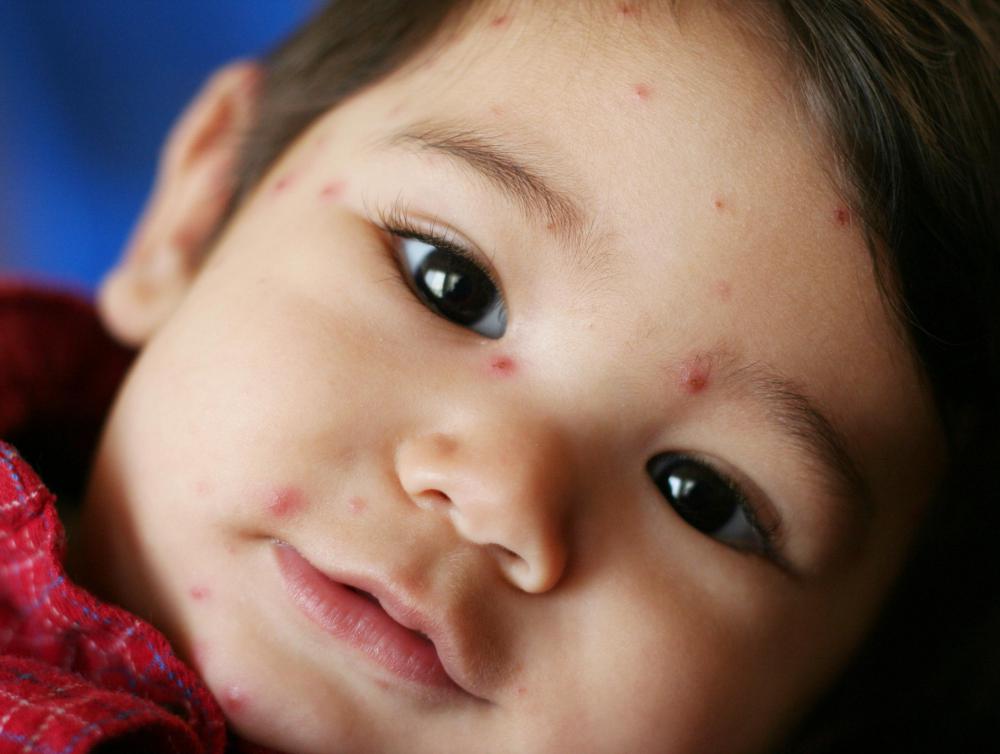
In the case of measles, mumps, and chickenpox, the virus's ability to reproduce rapidly is weakened. Normally, these viruses cause illness by reproducing themselves thousands of times in the body. One used in a vaccine may reproduce itself 20 times or less, but this is still enough to initiate B-cell reaction and cell memory. One or two injections of a live, weakened virus will typically make a person immune for life. Unfortunately, this type is not safe for people with compromised immune systems, such as those suffering with cancer or AIDS.

Another strategy is to deactivate a virus by killing it with a chemical. The virus will not be able to reproduce at all, yet its presence in the body still generates a response by B-cells, producing antibodies and a memory record. As safe as this method is for people with weakened immune systems, however, its drawback is that it takes several treatments to achieve long-lasting immunity. Vaccines of this type include polio, influenza, hepatitis A, and rabies.

For hepatitis B, only a part of the virus is used: a protein taken from the surface of the virus. In this case, B-cells respond to the protein, immunizing the body against the entire virus. This is safe for people with weakened immune systems, but it requires three doses for lifetime immunity.
Several bacterial diseases have vaccines based on using part of the bacteria as well. These bacteria make harmful proteins, called toxins, that can be inactivated with a chemical. Once the toxin is inactivated, the bacteria is harmless, and therefore so is the vaccine. Two examples of this type are diphtheria and tetanus.

Many people get the flu shot every year, which contains dead influenza viruses, while the nasal-spray flu vaccine contains live, weakened viruses. The nasal spray is normally given to healthy individuals between age 5 and 49. The flu shot can be administered to anyone 6 months or older, regardless of health. Each shot contains 3 different flu viruses, prevalent that year.
People should always check with a healthcare provider for which vaccinations that are best-suited to their personal health profile.
AS FEATURED ON:
AS FEATURED ON:


-
![Vaccines help the body fight illnesses and deadly diseases.]() By: TsuboyaVaccines help the body fight illnesses and deadly diseases.
By: TsuboyaVaccines help the body fight illnesses and deadly diseases. -
![A baby receiving a vaccine.]() By: Oksana KuzminaA baby receiving a vaccine.
By: Oksana KuzminaA baby receiving a vaccine. -
![Each flu season, medical researchers determine which flu strains are likely to be the most prevalent.]() By: emde71Each flu season, medical researchers determine which flu strains are likely to be the most prevalent.
By: emde71Each flu season, medical researchers determine which flu strains are likely to be the most prevalent. -
![Vaccines are required in school age children because public health could be endangered by a single child who attended school sick.]() By: IlikeVaccines are required in school age children because public health could be endangered by a single child who attended school sick.
By: IlikeVaccines are required in school age children because public health could be endangered by a single child who attended school sick. -
![The chickenpox vaccine weakens the virus's ability to reproduce.]() By: Jaren WicklundThe chickenpox vaccine weakens the virus's ability to reproduce.
By: Jaren WicklundThe chickenpox vaccine weakens the virus's ability to reproduce. -
![Vaccines produce the same effect as being exposed to the disease without making the patient suffer through the symptoms.]() By: robyelo357Vaccines produce the same effect as being exposed to the disease without making the patient suffer through the symptoms.
By: robyelo357Vaccines produce the same effect as being exposed to the disease without making the patient suffer through the symptoms. -
![Veterinarians receive vaccines to prevent rabies infections.]() By: absolutimagesVeterinarians receive vaccines to prevent rabies infections.
By: absolutimagesVeterinarians receive vaccines to prevent rabies infections. -
![Most medical doctors believe that the benefits of common vaccines outweigh potential risks, especially unfounded ones such as the possible development of autism.]() By: Filip RistevskiMost medical doctors believe that the benefits of common vaccines outweigh potential risks, especially unfounded ones such as the possible development of autism.
By: Filip RistevskiMost medical doctors believe that the benefits of common vaccines outweigh potential risks, especially unfounded ones such as the possible development of autism. -
![It is recommended that everyone over the age of 65 receive a pneumonia immunization.]() By: Ocskay BenceIt is recommended that everyone over the age of 65 receive a pneumonia immunization.
By: Ocskay BenceIt is recommended that everyone over the age of 65 receive a pneumonia immunization. -
![Nasal sprays that are used for vaccines contain live but weakened viruses.]() By: Ken HurstNasal sprays that are used for vaccines contain live but weakened viruses.
By: Ken HurstNasal sprays that are used for vaccines contain live but weakened viruses.





Discussion Comments
The flu virus mutates at a very high rate compared to many other viruses because of two reasons: 1. It's replication machinery is very error prone and therefore mutations are frequently made ("genetic drift") and 2. The human influenza virus can also infect both pigs and birds which have their own influenza viruses respectively. Therefore, a coinfection between the human virus and avian/swine can occur, in which the human virus can pick up new genetic material making the virus a completely new one ("genetic shift").
Because of this variability, each year the most common genetic variations of the virus from the year before are included in the vaccine. Therefore, you are being protected from the most common virus strains, however, if new ones arise the vaccine doesn't protect you from those (although it may partially protect you).
A virus like polio mutates at a much lower rate and only has a human host, therefore the use of vaccines have almost completely eradicated it from the earth.
What is it that flu shots actually do that is so special that we should get one every year? I got my flu shot this year but got the flu anyhow.
@burcinc-- I think it has to do with how quickly viruses change and how long our body maintains antibodies for them.
It's enough to get childhood vaccines only once. Other vaccines like tetanus have to be repeated every five to ten years. And then there are others like flu vaccinations that have to be repeated every year.
This is because antibodies for tetanus remain in our body for up to ten years. Flu vaccinations are repeated often because the influenza virus changes and adapts very quickly. And the shots have to be adjusted to the new virus every year so that it's effective.
My mom got bit by a stray dog several months ago. She was trying to feed him and he got scared and bit her hand.
We didn't know if the dog had vaccinations or not and the doctor advised my mom to go ahead and get the rabies shots anyway.
She had to go to the hospital about four times for rabies shots. She hated it! But it's better to be safe than sorry.
Why do we get some vaccines only once in our life and others every year?
Can a rabies vaccination be compromised due to overexertion?
This is really helpful for my homework, so thanks a lot. I'm trusting this website that all the info is right so hopefully it is. Thanks!
Absurd. When one develops a holistic understanding of how body systems work in concert to prevent toxic materials from entering the bloodstream, it becomes obvious that the antibody theory of disease prevention is absurd. Even the CDC recognizes that the presence of disease antibodies, the creation of which comprise the entire justification for vaccines, does not necessarily result in immunity from the disease.
Remember the Avian Flu vaccines that many countries got on the bandwagon to purchase, recommended by WHO. Later turned out they were all pressured by GlaxoSmithCline and WHO backed out of the recommendations.
It was very informative and it helped me a lot with my project on vaccinations (which I was very uncomfortable with as I cannot stand vaccines or anything to do with sticking a needle into yourself). Maybe you should write about other stuff as well. Anyway, thanks a lot!
This was very simple for me to understand and it helped me with my assignment very much.
@anon92148: The human cells are there because they are how the virus in cultured in the first place. The chemicals? They are left over from production as well. Aluminum is a preservative so that the vaccine will actually work when administered.
it is rare that I find easy to read, good info on a website! thanks!
This is well summarized, informative and extremely helpful. Thanks to the contributor.
What sort of disease does the inclusion of mercury, formaldehyde, human aborted fetus cells and aluminum in vaccines help to fight off?
Excellent article, more informative than the NHS one.
This information was very helpful in the research for my school assignment, and I also found it very interesting.
I usually don't like articles like this, but I loved yours! It was so informative and interesting. Thank you very much!
Very informative. Thank you
Vaccines do work, which is why they also are causing the epidemic of food allergies among children.
This is well summarized and a very easy read. I usually stay away from lonnnnggg articles, but this one is just short enough for me because I don't have a lot of time to spend reading.
Post your comments