
At TheHealthBoard, we're committed to delivering accurate, trustworthy information. Our expert-authored content is rigorously fact-checked and sourced from credible authorities. Discover how we uphold the highest standards in providing you with reliable knowledge.
How do People get Water in Their Lungs?
 Tricia Christensen
Tricia Christensen
Tricia Christensen
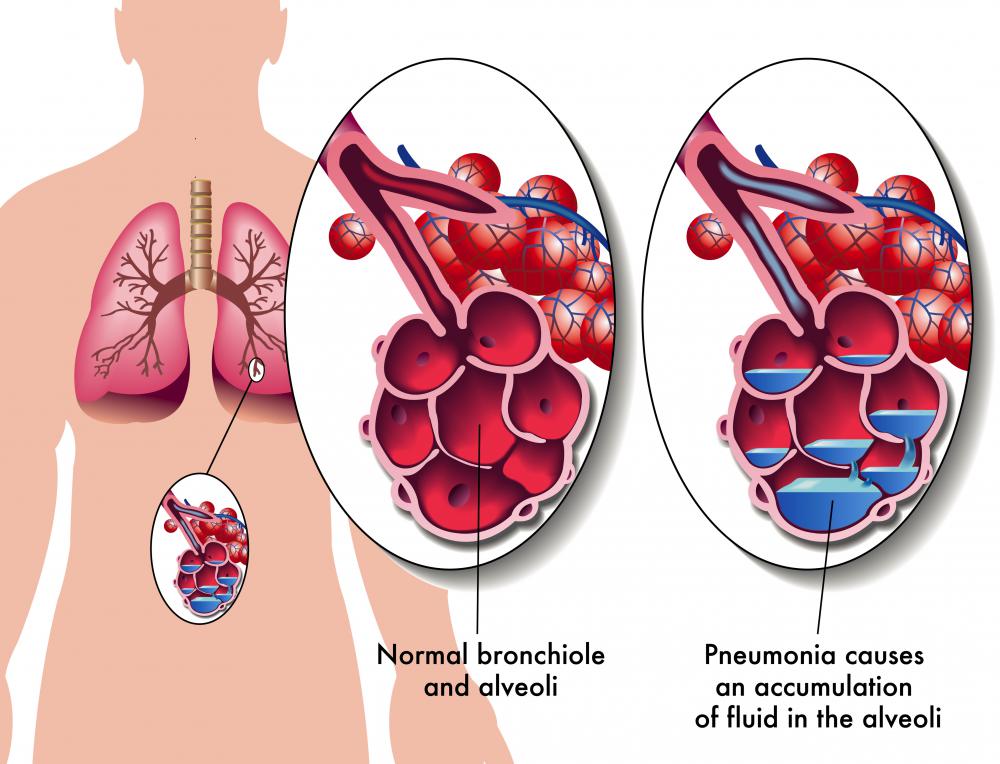
Pneumonia is often described as people having water in their lungs. If you do drown or take in a huge amount of water through inhalation, you could develop pneumonia. However, not all pneumonia is due to water in the lungs, but is instead accumulation of fluid in the lungs, which may have nothing to do with inhaling water. The body can produce fluid in the lungs because of infection, high pulmonary pressure, as a result of surgery, and for a number of other reasons. This isn’t technically water but “fluid.”
How people do get water in their lungs is usually very specific. You must inhale water (not a recommended practice). And don’t expect that water in the lungs will remain long, especially if you take in a very small amount. If you’re having a glass of water and you drink it and inhale at the same time, you may have that experience of water going down “the wrong pipe,” as the expression goes. This generally induces significant coughing, since the lungs will reject the water, and do everything they can to push it back out of an environment where it shouldn’t exist.

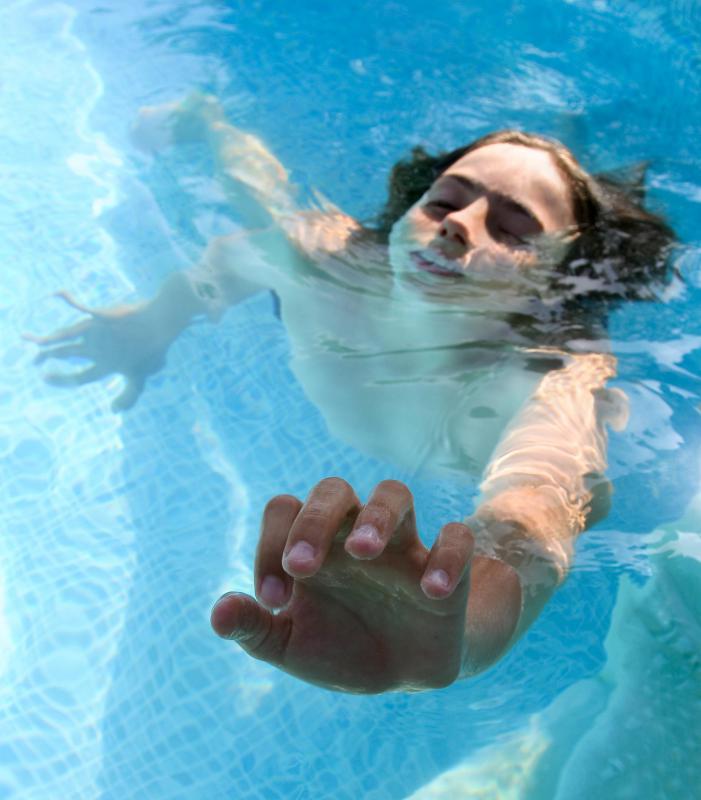
On the other hand, when people take in huge amounts of water in their lungs, such as if you drown, or even inhale about a teacup’s worth of water at once, it may effectively cut off oxygen supply and cause unconsciousness or death. When a person who has taken in water in their lungs and has stopped breathing, another person should perform mouth-to-mouth resuscitation in order to get the water out. When this works, most people will appear to vomit the water and then able to breathe normally, with some residual coughing. Drowning, however, is serious business, and doctors might want to evaluate a patient over the next few weeks to be sure that no infection to the lungs has occurred. Also, the longer the person has not been able to breathe, the more chance he or she has of brain damage, because the brain was deprived of oxygen.

Unfortunately, it is fairly easy for young children and inexperienced swimmers to get water in their lungs. Especially if panic sets in, respiration may increase and cause people to get water in their lungs quickly. Sadly, young children can drown not only in swimming or even wading pools, but also in bathtubs. Proper vigilance around inexperienced and even young trained swimmers and young kids bathing or wading is extremely important. Never leave them for a second. If you must leave, take the bathing, swimming or wading child with you.

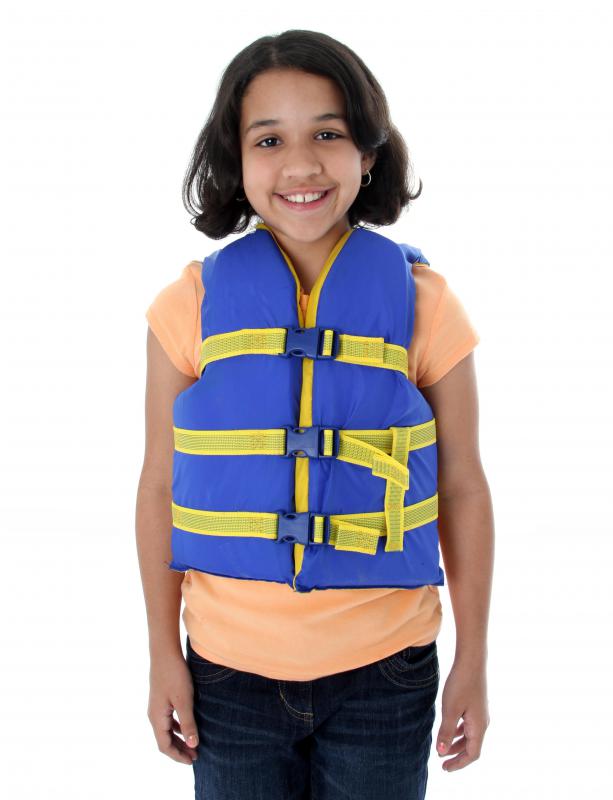
Don’t rely on safety devices to prevent children from getting water in their lungs. Especially things like arm fitting flotation devices or floating mattresses and inner tubes will not necessarily prevent a child from drowning. Arm fitting flotation devices are fine if the child is being closely watched at all times, but a child can lie on his or her back with these on, and water could rush over their heads, causing drowning. Even life jackets are not always a safe enough measure to prevent drowning. Constant vigilance is always better.

Children are especially at risk for drowning from small amounts of water in the lungs because of their small lung capacity. It is easier to fill lungs with water and cut off oxygen supply much more quickly. It cannot be stressed enough how important it is for children to receive attentive supervision at all times, even if they know how to swim.
Tricia Christensen
Tricia has a Literature degree from Sonoma State University and has been a frequent TheHealthBoard contributor for many years. She is especially passionate about reading and writing, although her other interests include medicine, art, film, history, politics, ethics, and religion. Tricia lives in Northern California and is currently working on her first novel.
Learn more...
Tricia Christensen
Tricia has a Literature degree from Sonoma State University and has been a frequent TheHealthBoard contributor for many years. She is especially passionate about reading and writing, although her other interests include medicine, art, film, history, politics, ethics, and religion. Tricia lives in Northern California and is currently working on her first novel.
Learn more...AS FEATURED ON:
AS FEATURED ON:


-
![Safety devices, like a life jacket, can help prevent children from getting water in their lungs, but they are not foolproof.]() By: RobSafety devices, like a life jacket, can help prevent children from getting water in their lungs, but they are not foolproof.
By: RobSafety devices, like a life jacket, can help prevent children from getting water in their lungs, but they are not foolproof. -
![The human respiratory system, showing the trachea, bronchioles, and lungs.]() By: Alexandr MitiucThe human respiratory system, showing the trachea, bronchioles, and lungs.
By: Alexandr MitiucThe human respiratory system, showing the trachea, bronchioles, and lungs. -
![Children have a small lung capacity, so are at particular risk for drowning.]() By: Eléonore HChildren have a small lung capacity, so are at particular risk for drowning.
By: Eléonore HChildren have a small lung capacity, so are at particular risk for drowning. -
![Sometimes, while drinking a glass of water, the water can go down the "wrong pipe."]() By: Gina SandersSometimes, while drinking a glass of water, the water can go down the "wrong pipe."
By: Gina SandersSometimes, while drinking a glass of water, the water can go down the "wrong pipe." -
![A patient who appears to be fine after a near-drowning incident may later experience pulmonary edema.]() By: benjaminnolteA patient who appears to be fine after a near-drowning incident may later experience pulmonary edema.
By: benjaminnolteA patient who appears to be fine after a near-drowning incident may later experience pulmonary edema. -
![A large amount of water in the lungs can cause pneumonia.]() By: rob3000A large amount of water in the lungs can cause pneumonia.
By: rob3000A large amount of water in the lungs can cause pneumonia.


Discussion Comments
Is it possible that while drinking water, it can enter the lungs and brain? If yes could it cause any infection? What are the symptoms?
How long can a person with emphysema live?
One man died in water but there was no water inside his lungs after the body was in the water for three hours. Can this happen?
@anon78167: Always ensure that there is hardly any water in your bong, just enough to cover the bottom of the stem to create bubbles. It is possible to get water in your lungs from having too much water in your bong. If you are feeling water come into your mouth when you smoke from the bubbles, there is way too much water in there.
This was really helpful. I didn't have a clue about what caused it and if it was dangerous.
While taking a lifeguard class, we practiced the back board "strap-in", and I took in a decent amount of water.
We were in the 15 foot end, and i had to hold the back board up only using my legs. Now, five days later, I still feel like I'm coughing up water, however little it may be. I just can't stop coughing.
Also I smoke, which hasn't been a problem before, but I doubt that helps the situation. Am I overreacting, or is there more to it than that?
My sister 60, has chronic problem of Hystertomy. Because of her weakness and age, it's very risky to operate. Now she has another problem of water accumulating in lungs and every few months she goes through water extraction which is painful and risky.
Doctors could not diagnose where this water is coming in to lungs, Can anyone please help to advise how to treat her.
I'm a cigar smoker and I'm asthmatic. i was sick with a cold and after that i had a cough and it's not same as infection (water color) and it's not hack.
My father passed away because of cancer, and i don't have seasonal allergies, either. Do you think it's serious problem?
My brother and I were playing in the pool and I inhaled a pretty decent amount of water. I physically could not inhale because of all the water. Now i feel very congested in my chest. Will I be OK? I'm a little afraid to fall asleep. How do I get the water out? It also doesn't help that I'm asthmatic.
My grandmother, a 72 year old has problems with her breathing and is in ICU in the hospital right now. they told us that she has water in her lungs. Right now she breathing on a resuscitator. she has diabetes and gets insulin and her kidneys are diseased. hoe can we vacate the water from her lungs? would you please answer me? thanks Hadi
My dad has problems with his heart and is in the hospital right now. they told him that he has water in one of his lungs. what causes this? would you please answer me? thanks Evelyn
I smoke a lot of bongs (pot). could this cause fluid on the lungs?
when drinking water i think some drops had gone in to the lungs, so from that time i got a cough. so is this the process to push the water back or do i have to see a doctor to solve this problem? For the past 30 minutes i have had this cough. please reply soon as i am very fearful about this.
anon62100: If the person is not drowning, they will be coughing.
anon37947: 'Medicine' would not be applicable, the water must be evacuated, because it cannot be absorbed in large enough quantities. Infections are common after inhaling large quantities of water. However, these will not present immediately.
anon34326: CPR is perfectly acceptable after assessment of pulse by palpation alone. You do not need to wait for a defibrillator. Ensure you take a full 10 seconds to watch for breathing and feel for pulses.
when the situation is not drowning, what treatments are there? how long can a person have water in their lungs before it becomes very severe?
what can be the solution for this? does medicine remove the water? how long does it take?
CPR must only be performed on unconscious patients that are apneic and/or pulseless. Even then you should analyze their hear rhythm with and AED before performing any form of CPR.
What is the exact treatment for bacterial pneumonia? Along with antibiotics is there any other treatment?
Post your comments