
At TheHealthBoard, we're committed to delivering accurate, trustworthy information. Our expert-authored content is rigorously fact-checked and sourced from credible authorities. Discover how we uphold the highest standards in providing you with reliable knowledge.
How do I Treat Severe Dehydration?
 Tricia Christensen
Tricia Christensen
Tricia Christensen
Severe dehydration is a medically urgent condition that most often requires medical attention. Some people cannot get to medical help right away or may live in areas where poverty affects access. There are some alternatives advocated by organizations like the World Health Organization (WHO) that can be employed instead, but it should be stated that emergency care from licensed medical workers is the best and most medically sound treatment.
People need to first recognize severe dehydration. It may present with symptoms like very dark colored urine or failure to urinate, confusion, no perspiration, and high thirst. The pulse might feel quick and the person may have fever. Extreme vomiting may occur and in the most severe cases a person may be unconscious. One symptom to look for in babies is depression of the soft spots or fontanels.

As stated, the presence of these symptoms should be considered a medical emergency and people should immediately get to a hospital. At hospitals, the goal is to give the body fluids to end the dehydration. This is usually done with an intravenous or IV drip of fluids. Depending on other conditions, a person might leave after a few hours of treatment or could need to stay overnight or longer to treat underlying medical issues.

When it is not possible to get to a hospital or to get an ambulance to come, severe dehydration is treated with oral fluid replacement, usually at the rate of about a teaspoon (5 ml) per minute. The fluid used should have a balance of electrolytes which some over the counter substances like Pedialyte® contain. Another option is an oral replacement solution, which is sold in packages and can be mixed with clean water. It should not be mixed with high sugar substances like soda.

In absence of electrolyte balanced fluids or oral replacement solution, people can make their own solution with ordinary sugar and table salt. The ratio should be about three teaspoons sugar to one-half teaspoon salt. Some recipes also recommend adding equal amounts salt and baking soda. This should be mixed with four cups (.95 liters) water and fed at the rate of a teaspoon per minute.

Recommendation is feeding of oral replacement solution continue even when vomiting occurs. Some liquid may remain down. Yet if a person can keep nothing down, it is absolutely vital to try to find more medical help as the condition will worsen. In many circumstances, though, treatment with this simple solution can be effective, but people should begin treatment before severe dehydration signs occur for best results.

One special proviso applies to infants. If babies are breast-fed and the mom is present, it is better to try to treat severe dehydration with breast milk. It has a better balance than any other solution for babies and may be tolerated. Yet again, the optimum treatment is immediate hospital care, and this is especially true for infants, who may easily begin to experience systemic organ failure without needed fluids.
Tricia Christensen
Tricia has a Literature degree from Sonoma State University and has been a frequent TheHealthBoard contributor for many years. She is especially passionate about reading and writing, although her other interests include medicine, art, film, history, politics, ethics, and religion. Tricia lives in Northern California and is currently working on her first novel.
Learn more...
Tricia Christensen
Tricia has a Literature degree from Sonoma State University and has been a frequent TheHealthBoard contributor for many years. She is especially passionate about reading and writing, although her other interests include medicine, art, film, history, politics, ethics, and religion. Tricia lives in Northern California and is currently working on her first novel.
Learn more...AS FEATURED ON:
AS FEATURED ON:


-
![Water, which can help prevent and treat dehydration.]() By: Aaron AmatWater, which can help prevent and treat dehydration.
By: Aaron AmatWater, which can help prevent and treat dehydration. -
![IV fluids are usually given to individuals with severe dehydration.]() By: michaeljungIV fluids are usually given to individuals with severe dehydration.
By: michaeljungIV fluids are usually given to individuals with severe dehydration. -
![Dehydration may cause feelings of weakness.]() By: MaridavDehydration may cause feelings of weakness.
By: MaridavDehydration may cause feelings of weakness. -
![People who work out intensely need to replenish not only water, but also essential salts and electrolytes lost through sweat.]() By: geronimoPeople who work out intensely need to replenish not only water, but also essential salts and electrolytes lost through sweat.
By: geronimoPeople who work out intensely need to replenish not only water, but also essential salts and electrolytes lost through sweat. -
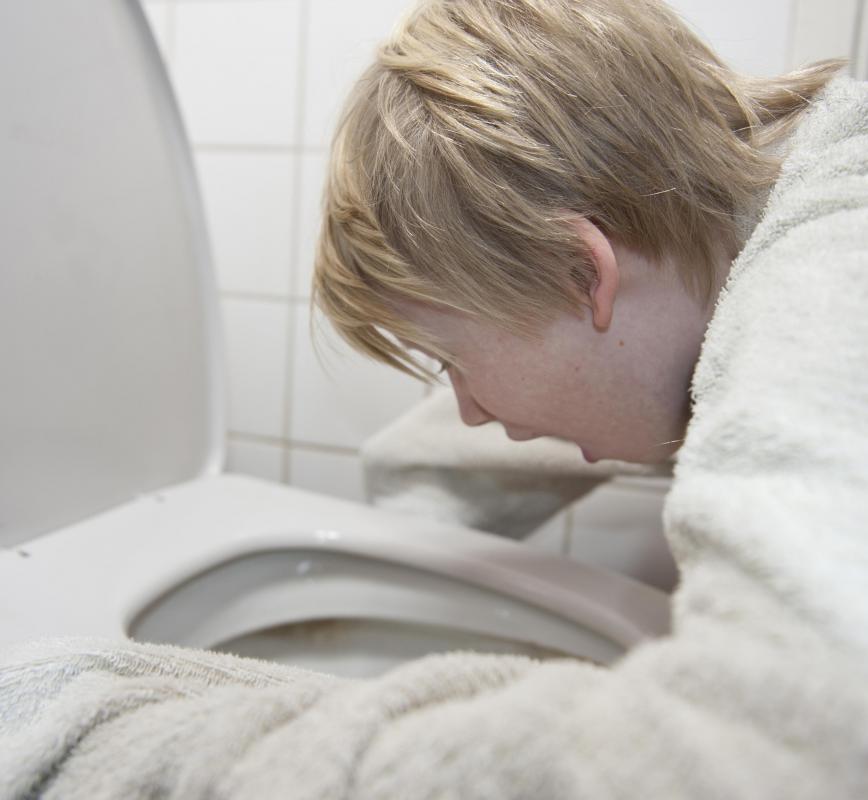
![Vomiting may occur during cases of severe dehydration.]() By: Johan LenellVomiting may occur during cases of severe dehydration.
By: Johan LenellVomiting may occur during cases of severe dehydration. -
![Some medications taken by the elderly can lead to dehydration.]() By: Sandor KacsoSome medications taken by the elderly can lead to dehydration.
By: Sandor KacsoSome medications taken by the elderly can lead to dehydration. -
![It can be dangerous to drink large amounts of water when severely dehydrated.]() By: DragonImagesIt can be dangerous to drink large amounts of water when severely dehydrated.
By: DragonImagesIt can be dangerous to drink large amounts of water when severely dehydrated.




Discussion Comments
Sporkasia - I too have had a couple IV tubes for severe dehydration treatment. When you're playing sports and you begin to cramp you have probably waited too late to hydrate normally. At that point, you can't drink enough water to hydrate as you continue to play and perspire.
The key is to start hydrating in advance of a strenuous physical workout. When you know you're going to play a tournament start hydrating a week or so before the tournament-- and eat bananas.
I often get cramps when I don't think I have exerted myself too much, so I sometimes take the muscle spasms for granted. However, I have learned that muscle cramps are often the body's way of saying you are low on liquids.
Long story short, I was playing in a tennis tournament and began to cramp. I started drinking water immediately, but the cramps got worse as I sweated more. It was a hot day and even more so on the hard-surface tennis courts.
Anyway, I was sweating and sweating. Then at some point I noticed I wasn't sweating anymore, and about that time my entire body cramped. Seriously, I had cramps in virtually every muscle in my body. I ended up lying flat on the courts, unable to get up or move without pain. So my tournament concluded with a ride in a rescue vehicle to the local emergency room.
After the first IV I felt much better. I was told at the hospital that there are many dehydration causes, including sweating profusely during a tennis tournament.
Post your comments