
At WiseGEEK, we're committed to delivering accurate, trustworthy information. Our expert-authored content is rigorously fact-checked and sourced from credible authorities. Discover how we uphold the highest standards in providing you with reliable knowledge.
How do I Treat Scalp Psoriasis?
 Hillary Flynn
Hillary Flynn
Hillary Flynn
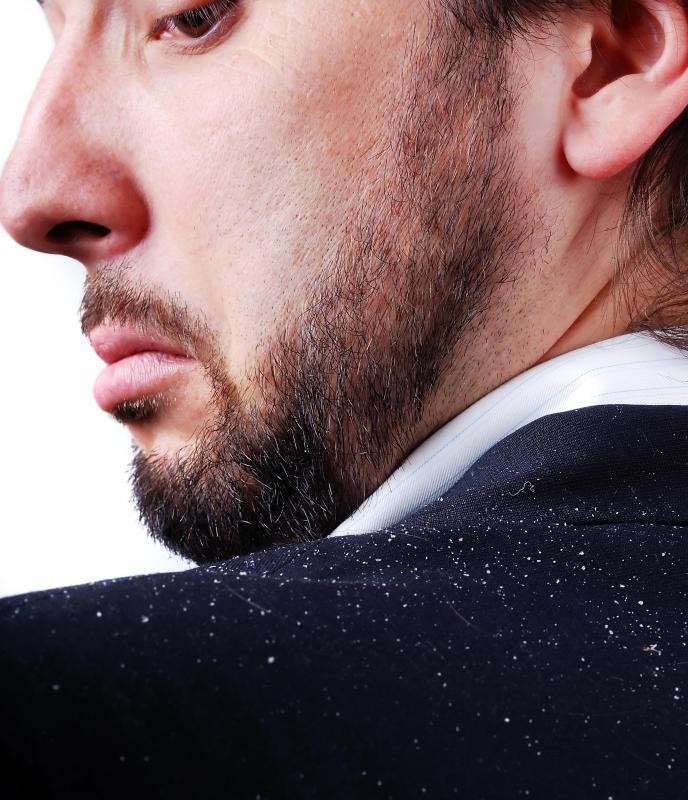
Psoriasis is a common skin condition that results in a scaly rash. Nearly half of all psoriasis suffers are also afflicted with scalp psoriasis. This produces very scaly, dry, inflamed patches on the scalp. This is not only uncomfortable, it's also embarrassing, as the scalp is in plain view. The heavy scaling is caused by the rapid growth of skin cells on the areas affected by psoriasis. In severe cases, the condition can cause hair loss.
It's tempting to try and scrape the thick crust off the scalp, but this only exacerbates the condition and causes more flaking. Unfortunately, the scalp is a difficult area to treat, but for those with a little patience, a treatment is out there; it just takes a bit of experimentation to find the best course of action for each individual case. Some of the luckier sufferers will find the condition clears up on its own, but for the rest, there is a large selection of products and medications to choose from.

When deciding on a treatment, the first thing to do is determine the severity of the scalp psoriasis. Thin flakes will require a different course of treatment than a thicker, more severe case. Unlike psoriasis on other locations of the body, thick creams and ointments should be avoided, or else the hair will collect and hold the gooey mixtures and will be resistant even to shampoo when it's time to remove the treatment.

For a mild case of scalp psoriasis, one might start with tar products. Tar products can be found in most drugstores and options include shampoos, gels, and lotions. If tar isn't effective, salicylic acid is also a popular alternative. Like tar, it can be found at most drug stores, and it comes in many different forms, including shampoos, ointments, gels, and pads. The pads are saturated with the salicylic acid and dabbed on the affected areas of the scalp.

For more severe cases, ultraviolet (UV) light is sometimes used, and more frequently, stronger topical corticosteroids are applied. Treatment of severe cases requires time and patience. Often, scalp psoriasis is at first resistant to a particular treatment, then gives in and begins improving, but later develops a tolerance. To remedy this, treatments should be rotated. It can take up to two months for scalp psoriasis to show a marked reduction in flakiness. It would behoove a person with a severe case to continue treatment until all signs of psoriasis are gone.
Hillary Flynn
Joining the WiseGEEK team has helped to satisfy Hillary’s insatiable curiosity for knowledge. She also manages an electronic publishing business that allows her to develop her skills in technical writing, graphic design, and business development. Hillary has a passion for satirical writing and enjoys traveling, especially to places of historical importance.
Learn more...
Hillary Flynn
Joining the WiseGEEK team has helped to satisfy Hillary’s insatiable curiosity for knowledge. She also manages an electronic publishing business that allows her to develop her skills in technical writing, graphic design, and business development. Hillary has a passion for satirical writing and enjoys traveling, especially to places of historical importance.
Learn more...AS FEATURED ON:
AS FEATURED ON:









-
![Scalp psoriasis may cause hair loss.]() By: maska82Scalp psoriasis may cause hair loss.
By: maska82Scalp psoriasis may cause hair loss. -
![Scalp psoriasis may cause a dry hairline.]() By: roblanScalp psoriasis may cause a dry hairline.
By: roblanScalp psoriasis may cause a dry hairline. -
![Treatments can take up to two months for scalp psoriasis to show a marked improvement.]() By: Lars ZahnerTreatments can take up to two months for scalp psoriasis to show a marked improvement.
By: Lars ZahnerTreatments can take up to two months for scalp psoriasis to show a marked improvement. -
![Medicated shampoos containing salicylic acid can usually treat dandruff as well as psoriasis.]() By: Jasmin MerdanMedicated shampoos containing salicylic acid can usually treat dandruff as well as psoriasis.
By: Jasmin MerdanMedicated shampoos containing salicylic acid can usually treat dandruff as well as psoriasis. -
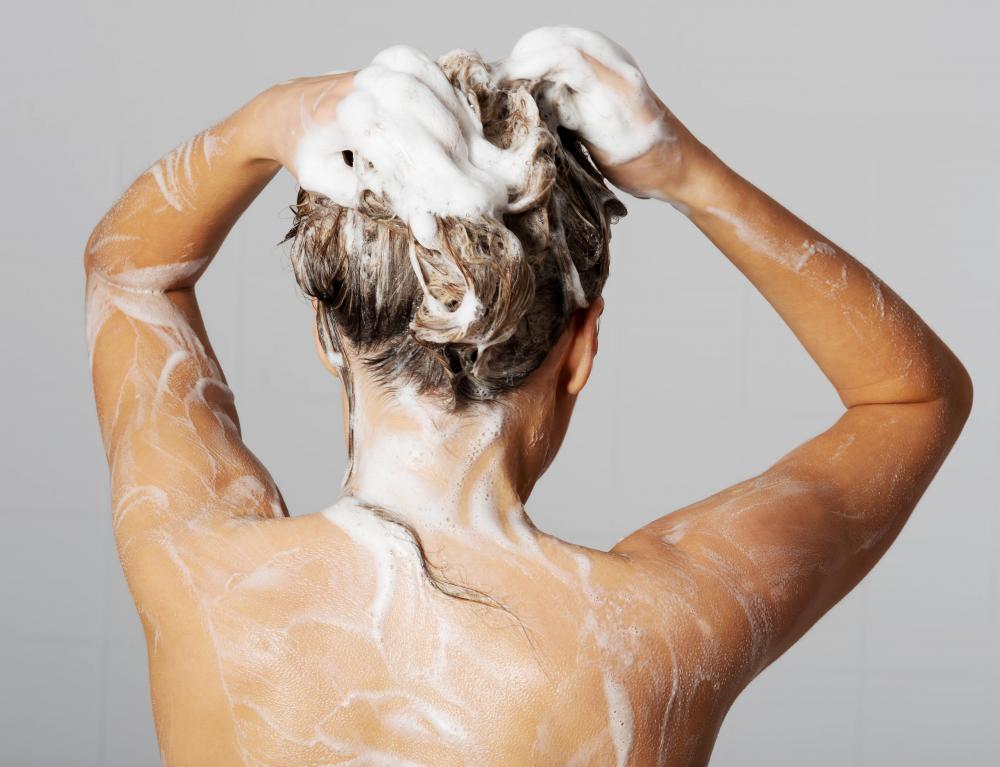
![Washing with a medicated shampoo can help the treatment of scalp psoriasis.]() By: Piotr MarcinskiWashing with a medicated shampoo can help the treatment of scalp psoriasis.
By: Piotr MarcinskiWashing with a medicated shampoo can help the treatment of scalp psoriasis.


Discussion Comments
Here's a quick fix I discovered. Charcoal mixed with Blue Star Ointment. I just charcoal capsules, break it open and mix into the ointment. You could also mix it with Vaseline.
I had a small patch on the back of my neck right in the base of my hairline. It cleared it up in three days. Applied it before bedtime and left overnight. Its kind of hard to wash out, a little dawn dish liquid or Castile Soap works great.
Charcoal is used many different ways to absorb toxins and bacterial and fungal toxins. So I figured why couldn't I try it for my psoriasis. Couldn't hurt because its very safe. Look up activated charcoal to learn more. This site wouldn't let me add a link.
Today's world is returning towards natural way of curing due to the harmful effects of today's chemicals and synthetic medicines. People are deeply worried on this issue and also insisting to use natural way of curing to get health and security.
These generic suggestions are all but useless for moderate to severe psoriasis sufferers. Every one I've ever read has suggested tar and/or salicylates "to start" but they leave it at that as if that will solve the problem. What psoriasis sufferers need is advice about what to do when the problem comes back -the chronic resistant cases. How to rotate treatments, etc... Now that would be helpful as well as reinforce the idea that this is a chronic illness and people should expect it to recur.
Post your comments