
At WiseGEEK, we're committed to delivering accurate, trustworthy information. Our expert-authored content is rigorously fact-checked and sourced from credible authorities. Discover how we uphold the highest standards in providing you with reliable knowledge.
How do I Treat Itchy Skin?
 Tricia Christensen
Tricia Christensen
Tricia Christensen
There is no single perfect treatment for itchy skin because it may have many different causes. Some irritation can indicate a serious infection (bacterial or fungal) or might be the result of a virus. Allergies are another potential cause. Though there may be ways to make itching less irritating, it’s important to first determine what is causing it. Treatments specific to the underlying condition are the best way to tackle the itch, and are better than only relying on home methods to reduce itchiness.
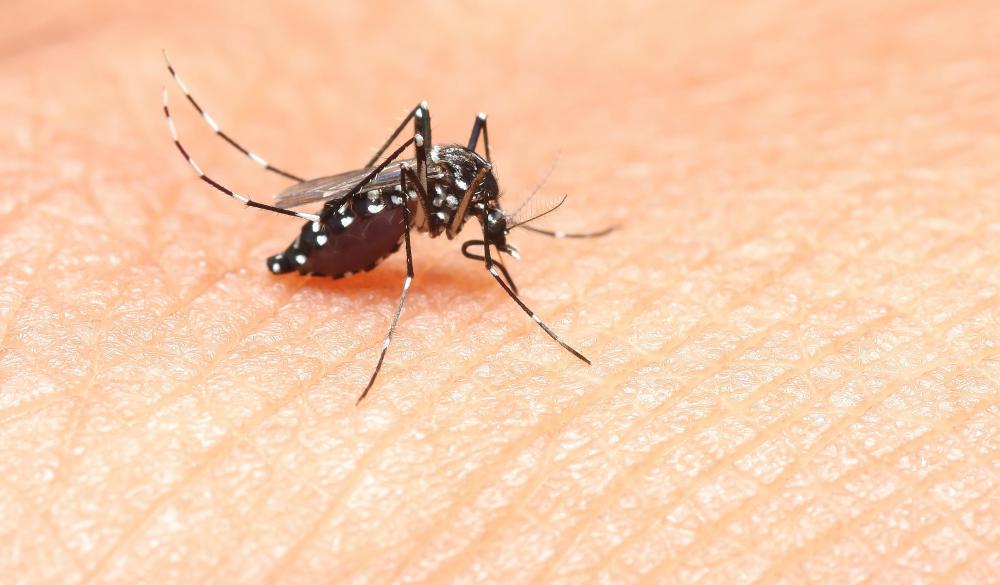
Thus the first suggestion for people suffering from itchy skin, especially if the condition is widespread, is to see a medical professional for a diagnosis unless the cause is immediately apparent. For instance, a person who went camping might come back with a poison oak or poison ivy rash, or someone might slap a mosquito or spider off his or her skin that is in the process of biting. These conditions could be safely treated at home, but an itch or rash of unknown origin needs to be investigated.

Since there are many different skin conditions that can cause itchiness, there are many potential treatments. Allergic reactions might be treated with topical creams that contain antihistamines, usually diphenhydramine, or with oral antihistamines. Other kinds of topical lotions might be required. For itches causes by fungus, anti-fungal ointments could be needed, and for those caused by inflammation, corticosteroids like hydrocortisone may be the most appropriate choice. Oral medications for itch, aside from things like diphenhydramine, include oral steroids like prednisone, or oral anti-fungal treatments.

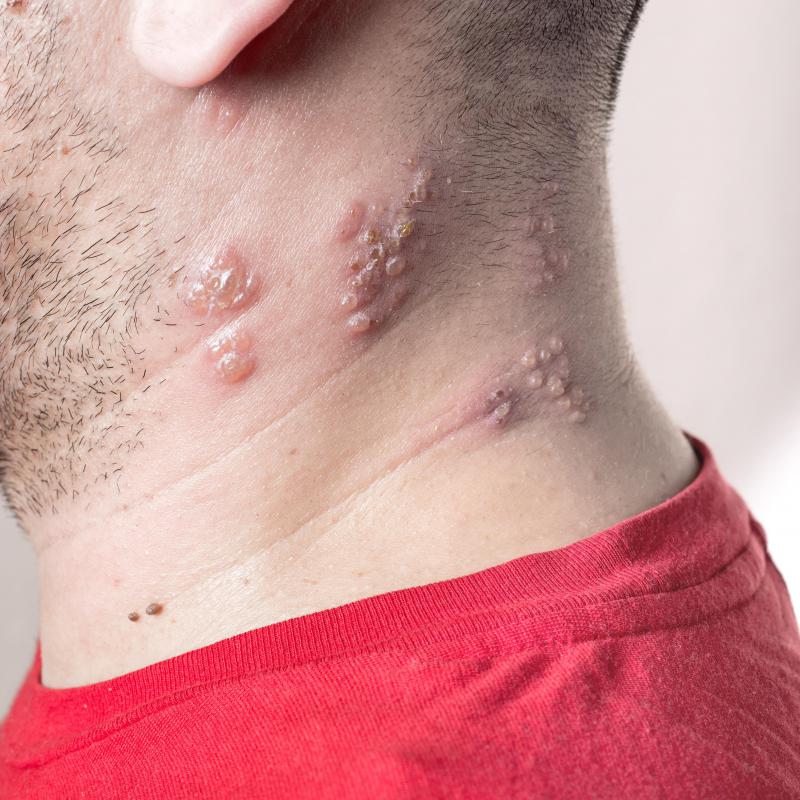
Sometimes, certain itches result from viruses. Blisters and scabs on the skin could be the result of herpes viruses, including oral and genital herpes, chickenpox or shingles. Some of these conditions respond well to antiviral medications, and others, especially chickenpox, may simply be best treated with home remedies for itching.
A few home remedies for itchy skin, suggested for used once diagnosis is made, include soaks in certain solutions like oatmeal baths, cornstarch baths, or vinegar baths. Keeping the area in moist bandaging may also help reduce itching, but this is not appropriate for fungal problems. Products like camphor and calamine lotion can be dotted on the skin too and may help relieve some discomfort.

There are some tips for any type of itchy skin that may help. Don't scratch the itch if possible, as this will make it worse, and if the source of itching is infectious, it could spread infection to other parts of the body. Wearing smooth, comfortably fitting clothing that has not been washed in heavily perfumed detergents may also create a little more comfort.

Don’t use simply any cream or treatment without first talking to a medical professional. Some over-the-counter treatments of the wrong kind could make skin conditions worse or delay their diagnosis. Get a diagnosis first, so the best treatment methods may be used from the beginning.
Tricia Christensen
Tricia has a Literature degree from Sonoma State University and has been a frequent WiseGEEK contributor for many years. She is especially passionate about reading and writing, although her other interests include medicine, art, film, history, politics, ethics, and religion. Tricia lives in Northern California and is currently working on her first novel.
Learn more...
Tricia Christensen
Tricia has a Literature degree from Sonoma State University and has been a frequent WiseGEEK contributor for many years. She is especially passionate about reading and writing, although her other interests include medicine, art, film, history, politics, ethics, and religion. Tricia lives in Northern California and is currently working on her first novel.
Learn more...AS FEATURED ON:
AS FEATURED ON:









-
![Antihistamine ointments may relieve itchy skin caused by an allergic reaction.]() By: TingaAntihistamine ointments may relieve itchy skin caused by an allergic reaction.
By: TingaAntihistamine ointments may relieve itchy skin caused by an allergic reaction. -
![A cornstarch bath may help relieve itchy skin.]() By: Yuriy AfonkinA cornstarch bath may help relieve itchy skin.
By: Yuriy AfonkinA cornstarch bath may help relieve itchy skin. -
![Shingles can itch and sting.]() By: librakvShingles can itch and sting.
By: librakvShingles can itch and sting. -
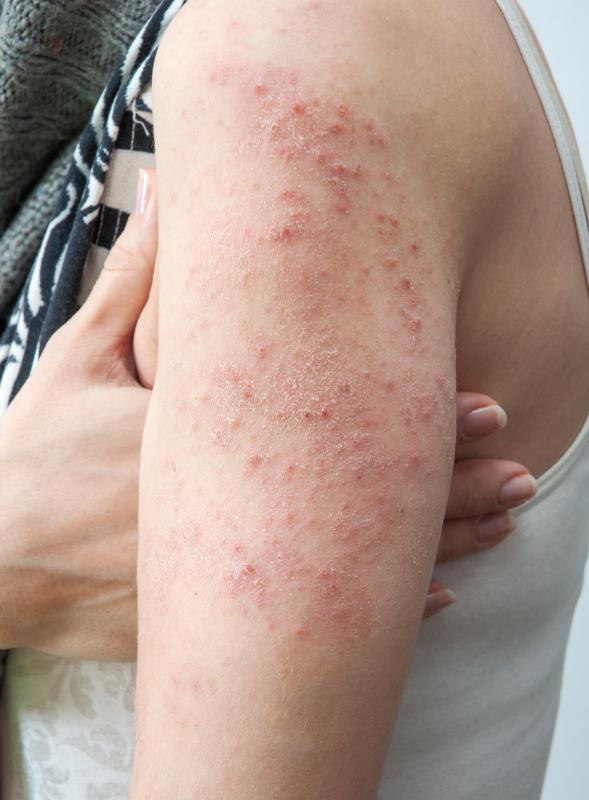
![Dermatitis can cause itchy skin.]() By: quaysideDermatitis can cause itchy skin.
By: quaysideDermatitis can cause itchy skin. -
![It's important to determine the source of itching.]() By: Adam GregorIt's important to determine the source of itching.
By: Adam GregorIt's important to determine the source of itching. -
![A mosquito bite is one cause of itchy skin.]() By: saidin jusohA mosquito bite is one cause of itchy skin.
By: saidin jusohA mosquito bite is one cause of itchy skin. -
![An oral antihistamine may be taken to treat itchy skin caused by allergies.]() By: Wellford TillerAn oral antihistamine may be taken to treat itchy skin caused by allergies.
By: Wellford TillerAn oral antihistamine may be taken to treat itchy skin caused by allergies. -
![Prednisone is a type of oral steroid.]() By: Thirteen Of ClubsPrednisone is a type of oral steroid.
By: Thirteen Of ClubsPrednisone is a type of oral steroid. -
![Hydrocortisone cream is used to treat swelling and itching.]() By: carroteaterHydrocortisone cream is used to treat swelling and itching.
By: carroteaterHydrocortisone cream is used to treat swelling and itching. -
![A poison ivy rash may appear as a red, itchy rash marked by bumps.]() By: librakvA poison ivy rash may appear as a red, itchy rash marked by bumps.
By: librakvA poison ivy rash may appear as a red, itchy rash marked by bumps. -
![Acne might cause skin to be itchy.]() By: Ocskay BenceAcne might cause skin to be itchy.
By: Ocskay BenceAcne might cause skin to be itchy.







Discussion Comments
What works for me is jalapeño juice. Just rub fresh sliced chili on your itch and gone! It is the capsaicin in the chili that controls the itching and it may sting a little at first but it works. It's a very economical remedy as well and may take a few applications to take effect. I should mention my itching problem was not a rash - just intense, daily itching without obvious skin irritation. Good luck.
I recently found out that I am allergic to bee stings. I got stung by a bee when I was out mowing and one of the reactions I had was a break out that looked like hives and severe itching all over my body.
This itching was different than anything else I had ever had as it felt like I was itching both inside and outside my body. I am starting to feel itchy just remembering what this felt like.
I was taken to the hospital and given a shot to stop the symptoms I was having from the reaction. Now I have to carry an EpiPen with me at all times in case I ever get stung again and have a bad reaction like that.
I have trouble with itchy skin in the winter when my skin gets so dry. Even though I try to put lotion on regularly, it doesn't always keep my skin as soft and smooth as I would like.
One of the worst things about itchy skin is the more you itch it, the worse it gets. Itching may give you a little bit of temporary relief, but if you itch too much you just aggravate the condition.
When we were kids we loved to play outside in the summer and would stay outside even past dark playing out in the yard. I remember getting bit by mosquitoes and also getting chigger bites.
When you have a lot of bites on you, the itching can drive you crazy. I would always put calamine lotion on my bug bites which really helped with the itching. I would put this on before bed so I could get so sleep. Usually by the time I woke up in the morning the itching was gone and the bites were much less noticeable.
@anon128903 -- If the things you have tried to relieve your itching are not helping, I think the best thing is to wait it out until you see your doctor. Thankfully you already have an appointment scheduled and you should soon be able to get a diagnosis and hopefully some relief very soon.
I have severe itching on my left fore-arm. Nothing is helping to relieve this, I've tried vinegar soak, oatmeal etc. Any other suggestions? I see my Dr. on Wednesday.
If you have chronically itchy, dry skin, you may want to try incorporating some oatmeal skin products into your skin care routine.
Oatmeal is a great home remedy for a variety of itchy skin conditions, and can really provide a good moisturizing effect even to normal skin.
The great thing about oatmeal is that it's very soothing -- and cheap, of course! Some good suggestions for incorporating oatmeal into your skincare routine are to use an oatmeal soap or lotion (make sure they're organic, or you could end up exacerbating your problems!), and of course, the good old oatmeal bath.
An oatmeal bath is particularly good if you have itchy skin all over, or in hard to reach places. It's really one of the only thorough methods for dealing with itchy skin on the back as well.
So keep it in mind next time you go to the pharmacy or grocery store -- the anti-itch cure you crave may be as close as the next box of Quakers.
I used to get really dry itchy skin on my legs in the winter, and no matter what I did, it never cleared up. I couldn't for the life of me figure out why it was only my legs until I realized that it was because of my running.
I would go running in shorts, even in the winter, since I hate getting overheated, and my legs were getting windburnt! After that I got a pair of running leggings and the whole thing cleared up, so I definitely know that that was the my itchy skin cause.
I just share that to say, remember to think outside of the box when you're trying to figure out what's causing your itchy skin -- it may be something that you can very easily fix.
Itchy skin is the worst. I get really itchy skin on all over from eczema, and if you've never experienced an eczema flare up, you know that there's nothing like it -- itchy skin from eczema is really unreal.
And it's even worse because even if you know that it will die down sooner if you don't scratch it, sometimes you just can't stand it. And then you end up with red itchy skin whereas before you may have only had itchy skin bumps. The only think that ever works for me is an oatmeal bath, but it never cures it all the way -- I just have to wait for it to clear on it's own and wear gloves at night to keep from scratching in my sleep.
So for all of you fellow eczema sufferers out there, believe me -- I feel your pain!
Post your comments