
At TheHealthBoard, we're committed to delivering accurate, trustworthy information. Our expert-authored content is rigorously fact-checked and sourced from credible authorities. Discover how we uphold the highest standards in providing you with reliable knowledge.
How Do I Treat Drooping Eyelids?
In most cases, the best treatment for drooping eyelids depends on what’s causing the condition in the first place. Sometimes, simple muscular exercises performed at various intervals daily will correct the droop, but in other instances medical interventions may be required. There are certain medications you can take that might help the problem, for instance, and specialized eye drops can also bring relief, even if just temporarily. If your condition is chronic or caused by something more serious, you might want to consider surgery. Surgical procedures, especially those involving the eyes, are normally thought of as a last resort; they carry a lot of risks, and are usually only recommended when nothing else is working. Talking about your situation with a doctor or other qualified healthcare professional will help you determine which course of action may be right for you.
Understanding the Condition Generally

Though people may occasionally experience drooping eyelids as a consequence of fatigue, allergic reaction, or illness, the condition isn’t usually considered a problem in its own right unless it happens frequently, on its own, and with few or no other symptoms. Drooping might also happen as a side effect of some larger illness or some new medication. The medical name for this sort of eyelid drooping, no matter its cause, is Ptosis.

Both children and adults can experience droopy eyelids to varying degrees. In some people the droop is slight and barely noticeable, but in more extreme cases the eyelid can descend over the entire pupil and can’t be retracted. In its early phases the condition often comes and goes, but in more advanced cases people often experience very limited sight — and frequently also a great deal of frustration.
Benefits of Eye Exercises

Eye exercises can be an effective treatment in individuals who have slight droops or for individuals looking for preventative measures. There are several different exercises you can try. First, with your fingers placed on each of your temples, blink rapidly several times, then sit up straight, avoid moving your head, and rotate your eyes by looking up and down, then left to right multiple times. Next, try massaging your temples and eyebrows to stimulate circulation and trigger movement. Finally, in 10-second intervals, try moving the skin from your eyebrows down to cause your eyelids to droop, and then move them up to cause your eyelids to open.

This and similar exercise routines are often recommended for people with mild to moderate droops, as well as for drooping that seems to come and go. Physical therapists and trained vision therapists are often able to recommend more specific exercises for your specific situation, but the main idea is to get the muscles responsible for eyelid lifting moving, toned, and responsive.
Pharmaceutical Interventions

When the condition of drooping eyelids is caused by a medical disorder or disease, the problem can often be corrected through treatment for the underlying condition. Medications can be administered, with the specific medication depending on the type of disorder or disease. The eyelids often will correct themselves during the course of treatment.
Surgical Alternatives

Depending on the specifics of your situation, surgery may be the only effective treatment. Surgery is almost always the best solution when it comes to the most common cause of drooping eyelids: old age. When preparing for surgery, the ophthalmologist usually chooses a surgical technique based on the level of droopiness, the cause of the droopiness and the degree of function in the levator muscle, which lifts the upper eyelid. In the majority of cases, numbing injections will be used. Only in really severe cases will general
be necessary.
After numbing the region, the ophthalmologist cuts an incision and tighten the levator muscle. In cases where the levator muscle is weakened, the surgeon instead attaches the eyelid under the eyebrow. In these cases, the forehead muscles then substitute for the levator muscle's failure to move the eyelid.
Some patients must undergo multiple surgeries to fully correct the condition. One of the most common risks of the procedure is that the eyelids might not appear symmetrical after surgery. In very rare cases, eyelid movement can be completely lost.
AS FEATURED ON:
AS FEATURED ON:


-
![Surgery may be performed to remove excess tissue of the eyelids.]() By: DelphimagesSurgery may be performed to remove excess tissue of the eyelids.
By: DelphimagesSurgery may be performed to remove excess tissue of the eyelids. -
![Massaging your temples can help with drooping eyelids.]() By: jinga80Massaging your temples can help with drooping eyelids.
By: jinga80Massaging your temples can help with drooping eyelids. -
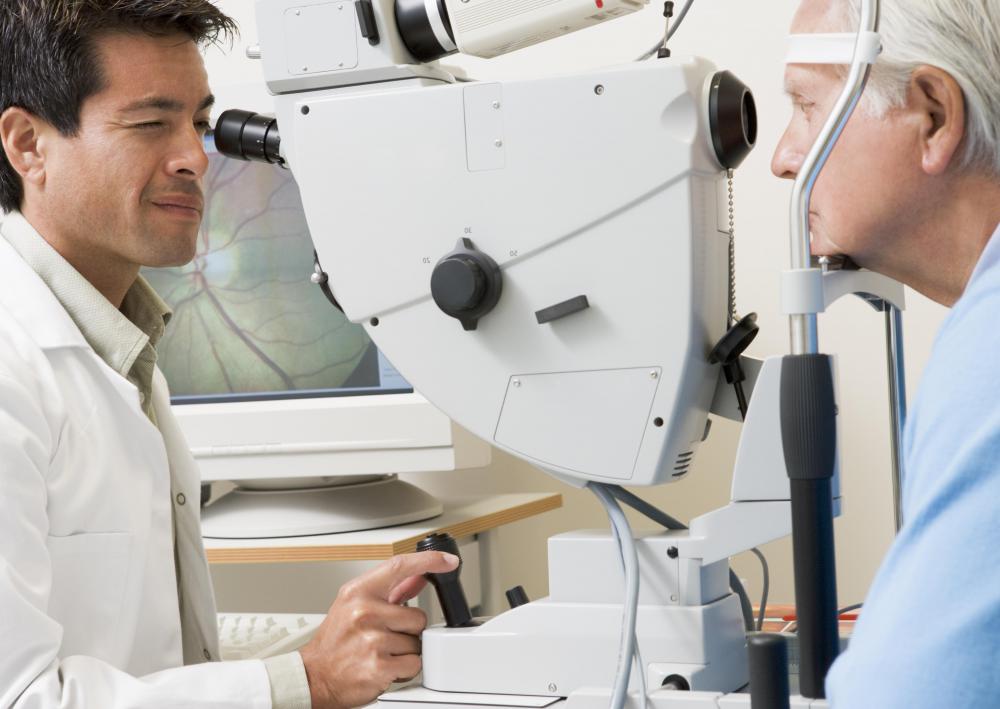
![An ophthalmologist may recommend surgery for older adults experiencing problems due to drooping eyelids.]() By: Monkey BusinessAn ophthalmologist may recommend surgery for older adults experiencing problems due to drooping eyelids.
By: Monkey BusinessAn ophthalmologist may recommend surgery for older adults experiencing problems due to drooping eyelids. -
![A number of surgical techniques may be used to reduce the effect of drooping eyelids.]() By: Peter Orsaeo SrA number of surgical techniques may be used to reduce the effect of drooping eyelids.
By: Peter Orsaeo SrA number of surgical techniques may be used to reduce the effect of drooping eyelids. -
![Some patients undergo multiple surgeries to fully correct drooping eyelids.]() By: danr13Some patients undergo multiple surgeries to fully correct drooping eyelids.
By: danr13Some patients undergo multiple surgeries to fully correct drooping eyelids. -
![Eye exercises may help treat slightly drooping eyelids.]() By: brankatekicEye exercises may help treat slightly drooping eyelids.
By: brankatekicEye exercises may help treat slightly drooping eyelids.




Discussion Comments
@ysmina-- My sister had ptosis of the right eye because of a sinus problem. After she had sinus surgery, the ptosis disappeared. This might be something to look into.
@fify-- I'm glad you had a successful surgery.
I can't have surgery for my drooping eyelid symptoms because the cause is still unknown. I seem to have a facial nerve problem on one side of my face. I'll be going through numerous diagnostic testing starting next week to figure out the problem. I just hope it's not a tumor or anything like that.
I had drooping eyelids when I was young. I think my eyes were inclined to it from childhood, but it became very apparent by the time I was in high school. I tried exercises first, as recommended by my doctor but they didn't help. Finally, during my senior year in high school, I had corrective droopy eyelid surgery to "lift" my eyelids.
It was the best decision I ever took. I found a great doctor who was in another state. My parents drove me there several times for consultation and finally for the surgery and a check-up post surgery. Everything went great and my eyelids look perfect.
I think that surgery is the best treatment, but I agree with the article that it has to be done by a good doctor or lots of things could go wrong.
Post your comments