
At TheHealthBoard, we're committed to delivering accurate, trustworthy information. Our expert-authored content is rigorously fact-checked and sourced from credible authorities. Discover how we uphold the highest standards in providing you with reliable knowledge.
How do I Treat a Jammed Finger?
 Michael Pollick
Michael Pollick
Michael Pollick
Many people have experienced the pain and swelling of a jammed finger, often while playing sports. Grabbing the ball the wrong way or driving a finger into a hard surface can strain the tendons in the knuckle. People with serious injuries should always contact a medical professional to ensure they receive the proper care, though less severe injuries may be treated at home. To treat a jammed finger at home, you should typically ice the finger, immobilize it with a splint, and use topical or oral analgesics and anti-inflammatories to reduce the pain and swelling.
Assessment

The first step in treating a jammed finger is to assess the damage. Obvious deformations, immediate bruising, or a being completely unable to move the finger could be signs of a serious fracture or dislocation. In cases like these, you should use a sling to immobilize the hand and go to the emergency room immediately. If the finger is painful but can move and is free of bruising or deformities, you should be able to treat it successfully at home.

If, at any time during treatment, the finger turns very red, blue, or white, it could be a sign of a serious problem. The swelling and pain should start to decrease after a few hours or a day, but if they don't, it could be a sign of a fracture. Numbness and tingling in the finger can also indicate a problem. You should seek medical care if you experience any of these symptoms.
Home Treatment

Patients may treat less severe injuries with the doctor-recommended RICE method: rest, ice, compression, and elevation. Typically, you should ice the finger first to reduce the pain and swelling. Adding ice to a sealable plastic bag usually makes a serviceable ice pack, and cold packs for medical use are also available at most drug stores. Don't put ice directly on your hand, because it can cause frostbite. Medical professionals generally recommend applying the ice for about 15 minutes at a time, with a 10 minute break between applications.

Rest involves immobilizing the jammed finger with a splint. Commercial ones are typically U-shaped aluminum sheaths with padding on the inside. You should gently straighten you finger and slide the sheath over it, wrapping gauze or medical tape around it to keep it in place. If you don't have a splint, you can also use wooden tongue depressors or craft sticks instead.

You may need to tape the injured finger to an adjoining healthy finger for added support; this is commonly done to treat a jammed finger that is too short to be splinted. The splint or tape prevents the finger from moving, allowing it to rest, and also provides compression, which helps reduce swelling.
Elevating the injury involves holding the hand so all of the fingers point upward. This helps excess blood and fluid drain from the injury, which may reduce the swelling. You can also rest your arm on a stack of pillows. The idea behind this is to keep the injured hand above the level of your heart, which makes it less likely that fluid will build up in the finger.
Aftercare and Pain Relief

Oral painkillers, such as aspirin or sodium naproxen, are often used along with ice to help alleviate pain. You can take a dose of most painkillers every four to six hours, though some medications may last eight to 12 hours. Sports creams that contain analgesics or warming agents may relieve muscle tension associated with the jammed digit. Applying the creams lightly helps keep them from soaking through the gauze on the splint.
Healthcare professionals often recommend switching from ice to heat treatments two days after the injury. Soaking your hand in a warm Epsom salt bath for about 20 minutes may help speed healing.
In most cases, a jammed finger heals within one to three weeks, although serious injuries being monitored by a medical professional may take up to eight weeks to heal. Don't force yourself to use the finger during healing, but let it rest. After a week or so, you can remove the splint briefly and very gently move the finger to see if it has improved at all, but if you feel anything other than mild discomfort, you should stop. If you don't notice any improvement after a week or so, it's a good idea to visit your healthcare provider. He or she may order an x-ray to make sure that the finger isn't broken.
Michael Pollick
A regular TheHealthBoard contributor, Michael enjoys doing research in order to satisfy his wide-ranging curiosity about a variety of arcane topics. Before becoming a professional writer, Michael worked as an English tutor, poet, voice-over artist, and DJ.
Learn more...
Michael Pollick
A regular TheHealthBoard contributor, Michael enjoys doing research in order to satisfy his wide-ranging curiosity about a variety of arcane topics. Before becoming a professional writer, Michael worked as an English tutor, poet, voice-over artist, and DJ.
Learn more...AS FEATURED ON:
AS FEATURED ON:


-
![Finger splints can immobilize a jammed finger while it heals.]() By: Rob ByronFinger splints can immobilize a jammed finger while it heals.
By: Rob ByronFinger splints can immobilize a jammed finger while it heals. -
![Epsom salts can help with a jammed finger.]() By: Jiri HeraEpsom salts can help with a jammed finger.
By: Jiri HeraEpsom salts can help with a jammed finger. -
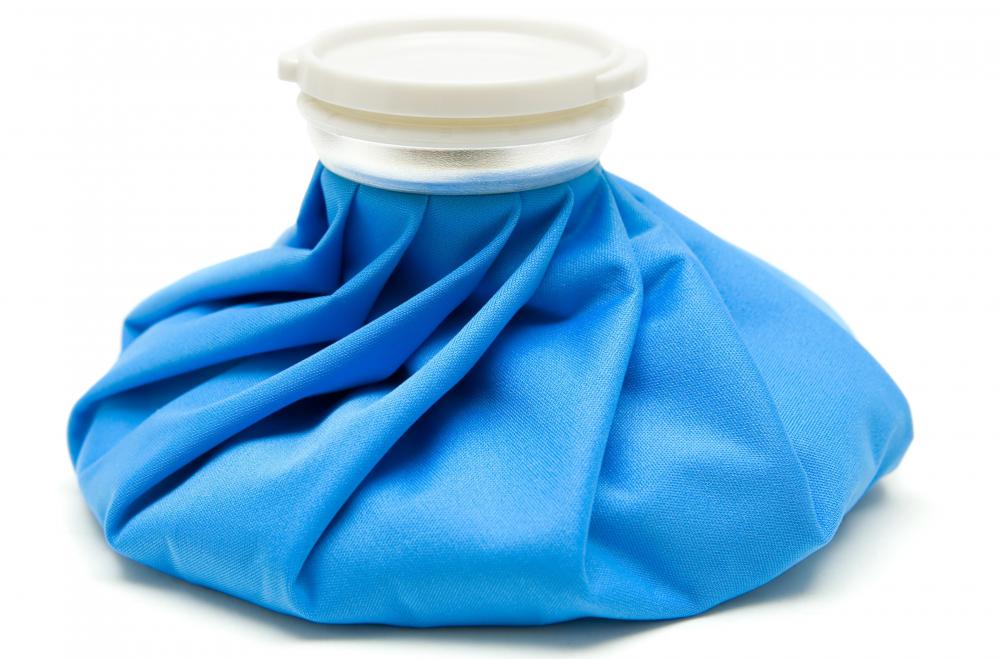
![An ice pack, which can help relieve pain from a jammed finger.]() By: Marc DietrichAn ice pack, which can help relieve pain from a jammed finger.
By: Marc DietrichAn ice pack, which can help relieve pain from a jammed finger. -
![Pain killers such as aspirin are used to ease the pain of a jammed finger.]() By: blueskies9Pain killers such as aspirin are used to ease the pain of a jammed finger.
By: blueskies9Pain killers such as aspirin are used to ease the pain of a jammed finger. -
![If there are signs of fracture or dislocation, a jammed finger should be treated at the emergency room.]() By: SeanPavonePhotoIf there are signs of fracture or dislocation, a jammed finger should be treated at the emergency room.
By: SeanPavonePhotoIf there are signs of fracture or dislocation, a jammed finger should be treated at the emergency room. -
![Wrapping gauze around a jammed finger can help keep the finger in place, allowing it to properly heal.]() By: design56Wrapping gauze around a jammed finger can help keep the finger in place, allowing it to properly heal.
By: design56Wrapping gauze around a jammed finger can help keep the finger in place, allowing it to properly heal.




Discussion Comments
Today I jammed my finger at football practice and I don't know what to do. I have a band concert to play and I play the flute. I cannot miss it. What do I do?
I am in a pickle! My 11 year old son jammed his pointer finger about two days ago at a football completion he was in. However, he didn't bother to tell me he did that until after his game later that same day. So I splinted it.
Yesterday during his football practice, one of his coaches pulled his finger to unjam it. Although his intentions were good, I feel it may have made it worse. His finger is again swollen and he was complaining it hurt. See, one thing you should know is my son has a high tolerance for pain. So when he hurts, he hurts. I again splinted it and taped it, elevated it and gave him ibuprofen for swelling and one Tylenol 3 for pain. I don't want to take him to the doctor if it is something I can fix from home. Please help me!
I jammed my middle finger today on my handball training. We were just passing the ball and it hit my finger a little too hard. That happens to me a lot so I thought it's nothing, but then I couldn't move it. I put ice on it when it was straight and then I couldn't bend it. Then I put ice on it while it was bended and then I couldn't straighten it our. It kind of looks bigger than my other finger and the veins are bluish. Help anyone?
I jammed my finger during a basketball game. I couldn't come out but it hurt like hell. I slept on it hoping to feel better, and in the morning it was swollen and black and blue. I can still move it and it feels better, but taping my finger hurts more then not taping it. Should I have iced it when it happened?
I jammed my thumb hardcore at work last night. It seemed to be dislocated so I pulled it back into place, but that wasn't such a good idea. This actually sent me into shock and I blacked out. It was my first time ever going into shock, and it was a very strange feeling.
I jammed my pointer finger on the left hand and I taped it, but it got fat. What do I do with it?
I jammed my thumb once and now every time I catch something hard thrown at me it jams again.
If you are a basketball player, white medical tape around the two fingers that are close together works best.
If the finger has been hurt/slightly swollen for months is it still helpful to use a splint?
I am a goalkeeper and I have had this type of thumb injury before. The only cure is to rest it. I had to give up six weeks of playing to make sure my thumbs healed sufficiently.
Do the same. Otherwise, you risk thumb arthritis, which is far worse than a thumb sprain!
P.S. I managed to sprain both during a game, because I did not stop after the first injury. I then tried to protect my injured thumb, and Voila!
I jammed my finger playing volleyball. It hurts very badly. What can I do to help it?
I injured my finger, the finger located at the right side of the pinky, right hand. I believe I got it from taekwondo, at first it did not seem serious, then one day later my finger began swelling, so I went to the health services office, and the doctor told me to soak it in hot water until i can see the pus coming out the finger. now i have a hard time typing and writing assignments. I need my finger healed.
I was playing basketball outside when all of a sudden the ball bounced to the ground and bounced up. at the same time i tried to reach and handle it, at first i couldn't feel it, then once i did, it hurt bad. I recently jammed my thumb, too. me and my little sister were hitting a balloon like a volley ball when suddenly i jumped up and she did also and missed the balloon so she swatted my thumb down really hard. it popped. is it broken?
my thumb hurts really bad. i hurt it playing basketball today and now i can barley move it.
i was playing football with my brother. he threw it hard and my finger got jammed and now it is completely straight!
but i jammed my thumb so i can't tape to another finger so i guess i have to go get a finger splint.
My thumb got jammed in basketball. It's been jammed for two or three weeks now. Should I seek medical help?
Last night i noticed my thumb was tendering but had no recollection of hurting it in any way. This morning i woke up and can barely move it, every time i do i get a sharp shooting pain through my knuckle. I took some tylenol and ibuprofen and iced it for 15 minutes. Should I be using ice or heat?
I jammed two of my fingers during the warm up of a football match because i was a goalkeeper it caught me off guard because one of my coaches shouted to me and there was no other goalkeeper sub so i played all the way through the game and the cool down it hurt like hell but i played through it.
I've also jammed four other fingers in other sports netball and dodgeball but I've only told my teacher about two out of the five fingers and the ones that ice on are the worst two.
I jammed my finger playing football. it is kind of purple around the joint. i don't know if it is broken or not. does ice help?
I jammed my finger playing football at school. When I got home, it really hurt to bend it, but it wasn't distorted or purple, so we left it alone. That night the veins in my finger started to turn purple, so we got a commercial splint and stuck it on there. Having worn it for about two days now, and it really helped with the pain and my finger's not purple anymore.
I jammed my pinkie finger really good playing football, to the point that the tip is bent over in a 45 degree angle, i have a boyscout finger splint on it and was wondering how long is it going to take to heal up or should i just go to the hospital to get one of those ugly things put on it?
i just shut my finger in my car door and it's all purple and infected. my dad heated up a nail on his heat gun and poked my fingernail, causing the blood to go out. it helped with the swelling but it does hurt to get your finger stuck in the door. But instead of opening the door back up, i pulled it out. Do i think my whole fingernail is going to fall off? i have something to look forward to, then -- other than school.
I am a joiner and i got my finger jammed in the door and the back end of my nail was pushed out. it has been three weeks now and i think the nail is dead but it doesn't seem to be falling out.
If you jerk your finger it won't help.
My finger is just stiff and i can't bend it. so what do i do?
i was trying to catch my dog and instead of hitting him my finger hit the ground hard! is that a jammed finger and if so how does it go away?
I jammed my finger and the nail went black and sort of half fell off but you see it doesn't even hurt. is that weird?
my finger is stiff and i can barely bend it.
If it sounds like a stupid, childish idea, it probably is. Popping the finger out of socket would only work if your finger was literally jammed in there; however, it isn't. A jammed finger just means it's sprained, and you'd probably think it crazy to pop a joint you just sprained. The ligaments in the joint in your knuckle are torn, and popping it could only make the problem worse.
i was told to jerk on it very hard and it will heal very quickly.
If it hurts too much pull on it very, lightly at first, then increase the amount of force you put on it over time.
What if your finger hurts too much to pull it away from the socket? I have a dancing competition in a week. I need my finger healed!
Perhaps this was the wrong thing to do, but as kids, when we jammed our fingers, albeit slightly, we simply pulled the jammed finger away from the socket and left it alone for a while. If the jam wasn't that bad to begin with, the finger would recover quickly. But pulling the finger away from the socket seemed to alleviate some of the immediate pain and speed that healing time up.
Post your comments