
At TheHealthBoard, we're committed to delivering accurate, trustworthy information. Our expert-authored content is rigorously fact-checked and sourced from credible authorities. Discover how we uphold the highest standards in providing you with reliable knowledge.
How do I Tell the Difference Between an Ingrown Hair and a Cyst?
Ingrown hairs and cysts have many similarities, often leading to confusion between the two conditions. Both can cause uncomfortable pockets of fluid underneath the skin that can create lumps visible on the surface. Both an ingrown hair and a cyst can also occur on various parts of the body. Each condition has different appearances, different symptomology, and different causes, however. Their treatments and outcomes may also vary.
As a hair grows, it can become tangled before it reaches the surface of the skin. When this condition occurs, the hair grows back towards the inner skin, fluid often builds up around the area, and an ingrown hair results. The skin growth — resembling a blister or pimple — may be painful and itchy, particularly if it becomes infected with pus and forms an abscess. Ingrown hairs can also recur and occur in clusters in some cases. The abnormal hair growth is generally increased by trauma to the skin area, scar tissue over the area, or improper shaving that causes the hairs to become jagged.

Cysts, on the other hand, are masses that usually arise from more uncontrollable factors, such as tumors, infections, inflammatory ailments, and even genetic conditions. Further, an ingrown hair and a cyst are different sizes, as a cyst may grow much larger than an ingrown pimple. Cysts can also occur further inside the body on or around vital organs. These types of cysts may be felt on the skin as colorless lumps or may only be uncovered via medical tests. Although one of the chief symptoms of an ingrown hair is pain and discomfort, symptoms of cysts may be nonexistent unless the mass pushes against an organ and causes pain.

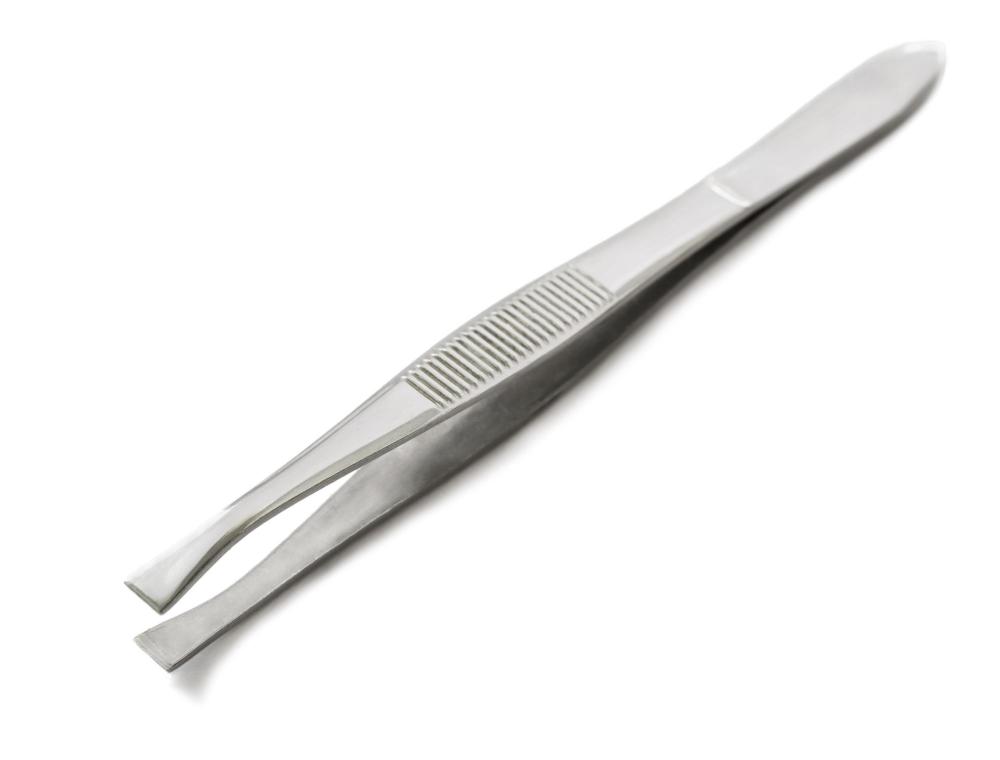
Treatments for an ingrown hair and a cyst usually differ as well. In the case of an ingrown hair, releasing the hair from its trapped state beneath the skin is most beneficial. This step may be accomplished by using tweezers to access the hair or through laser therapy in more severe cases. Fluid drainage or surgery may be necessary to treat a cyst, however. Antibiotics may be needed for infections arising from treating an ingrown hair or a cyst, and warm wet compresses are also useful in alleviating pain related to both conditions.

Any prolonged irritation should be examined by a medical professional. Dermatologists are certified to treat skin conditions and can best diagnose them. Advanced cases of either ailment can cause complications, and surgical intervention may be needed.
AS FEATURED ON:
AS FEATURED ON:


-
![An ingrown hair.]() By: F.C.G.An ingrown hair.
By: F.C.G.An ingrown hair. -
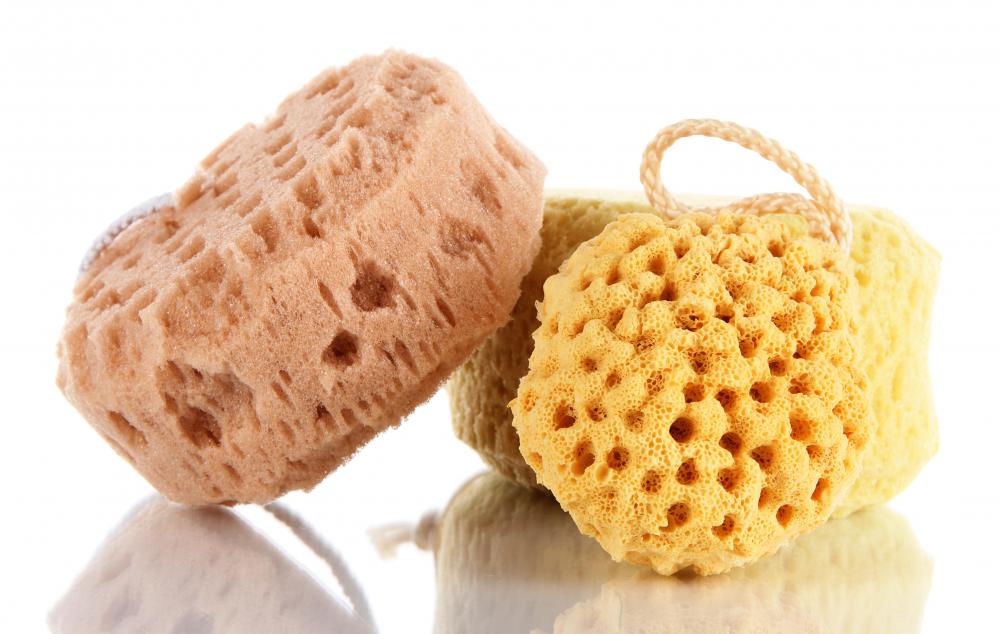
![Exfoliating with a wet sponge may help prevent ingrown hairs.]() By: Africa StudioExfoliating with a wet sponge may help prevent ingrown hairs.
By: Africa StudioExfoliating with a wet sponge may help prevent ingrown hairs. -
![Fluid drainage or surgery may be necessary to treat a cyst.]() By: Radu RazvanFluid drainage or surgery may be necessary to treat a cyst.
By: Radu RazvanFluid drainage or surgery may be necessary to treat a cyst. -
![Ingrown hairs may be removed with sterilized tweezers.]() By: TarzhanovaIngrown hairs may be removed with sterilized tweezers.
By: TarzhanovaIngrown hairs may be removed with sterilized tweezers. -
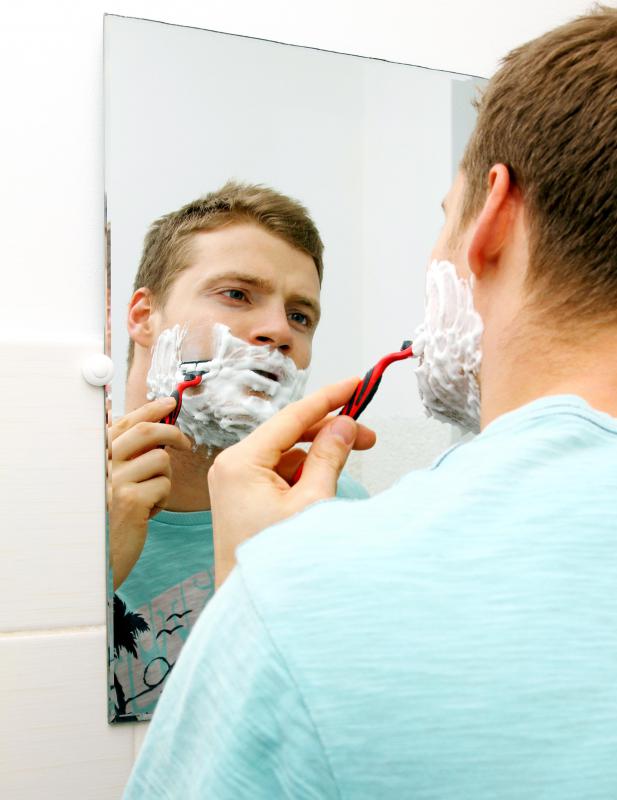
![Ingrown hairs may occur as a result of shaving.]() By: ronstikIngrown hairs may occur as a result of shaving.
By: ronstikIngrown hairs may occur as a result of shaving. -
![Laser therapy can be used to remove an ingrown hair.]() By: Raymond GregoryLaser therapy can be used to remove an ingrown hair.
By: Raymond GregoryLaser therapy can be used to remove an ingrown hair. -
![Cysts may develop on the hands.]() By: nebariCysts may develop on the hands.
By: nebariCysts may develop on the hands. -
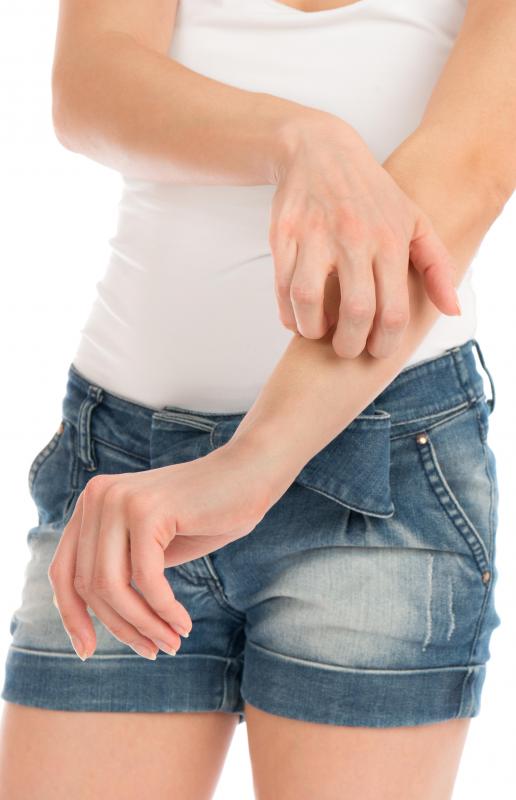
![Ingrown hairs can become painful and itchy.]() By: Dmitry LobanovIngrown hairs can become painful and itchy.
By: Dmitry LobanovIngrown hairs can become painful and itchy. -
![Treatment options for a cyst include the use of a compress.]() By: nitoTreatment options for a cyst include the use of a compress.
By: nitoTreatment options for a cyst include the use of a compress.




Discussion Comments
I can actually run my fingers over my stomach or inner thigh and feel a raised formation. What I do after that is, I pick it out. It looks like a pod of some sort. Grayish with black, and its rough to the touch. I examine the end of it and it appear to have a little hair attached. I live with about 30-40 of these on my body at once. I'll tell you I have extensive scarring on certain parts of my body and I'll never know what its like to wear a bikini. It's totally embarrassing and I wear loose clothing and all that. I'm in my 30's and can't wear jeans because they will appear worse. I live in yoga pants now.
No doctors can figure it out and I've googled the hell out of "ingrown hair skin pods". I don't know what they're called but I'm pulling them out and saving them for the doctor. Any feedback you guys can give would be greatly appreciated. I'm applying clyndamycin gel daily to almost my whole body. I'm just tired of the daily regimen of this. Thanks!
The best thing to do if you get ingrown hairs is to buy one of the better ingrown hair remedy gels and apply it when necessary.
I found a really good one through carefully reading a bunch of reviews on Amazon. It's quite a relief to feel like I have control over my skin.
@pastanaga - They can be painful when they are on the inside of you as well. I once went to the doctor because I was having some bad pain in my lower stomach and I was convinced it was the beginning of appendicitis.
The doctor did what was considered normal under that kind of complaint and pressed her hands into my stomach to try and determine what was wrong. Unfortunately, what was wrong was that I had a cyst on my ovary, and she burst it with her examination. Although it didn't turn out too badly, because it must have been fairly small. I've heard of women who had to go to the hospital because the internal bleeding wouldn't stop from a burst cyst, but after a couple of days I was fine.
While a cyst on the inside of your body might be painless, they can be very painful if they are on the surface, where ingrown hairs usually are. For some reason I sometimes develop cysts around the corner of my eyebrow, possibly because my glasses tend to irritate the skin there (unfortunately, I can't wear contacts either). I try to disinfect my glasses regularly, but it doesn't always work.
When it does happen, the cyst can be very painful. It's apparently partly because the fluid pushes aside all the other cells.
Most of the time I can treat it with hot compresses and it goes away fairly quickly, but once or twice I've had to go to the doctor to get it drained. It's a very big annoyance, but generally seems to be harmless.
I don't think it's hard to tell them apart. Cysts are larger than ingrown hairs and much more painful too. And if a cyst is because of a bacterial infection, it won't be just one cyst but several of them. Or the cyst will keep coming up in the same spot.
Ingrown hair bumps don't do that. I usually don't get an ingrown hair on the same spot twice.
Does anyone know the difference between the kind of pus that each contain though? Why is it sometimes clear and sometimes yellow?
@ZipLine-- Sometimes, ingrown hair infections happen where the ingrown hair resembles a cyst more. That's probably why you're confused.
One thing to keep in mind is that sometimes the ingrown hair can be seen under the skin which is the best way to know if what you're seeing is an ingrown hair or a cyst. Also, cysts tend to leak pus continuously. Whereas, an ingrown hair will not do that. If it has liquid or solidified oil in it, it will only release once.
Treatment wise though, they are similar. They both require extraction and or drainage and proper cleansing.
I have trouble telling apart ingrown hairs and cysts because they both have fluid which releases when popped. So, to me they look the same.
Also, the skin on top of the ingrown hair tends to run pink or red much like a cyst does.
Post your comments