
At HomeQuestionsAnswered, we're committed to delivering accurate, trustworthy information. Our expert-authored content is rigorously fact-checked and sourced from credible authorities. Discover how we uphold the highest standards in providing you with reliable knowledge.
How do I Reseed a Lawn?
If your lawn has brown spots, has bare spots or is thinning, it might be time to reseed it to achieve a lusher, healthier lawn. Reseeding does take some preparation and planning, but can it improve your home's curb appeal, its value and even your relationships with your neighbors. To reseed your lawn, you should do it at the proper time, prepare your lawn for reseeding, choose the best grass seed for your area and use the appropriate process for reseeding.
Timing

You can reseed a lawn at almost any time of the year, if necessary. The grass needs adequate time to get established before winter, however. Ideally, reseeding should be done several weeks before the first frost but after the scorching heat of summer.
Preparing Your Lawn
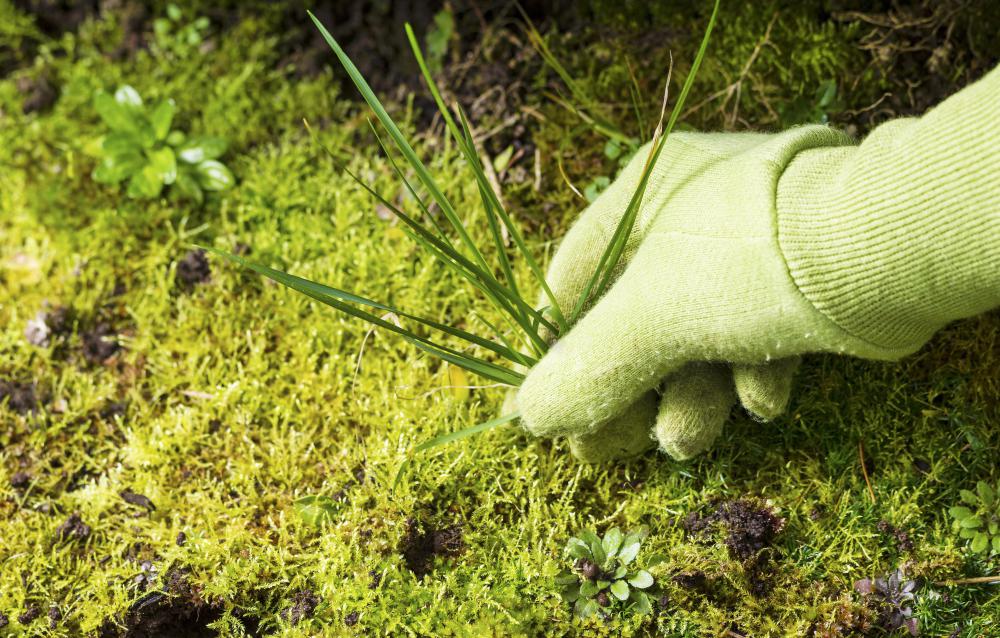
Before you reseed the lawn, you must first remove all of the debris and dead grass from the area. Remove all of the weeds as well, by manually pulling them or using weed killer. If you use weed killer, be sure to follow the manufacturer's directions, which should specify how long it will take to be effective before you can reseed.

Next, loosen the soil with a hard rake. For extremely compacted soil, you might need to rent a machine to aerate the soil, which removes small plugs of dirt and turf. This allows water and nutrients to better penetrate the soil and nourish the roots of your lawn.
If there is excessive thatch, which is dead grass and roots, you might need to rent a power rake or a de-thatcher to remove the dead material. If this task is too daunting or physical for you, most lawn care companies offer aeration and de-thatching services. Lawn experts recommend performing this maintenance on your lawn every few years to ensure a healthy foundation for your lawn.

If your soil is in extremely poor condition, you might need to add some compost or new soil to prepare it for new grass seed. This will also depend on the type of soil that you have and where you live. You can consult your local nursery or garden center for advice about the type of soil that you have. In some cases, you might need to completely renovate your lawn, which would entail killing the existing lawn, tilling the soil, flattening the area and reseeding the lawn from scratch.
Reseeding

You should use a grass seed that is similar to the grass that is already in your lawn and is appropriate for the climate in your area. Using seed that matches the existing grass will prevent unsightly spots where one area might be greener or have smaller blades than another. Scattering the seed by hand is sufficient, but if you are reseeding an entire lawn, it is better to use a mechanical spreader to ensure even coverage. The grass seed packaging should include instructions for the amount of seed to use for the dimensions of your lawn.

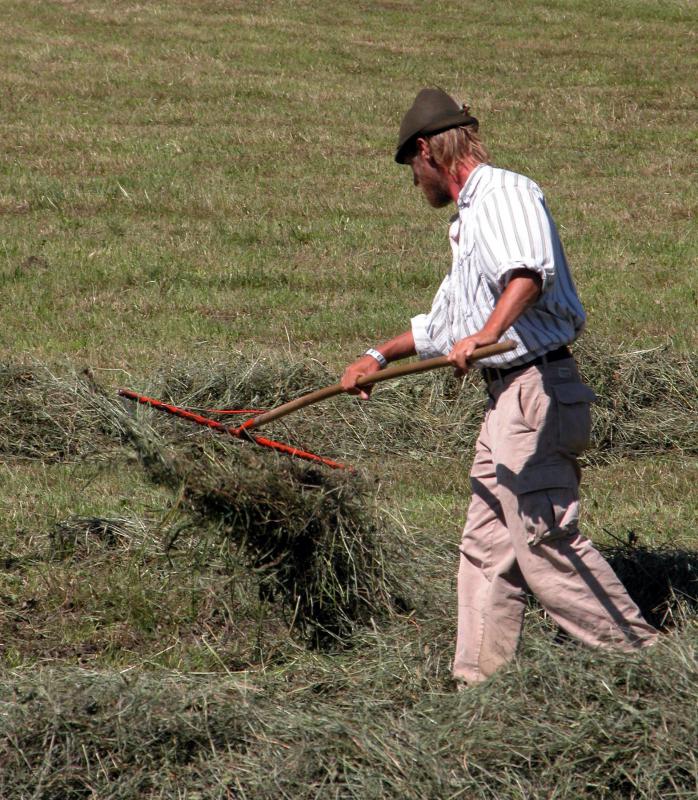
Rake the seed into the soil so that it makes good contact with the soil. If the seed is lying on top of the existing grass, it might not sprout and could become the next meal for birds that are nearby. If birds are likely to be a problem, you can cover the seeded area with weed-free straw or hay or a little bit of mulch. Some garden care centers recommend applying a starter fertilizer to the lawn after reseeding.
After Reseeding

Once the lawn has been reseeded, it is important to keep the soil moist by watering it twice a day. The grass will germinate in about two weeks. When the grass starts to grow, mow it. The ideal length for grass is 2 to 2.5 inches (about 5.1 to 6.4 cm), rather than having closely cropped grass. This encourages deeper rooting, which is especially important with new lawns.
While your recently reseeded lawn is getting established, make sure that it doesn't receive heavy traffic — try to keep pets and kids off it until it is strong and healthy. Be sure to maintain your newly refurbished lawn by mowing regularly, by applying weed and feed and by keeping it watered during droughts or hot weather.
AS FEATURED ON:
AS FEATURED ON:


-
![Bare spots in a lawn indicate the need to reseed.]() By: ElenathewiseBare spots in a lawn indicate the need to reseed.
By: ElenathewiseBare spots in a lawn indicate the need to reseed. -
![Pulling all weeds out of the lawn is an important step before reseeding.]() By: tab62Pulling all weeds out of the lawn is an important step before reseeding.
By: tab62Pulling all weeds out of the lawn is an important step before reseeding. -
![The grass seed one uses should be similar to the grass already in the yard.]() By: ElenathewiseThe grass seed one uses should be similar to the grass already in the yard.
By: ElenathewiseThe grass seed one uses should be similar to the grass already in the yard. -
![Watering twice a day is crucial to the growth of new grass.]() By: Vera KuttelvaserovaWatering twice a day is crucial to the growth of new grass.
By: Vera KuttelvaserovaWatering twice a day is crucial to the growth of new grass. -
![A lush new lawn can greatly improve the overall look of a house.]() By: Konstantin LA lush new lawn can greatly improve the overall look of a house.
By: Konstantin LA lush new lawn can greatly improve the overall look of a house. -
![Lawn care professionals recommend dethatching the area before reseeding.]() By: viappyLawn care professionals recommend dethatching the area before reseeding.
By: viappyLawn care professionals recommend dethatching the area before reseeding.



Discussion Comments
Is Nov. 1 in Salt Lake Valley, Utah too late to reseed?
I am sowing a big lawn ((over 0.1 Ha). I have it ploughed and harrowed. Should I roll it with a farm roller and if so, should I roll it before or after sowing the seed?
Please help. I wanted to reseed/over seed my unhealthy lawn, and I looked at several videos to find out the how and when, etc.
I mowed, aerated, de-thatched, put down seed, and the whole reason I'm here is, I also put down a "weed and feed" fertilizer. I spent two days doing all of that. Nothing in all of the videos I watched said not to use a weed and feed at the same time as reseeding. They just said that I needed to put down a fertilizer with the seed.
Now that I have done it, after the fact,I find out that all of that seed will just be wasted because the herbicide in the "weed and feed" will just keep the seed from germinating, and I am going to have to wait a minimum of four weeks before reseeding. At least that is what I have gathered.
I am so ticked off and mad at myself for not catching this before paying for and wasting the seed, and my time.
Is there anything else I can do instead of waiting another month? It's now the end of September. I paid to rent the darn aerator also, and now I'm worried that it will have been a waste as well. Thank you for any feedback from anyone!
When reseeding, I spread two inches of soil over my entire lawn instead of 1/2 an inch. Will the existing grass below still grow? I'm a bit worried I did more harm than good. --P
Why is it that I get new seed for bare spots, sprinkle potting soil over that, water it, and nothing happens? Is the seed bad? I got four bags of seed, in all, and nothing happened.
We have centipede grass and it really looks bad. We also have briers and rhizomes that when dug up look like potatoes. Some have been 6-8 inches in diameter and 4 feet long and two feet deep in the ground. I would like to know how to get rid of all of these. Nothing seems to work
We bought a house last year and the lawn was a mess; more weeds and moss than grass. We dug up the moss and weeds and tilled the soil, added limestone, added the grass seed then covered it with straw. The problem is that the straw is growing and we have a lot of bare patches. How do I get rid of the growing straw?
similar problem as above! i have a full sunny garden, and three years ago it was a field of blackberry bushes. well, as you can imagine that was a nightmare to clear and took two years to rid of the young seedlings coming up but there is no sight of that past now.
my problem is i put down a lawn with the best hardwearing lawn seed from a good reputable, grass seed company. It's hardwearing lawn seed, and it comes through absolutely fab -- even and very dense, and throughout the summer it is wonderful it looks healthy and fine. Then winter arrives and when i go to venture into the garden,to start pruning, which incidentally is an old lilac tree, the lawn is very sparse and the majority has gone and there is only soil left.
i wonder if any one else has a problem like this. if so can you please let me know. i was under the impression that once you laid a lawn it would probably come back most every year.
i understand that after maybe a few years you may have to re-seed, but every year? or is that what one has to do? is there a feed as well as the seed that might help to retain the lawn to the next spring?
I would appreciate some tips before once again laying the grass seed in april. 10 thanks. no, the birds don't take the seed. i make sure of that. it is tight after laying the seed.
To keep our yellow lab from digging holes in the backyard, I pick up and deposit her poop in the holes. She stays clear of those areas.
I have a similar issue:
1. The lawn was put in last fall, seeded and covered with straw.
2. Winter rye was planted along with fescue, the winter rye came up and is now fading away while the fescue is beginning to grow.
3. We had a lot of rain and run off and I think overseeding might be appropriate/needed (we have also installed french drains).
Q1. Should I overseed or wait a bit and see what the fescue does, if I wait how long is to long?
Q2. If I overseed should I rake up all the excess hay that is still on the ground? From reading this article it appears so (my poor back) but the firm that installed the lawn said not to so I am confused.
Any input would be appreciated. Thanx
I moved into a new development, and the builder put down grass seeds along with the straw. However, I have a lot of bare spots, and a lot of left over straw. I have tried raking the excess straw but that just left more bare spots. I have reseeded recently. Still waiting on some improvements. any suggestions?
My grass is 1-2" tall now. Do I leave the hay I spead to rot or rake it up now?
Last fall I planted a lawn in my front yard from scratch. My husband added steer manure and tilled the entire lawn and leveled it off. But now, I have a problem. We have a lot of weeds due to the manure, sheeeesh! I told him. lol Anyway, I'd like to thicken the lawn a bit, should I remove the weeds that are existing first?
I live in Northern California and not sure if I should, it's early in the spring. Or should I just seed it again and kill the weeds this fall? The lawn actually looks good. I just need to get those pesky things off my lawn.
please help. Sandy
The best way to reseed a lawn is:
1. Buy some seed.
2. Pour it over your lawn.
It would be better to break up the soil a little bit because it is likely your dog has 'compacted' the soil, and that will make it difficult for the grass to root into that hard soil. If you can just rough up the top half inch or a bit more than that you can then sprinkle seed which will then make better contact and will root easier. You can do that with a good rake or a 'spading fork'. Keep your seed moist - do not let ungerminated seed dry out.
The problems are 1) keeping your dog out of the area while the grass grows, and 2) getting your dog to stop ruining the grass.
It seems to me the only way to keep the dog from doing that is not let the dog out in the yard. You might also consider taking the dog for a run to get it tired so it doesn't have that pent up energy it wants to burn off. Is it possible the dog is too big for the space? If so, you might think about doing the right thing by the dog and letting it live where it will be better off.
As far as the landlord is concerned, if it was me, I would promise to re-seed the lawn before I moved out, and hope that would satisfy him. If he agrees to that, then I wouldn't even bother to repair the lawn as long as the dog is going to live there. What would be the point?
Lemme know if that helps...
I rent my house and I have a back yard with grass. My dog runs around and around in circles and wears out the grass so that now there are big brown spots on the grass. I want to fix it so my landlord doesn't get mad. Can I just put grass seed on that part? Is there any good way to stop my dog from wearing out the grass again?
Anonymous asks if it is too late in the season to weed & feed the lawn in East Tennessee.
The answer is yes, it is too late to do that. The reason is the weeds are all dying anyway, and it would be a waste of money to use a weed killer. It WOULD be a good idea to fertilize, though, especially if you have had a soil test done, and know what nutrients are lacking.
Bear in mind the peat moss will affect the pH of the soil to the acid side. I like to add peat moss myself to the lawn, but I always use lime with it to counter balance the acidity. But, then again, I know my soil. You should get a soil test done - contact your county extension agent for the "how's and why's". It's worth the money because it will save you from having to put stuff on the lawn it don't need.
Come spring time if you want to put down a "Weed Preventer" do that around Valentine's Day for best results.
Also, you might think about being an organic lawn person - there's enough poisons in the ground already. Think about using Corn Gluten Meal for the Weed Preventer - it's more expensive, but it doesn't harm the environment.
I have reseeded my lawn and I am going to mow it for the first time today. Is it too late in the season to weed & feed it now? I live in East Tennessee.
Regarding the post by trimin15 (I wish I knew when it was posted)the presence of moss in a lawn is a sign that area of the lawn is not getting enough sun, which is probably why your efforts were not met with success. trimin said "it has been over a month now the new grass seed does not grow well." That's more evidence of a lack of sufficient sunlight.
It would be helpful to know more about the lawn: where is it? what zone would that be? can anything be done to bring in more light, such as pruning tree branches?
Over a month ago I thatched my whole lawn because it had mosses and brown spots. I cleaned up all the debris after I thatched then I spread Peat Moss over the thatching areas and I raked it nicely. After I did that, I applied Starter Fertilizer then I new grass seed. However, it has been over a month now the new grass seed does not grow well. It does not seem to grow much. I don't know why. Did I do something wrong or skipping step of one another?
Post your comments