
At WiseGEEK, we're committed to delivering accurate, trustworthy information. Our expert-authored content is rigorously fact-checked and sourced from credible authorities. Discover how we uphold the highest standards in providing you with reliable knowledge.
How Do I Recognize Blisters from an Allergic Reaction?
The most accurate way of recognizing blisters from an allergic reaction is to take note of their appearance and of what you were doing before they appeared. Most allergy-related blisters will develop in clusters, so if you have a single blister, you probably are not be having an allergy reaction. Actual blisters and allergy-related blisters are also different in appearance. An allergic reaction also usually has a number of other symptoms.
One way to recognize blisters caused by an allergic reaction is that they usually form in groups or clusters. While most blisters form due to friction or injury to one particular area, such as from shoes rubbing the back of your heel, allergy-related ones are not typically formed in response to an injury. Most times, you will notice several blisters formed in one area rather than just one solitary lesion.

The appearance of blisters from an allergic reaction may also be different from other forms. They often form directly over an area of skin that was exposed to an allergen. For instance, blisters that form in response to henna temporary tattoos typically only form directly over the painted area. If you have sores that look different than most, you may have hives. These are bumps that appear on the skin and they resemble pimples, although they don’t usually have whiteheads.

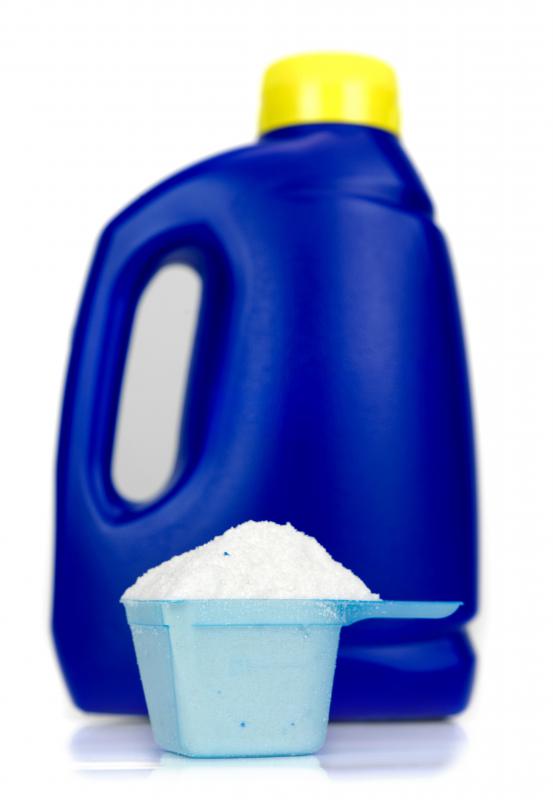
If you notice blisters anywhere around your body and you know that you have recently used a new laundry detergent, soap, or lotion, there is a good chance you are allergic to it. This is one of the best ways to tell the difference between allergy blisters and others. Pay close attention to the products you use, and try to stop using anything you think may be causing a reaction.

Take note of any other symptoms you may be having as well. Skin redness or dryness, itching, oozing, and general irritation are all signs of an allergic reaction, as are sneezing, itchy and watery eyes, stuffy nose, and wheezing. These will usually be temporary and are not serious.
Occasionally, signs of a severe allergic reaction may also develop. These can include shortness of breath, dizziness, heaviness in the chest, nausea, and even fainting. Shock may also occur in very serious cases. If any of these symptoms appear before or shortly after blisters appear, you may be experiencing anaphylactic shock and should seek medical attention right away.
AS FEATURED ON:
AS FEATURED ON:









-
![Some laundry detergents can cause skin reactions.]() By: Kitch BainSome laundry detergents can cause skin reactions.
By: Kitch BainSome laundry detergents can cause skin reactions. -
![Blisters from an allergic reaction to henna will form only over the painted area.]() By: videorootBlisters from an allergic reaction to henna will form only over the painted area.
By: videorootBlisters from an allergic reaction to henna will form only over the painted area. -
![A severe allergic reaction can include shortness of breath.]() By: nuiikoA severe allergic reaction can include shortness of breath.
By: nuiikoA severe allergic reaction can include shortness of breath. -
![If blisters are followed by symptoms of anaphylaxis then emergency medical care is necessary.]() By: Monkey BusinessIf blisters are followed by symptoms of anaphylaxis then emergency medical care is necessary.
By: Monkey BusinessIf blisters are followed by symptoms of anaphylaxis then emergency medical care is necessary. -
![Consulting 911 can be helpful in suspected cases of a severe allergic reaction.]() By: Tatyana GladskihConsulting 911 can be helpful in suspected cases of a severe allergic reaction.
By: Tatyana GladskihConsulting 911 can be helpful in suspected cases of a severe allergic reaction. -
![Skin blisters may be caused by an allergic reaction.]() By: librakvSkin blisters may be caused by an allergic reaction.
By: librakvSkin blisters may be caused by an allergic reaction. -
![Signs of an allergic reaction may include sneezing and runny or stuffy nose.]() By: Chepko DanilSigns of an allergic reaction may include sneezing and runny or stuffy nose.
By: Chepko DanilSigns of an allergic reaction may include sneezing and runny or stuffy nose.





Discussion Comments
I got a blister from a yellowjacket sting. The sting also made me feel kind of nauseated and dizzy. It wasn't a full-on allergic reaction, thank goodness, but I felt pretty bad, and that blister hurt like the devil!
I went to an urgent care clinic because I felt so awful, and the doctor gave me a shot of antihistamine and told me to keep an epi-pen around in case I got stung again and had even a mild reaction. I've been stung by a red wasp since then, but didn't have a reaction other than the pain from the sting.
My husband got blisters from a new laundry detergent he used. He really broke out and had hives and blisters. I had to dose him up with Benadryl. Now, we usually use the detergent that's labeled "free" because it usually doesn't have color or fragrance added. I don't know why you need color in a detergent anyway.
I also went ahead and replaced all our soap with Ivory soap and he uses a "free" shampoo, in that it doesn't have color added. I'm not as sensitive to that kind of thing. I don't usually have a reaction, but he sure does!
Post your comments