
At BeautyAnswered, we're committed to delivering accurate, trustworthy information. Our expert-authored content is rigorously fact-checked and sourced from credible authorities. Discover how we uphold the highest standards in providing you with reliable knowledge.
How Do I Recognize a Wart or Callus?
A person can recognize a wart or callus by checking the location and color of the growth. Differences in the top layers of the lesions also sometimes are useful to tell them apart. When the problem appears or goes away is another indicator, because warts are viral, whereas calluses are the result of repeated, excessive friction. Trying simple removal methods, such as filing the dead skin away, provides more clues, but if a person still can't tell what the bump is, a medical professional can take a look and make a final diagnosis.
Location
Calluses form in areas where the skin experiences frequent pressure or friction. The most common locations are on the feet and hands, but they also appear on other areas, such as the knees or elbows, to a lesser degree.

Warts can appear almost anywhere on the body, but certain types are associated with different regions of the skin. The plantar variety, for example, are found on the bottom of the feet, while condyloma appear mainly around the pubic area. Periungual types grow near the nails of either the toes or fingers.
Surface Appearance
One good way to tell the difference between these lesions is to look at the surface of the growth. All calluses have top layers that are hard, thick and somewhat bumpy. The upper parts of warts usually are smooth and flat, although some of them might look a little rougher.
Color
Calluses generally have a somewhat yellow or gray color. Warts have many color variations, including gray, but expanding to brown and even pink. Some of them have dark specks throughout, or they might have a single dark spot in the center.
Origin and Transmission

Warts are caused by various forms of the human papillomavirus, better known as HPV. The exact strain of HPV a person has is largely what determines where the growths will appear. They usually are spread by physical contact, but a person can go months or even years after being infected before symptoms show up. It, therefore, isn't possible in many cases to determine exactly how or when the virus was transmitted. When the skin problem finally does appear, it tends to be somewhat abrupt, with the raised spots forming quickly.

Calluses are caused by repeated stress on an area of the skin rather than a pathogen like a virus or bacteria. They are simply the body's way of trying to build up some protection and, therefore, are somewhat beneficial. These structures are never contagious and cannot be passed from one person to another. Skin redness, irritation and blisters often show up first, so a person almost always has some warning prior to getting one.
Duration

When a person's body is able to suppress or kill the HPV strain that is causing a wart, the growth typically fades over time. If the immune system cannot keep the infection under control, however, the lesion can remain on the skin indefinitely. By contrast, a callus will soften and go away as soon as a person is able to keep that area of the body from getting so much friction. It can take time for it to disappear entirely, depending on how thick it's become.
Removal and Treatment

Due to the differences in how these conditions start or spread, a person sometimes can tell if he is dealing with a wart or callus by what happens when the growth is manually filed or cut off. Doing this spreads the former kind of lesion in many cases, but it is an effective removal method for the latter, which come back only if someone continues to put friction in the same area. People often will soak or soften the area with lotion before using these techniques.

With HPV being the source for warts, the best way to treat one is to suffocate the virus in some way. Covering it with tape or nail polish might do the trick in some cases. Experts also recommend applications of salicylic acid or freezing the growth with an over-the-counter propane solution.
Final Differentiation
Healthcare professionals typically will be able to offer an initial diagnosis about a wart or callus just by looking at it. They usually make the final call after getting additional information such as when the growth appeared. If the medical professional still isn't sure which one it is, the next step is to take a biopsy. This procedure takes a tiny amount of tissue out of the growth for examination in a lab.
AS FEATURED ON:
AS FEATURED ON:


-
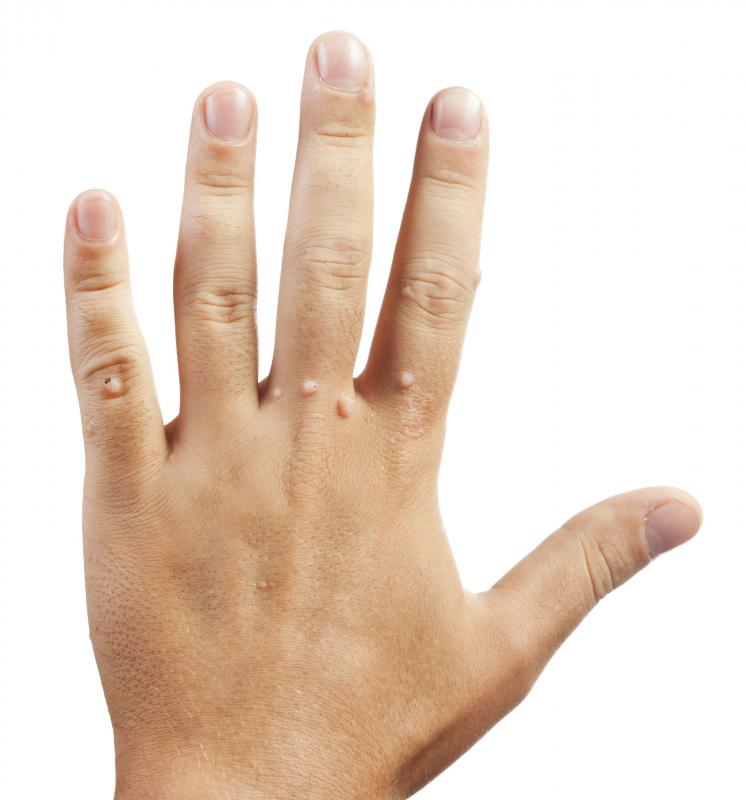
![Warts on a hand.]() By: Tiler84Warts on a hand.
By: Tiler84Warts on a hand. -
![A person applying medicine to a wart.]() By: leschnyhanA person applying medicine to a wart.
By: leschnyhanA person applying medicine to a wart. -
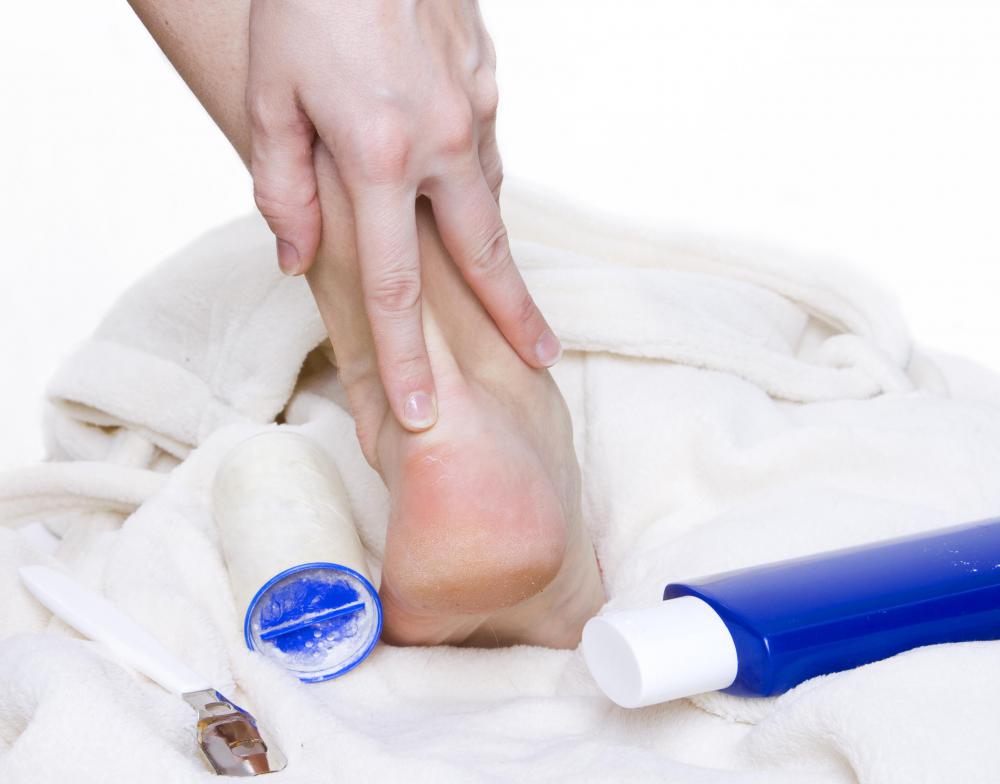
![Calluses occur from repeated stress on the skin, such as a shoe rubbing on the back of the foot.]() By: amaximCalluses occur from repeated stress on the skin, such as a shoe rubbing on the back of the foot.
By: amaximCalluses occur from repeated stress on the skin, such as a shoe rubbing on the back of the foot. -
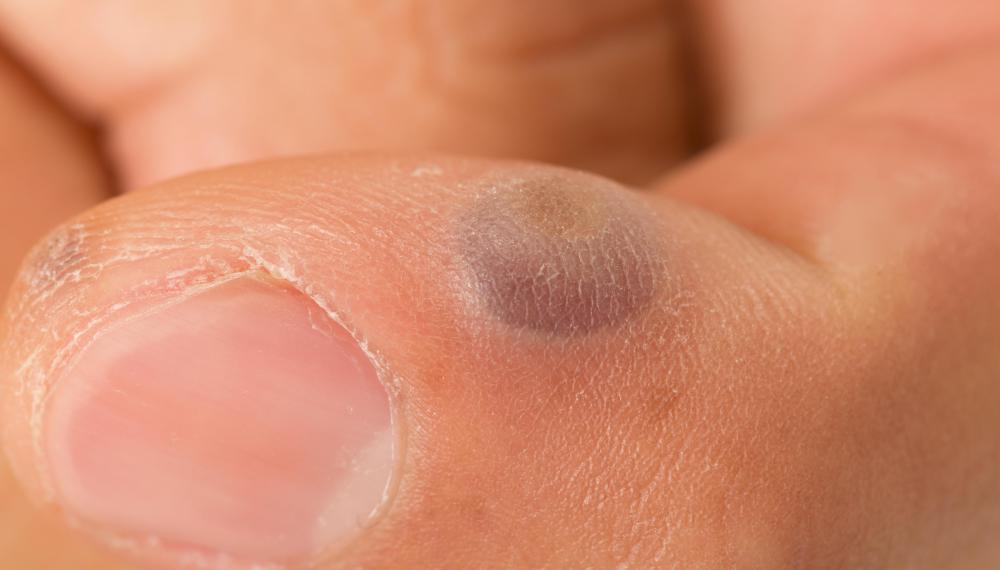
![Freezing warts with liquid nitrogen often causes blisters to form where the treatment was performed.]() By: F.C.G.Freezing warts with liquid nitrogen often causes blisters to form where the treatment was performed.
By: F.C.G.Freezing warts with liquid nitrogen often causes blisters to form where the treatment was performed. -
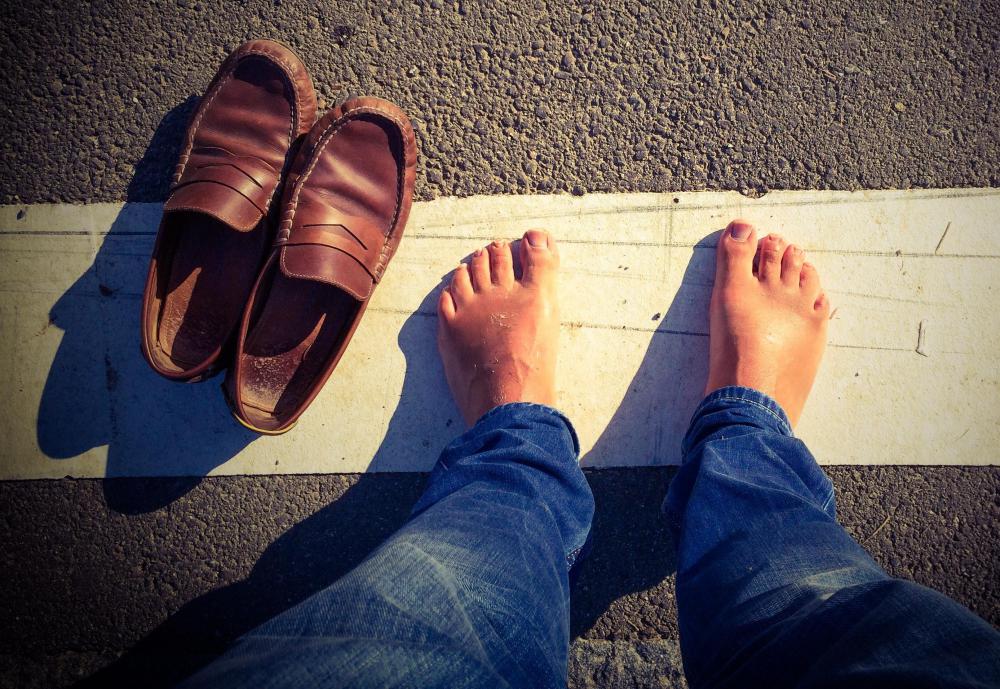
![Plantar warts grow on the soles of the feet, and may be avoided by refraining from walking barefoot in public places.]() By: Jürgen FälchlePlantar warts grow on the soles of the feet, and may be avoided by refraining from walking barefoot in public places.
By: Jürgen FälchlePlantar warts grow on the soles of the feet, and may be avoided by refraining from walking barefoot in public places. -
![Both calluses and plantar warts can appear on the balls of the feet, as well as other areas of the sole that are under constant pressure when a person is standing.]() By: Arve BettumBoth calluses and plantar warts can appear on the balls of the feet, as well as other areas of the sole that are under constant pressure when a person is standing.
By: Arve BettumBoth calluses and plantar warts can appear on the balls of the feet, as well as other areas of the sole that are under constant pressure when a person is standing.


Discussion Comments
@SarahGen-- Growths on the soles of the feet are the hardest to diagnose. A dermatologist can diagnose it with ease, but they've seen so many of them!
Where exactly is the growth located? If it's on the ball of the foot, on the heel or on the side of the big toe, it's probably a callus. Calluses develop on these areas because these are the spots where friction occurs while walking.
If the growth is elsewhere, it might be a wart. Warts can grow quite large, but they usually start off small. Calluses take longer to develop but tend to be wider. Calluses also have a cracked appearance, whereas warts are almost smooth.
I have something on the sole of my foot. I have no idea whether it's a wart or callus. I looked up pictures and it resembles a wart and a callus. Any ideas on how I can figure this out?
I realized that I have warts when the bump on my hand kept growing and multiplying. First, I had just one bump, then the bump got bigger and a second one popped up next to it. I should have realized before it got to this point but I've never had warts before.
Anyway, I bought some over the counter wart treatment and it dried up the warts fairly quickly. I do have some small scarring/discoloration though.
Post your comments