
At InfoBloom, we're committed to delivering accurate, trustworthy information. Our expert-authored content is rigorously fact-checked and sourced from credible authorities. Discover how we uphold the highest standards in providing you with reliable knowledge.
How do I Know if I Am Buying Sweatshop Free Clothing?
 Mary McMahon
Mary McMahon
Mary McMahon
There are a number of ways to know that you are buying sweatshop free clothing, ranging from using ethical consumer guides to purchasing clothes directly from their producers. By being more aware of the use of sweatshops in the garment trade, you can also help to pressure conventional clothing manufacturers. Consumer demand often results in major industry shifts; by stating a preference for clothing that doesn't come from sweatshops, you can encourage more companies to adopt ethical labor practices.
Garment labels are an excellent place to start. One of the best signs that a garment was not made in a sweatshop is a union label; UNITE is an international union which makes sweatshop free clothing, for example. Look for a label which is clearly sewn into the garment, as some unscrupulous merchants may add union tags to garments produced in sweatshops. You can also also seek out clothing with fair trade labels.

Fair trade consumer goods are a great consumer choice because the supply chain is short and tightly controlled. The goal is to get as much of the profit as possible into the hand of the producer; and fair trade certification is denied to producers who use sweatshops or other questionable labor practices. Although many people associate garment production in developing countries with sweatshops, it is possible to find sweatshop free clothing from places like Africa and Asia, with a bit of digging. You can find fair trade certified goods through worker collectives and at many mainstream retailers.

Another option for you is to seek out producers and retailers which have committed to anti-sweatshop values. Many organizations publish ethical consumer guides, especially during the holiday season, which list their recommendations for sources of sweatshop free clothing. Workers rights organizations, unions, and activist organizations are good sources for these guides. You can also check with colleges and universities; many student organizations promote sweatshop free clothing for their college stores, and these groups may provide lists of safe garment manufacturers.

The price of sweatshop free clothing may be higher than that of clothing produced in sweatshops, but as a consumer you can be assured that the people who made your clothing are making a living wage and living in safe conditions. Sweatshops can be found all over the world, and they typically have a plethora of illegal conditions including child laborers, unsafe working conditions, and long working hours. In some instances, these workers are virtual slaves; by taking a stance against clothing produced in sweatshops, you can help stamp out modern slavery.
Mary McMahon
Ever since she began contributing to the site several years ago, Mary has embraced the exciting challenge of being a InfoBloom researcher and writer. Mary has a liberal arts degree from Goddard College and spends her free time reading, cooking, and exploring the great outdoors.
Learn more...
Mary McMahon
Ever since she began contributing to the site several years ago, Mary has embraced the exciting challenge of being a InfoBloom researcher and writer. Mary has a liberal arts degree from Goddard College and spends her free time reading, cooking, and exploring the great outdoors.
Learn more...AS FEATURED ON:
AS FEATURED ON:









-
![Researching brands can help consumers avoid clothes that were made in sweatshops.]() By: Karramba ProductionResearching brands can help consumers avoid clothes that were made in sweatshops.
By: Karramba ProductionResearching brands can help consumers avoid clothes that were made in sweatshops. -
![Researching companies before you buy clothing may help keep consumers from inadvertently supporting child labor practices.]() By: poco_bwResearching companies before you buy clothing may help keep consumers from inadvertently supporting child labor practices.
By: poco_bwResearching companies before you buy clothing may help keep consumers from inadvertently supporting child labor practices. -
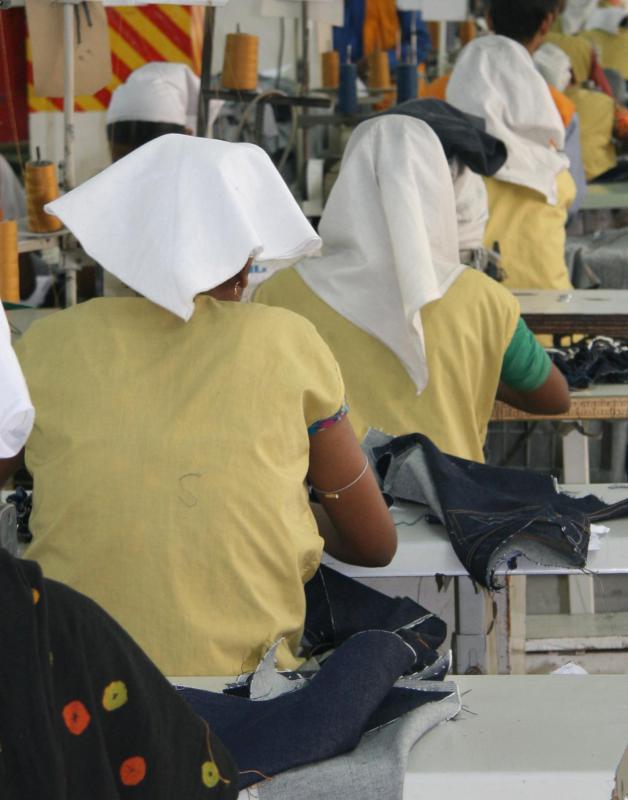
![There are many consumer guides available to inform people of companies that use sweatshop labor.]() By: CROSS DESIGNThere are many consumer guides available to inform people of companies that use sweatshop labor.
By: CROSS DESIGNThere are many consumer guides available to inform people of companies that use sweatshop labor.


Discussion Comments
This is so confusing. I hear the stories and testimonies of those who got away only to end up in a sweat shop and then those who depend on them.
@anon9338: The U.S. gets the majority of its resources from imports: wood (Canada), beef (Canada), Uranium/Plutonium (Canada); oil (Canada and the Middle East). Plus, you have a messed up, corrupt government that bows to these corporations that support child labor and sweatshops worldwide.
The difference between clothes made in a sweatshop vs. a normal factory would be that in a sweatshop, the people working at sweatshops are being overworked and they have such a low salary that it's not enough for their living expenses. The conditions of the workplace differs in both places as well. Human rights are violated at sweatshops and not at normal factories. Especially the value of the product at sweatshops. Most are expected to make 1,000 pieces of clothing a day. At a normal factory, you're not expected to over work as much.
I have to say it really bugs me when people argue, "but if you don't buy from sweatshops, you are sending girls into prostitution!" Sweatshops need to be eradicated. We need to pressure our political representatives to put regulations in place, so that retailers can't get away with selling items made by workers who are suffering. And we should all be prepared to pay higher prices to help improve this situation, and that especially goes for the shareholders of the fashion industry. (At the moment, though, a high retail price means nothing when it comes to figuring out how a garment was made.)
Most non-profit groups working on sweatshop issues do not ask consumers to boycott a label (e.g. Nike) or to pressure companies to "cut and run" from suppliers where child labor is discovered, for the exact reasons outlined here.
Instead, these non-profits work closely with workers in factories around the world to identify their concerns, and then what they do is pressure companies to pressure their suppliers to improve conditions. Nike, for example, which may buy 100 percent of the output of a particular factory, can tell the factory to improve ventilation, allow lunch breaks, provide weekends, provide a living wage, etc. and the supplier will respond because they don't want to lose the contract.
It's only when a supplier consistently and egregiously abuses its workers that workers will call for the supplier to be cut, knowing that if that factory goes out of business there's usually another one that will open up (especially if they work in free trade zones).
The key is that organizations for the most part will only call for a boycott if the workers want it. The union UNITE does amazing work on these issues, as does Maquila Solidarity Network and Oxfam.
One of the areas where companies are sending mixed signals, however, is that they ask a supplier to cut their costs by 10 percent every year (walmart was famous for asking for costs to be cut every quarter, don't know if they still do that). When factories are being asked to cut costs (or risk losing the contract) it's a bit hypocritical to then ask them to pay their workers more and treat them well!
Companies feel pressured to keep boosting their quarterly profits, and paying their executives millions of dollars.
I was watching a show once on TV about sweatshops and they interviewed one of the workers there. the girl was only 15 and had been there since she was very young.
They asked her opinion on what she would think if they shut down the place she worked. she said it would make life harder for her family because because there were no other jobs and her mom and dad already worked and if they shut it down then she would probably have to become a street hooker. She actually said street hooker.
She said she would rather work in that shop than to sell sex on the streets. So I think it would be bad to shut down some of them but also I think those shops should at least take some safety measures. Otherwise a lot of the families would be forced to send their own children to sell sex just to get their next meal.
The difference between clothes made in sweatshops vs those made in normal factories are numerous. First, and often most important, are the working conditions of sweatshops. Often times workers are underpaid, overworked, working in unsafe conditions and are young children (as young as 5) who have no choice as to working in these conditions. These products are usually cheaper than other products, but that comes at a social cost. Normal factories are usually factories in developed countries that do not exploit young children or struggling individuals. Often times, these factories are company factories that make their own products without exploiting human kind.
The best way to ensure you are purchasing products that are not sweatshop products is to purchase straight from the manufacturer so long as you are familiar with the practices of that particular company.
One needs to be careful about what one calls a sweatshop. What is a sweatshop in New York City is a much sought after job in many parts of the world. One unintended consequence of forcing manufacturers to close "sweatshops" in many parts of the world is throwing workers into the street and often forcing young women into the sex trade. Be aware that a living wage in the United States is much different from a living wage in much of the world. Everywhere isn't the United States of America, and cannot possibly be. The grim fact is that most of the world will never reach the standard of living that this country has been able to achieve. The United States is blessed with vast resources that much of the world can only dream about.
What is the difference between clothes made in sweat shops or in a normal factory?
Post your comments