
At WiseGEEK, we're committed to delivering accurate, trustworthy information. Our expert-authored content is rigorously fact-checked and sourced from credible authorities. Discover how we uphold the highest standards in providing you with reliable knowledge.
How do I get Rid of Ingrown Hairs?
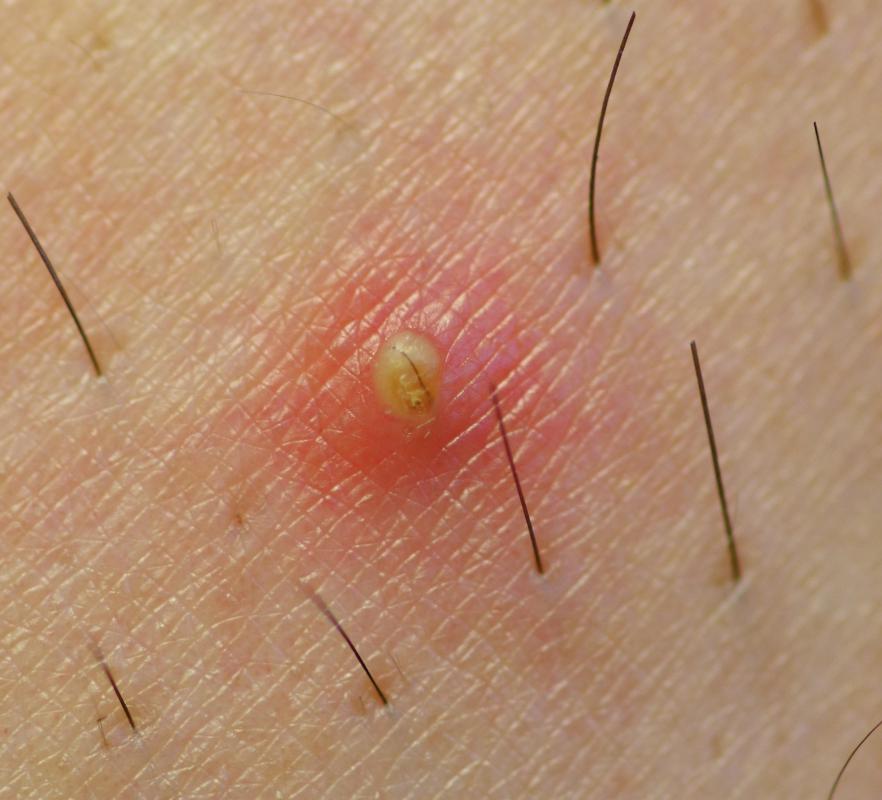
While it's better to prevent ingrown hairs in the first place, if you have one, do not tweeze or pluck it out. Instead, try to lift the hair from the follicle and back to the skin's surface. Avoid further irritating the follicle by squeezing the area around the hair. If a pustule has formed, apply warm compresses and keep the area clean and moisturized until it heals.
Characterized by red, irritated bumps on the surface of the skin, ingrown hairs are an unsightly irritation, but are rarely serious in nature. They can mimic other skin conditions, so chronic skin problems should be diagnosed by a dermatologist or other healthcare provider. People with coarse, curly hair are more prone to this condition, and this condition, medically referred to as pseudofolliculitis, occurs most commonly on frequently shaved areas such as a man's face or woman's legs, underarms, and bikini area.

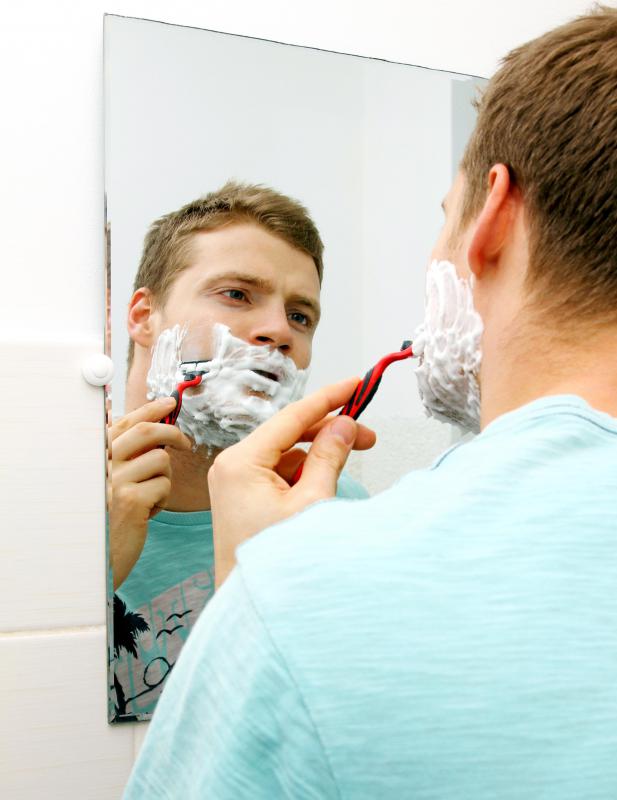
To prevent ingrown hairs, there are a few grooming tips, that if implemented, should reduce or eliminate this minor but problematic occurrence. Ingrown hairs are often triggered by shaving. This is because shaving cuts the hairs off, leaving a sharp end that may easily penetrate back into the hair follicle if the hair should curl up beneath the skin's surface. Avoid a "too close" shave by using a single-blade razor, shaving in the direction of hair growth, and avoiding excessive pressure on the razor. If possible, shave with an electric razor rather than a blade.

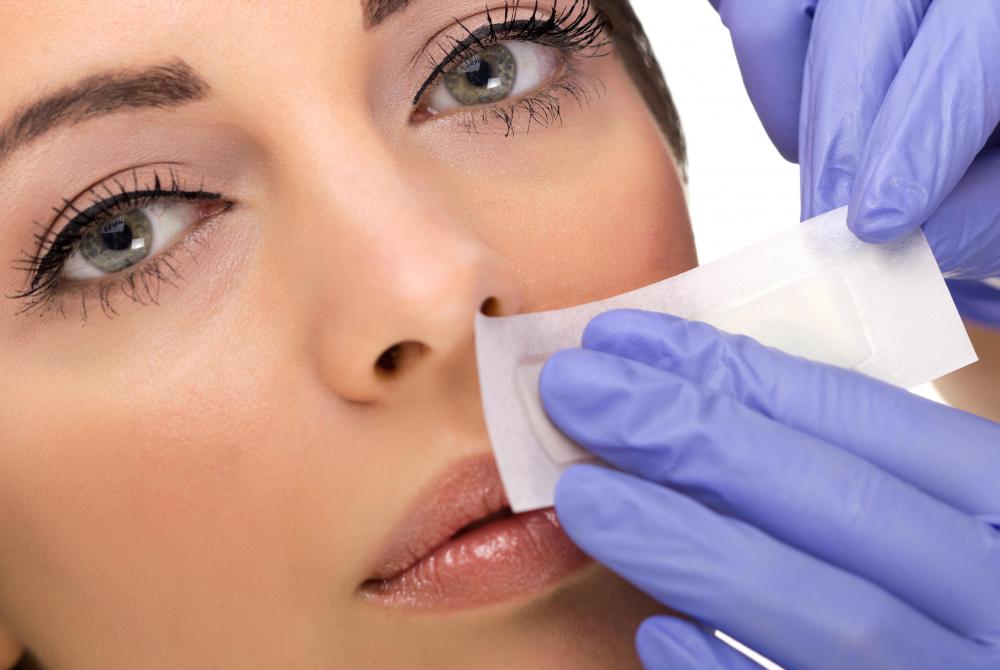
Women may choose to use depilatory creams in place of shaving. This may prove effective at preventing ingrown hairs because it leaves the hair with a smoother, more rounded tip than shaving, tweezing, or waxing, which essentially cuts or breaks the hair off. Many people find that depilatories either irritate their skin or their sinuses, however. Avoid depilatories if you have an allergic or irritating reaction.

Another problematic condition that can lead to problems is excessively dry skin. Use a non-comedeogenic shaving cream, moisturizer, and cleanser containing salicylic or glycolic acid on shaved areas to help the skin stay clean, soft, and pliable. Exfoliating to remove dead skin cells is another preventative measure that can reduce the blockage of pores and help the skin stay soft.

If skin has become dry or pores become blocked, ingrown hairs can begin to become a regular occurrence. To avoid them while treating dry skin and improving the skin's surface, allow the hair to grow out. Many times when hair is permitted to grow, the hair is pushed back out through the surface of the skin and is no longer ingrown. Though this is not always a practical approach, it can be useful in certain situations and allows the avoidance of the unpleasant irritation while the skin surface is improving.

Many times, ingrown hairs heal on their own but can occasionally become worse. Depending on the type of hair a person has, they may become a chronic problem even with preventative measures actively being implemented. In this case, permanent hair removal from the problem area may be necessary. Permanent hair removal, or electrolysis, can eliminate ingrown hairs in areas where it becomes a continual problem.
AS FEATURED ON:
AS FEATURED ON:









-
![People with coarse, curly hair are more prone to develop ingrown hairs.]() By: indirasworkPeople with coarse, curly hair are more prone to develop ingrown hairs.
By: indirasworkPeople with coarse, curly hair are more prone to develop ingrown hairs. -
![Ingrown hairs are often triggered by shaving.]() By: ronstikIngrown hairs are often triggered by shaving.
By: ronstikIngrown hairs are often triggered by shaving. -
![An ingrown hair.]() By: F.C.G.An ingrown hair.
By: F.C.G.An ingrown hair. -
![Exfoliating with a wet sponge may help prevent ingrown hairs.]() By: Africa StudioExfoliating with a wet sponge may help prevent ingrown hairs.
By: Africa StudioExfoliating with a wet sponge may help prevent ingrown hairs. -
![Using a sharp razor when shaving can help prevent ingrown hairs.]() By: April CatUsing a sharp razor when shaving can help prevent ingrown hairs.
By: April CatUsing a sharp razor when shaving can help prevent ingrown hairs. -
![Shaving with an electric razor may help prevent ingrown hairs.]() By: David StuartShaving with an electric razor may help prevent ingrown hairs.
By: David StuartShaving with an electric razor may help prevent ingrown hairs. -
![Waxing can break hairs off, causing them to become ingrown.]() By: V&P Photo StudioWaxing can break hairs off, causing them to become ingrown.
By: V&P Photo StudioWaxing can break hairs off, causing them to become ingrown.



Discussion Comments
If I get an ingrown hair, I'm plucking that sucker out!
This statement is very unclear "try to lift the hair from the follicle and back to the skin's surface." How in the heck to you lift the hair from the follicle without a tweezer?
I cannot get rid of ingrown hairs. I've tried tweezing but according to this article trying to pluck them out should be avoided and I don't understand how to lift them out from the follicle. Would using a hair removal cream such as Nair help?
I find when i exfoliate my skin and keep it well moisturized after i wax i get fewer ingrown hairs.
you can get ingrown hairs from simply wearing tight clothes, or so I've read. As for when you wax, your hair type may not be the best for that so maybe you should try hair removal creams that will not cause ingrown hairs as much. Good luck.
i get ingrown hair repeatedly in my bikini area when i wax it, and it makes me feels uncomfortable. Nothing i do seems to stop it, how can i prevent it?
I have repeated problems with ingrown hairs, especially where clothing fits close to the body. Is there any way to prevent that?
Post your comments