
At WiseGEEK, we're committed to delivering accurate, trustworthy information. Our expert-authored content is rigorously fact-checked and sourced from credible authorities. Discover how we uphold the highest standards in providing you with reliable knowledge.
How do I get Phlebotomy Training?
 Hillary Flynn
Hillary Flynn
Hillary Flynn
Phlebotomy training can be acquired through a number of different training facilities. Some future phlebotomists are able to train on the job, but others will want to ensure the training program selected is accredited by a reputable agency. There are many companies that offer phlebotomy certification, but some are not as reputable as others. The following nationally recognized agencies are known to have comprehensive accrediting criteria for phlebotomy programs: American Certification Agency (ACA), National Center for Competency Testing (NCCT), American Medical Technologists (AMT), National Credentialing Agency (NCA), American Society for Clinical Pathology (ASCP), National Healthcareer Association (NHA).
Most training programs are two year programs at technical training schools, community colleges, or hospitals. To gain admittance to a phlebotomy training program, one must first complete high school or a GED. Each certification agency and state will vary slightly in the requirements, but a phlebotomist will typically need to complete about 120 hours of accredited classroom phlebotomy training, and about 120 hours of practical experience.

During a phlebotomy training program, each student should complete at least 50 successful venipunctures and 25 successful capillary punctures. That is a typical requirement for obtaining certification or a license, so it's important to select a school that will guaranty the opportunity to fulfill that requirement. Courses that should be included in a training program are anatomy, physiology, blood draw procedures, patient safety procedures, handling blood specimens, collection procedures, patient care, quality assurance, patient privacy, and hospital legal issues.

For those who are already working in a field requiring blood drawing who want to become certified phlebotomists, work experience may be accepted in lieu of classroom training hours. Typically, 1040 hours of work experience within the last three years can be substituted, but the work hours must come from an approved health care facility that collects, examines, or transports materials derived from the human body. The candidate will still need at least 50 successful venipunctures and 25 successful capillary punctures.
Each state and certification agency has different requirements for the regulation of the phlebotomy profession, but most require continuing education in addition to the training requirements to begin a career in phlebotomy or other medical technology profession. This continuing education is required to re-certify when a certification period expires, and it generally involves training credits in safety as well as an option for specialty training. These education credits can be earned at any of the accredited phlebotomy training programs.
Hillary Flynn
Joining the WiseGEEK team has helped to satisfy Hillary’s insatiable curiosity for knowledge. She also manages an electronic publishing business that allows her to develop her skills in technical writing, graphic design, and business development. Hillary has a passion for satirical writing and enjoys traveling, especially to places of historical importance.
Learn more...
Hillary Flynn
Joining the WiseGEEK team has helped to satisfy Hillary’s insatiable curiosity for knowledge. She also manages an electronic publishing business that allows her to develop her skills in technical writing, graphic design, and business development. Hillary has a passion for satirical writing and enjoys traveling, especially to places of historical importance.
Learn more...AS FEATURED ON:
AS FEATURED ON:









-
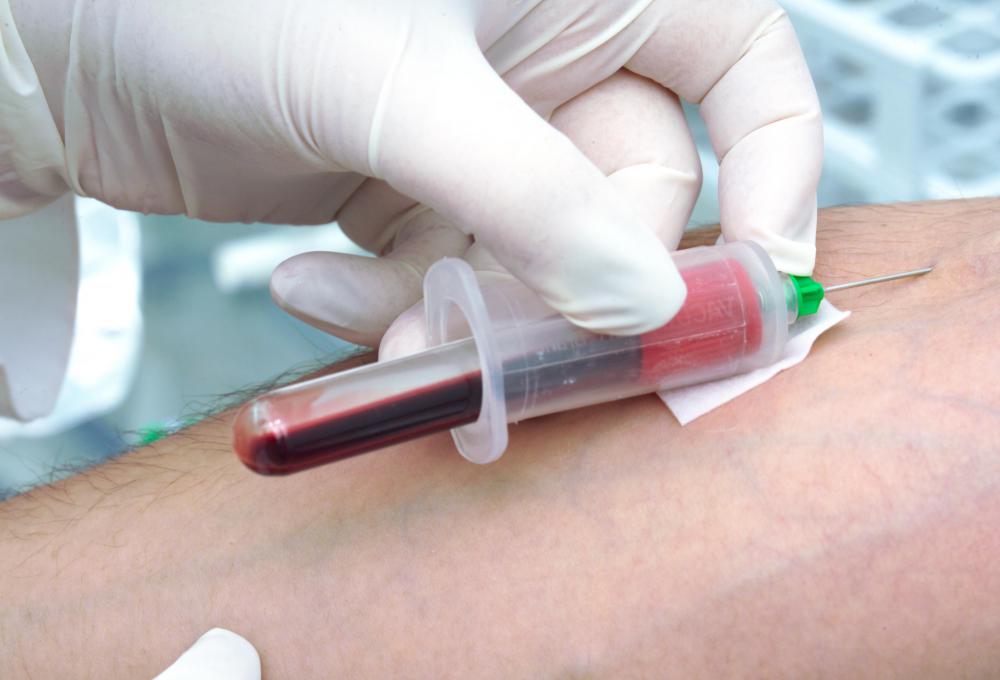
![Most phlebotomists train for about 120 hours in the classroom before beginning to gain practical experience.]() By: Ljupco SmokovskiMost phlebotomists train for about 120 hours in the classroom before beginning to gain practical experience.
By: Ljupco SmokovskiMost phlebotomists train for about 120 hours in the classroom before beginning to gain practical experience. -
![The best phlebotomy training programs offer in-depth instruction, including hands on experience with patients.]() By: Tim URThe best phlebotomy training programs offer in-depth instruction, including hands on experience with patients.
By: Tim URThe best phlebotomy training programs offer in-depth instruction, including hands on experience with patients.

Discussion Comments
@runner101 - Technically speaking, phlebotomy training schools are everywhere because phlebotomy training online is offered.
But I have to imagine going to an actual school would provide better training so that the future phlebotomist would have hands on training for what they were about to do!
One of the places where I have seen phlebotomists work is at a plasma donation site. These type of donation places are almost in every city and that is on top of places of employment for phlebotomists like the Red Cross (which also seem to be everywhere).
And I think that is one reason phlebotomy would be a good job because after you receive your phlebotomy technician training you would be able to find a job in a decent amount of time because there all of those locations who use phlebotomists.
Also, another job perk - most of the phlebotomists I have seen get to wear scrubs!
I wonder if there is a phlebotomy training course in most places since there are many facilities that use phlebotomists...
Just like every kind of training or education course, there seems to be online classes for most of them. For something like phlebotomy training, I would think you would get better training if you got the lecture and reading part in combination with the hands-on training.
If you took an online course, I would check to see where it would be accepted before I enrolled.
@strawCake - Accreditation is a big thing to look for in any program, but especially one related to the health care field.
Another place you can get phlebotomy training is the military! My boyfriend is in the army reserves and he got certified as a combat lifesaver. He learned CPR, and he also learned to draw blood. I'm not sure if his certification holds any weight in the civilian world though.
A lot of community colleges offer phlebotomy training. My advice is to be careful with accreditation though. I was looking into one healthcare related program awhile ago, and when I checked with some local hospitals, none of them accepted that certification. So make sure the program you choose will give you the certification local employers are looking for.
Are there any companies in the Philippines that offer phlebotomy certification?
Post your comments