
At TheHealthBoard, we're committed to delivering accurate, trustworthy information. Our expert-authored content is rigorously fact-checked and sourced from credible authorities. Discover how we uphold the highest standards in providing you with reliable knowledge.
How Do I Deal with Pus from a Cut?
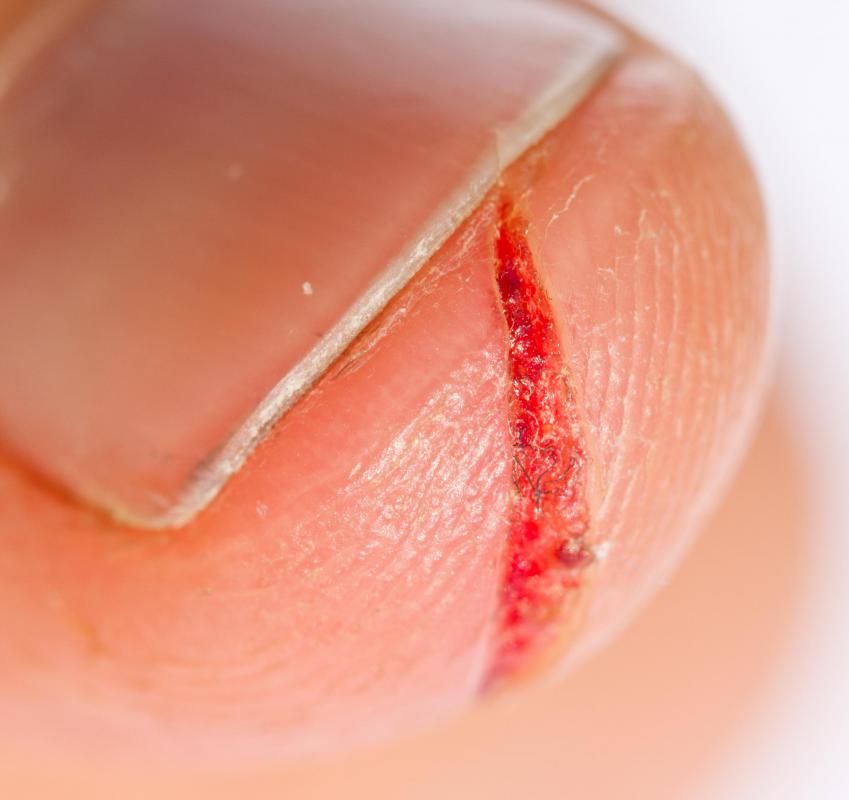
Treating pus from a cut depends upon the severity of the cut and whether symptoms are involved. Pus always indicates the presence of a bacterial infection, as it is part of the body's immune response. If the pus is draining, it should be gently cleaned with warm water and soap. Antibacterial products can be used, but hydrogen peroxide should never be poured directly on the cut because, although peroxide is effective in eliminating bacteria, flooding the wound with it can cause tissue damage.
A cut that is oozing pus should be evaluated by a healthcare provider who can determine if topical or oral antibiotics are needed. Sometimes, both types are recommended, especially in wounds that are deep or severe. While waiting to see the healthcare professional, the individual can apply an over-the-counter antibiotic ointment and then cover it with a sterile bandage. After a few days, the bandage can be removed and the cut exposed to air.

Sometimes, pus from a cut can look pink or red as a result of it mixing with blood. This is referred to as blood-tinged pus and is not generally an indication of the severity of the cut. Other variations of pus include its consistency, which can range from thin to extremely viscous, which is characteristically very thick and sticky. In addition, ot can look yellow, green, or even brown.

Occasionally, this discharge can be a sign of a systemic infection that may also produce fever, chills, and body aches. When this occurs, a medical professional needs to be notified, because if not treated, complications can arise. In addition, if there are red streaks around from the cut, emergency medical attention should be sought. This can indicated blood poisoning, and if not promptly recognized and treated, it can lead to an unfavorable prognosis.

A cut that is infected and contains pus should not be lanced or drained at home. Done under less-than-sterile conditions, this can cause the infection to spread or worsen. Draining the pus should only be attempted in a sterile setting, in the office of a medical professional or emergency department. After the injury has been drained, the wound is typically covered with antibiotic ointment and then dressed with a sterile bandage or dressing.
AS FEATURED ON:
AS FEATURED ON:


-
![Keeping cuts clean helps prevent infection.]() By: WideAwakeKeeping cuts clean helps prevent infection.
By: WideAwakeKeeping cuts clean helps prevent infection. -
![Warm water and soap should be used to clean pus from a cut.]() By: F.C.G.Warm water and soap should be used to clean pus from a cut.
By: F.C.G.Warm water and soap should be used to clean pus from a cut. -
![If you have a cut that is oozing pus, it may be infected, so you should see a doctor who can prescribe antibiotics or medicated creams.]() By: 2xSamara.comIf you have a cut that is oozing pus, it may be infected, so you should see a doctor who can prescribe antibiotics or medicated creams.
By: 2xSamara.comIf you have a cut that is oozing pus, it may be infected, so you should see a doctor who can prescribe antibiotics or medicated creams. -
![Topical antibiotic creams can be used to treat infected cuts.]() By: CopridTopical antibiotic creams can be used to treat infected cuts.
By: CopridTopical antibiotic creams can be used to treat infected cuts. -
![In some cases, it may be necessary to have a doctor clean and dress a cut with pus.]() By: casanoweIn some cases, it may be necessary to have a doctor clean and dress a cut with pus.
By: casanoweIn some cases, it may be necessary to have a doctor clean and dress a cut with pus. -
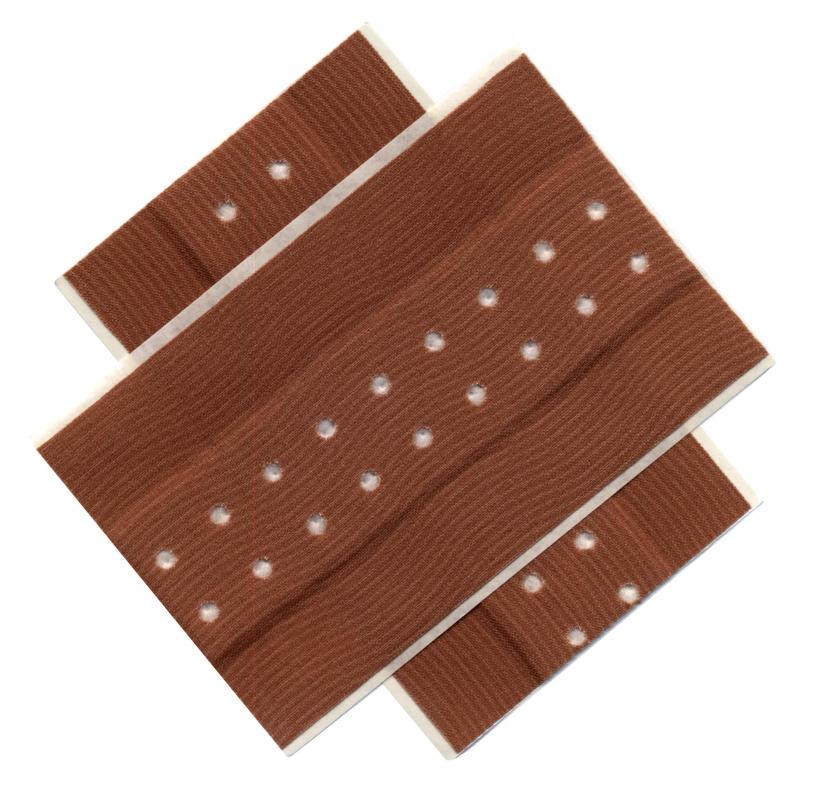
![Minor cuts may be dressed with an adhesive bandage.]() By: PinkShotMinor cuts may be dressed with an adhesive bandage.
By: PinkShotMinor cuts may be dressed with an adhesive bandage.



Discussion Comments
What is the best thing to use for/on animals such as cattle that have cuts with pus? Is it best to just call a vet?
I once cleaned up an infected cut myself, but it was very minor and it was not deep. The pus continued for a while and then it stopped. Antibiotic cream really made a difference.
The one thing I paid attention to was that I didn't apply any other lotion on the cut because it was on my face. I applied regular lotion to the rest of my face, but not the cut because I tried it one day and it made things worse. The cut became swollen.
After that I tried to keep the cut as dry as possible and only used a small amount antibiotic cream twice a day. That seemed to do the trick and it healed within a week.
@fBoyle-- Infected cuts are treated the same way in animals, but you won't be able to treat it yourself. You need to call the vet right away so that the pus can be drained. After that, the vet will give antibiotic creams or medications. It doesn't make a lot of sense to use an antibiotic cream right now if there is pus underneath the skin. So that has to be drained first. Don't try to drain it yourself because you might make the infection worse.
It's a good idea to continue cleaning the cut once or twice a day until and after the vet comes.
Are cuts with pus on animals treated the same way as with humans?
My horse has a cut on his leg and it has pus coming out from it. I cleaned it up with soap and water, should I apply antibiotic cream next?
Post your comments