
At TheHealthBoard, we're committed to delivering accurate, trustworthy information. Our expert-authored content is rigorously fact-checked and sourced from credible authorities. Discover how we uphold the highest standards in providing you with reliable knowledge.
How do I Deal with a Controlling Partner?
How you deal with a controlling partner really depends on the amount of inappropriate control that is present in the relationship. Many relationships have an ongoing power struggle running through them. Each partner may be trying to be the dominant partner within the relationship. Experts have thought this power struggle is caused by blurred gender roles in today's society.
One way to deal with a controlling partner is to find out the reason they are exerting this control. It may be due to the parental examples they were shown as a child. If one parent was seen to be more dominant than the other, this model may become ingrained in the child. As an adult, they may be unconsciously mimicking this type of control.

Another possible reason for the behavior of a controlling partner may be found in previous relationships. If a previous relationship ended due to a lack of trust or some form of deceit, this can continue on to the future relationships. A controlling partner may not realize that they are being controlling to the extent that it is harmful to the relationship.

There are many ways that a controlling partner can exert his or her control. It can take the form of simply phoning the partner continually to check up on him or her. It can take the form of verbal abuse and constant arguments. If left unchecked, it can often lead to physical abuse and domestic violence.
The first step to take with a controlling partner is to establish communication. Your partner should be aware that this form of control is not acceptable to you. This should be talked about early in the relationship to enable the controlling partner to realize his or her behavior will not be tolerated.

Unfortunately, in many cases the controlling partner will not accept that he or she is behaving in any way out of the ordinary. Previous partners may have accepted this form of behavior; if a controlling partner has not been confronted about his or her behavior before, he or she may not see anything wrong with this type of behavior. When talking about the problem, the controlling partner may become angry and defensive. The anger he or she is showing is also a form of control, as he or she wants the conversation to stop and not be discussed any further. If he or she is unwilling to discuss the issue, there may be no alternative than to step away from the situation until your partner is willing to discuss it.

The problem of controlling behavior within relationships is widespread. A relationship is built on mutual trust and respect. If one partner is trying to control everything that the other partner is doing, it is an unhealthy relationship. The behavior can have consequences in future relationships and, if children are involved, can influence they way they view relationships in their adult life.
AS FEATURED ON:
AS FEATURED ON:


-
![A controlling partner may become angry or defensive if you say you have a problem with the relationship.]() By: Jason StittA controlling partner may become angry or defensive if you say you have a problem with the relationship.
By: Jason StittA controlling partner may become angry or defensive if you say you have a problem with the relationship. -
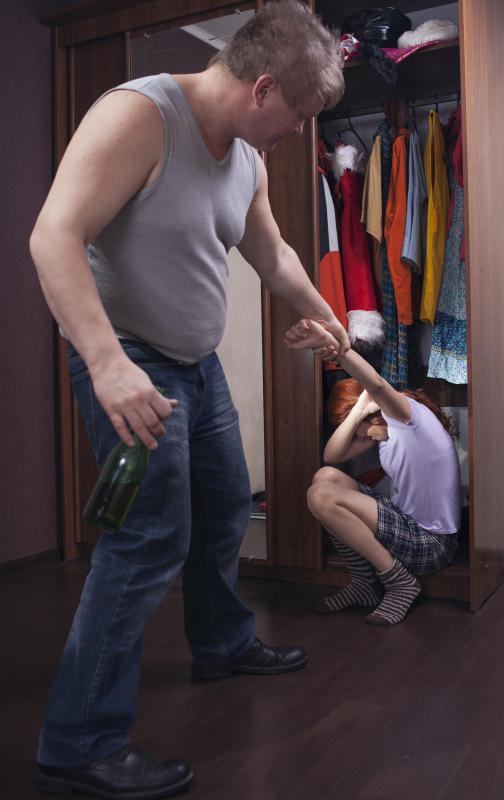
![If a controlling partner is not dealt with, it could lead to physical abuse.]() By: Anatoly TiplyashinIf a controlling partner is not dealt with, it could lead to physical abuse.
By: Anatoly TiplyashinIf a controlling partner is not dealt with, it could lead to physical abuse. -
![A controlling partner may be prone to anger issues.]() By: mast3rA controlling partner may be prone to anger issues.
By: mast3rA controlling partner may be prone to anger issues. -
![If a person fails to deal with a controlling partner, the bottled up frustration might come out in negative ways.]() By: jbrandtIf a person fails to deal with a controlling partner, the bottled up frustration might come out in negative ways.
By: jbrandtIf a person fails to deal with a controlling partner, the bottled up frustration might come out in negative ways.



Discussion Comments
@sm76: Good for you for taking this step! I know it wasn't easy, especially with the kids in the picture, but as you said, they're not yours.
Once you get used to the idea of being your own person again and not having to deal with this toxic woman, you will be amazed at the sense of freedom you will have. Your bank account and credit rating will also be better off for it.
You have done a good thing for yourself. Good luck!
So I broke up with my girlfriend. It wasn't pretty. I walked over to her house and told her I was tired of being treated like a child and that she can't even trust me and said what is the point of being in a relationship if you can't even trust me?
I have put up with a lot of stuff in the four years I was with this woman. I guess I was just fed up with it all. She did not hesitate to kick me out of her life after I told her I wasn't going to buy that car and that I was not moving in with her. I just wanted to leave things as they were and I guess one thing lead to another and I eventually broke it off. The bad part about it is I love the kids and one of the kids is actually staying overnight at my mom's house because they all think of her as grandma.
It's sad, really, that I know when tomorrow comes around their mom will no longer let them come over there to visit when they think of her as a grandma. I don't have a problem with the kids coming around. I just think it wasn't good for me and my girlfriend to be together. I am sure ill be a lot better in a couple of weeks.
@sm76: To be absolutely blunt, she treats you like you don't matter to her, because, well, you don't matter to her! You are what is known as a meal ticket. She knows she can come to you with some sob story and you'll cave.
Let me tell you something: if you get that car, you will never, *never* see a dime of the money to pay for it. You'll either end up paying for it yourself, or it will be repossessed and *your* credit will be in the toilet.
Should you leave? Yes! For heaven's sake, yes! She verbally abuses you, controls you and only wants you around when she needs money. Why in the world wouldn't you leave? You say yourself you want a normal relationship. Well, you will have to leave her to find one. There will never be any kind of "working it out" with her because she has no intention of changing. I feel tremendously sorry for her children. In ten years, they'll all probably be in jail.
Leave her, change your phone numbers, get another e-mail address and drop out of her life. If you don't, then honestly, you deserve whatever you get. And this is from a woman. It doesn't matter how awful her past relationships were. That doesn't give her the right to treat you like dirt under her feet, and worse. That's just an excuse so people will feel sorry for her. She's probably been cheating on you physically as well, so I'd go to the doctor and get tested for STDs. For real.
Leave this woman and her bratty kids. I promise, you will be glad you did, in the long run.
I would like some advice. I am not calling myself perfect by any means, but I feel like my girlfriend is an abusive person and is trying to control me in every aspect of my life. She gets extremely upset if I don't do what she tells me to do. We used to live together, but I could not handle it. She doesn't know that's why I moved out. She believes I moved out to lighten her stress level.
I am just tired of her constantly nagging me over things I don't want to do. Recently, she had her car repossessed because she wasn't paying the note on the car and now she wants me to get a car in my name so her daughter can get back and forth to work and college. She has three children. None are mine biologically. I have been with her for about four years now and it's been like being on a roller coaster. She blames me for her stress level and tells me when I am gone she is happy, but then she has times when she wants me around and helping her out with her bills and children. Only when I can help out with her everyday life is when she wants me around. If I cannot do something for her, she gets upset and tells me it's over and she wants to move back to her hometown where there are people who will help her out.
When she gets upset with me, she turns into this totally different person. She will belittle me and call me names like we are in grade school again. I am 37 years old and she is 36. She has had some really crappy relationships in the past and I am pretty sure she had relationship baggage, but that's not my fault. It's her past, not mine. I came into the relationship just fine only having one other relationship before I met my current girlfriend. When I first came to live with my current girlfriend, she would call her ex boyfriend and talk him to sleep or call other men and talk to them like she was wanting to be in a relationship with them when I was sitting not four feet in the other room from her. She would constantly flirt with other men and they would call at all hours of the night to talk to her. I have caught her talking to other men from her past and it wasn't just some friendly talk, either. She would get explicit with them and we were supposed to be in a relationship with each other. Recently, I have noticed her not doing that as much, but I also have given up on worrying about whether or not she is talking to other men in explicit ways.
I just want to know if I should just throw in the towel or try to work harder on making it work out because I do love her and the kids, but I am so so tired of the controlling and the verbal abuse. Every time I turn around, I am doing something wrong and she feels like she needs to scold me like I am one of her kids. If she doesn't like the way I handle something with her kids, she will up and void it like it's no good to her, and the kids will go behind my back and tell her I did something if they don't like what I did.
I just want to be in a normal relationship where I can be myself and my partner can be herself and we meet in the middle for common goals in life, and not have to work on her goals alone because my goals don't matter to her. I have to conform to her life and be what she wants or she doesn't want me around. It's like there are all these conditions to being with her and if I break those conditions she just tosses me like I never mattered to her in the first place.
I am in an abusive relationship, and the worst part is I am four and a half months pregnant with his child now.
It all started as excessive jealousy, and went to repeated accusations of cheating, to verbal abuse, to physical and sexual abuse. It has been the toughest 4 1/2 months of my life and still counting.
Nobody is aware of what i am going through. I am too ashamed, embarrassed or whatever you may call it to tell anyone, especially my family. I am a single mom, too.
I already had two little boys when I met him. My younger boy looks at him as his father since his biological father and I separated when I was pregnant with him, so, you see, it has really been hard. Now, I just don't know what to do anymore. I feel defeated and worn out.
I recently ended my relationship with my controlling ex. We started dating a little over four months ago, things seemed so "perfect" at first. I thought I had met the man of my dreams. Within less than a month of dating, he confessed his love to me and started telling me, "I love you, you're my soulmate." I was flattered by it but should've seen it as the first major red flag. He started telling me how he wanted to get engaged before the end of this year and move in together ASAP. Our relationship was long distance. Gradually, over time, I started noticing a controlling streak in him and how he was emotionally unstable and clingy.
He worked overnight and wanted me to talk to him on the phone or text him all the time. I started finding myself being cooped up in my room, talking to him at all hours of night and spending whatever little free time I had after work with him on the phone. At the beginning it was nice, but it slowly started to become overwhelming and chore-like. I would find myself running out of things to talk about and he would call me boring and insist on staying on the phone longer when I had to be up early for work the next day. We constantly started to argue over the phone over the most petty things. It was affecting me at work as well; I started missing days and showing up to work late.
I started to feel emotionally and physically drained. I lost weight and would get headaches that would last for hours. My hair started to fall out, I started getting frequent break-outs on my face due to lack of sleep, poor diet and stress. My life became an emotional rollercoaster. I'd have sleepless nights and would wake up feeling anxious.
He would have occasional mood swings and I wouldn't know sometimes what I did or said to set him off. I started to feel like I was walking on eggshells all the time and had to watch what I was going to say and how I was going to say it without suffering from consequences. He would call the house phone and my mobile the same time to make sure I wasn't lying to him and I was where I was supposed to be. He would insist on meeting all my female friends to make sure they were "acceptable" and not the partying kind. He would ask almost every day, "did you get hit on by any men at work or while you were out? How many contacts in your phone are guys and are they just friends or something more?" Within that brief period of dating, he started accusing me of flirting with other men and possibly cheating on him. I had given him no reason to feel that way. He would boast about how he got hit on at work or while being out grocery shopping. He even broke up with me over the phone. When I showed no distressed emotions and told him to leave if he wasn't happy, he then profusely started begging and crying that he'd never do it again and that it was a defense mechanism for him that he used with his ex-girlfriend, as well.
He would argue with me over little things over the phone every day and would always make it seem like it was my fault. He started telling me that all my friends are here temporarily and once I move away, I'll never see these people in my life again, so I need to make him more of a priority instead of these strangers. I basically had to ask for his permission to go out with just married female friends for dinner. He would ask if there are going to be any men around where I am going. I had to keep in touch with him via text or a phone call while I was out. He was very manipulative and emotionally blackmailing me and would tell me that he cared about me and just wanted to make sure that I am safe.
I am in my mid-20's, but I was starting to feel like an old woman. I had to get my old self back and wanted to start feeling like a normal human being again. With the love and support of my mother and sister, I broke it off. I feel like it was the best decision I made which ultimately prevented me from suffering from emotional trauma for the rest of my life.
If you feel like you're in a similar situation, please follow your intuition and get out. Don't put your life on hold and stick around waiting for the other person to change. The only person you can change is you and only you are responsible for your own happiness.
Quietly forgiving and moving on is a gift to God, and to yourself. Please get your freedom back and be happy, always!
I have been "cheated" on four times. My partner comes from a background of abuse through an ex partner and three nasty stepfathers.
I ask her when she goes out to text me or even call at some point, only once, just to let me know she is safe and well. She may have been spiked on one or two of the occasions by the same guy, an ex.
I love her to pieces and have spoken to my doctor to see if she is right and that I am controlling, abusive and a bully myself and they have told me to write to her doctor.
She has seen a counselor half a dozen times and they have apparently said I am all of the above and she is fine. Am I wrong to ask her or think she should want to return my trust in her by showing me some common courtesy? I went out the other night and, following her going out the week before and not coming home until 5:30 p.m. the next day with no contact. I told her I would not be texting her or contacting her and might not return that evening myself. Petty, I know, but I thought it necessary. She has not dropped it and cannot see it was just my reaction to her provocation. She has hit me. She constantly threatens to move to Oz with money she has saved.
She pays rent at her mother's and has asked via a social site for a room to rent but has never offered me so much as a penny, although I do not ask. She has £4,000 saved and owes me £300. She has a facebook account and keeps ex BF's contacts on there who I know contact her. She will not remove them although she never sees them.
We have a 4 month old puppy, her "baby" and a cat, also hers. She had an abortion in 2010 and would not allow me to be involved or help her in any way, choosing her mother instead, who had refused to help her some three years earlier through the same process. I cannot emphasize how much I love this girl with all my heart and want to be strong for her and let her travel as she wants, keep the home a home for her and look after the pets until she is ready to settle down. But I fear there will always be something that she wants or "needs" to do as an individual, whereas I would give anything to share every experience and smile with her. Your advice, please!
There are many posts on here, but the trend seems to lean towards more possessive guys than women. Please understand that my theory on this lies in the traits of society. Women are now stronger and yes, it's the norm for them to want to look good and sexy. But TV and film and the media show nothing but women having multiple partners, sexual encounters and constantly being the focus of attention.
Women no longer put up with 'bad men' because they no longer need a man in their lives and move on at the bat of an eyelid; even older women are experiencing a new found taste in younger men.
All of this has been good for the independent women, but the side effect of this is that the men in our society no longer feel like men. They are becoming more and more insecure as the days go by. I do not condone any possessiveness, but men generally feel it is harder to keep a long relationship nowadays and there is huge amount of pressure on men for how to behave towards a lady. Many begin to feel that they just don't size up. They cannot compete with all the images shown on how women want their lives to be. TV is the biggest relationship killer with all its ideologies and crappy programs about relationships.
Also, I am in a on/off relationship with my partner and the worst thing is we have three children. She is so possessive and angry that I cannot cope any longer. I do admit I am a little insecure and maybe jealous but after being away from her, I realize that this was mostly down to all the mental and verbal abuse. Nothing I did was enough or right. She constantly called me pathetic and other crude names.
Now I've joined a gym and it's made her flip out. She's giving me abuse, even though we are not together. Ee were trying to reconcile but I no longer have the strength to help her change, and she refuses any form of help or counseling.
Everyone is right. Imagine that. You narrate your own story and then act on it and the feelings that go with it. And then reflect on that. All of it is based on your perceptions. So you all had those things happen, had those thoughts and feelings and made those choices for your own inner motives, some known to you and some you may need to look at.
Get better every day. None of you are victims of anything but growing pains. Enjoy life. Life likes it when you do.
@anon229825: You go, girl! Awesome! I am *so* proud of you! You stand firm. Now, you know for certain you've got the inner strength to say "No!" when you have to. You don't have to look back. And I'm thrilled you're seeing a therapist. This will help you process those empty feelings, and the other emotions that will come up. Stay with the therapy too, because you'll learn how to have healthy, happy relationships.
Reading your post made my day. I hope other people read this and realize they can get out, too. It can be done! Stand on your own two feet. You can! You've proved it to yourself that this creep has no power over you! You rock!
God bless you and your future!
This is anon179217 writing again!
So my story is (hopefully) over.
I left my boyfriend in march and until now he was continuing to threaten me and to be abusive towards me. He was calling, making threats, threatening with suicide, following me, forbidding me to go out, to see my friends, putting all sorts of pressure on my soul, that I was never to be anything in life, that my life is a series of bad choices, that I was worth nothing without him, that I was blinded by my friends (who started to return into my life)... etc. You get the picture. And I was falling for his game. I wanted to be nice to him and to help him. But I refused to be with him, to return. That made him very angry and sad and crazy.
I was afraid to do the things I liked because I had the feeling he was always watching me (I live in a small town) and because I had instilled his beliefs into my soul (even though I did not believe that a girlfriend/wife should be all the time inside the house alone or with her man). But I slowly started to do all the things that irritated him so much. I had my own clothes, my own friends, I was starting to do sports and to go out.
Finally, he saw me one night out with my friends and when I separated from them for a moment, he came up to me and he started his speech (you are a prostitute, you are filthy, get out of here...). I went back to my friends, with him following, of course. At the end, he went away and he sent me a message that I was a "prostitute" and that he will never speak to me again. Since then, I haven't had any conversations with him. So all I did is everything he didn't want me to and I stood firm (that was the difficult part) and he is now so mad at me that he doesn't even want to see me.
I'm now left with this huge hole inside of me. The fighting was going on for two years and now that it's gone, I feel empty. That's crazy! I cannot believe it. I cannot believe that I let myself become this way. Today I called a therapist and I'm going to start to put my life together. I do not ever want to be in the same position as I was for the past two years! I was blind. And don't get me wrong. It's very difficult to go through the day, I miss him, I miss his good days, but the good days were so rare that it just wasn't worth it. He will stay in my heart, but not in my life. I will not think of him.
I just wanted to share this. Maybe it will help someone. Just stay firm in your decision (even if your feelings say differently, they are not always right) and you will come to a place in life where you want to be. Best of luck to everyone!
It's so weird to read all of this and remember my past. I'm 19, and although I never had a controlling partner, I can relate to all of you. My biological father was an extremely abusive man towards my mother, my siblings, and myself. The physical abuse and verbal abuse was mentally debilitating.
My mother finally divorced him when I was about four (thank God for that). But I still have issues brought on by all of his behavior. I say this completely knowing what it feels like to live like this, that not a single one of you or any other soul in this universe deserves to be treated like this. It can cause life-long issues to your children and to yourself.
Getting out was the best choice my mother ever made for us. Getting out means that you have boundaries that you will not tolerate to be crossed. By doing this will also show that you are never going to break down from the abuser.
I wish you all the best of luck, and hope you will find happiness again. P.S. You may feel as though you have changed in some way, but the truth is that the person you were, is still the person you are today. Your abuser's goal is to make you feel different, smaller, weaker, but don't believe it because you are, in fact, stronger than what even you thought yourselves to be.
I am 38, married for 15 years and I have an 8 year old daughter. My husband is mentally abusive. He wants to rule in everything I do but he does not feel that he has to even talk to me. He does not have a good talking relationship with his parents, even before I was married or even to his sisters. He thinks it is my duty to take care of them and not his.
I do not know what to do. He even tries to torture me by first not giving money monthly. I have to ask him at least 10 times for it. He does not stand and talk or answer and leaves the place and so I have to call but then again shouts who will pay the bill.
Can anybody please help me as I do not have anyone to turn to? He spoils the relationships that I start to have, by even socially discriminating me everywhere. All my self respect and self-confidence is dead. I am now just waiting when I am going to have enough of all this and decide to die. The look on my daughter's face stops me every time. I do not know if writing here is going to help me in any way but if anyone really can help me, please help me.
I know I am controlling to a certain point. I'm 17 and my girlfriend is 16, but maybe it's because she has cheated on me five times, then she tries to call it rape, when I know it's crap. We got over that stage, but in my mind when she is out getting high with her "friends" I have no trust or respect. The simple fact is I love her more than she will ever with me, and this relationship is going to hell.
Many of you are in the late stages of an abusive relationship, but some of you are young and have the chance to get out.
I am 34 with two young children, and my husband, who displayed all of the characteristics described, left when my youngest was two weeks old and we were living overseas away from family. He now only pays minimum child support, and still does all he can to make my life hell.
I am a well educated lawyer who worked internationally. These situations can happen to anyone. Get out now before you have children. Talk to friends who will be honest with you and who really care. Most importantly, listen to yourself. If you feel something is not right, it probably isn't.
I didn't trust my instincts enough, and life will never be the same. Beware of any partner who is over-the-top anything, who does not have a settled social circle, and who makes judgements on you on a regular basis. This is not love.
My ex was not Iranian. He was greek. He was all those things and he got around to physical abuse. I got the hell out of there, reconnected with my old friends and life is great again. The only difference is now I am more educated on the topic of abuse. Good luck to all of you.
@anon 2434: He is homing on the smallest of things to break down your morale! He aims to use you like a puppeteer and you are his puppet! It will come to the point where he will convince you about what and the way and how you should speak. He will say, you should have said it like this, you should have said it like that. He will infiltrate your soul and make you doubt your intellect and nature. He wants to rob you if your outstanding merits to fill his empty void! Please do not serve him, stuff his better suggestions. Don’t become his victim! Eat what you want. Start to zip the mouth! Do not let on anything to him but the way that he lives his life. Feed him only with anything but your truth, then at the end of the day, you will know you never even had a standing chance with your truth, let alone lies.
For thirty odd years I have stood fighting for the truth, and now the time is right! I will never reveal my plans, nor mind, nor heartfelt emotions to the enemy! I will never go back to the beautiful, honest, gorgeous, faithful, trustworthy, loyal person that I am underneath, unless I feel elated, after pursuing all that I need to gel with my soul, not his!
Communication cannot be established with an abuser for the rationale granted in the explanation of the top post. Let us cut to the chase, please. Returning at a later date to try and communicate with an individual who is willing to take it to any lengths to “win,” in their perception, is to delude oneself concerning the obvious and to exhaust oneself further. There is no merit in the exhaustion of dealing with another or upholding of the self; it is simply the dynamics of the hunter and the prey!
The mere fact that one continues to entertain the other, be it female or male ego, and kingship unto themselves is enough for them to feel that they have won one battle of many battles. This is like asking how long is a piece of string? Many would say, as long as the string is. Others, who have removed their rose-colored glasses, or have been snapped into the reality of the situation, would answer more constructively, since they have lived on their wits and rehashed and reflected on every moment unsavoury and blemishing to their soul. The answer is twice the distance from the middle to the end!
In all fairness, these relationships are one sided, reflective of the no-go areas, no- go zones, no-go opinions, no-go options for the other party but to take on board emotional blackmail, betrayal by their most loved, sucked in and sold out by the individual that something clicked with, betrayal right down to the death! Is it the one who is speaking so freely, because I can, or is it that I am into power of persuasion? Judgment and desecration of another can only be by another! What freedom is in agreeing, or should I say like I have said thousands of times, to abort a foreseeable argument that leaves the other always on the losing end so long as you and I state you, are their only audience?
We can stop right here, for my only wish is that others do not suffer this fate, or other excuses as to why one suffers this fate (soul partners, till the death, lovers, sexual click partners, mutual physical attraction), beauties that wear one beast hiding themselves in another’s beauty, beauty within and their desire to suck like a sucifist (soul sucker) beautiful souls that fill a void in their emptiness, their hollowness, their inability to feel, their inability to smile without smiling for something that they get their high from, because they can never be that sucked in, toxic relationships, etc., etc. etc., that somehow play with the mind the way the predator seeking and sucking the life out of the prey they saw something in (a weakness that they could exploit!) Look up the Stockholm Syndrome!
Reading all of these posts tonight is akin to being in an empty room where there is nothing but mirrors. There are mirrors everywhere I look and read. I see so many similarities and yes, no story is exactly the same, but the theme is as large as life. There are patterns of behavior that dominate this entire thread. Control is how this recurring theme has got people where they are, as their perceptions race through the keyboard in a desperate attempt to understand, or somehow accommodate what is clearly in a great percentage here, abuse.
I would like to share my story with you and am convinced it may make a difference to some. However, I simply don't have the energy or health to explain my story but briefly, at the end. Firstly, for those of you who are in a relationship but are fortunate enough not to be living with the other, I say this: You have already identified parts of the other's character that some don't and won't see in a lifetime. I see comments about how one must compromise to get any freedom! There is no compromise! Freedom is yours for the taking.
Other comments relate to feelings of depression, loss of the person you were and to others who have anxiety disorders. Anxiety is a natural defense mechanism where your body goes through the release of hormones triggered by feeling intimidated, walking on eggshells, never being able to please, never being able to win, isolating oneself from family or friends because of the embarrassment or humiliation of a blow up or being put down or the other acting out in front of the people you have respect or at least some respect for. The sweet side of a person is the false face used to manipulate you right into the playing corner again and again, lined up like a chess piece ready for them to move. Unless you are an exceptional player yourself, you will not win!
The sweet moments are full of intent and purpose. Think about it deeply. Reflect on every sweet time and ask yourself what is the motive here, what has happened of the negative that this is in reference to and you most always find your cue. Repeating again, for those that are not living with another and they exhibit these patterns of behavior, throw guilt out the door, put your hand to your heart, invisibly grab hold of that guilt feeling and throw it invisibly out the window. Stop doing the predictable. Stop reacting (tell yourself the other party is doing a mind job on you). Stop living for them! Stop being the catch basket for their litter! Stop enabling further abuse to yourself by supporting their habit.
An honest answer from some perpetrators of abuse and violence is that they get off on the power! They describe it literally as a free high, or the best drug or sex they have had without having either! That is the look a lot of you can identify with when you are confused about what it is in their eyes when you are so hurt, or crying, or begging for a reason as to why you have angered them so, or being gutted like a cyclone just ripped you through and left you white with the horror of the barrage of verbal abuse! You know the look. I need not say anymore. It is not remorse; it is the feeling of power, their high at your expense, even your physical injuries, even your loss of self, etc etc etc.
Stop hiding the real truth from others; it is so common that no one should be so shocked. However, the more you conceal it from others, the more favorable you make it for the other. This is a tough game and it is a game. Do not delude yourself that it is anything more to the other. Being such a tough game you would need to withstand surrendering yourself and martyring your life for the other. Do you understand this? There is no compromise without punishment. There is no agreement without stored up resentment and payback when you are least likely to expect it. Get used to being happy for your smile to be taken so rapidly.
The empty feeling expressed in quite a few of these posts is the loss of the self. This goes with the territory. You see, it is a switch! You become derailed easier, you are picked away and picked away, little by little, day by day, in some small way, sometimes without noticing. Every fiber of your being is under attack. The hollowness you feel is what they have experienced and now you become hollow to refill them! Wait until special events that were planned ahead are somehow mysteriously (not) interceded with your own eventual excuses that you have to let someone down because you are actually physically sick due to the fight the night before, that apparently came out of the blue (or was it orchestrated over something so minimal like a hawk waiting on its prey)?
Talking about control, I think my fiance is worse. She wants to win every single argument or else she will threaten the relationship. I can't say no to anything she wants, or else, the usual, threaten the relationship.
We should be getting married in two months, but I mentioned building a house in a village where I come from. She doesn't want to hear anything about that. I can't avoid going there because that's where my parents are. Besides, I want to retire in the village.
She wants a house in the city where we work. Fair enough and I have no problem with that too, but my fears are once she has a house in the city, she might not allow me to build a house in my village. We have three kids, and we all sleep in one room when we go to the village because we have no house there, but she refuses to consider that we should build a house there. I find no sense in this. I am thinking of stopping the wedding. Please advise.-- Gilbert
My husband was a total control freak and I was ready to leave him on many occasions. He'd tell me to get changed if he didn't like what I was wearing or how I wore my hair. If I didn't listen to him, he'd spend the whole time saying that everyone was staring and laughing at me. (I think most people would agree that I dress quite conservatively.) He seemed to think his thoughts were universal. I couldn't clean the house when he was around because he'd always say I had to do it his way.
He once made up this rule that if he was in my way and I needed to get past, that I would have to wait until he finished what he was doing, even though that once meant that the baby's food got burned because I couldn't get to the cooker.
When we had our first child, his mother and sister became really controlling and overbearing. I hadn't seen that side of them before. I think that this experience made him realize that he was mimicking his mother's behavior. I started to point it out to him all the time. He stopped doing it. Also I think that over the years, my self-esteem grew and I wouldn't let him control me any more. He knew he had to change or he was going to lose me. Things are so much better now. He's still a pain in the butt sometimes, but in the end he is a good man. He's a wonderful father and helps out around the house a lot. At the moment we are as happy as a family can be, so there is hope that things can change.
@anon198657: I think you know the answer to your questions. You need to get this guy out of your life,and do it now, before things get any worse, and he hits you, because it's coming, sure as the world. If he's been banned from your workplace, something is seriously wrong. He has serious issues, and you don't need that in your life.
Get out now. Please, do it for yourself and your future happiness.
I need some serious advice. My boyfriend and I have been dating 7 1/2 months. Here are some issues we have, so someone please give advice. I'll add more detailed situations if needed. Thanks!
He is so insecure he gets upset when I dress up for work. One morning he accused me of having sex with someone I work with. Like I've never led him to believe that I had any feelings for this guy at all. He is not cute by any means, and my boyfriend wants to come up to my office. It wouldn't be a big deal if he hadn't been banned from my office for causing a scene. So yeah, he is banned, how embarrassing. Jealous of others who have no chance whatsoever.
He constantly wants to be all over me and cuddle all the time. If I don't, he accuses me of being ashamed of him? It's insane.
When we are fussing, he tells me what I should say. I'm my own person with my own feelings and opinions. He goes through my phone and online accounts and got very upset when I changed my (facebook) picture from me and him to just me. Thinks something is wrong if I don’t talk to him on yahoo messenger or on lunch break.
He says things he doesn't mean, or to just press my buttons. He brings up the past but says I love you constantly. I just feel so smothered, and emotionally stressed out.
I am a guy who looks controlling to my GF. Something that I do is exactly controlling and I admit it. But let me tell you a few things that help you better than any consultant or therapist. You have to break up with a controlling guy because he will never change his controlling behavior. If you are still with him expecting that he changes one day, you are wrong. Do you know why? Because the things that have made him controlling can never be changed. They are all happened in the past and they can never be changed and they are always with him and in his mind. They are either in you or in his past life, but wherever they are they can not be changed and his mind cannot be cleared.
He may love you a lot, but he cannot stop controlling you. You are not the right person for him and he is not the right person for you (although you may love each other). One day he feels he hates you, but after a few days of not seeing or talking to you, he thinks that he has missed you a lot. When he comes back he will be nice for a while, but then he is the same controlling person, and this cycle will be repeated over and over and over. This is something that has been happening to me and my girlfriend every week since we met more than a year ago. And finally today I have decided to end it and set her and myself free of these all disasters forever.
Now let me tell you about my story and tell you why I am controlling to my girlfriend. Am I crazy? Am I psycho? Am I paranoid? Am I schizophrenic? Do I have psychological problems? Do I come from an unhealthy family or parents as the above article says? Is there something wrong with me?
The answer of all of the above questions is no. I am not crazy and I don't have any psychological problems. I come from a very healthy and nice family and parents. I am a good businessman, my clients love me and they are always impressed by my honesty and professionalism.
So what is the problem?
The problem is in the relationship itself. I am explaining this because it can be your problem too. You may keep on going to the therapist or consultants with no result. Or you are waiting for him to change, and tolerating what he does, but he gets worse. Don't waste your time, because the problem is somewhere else, which can be in the relationship, like my case. And I tell you more now:
When I met her, she was divorced twice and I was still married. When we met and felt we liked each other and started having sex with each other, she did not know that I had problems with my wife and I wanted to divorce her. So in her mind, she did know that she had the relationship for fun and sex only and she did not expect anything extra.
Then she told me everything about her past two marriages, the way that she fell in love with ex-husbands, her life with them, even their sexual behavior and all the details. She just wanted to tell these things to someone and it was me who probably was the closest person to her at that time. But she never thought that our relationship could become serious and the things that she had told me made my mind poisoned to begin with and could make problems in our relationship. It was my mistake to go to the next step and telling her that I wanted to divorce my wife and wanted to live with her after that. I should not have done it because I should know that I could not live with a woman who did not respect my feelings as a man. She was not wise enough definitely, because if she was, she would not have talked to me about those things. It did nothing but poison my mind.
That was not the end. We decided to live with each other. Whenever that we met, she kept on talking about her exes continuously and she wanted me to sit and listen. Why? I don't know exactly, but I thought that, although she had divorced, but she was still living with them mentally. They occupied her mind all the time. At any given time, she was either with her first or second husband in her mind. Talking about the memories, where they went, what they did, how they slept, how they got children, what did they did when they could not have children. She told me things that even the most stupid woman wouldn't see any point in talking about with someone who is supposed to be her man or he already is (according to her). She kept on doing it even after I left my wife. It was really a disaster for me. Being in love with someone who didn't pay any attention to my feelings as a man. What did she think about me? Did she think that I was just an unfeeling stone or love machine? Nobody does this to her man if she really respects him as a man.
That is a long story. I had too many of these bad experiences with her. Finally I felt that there was no point for me to waste my time with her. All of a sudden, my wife, who was still my legal wife, got sick (cancer). She was alone with my two kids and she was in a very bad situation. I would never go back to my wife if I was happy with my GF, but when I saw I had almost no spot in her heart and mind as a man, I preferred to go back to talk care of my kids and a sick woman who was still my legal wife. However, I did not really want to break up with my GF. I wanted to come back to her after my wife felt a little better. I still loved her. But that was not the end of the story.
It was at that time that her last husband started interfering in our relationship. He had access to my girlfriend's emails and he started forwarding her emails to me anonymously. But I could find out that it was him, through the IP address of the emails he sent (I am a technical person. I know how to do it). He sent us so many of her personal emails to the others. Many of her photos. A series of emails to an old guy she dated and they were supposed to live with each other. They had openly talked about having sex in their emails. The old guy had mentioned that he had noted her "sexual outburst" and a lot of garbage that were like more salt on my wounds.
When I saw those emails, I really decided to break up with her. I really felt that I hated her. And I really realized that she could not be my lady. We had a big fight. She cried a lot. She promised to prove that she did not have sex with the guy, but she never did it.
Since that time, it was not even one month that I was not faced with something new in her past. I tried a lot to make her fully break up with her ex-husband and keep the relationships to the minimum necessary level which is just because of the kids. She did not want to do it deep in her heart. But I forced her to do it. Then I realized that it was one of my other mistakes. I should not have forced her. If she wanted me and liked me, she could easily do it on her own because she did know what I wanted. But she always wanted to have everything at the same time and also me on top of everything. That was not acceptable to me.
She also threatened me so many times that she would date the others. She used this as a weapon against me to hurt my feelings. And I think she really dated another person once. One day she told me seriously that she wanted to date a guy who has been after her for a long time. Then she stopped communicating with me for a few days, pretending that she is already gone with him, but she was back to me again after that. Again, I accepted to be with her because of my stupidity and my deep weakness in this relationship.
Last night, I found some other photos of her with an old white hair guy who is also a relative. She had already poisoned my mind about this too, because she had told me that she had some special attraction to old and white haired guys since she was a teen. I knew that it is a sexual attraction to these types of men that some women have.
Anyway, this story will be endless, unless I shorten it here. Last night after finding those photos, I really decided to finish everything with her to stop this psychological torture, first for myself and then for her. I don't know how long it will take for me to come to my balance. It was the biggest disappointment and the biggest mental trauma for me in all my 40 years of life.
Now, can you imagine that she calls me controlling after all of these events? Am I really controlling if I ask her who the guy is in the photo standing next to her with her hand around his waist or going with her to France?
I have never had such a problem with the others. I have become controlling only because of her own behavior and because of the wrong relationship with the wrong person. That is all.
Then what is the solution if you have the similar problem? End the relationship the first day that the signs of "doubt" and "control" appears. Do not try to fix anything, because it is impossible.
Another piece of advice: Never talk about your previous relationships with your new friend, BF, GF, partner, wife, husband or whatever he/she is supposed to be. It does nothing but destroy your relationship. It is just enough that they know that you had a BF or husband and you are separated.
I can't explain how I feel reading all of these posts. It's made me feel not so alone, but also made me realize how bad it can get.
I have been with my boyfriend for just over a year now, and just as everyone else has written, in the beginning it all seemed perfect. I felt like I had finally met the 'perfect' guy.
It was about three months into the relationship that I really noticed that something was not right. He began going through my phone and reading every single message from my friends -- secretly at first, but then as I caught on to what he was doing, he began to demand to go through my phone. One night when I was "sleeping" (or so he thought), he went through my phone and deleted my male friends' numbers. He also began telling me what to wear, hated me wearing make-up and I was not allowed to go out or see my friends.
About six months into the relationship was where it really became bad. I got a new job - the absolute perfect job that I spent five years at uni working hard for. He hated the idea of this. He started becoming very emotionally abusive, calling me every single name under the sun, telling me that he has cheated on me, that he hates me and hoped that I die. He also began stalking me: waiting at my car once I had finished work and on occasion even waiting outside work before I got there in the morning just so that he could 'talk' to me. He also began stalking my ex boyfriend and admitting to driving past my ex's house multiple times per day just to try to catch me there. He had also been on the property and looked through the windows to try to catch me or my belongings there.
The emotional abuse and fights have been a constant thing since this six month mark and has become physically abusive. He has punched me, pushed me, broken my belongings on several occasions, and the emotional abuse and put downs are constant too. One week ago, I tried to break up with him. He proceeded to punch me (hard, and I mean hard) five times in the same place in my arm, which has subsequently made half of my arm (no exaggeration) badly bruised (I also have thin blood -- which he is aware of -- which makes any physical abuse quite bad). I stood my ground for the whole next day, but somehow, he got me to go back to him, telling me that everything will change and that he realized how close he came to losing me and did not want to lose me again.
So here I am one week later, we're still together, we've had some really good times and it does in a way seem as though he has made an effort to change. I am scared though, as last night I started to see signs of his old self again. He started with the 20 questions about my day (interrogating, not normal conversation) and proceeded to blame me for him having a "crap" night. Today, however, he is being sweet again. I am really confused.
To anon59349: I read your post, and i feel like we are dating the same person. I feel like a shell of the person i was when he and i started dating. Do you feel the same?
I used to be a very social, fun girl who had fun with my friends. Now i cannot go out, talk to anyone really, and he has my facebook passwords, myspace, and e-mail.
If anyone talks to me at all, he asks me 20 questions, makes me delete pictures that he doesn't like, etc. He is on my facebook and myspace more than i am. In an odd way i'm happy i read your post because now i don't feel so alone with a boyfriend like this.
And you are right, when we are together he is the sweetest thing ever, saying all the same things yours does. Here is the big thing. He lives far away from me, and we made plans for me to go live with him. I feel though, if i go, and things get bad, i am going to be away from everyone and have no way to get back.
I'm sorry if i wasn't much help, but i am just in the same situation as you and I don't know what to do either. Good luck.
@anon40415 is He Iranian by any chance too? Or from a middle eastern country?
Is this man Iranian by any chance? Sounds standard and exactly the same as me and my Iranian boyfriend.
This is anon179217 writing.
Thank you very much for the response. I have been posting my story on other sites and you are the only one to respond.
I would just like to say that leaving this relationship is so hard because there have been many good and tender moments besides the obsessive control and because of that I sometimes feel I'm breaking something very special here. And he is letting me know that every time we speak. He is telling me how I will regret it one day and that I will realize that this kind of real love is very hard to find.
The other thing why it's so difficult to leave is the fact that he is really the only one that knows me. Because of my anxiety disorder I don't open up to people. Even to my parents. I keep most of my thoughts inside and I don't like to talk about myself. That is why I'm emotionally so dependent on him. It's not healthy. I would like to stress that I was also too controlling over him and when I'm reading all this information on controlling partners, I realize I was so wrong. I figured that if I have to obey all these rules he has to do the same. This is so stupid. If there is someone reading this and is feeling his/her relationship is going down this road, please don't. It destroys everything. Trust me.
So I have moved back to my parents. They think we had a small argument and that I feel alone at his place because he is working all the time. I haven't told them about the control. Not yet, but I would really like to talk to my mother because I have to get it off my chest. I figure my mother loves me more than anyone in this world.
My boyfriend told me that he gives me my freedom back but that I have to be very careful what choices I make from now on. Why he's giving me back my freedom is because he sees my life slipping away and he doesn't want me to be depressed and maybe even attempt suicide. He does love me in his twisted way. He also said that he is a very self destructive person and that from now on I don't have to bother with what happens to him and that I will not like his behavior. I would really like to be friends with him but all that he is saying just reminds me of control all over again. He gives me freedom, but I have to be afraid when I decide on my own? This is not really freedom,or is it?
We still see each other in the evenings. I still don't dare to wear what I want. I still don't do anything on my own. I don't talk to anybody and I basically stay at home all the time. It's true that it's been just one week and things don't change so quickly. I'm just afraid that when I will finally start to take my own decisions, that he will freak out and that I will feel guilty for doing it. It's just so messed up, these mind games.
I would like to seek some professional help, especially for my psychological problems but I don't live in the States and the medical help here is just awful. All the people I know who went to see a doctor just got medications and got stuck on them. I don't really want that.
Well thank you again for your answer and for all of you who are in the beginning of a relationship and you are starting to see signs of control, please stop for a while and analyze it. Just put your feelings aside for a moment and see what is in front of you. I'm not saying leave the relationship, just try to see it from an objective point of view. If I had done this, it would have saved me a lot of pain.
@anon179217: If you live in the U.S., please call the National Domestic Violence Hotline at 1−800−799−SAFE(7233). Otherwise, look for the hotlines in your country.
I've said it and posted it over and over: you don't deserve this abuse, and that's exactly what it is. These people can help you get out. Please don't be ashamed to tell your family. They love you and want to help you. Please call and get some help with your situation. There is no shame in it. Do it to save your life.
I read all the comments and I'm really surprised to see how many men like my own are out there. Being in a controlling relationship is just awful. In my head, we are the greatest couple in the world. We can beat anything since we have survived 16 horrible months together. But the truth is that we haven't survived anything, I have! I supported his crap all the way.
In the beginning, everything was OK but almost immediately he separated me from my friends. All of them. Even a friend of 20 years. All my friends told me he was bad for me and I was so angry at them. "What do they know? I love him. I choose my own boyfriend. " But they were right. I was so stupid.
We moved in together instantly (but we know each other long before we were ever together). I started to miss out on family lunches because he didn't want to see anyone. When he is not working (almost all the time he is) he just wants to be inside or take a walk with me. Nobody else should be in our lives. He is so negative and he hates everybody ("except me" -- yeah right). He is separated from his family, he never had real friends, unhappy childhood, very intelligent and the most charming man in the world. From what I have read he is the textbook case of a control freak. For some time he even hit me (also in public) but that stopped for the last five months.
After 16 months of horrible mental and emotional abuse and just creeping into my mind and controlling everything, I'm in a terrible state of mind. I have an anxiety disorder and he knows it and he attacks my weakest points. I have no defense. He calls me every bad word, he tells me I'm not worth anything because I don't bring in money (I didn't finish my diploma because he doesn't let me go to school or the library, so I'm not qualified for anything. I can't get work).
He hates my family, he talks bad about them. He is obsessed with every guy on the street. If I'm alone and I meet some male friend I know from before, I must just walk by without a word. When we walk on the street, he supervises all the people that go by me to see if they touched me by accident. Once he thought he saw a guy's jacket touch my jacket and he flipped out on him in public. I just looked down and was so ashamed. He erased some friends from my facebook. I cannot dress the way I want and I can't go shopping (not for clothes, not for food). So I've been wearing the same ugly t-shirts for 16 months now. A couple of times I saw some friends, always just one at the time and during the day and at their home (so no stranger serves me drinks). And he allowed it and when I came home he used it as an argument of how I'm stupid and shallow and that all I want is to be surrounded with empty relationships.
I cannot talk on the phone except with my mother for few minutes. I am completely alone and I depend emotionally only on him. I would die for him and he knows it. And sometimes I think he would like me to die for him. That would prove my love and I would be only his for eternity. Why do I love him in that way? Why can't I love myself more? Am I sick or what? Crazy? I don't understand myself.
I'm a strong person and I don't accept his behavior. Every day for the last 10 months we fight. Every single day. And I can't do it anymore. My disorder has gone from a little bit anxious to being completely paranoid of everything. Can't sleep, I suffer from headaches, losing hair, going gray, being afraid of people, of myself, being isolated in my room.
Recently I told him that I want this to end and that I want friendship like we had before. And during our relationship he told me several times that he wanted just to be friends because it's to difficult for him also. And now when he sees that I'm dead serious he tells me that it's too late to be friends and that if I go, he will never ever see me and that he will have his revenge. That makes me very afraid.
I'm just so lost. I can't tell my family, I'm so ashamed. I don't dare to tell my friends how I messed up and that they knew best at the time. So ashamed. How did I get here? I just don't know. I would never ever accept this kind of behavior, never. But I did.
And as weird as it sounds, I don't know how to live without him? He knows it and that gives him the power. Sometimes I feel like I'm dreaming and that this is not happening. Sometimes I don't feel myself. Sometimes I just cry for the person I used to be. How do I end this? And when I do, what do I tell everyone? And how do I react when I see him on the street? And what about the revenge? O God! I'm sorry I'm just letting it all out and I am desperate. Someone help me!
I chose to take my one-hour window of opportunity - before my partner comes home from work - to get onto the net to look for information on how to cope with my partner, .and as devastatingly sad as it is to read all of these posts, it is strangely comforting to know there are other people out there who know what I'm going through.
Although in this relationship, my partner has never hit me, the mental and emotional control has left me feeling empty and without any identity of my own.
I struggle with my situation, because although my partner is controlling, to an extent, I understand some of the factors that contribute to the way he acts. It makes it so hard to try to work out what I can do to make the situation better.
I relocated back to my hometown to escape a physically violent relationship, which took me to the brink of suicide, but which was eased by dulling my emotional senses with recreational drugs. After overcoming my addictions and getting my life back on track, I happily began a relationship with a man whom I had worked with (and had a wonderful friendship with) for over a year. I was open and upfront about my battles and my history and he was very understanding.
He, in turn, had been in a relationship with a woman who suffered from bi-polar disorder, and who took this out mentally, and on occasion, physically, on him. He left this relationship with many insecurities and trust issues, but not before having two children with her. When I asked him why he chose to stay and bring children into a tumultuous relationship, he replied that he “felt resigned to that was the best he was going to get.”
Things were normal in the beginning of our relationship, however it's two years later and I have virtually no confidence, have lost all of my friends and social life, and my family ties have disintegrated. I don't use my mobile phone or give my number out to anybody because the consequence of a friendly 'hello” text from anyone with a male sounding name sends him into a sullen, depressive mood where he refuses to acknowledge me, look at me or talk to me.
The employer I work for is quite small, and the girls in the office whom I have made friendships with are not approved by him. He tells me that these people are “not good influences for me” and that I 'need to be careful how much I talk to them because they “can't keep their mouths shut.” I stayed to have dinner with one workmate and sent a message saying when I intended to be home at 9.00 p.m. I arrived home 15 minutes later than expected and got a never-ending lecture on how disrespectful it was to not have kept him updated and how he was obviously not my priority like I am for him.
He drops me off to work in the morning, picks me up for lunch, drops me back to work and picks me up after I finish work. My heart sinks when I look out the window and see the car sitting there.
When he wants to go out and do social things, I encourage it so that I have him separated from my side for a bit of peace and space. He does this every now and then, however, if I want to go out he always invites himself along or wants all the details. I feel like a conjoined twin. Everywhere I am, he is.
I had a friend who, on a early Sunday morning (following a Saturday night out), sent me a message to see if I was out and about. My partner went absolutely mad, saying it was so disrespectful to message at that time in the morning, and obviously he was only messaging so that he could make a booty call (because “that's the only reason people message that early”). He told me adamantly that he was going to track him down, and put him in hospital. It took weeks to calm him down, and even now, 18 months later, he brings it up in arguments and throws it back in my face.
His two children are early teens. They are nice girls but my partner does not enforce any general housekeeping rules or routines. This results in me (who gets anxious about mess) running around cleaning up for three people, all night. He is certain that the world is full of bad people, and so his children are practically wrapped in cotton wool. They can't perform simple tasks without having to ask “what do I do next?” (for example, making breakfast). If I bring up any suggestions or rules for the girls, he takes it very personally and is set in his mind that I have a grudge against his kids and that I never make enough effort. He makes it into a situation where I feel that it will always be him and his girls versus me.
He's packed his bags and marched out three or four times, but then comes back. He's left and then rang me insinuating that he's going to kill himself. He's told me he's going to kill himself, and then I've had to sit beside the car door with him sitting inside, for hours, pleading him to hand me the keys and come inside.
I don't know what to do. I have so much debt that I've taken on because he doesn't qualify to apply for credit. And I know that he has baggage. I guess I have baggage too, but I feel that I have managed to keep it separate from affecting my input to the relationship.
What do you do when the person who is making you so miserable isn't necessarily doing it on purpose, but as a result of their own pain? I feel like I'm out of answers.
I just wish I could feel like me again. I know most (if not all) of you can relate.
I have been reading this page and it's making me so scared. I have been with my boyfriend for a while and I have noticed a huge change in me. I'm nothing like the person I was before, to the way i looked, who i used to hang out with, to going outside and enjoying my life.
Now if I ever go anywhere, i have to tell him before and ask permission. he has stopped me from seeing every single one of my friends and made me change my number, delete my facebook and delete my msn, but he always makes out it's for my own good.
I get shouted at for seeing my family, and even if he gives me permission, he will find something to shout at me for. he controls what i spend my money on and how much i spend. when he doesn't get his own way he shouts at me continuously calls me names and says I'm stupid and dumb and i just sit there and take it and say sorry.
He hasn't hit me but I am so scared that he will. I love him so much because when he is sweet he is the most amazing man ever and I'd rather be nowhere else. But when he is angry he takes it all out on me and makes me so depressed.
I'm 21 years old and I'm completely broken. I'm scared to tell anyone. I changed so much for him and always gave in to what he asked me to do and I never realized i was being controlled. Now i am so depressed. He creates an argument with me and when i cry he listens like as if he gets some joy out of it. He doesn't let me eat without permission because i will get in trouble. he looks so innocent but what he has done to me has ripped me apart. Now I'm scared stuck and in love with him. I know i need to leave him. I know it's the right thing to do but I can't. Every time I am about to, I just can't. i feel trapped.
anon148523: Your boyfriend is not just controlling and jealous he is abusive! Do you family and friends know about this? If you have supportive people around you, you need to tell them and get help from them. Call a domestic abuse hotline and get advise from them. Go to a woman's shelter if you live with him, or to friends or family. It will hurt for a while because you love him. It will hurt and be confusing because you have also seen the nice side to him. Trust me, that is just an act to keep you involved. Keeps you thinking he will change. I have been in these relationships time and time again and now I'm in the worst one ever.
I can assure you, they get worse. They may promise they will change. but they won't. Please get yourself out of it before its too late for you. I am now in a tricky spot where I can't get out. he has too much on me. Don't let yourself end up like me. Run and run as far away as you can.
Nothing you do will ever change him. It's not just control you are dealing with here.
I've been with my boyfriend nine months. I believe he is controlling and very jealous.
He has hit me before (broke my nose gave me two black eyes) choked me, threw me on the bed, etc. He says he loves me and if i leave he will never let me be with anyone else, he threatens my family and abuses me over nothing.
I've had to delete all the men out of my life even family, and now he has isolated me from my friends. he is a lovable person most of the time, he is good to my daughter and never hurts me in front of her. it's just these matters that happen every now and then that i can't handle. help.
Sorry to post so much and that they are so long!
Would my dad being controlling and abusive have anything to do with why I'm going for the same men? I thought i dealt with it all! But i am getting worse! I've just started my career and i already have to change it!
My dad used to hit mum (stopped 15 years ago), beat up my dog (stopped 15 years ago), yell at me for making a noise when playing as a child, scream at me in front of my friends, tell me they weren't allowed to come over any more, tell me i was a sl*t, etc., didn't talk to me for over a week when i lied once.
I arranged my own rental and government benefits to move out at 17 at this time, but he forbade me from moving out. Nothing was ever good enough, rarely took an interest in us kids, we were 'selfish witches'.
Even now, he moved but my sister and i rent from him. He won't let me move out (i am 25) because i have finished uni and it's my turn to support him now because he 'supported' me all through uni. But i paid for everything myself! I worked three jobs and studied full time. I would sleep during the day because i was working or studying all night and they would call me moody and lazy. But students' lives are like that!
I want to move out (to get away from control) but he says I will be 'selfish and messing the family up' and they will have to sell a house because they won't be getting my rent off me.
My mum and sister gang up and say i am selfish too. I have always been the odd one out, fighting my way out of control, but they just sit and agree with him. My sister ends up controlling her bfs and my mum has no friends and is isolated on a farm where he moved her to. He hasn't hit her for ages but said to her 'no one will find you here when i bury you.' jokingly?
I have told her to leave, and listened to her but she won't. Whenever i have problems with controlling bfs she blames me because i am 'crazy' and 'too much' but i don't feel i am. I really don't. I have been to so much therapy. I thought i understood it but I think i am going backward again big time.
I think I'm going to have to save and organize somewhere interstate and just suck it up if my family disowns me.
I am sick of secrets. Sick of lies. Sick of everyone walking on eggshells and being so controlled by dad. If i don't move on at 25, I never will. But i am so scared that i can't budget, find a place to live, keep a job etc. I am no longer scared of being alone (I'd actually quite like it from the string of bfs I've had) and i know ill make more friends. That's not my concern. I just don't want to end up homeless, and defeated. Then i will feel like i should have just let the family control me because i obviously couldn't make it on my own.
Sorry for the rants. I know there are people in far worse positions! Heck! I work with them! But i just seem to lose myself in their problems so i can forget about living my life. an escape i think. Helps me to make sense if i write it out!
@Sola: Please call the National Domestic Violence Hotline at 1−800−799−SAFE(7233). It is toll-free, anonymous, and I guarantee you can't tell these folks any secret you have that they've never heard before. They won't judge you, and they may be able to help you get out of this situation.
This is not just a controlling partner. This is abuse. Please call these folks and let them help you. Don't be ashamed. You can tell them your secret, whatever it is. Please give them a call.
I also wrote comment #80.
I don't know what to do. He spent all last night drunk and abusing me then spent today threatening that if i leave he can get 'nasty and violent'.
He blames the way he is on me.
I want to just ride it out, save some money, do my uni course online and then skip states but i am scared he will target my family. They can't know the secret and they will ditch me forever.
I am so angry and ashamed that i let someone so nasty and manipulative into my life, and that i gave up so much that they have so much pull over me now.
I'm so scared and lost and feel so guilty and ashamed.
I am so sorry to read all of your comments. And I am also sorry for the people on here who have recognized their controlling ways and are taking responsibility and changing- good things will come your way even though it seems like it's all for nothing. The strongest person is one who can swallow pride and admit fault and work at changing.
Anyway, I am in a complete mess. I have been with controlling boyfriends before who would put me down (subtly), talk about their 'fantasy girls', not give me a minute of my day to myself, and had cheated on me, and some been physically abusive. Now though, I regret leaving them because they were angels compared to the guy I'm with now.
I want to leave. I mean, i love him and want to help him (he is an alcoholic, but has changed a lot since we got together in that regard, but he has no friends, He is so self conscious and lacks confidence, and i know he is very depressed and has tried to kill himself three times. When he says if he loses me he will kill himself, i know he will, because of his serious attempts in the past. I will do anything for him but it's hard when he doesn't work with me.
He gets very jealous and abusive (especially when he is drunk) and has berated me constantly for 13 hours straight one time. He calls me all the names under the sun and threatens to leave every day. I actually wish he would at times, but i know he won't. He only says it to get a reaction, which he no longer gets from me.
He says he wants to change but 'doesn't want it to be for nothing and i might leave him anyway.' When he says that it makes me feel like he still isn't taking responsibility.
I don't see my friends anymore because i don't want them to ask questions. They have seen me in bad relationships before and i don't want to forever be that girl. He will call and message constantly and make my time miserable. I used to go to the gym every day for seven years. Now, i never go. I used to be fit and healthy, now i have gained weight, my face is a mess with scars and pimples and i don't even feel like brushing my teeth or hair anymore. I feel drained.
I can't leave because i am tied up in legal stuff with him (was all my fault!) I will lose my career and possibly go to jail. My family will leave me forever (though the relationships are already not so good anymore) and it will be a huge let down and embarrassment to all my friends and co workers.
I have finally got him to agree to see a psychologist. Whether that happens or not i don't know. he will call me a slut, where, worthless bleep and tell me i have ruined his life when he is drunk.
He will wake up in the middle of the night for sex, and when i don't wake up (because i am sick, or exhausted from the constant berating) he will yell at me at 1 a.m. and continue to the morning when i have to go to work.
I always go to work but have started having sick days for the first time in seven years of my working life because i am worn down and depressed. Nothing is enjoyable anymore to me. That's how he wants it.
He won't go out and meet friends, or go to the gym or draw or do anything in his life because he thinks lovers should only need each other. He says that if i need more things then I don't love him as much as he loves me.
One time i had a shower, and he had one after me. When he got out he was angry at me, asking 'did you have the fan on?' and 'why did you take your bag?' I couldn't remember if i had the fan on or not! Because of that he said i obviously didn't have a shower and was texting or calling another guy! It freaked me out. I was in tears for hours and he kept at me.
I lent him money to catch the bus and he spent it on alcohol because another guy had asked me out at work and i didn't react properly. He threatened to go and threaten the guy. If he did, i would lose my job, be deathly embarrassed and also ruin the program i run for my company (it is based on good relationships like any business!). I have to leave my job for him.
Last night, i was going to go over. However he said he was going to sleep. I thought that meant he didn't want me around. Then in half an hour he texts me asking if i am coming. I had already started doing my own thing (pampering, made dinner, was going to rent girlie flicks). I said i could come, just leave the keys outside and i wouldn't be sure what time i would be there. by then it was 10 p.m. I figured i could do all this stuff at his house. He told me to stay home. Five mins later he texts 'this is bleeped' and starts going on that he waited for me all day (didn't go to work) and he could have gone out! (i didn't stop him! I want him to go out!) We argued for 2 hours and it ruined my own night alone.
He lives 30 kms away and i drive there and stay there every night. I spend $300 in petrol a fortnight, plus parking tickets, and half the time i pay his rent and my rent. When i ask for some of my money back he yells and says i am only about money! Its my money that I worked for! If i had that money i could pay my car off. I almost want to say forget the money, but i know that would be giving in to him.
He has called me fat (i never get to go to the gym though because i am expected to be with him!). I can never eat regular meals and when i do its garbage because i never have time to cook for myself.
I am regretting leaving those other relationships. I don't have a spare second to myself. I hate it, but i know it's all my fault.
I am trying to change my career so that when/if i leave i have a backup career as this one will be destroyed (because of my stupidity). I will feel guilty because he has nothing and no one in his life (i didn't realize this until a couple of months ago- he hid it well!)
I have a big secret that keeps me with him, and i have no one to tell. I know i have brought it all on myself. I worked in an area i was not ready for. I don't know if i should bide my time and one day just leave everything behind and start again (i still have the confidence that i can do that), or should i just stay with him and deal with this forever because i have ruined his, and will ruin everyone else's life with my original decision.
i am a married lady and got married eight months ago. right now i am pregnant. my husband is basically a lovable guy when i consider him alone, but the only problem that has been arising recently is with his parents and his divorced sister.
he believes them more than he loves me and he is unable to make any decisions without their input. now they are even interfering in my personal matters which has been hurting me so badly.
Whenever I do not allow their interference, he argues and wants to dominate me. He was fine when he was with me but whenever he speaks to his mother and sister his behavior drastically changes.
now i am unable to react to the situations that are arising at my home because i don't want to argue with him. so i am becoming silent when he speaks.
All these posts sound so familiar. I'm 23 and my boyfriend is 32. We've been together for 2 years. I really love and care about him, and he loves me but is also so controlling. I can't go out without him, after all "why would I want to that's what single people do". All of my friends are "sluts", and he calls me names all of the time too. He accuses me of lying all the time. Admittedly, I do lie to him sometimes just to avoid a fight. Basically, he is like every other husband and boyfriend described.
We have broken up many times in the past, and for some reason I always want to talk to him again. I know our relationship isn't healthy, and I know there are so many aspects about him that I would like to change. So I feel like I fight the relationship a lot. But then I also feel like if I stopped fighting it, we could have a great relationship because he would be able to trust me.
He now is going back to school and is six hours away from me. We recently got back together and he wants me to move in with him to give our relationship a shot and chance. In some ways, I would love to. On the other hand, I am scared and don't want to be so far away from my family and friends. I would have nothing there.
I agreed to it, but then changed my mind. He cried and said he didn't want to force me. But now he says he is expecting me there. I don't want to hurt him, I care about him so much. But I know this probably isn't a good idea. He has said so many amazing things to me, how much he loves me and wants to marry me and I make him a better person and he has never felt this way. I feel so confused.
Look! I'm amazed and my heart goes out to all those who end up in a controlling relationship. I often here about women being abused by controlling men routinely, but what about controlling women? I feel that I’m along in this area at times, however I am not naive. I know that both men and women are equally capable of being controlling.
Here’s my story.
I'm a 45 year old male who has been in a controlling relationship for 24 years now. I just don’t get it. I understand the situation I am in, but have yet to find a means to have peace and joy within it. I’ve thought about bailing out, but have found myself unable to do so. I’ve thought about leaving, but I know that she will make it a nightmare to do so; the fear of going through that experience keeps me in this unhealthy relationship. I live in Missouri where ‘men’ tend not to receive fair treatment when going through a divorce.
I’ve always pulled my weight and more. We both work and finances are not a problem, except when I interfere with things because she spends too much, thus putting us in a financial bind. For some reason she doesn’t care about creating financial dilemmas for us.
I tend to be a responsible person who strives for balance and living life prudently through living sensibly. She could care less. I end up being the one picking up the pieces while she belittles everything I do. I find myself frustrated all the time and have ended up getting angry now. She bites and hits below the belt often emasculating me as a man. When she does this, it hurts. I’m not perfect and have ended up reacting negatively as a result.
When dealing with conflict, I preferred open communications where we each discuss our positions and then negotiating a compromise. She doesn’t like to do this, so will often pull a ‘jekyll-hyde’ response. She would do this without notice. (i.e., in public, in front of my parents, brothers, friends and so on). I would be embarrassed. So you can guess the result. I isolated myself and distanced myself from all my friends and family to try to keep peace.
Get this: one day I had a couple of friends over, and she decided to bring them into our problems by discussing a personal problem them. When I didn’t agree with what she said, she immediately grabbed her ‘boobs’ and bounced up an down on the chair as if she was making out with someone. She did this right in front of my friends. This was humiliating. They laughed at her. I didn’t know what to say at all. She behaved like she was doing a strip tease. What does one do when a person does something like this?
This is only one instance; there are many situations of this nature where she has acted out. So I don’t bring people or acquaintances around, because I don’t know when she’s going to act out.
I love my wife dearly, but life has been completely challenging. I want things to change, but apparently its not going to be the case. I’m trying to learn how to deal with things, knowing that my wife sees no need to change in any way. I’m definitely a different person now. I don’t recognize who I am anymore and have lost interest in the dreams I had. I use to be a calm, level-headed type of person, but now I find myself to be a stranger, a person who is just trying to survive and get along with a person who refuses to adhere to healthy boundaries of behavior.
I have let my controlling wife take charge of my life in every way to the point that I lost sight of who I am. I’m depressed and currently taking meds to treat it. I have the ‘hopeless - hope syndrome.’ I’ve sacrificed so much to making this relationship work, but its been too exhausting. I’m frustrated all the time and don’t know what to do.
I know that I have a problem with dealing with conflict due to childhood experiences, thus I often cave in when I should not, so now I find myself still dealing with a person who brings up the past in abusive ways on a routine basis. My mother lives on the other side of the country, yet you would think she’s in my home directly. My wife talks harshly about her every time a conflict arises. She will make some negative comment about her as soon as I seek to address the issues between us. I find myself avoiding issues and situations on a routine basis.
We have three children who are definitely affected by our unhealthy relationship. My wife will embarrass me in front of others on a routine basis, openly ridicule my family (especially my mother). She would tear down anything that I do by making demeaning comments or creating situations where I look like an idiot. When she makes me look like an idiot, I end up becoming defensive and lashing back, which only ends up giving her more ammunition to use in the situation and in the future.
When I met her, I thought I met the jewel of my heart. She and I got along quite well while dating – the
honeymoon period. She would pay attention to me and I soaked it up. We did things together routinely. She was the bubbly, friendly, lively type of person that people are drawn to -- thus I was.
She’s independent and self driven. I enjoyed the attention she gave me. I felt like a king when around her. She would do special things for me and would take time to interact with me both conversationally and physically. So I thought we were an item.
I still remember when all of it went away. Two weeks into our marriage some one threw the light switch on the wall and I ‘Mrs Jekyll’ was replaced with ‘Mrs. Hyde.‘ To this day I’m still trying to figure out what happened. Now it's 24 years later.
I did finally get the ‘Hyde’ side of my wife under control by finally reaching a limit on my part where I finally drew a line and gave her an ultimatum. She brought the Hyde side of her somewhat under control for a spell, but now is starting to back to the behavior again. I keep hoping that one day she will just stop and start respecting me as her husband, so that I can love her as my wife.
I try to explain the situation to her, but she only gets angry and starts to pick fights and do things in front of people that make me feel ashamed. I don’t know what to do at all, especially after 24 years. I want to walk away, but I’m afraid of what will happen to my 13 year old daughter (who I am close to), if I’m not around to offset my wife’s behavior. We almost lost one son (21 years old now) as a result of our unhealthy relationship.
My wife sees nothing wrong with her behavior or ways at all. She tells me that I’m the problem and that I’m just too sensitive. She says my family is sick, and therefore I’m sick. She says she loves me, but yet she treats me like dirt, especially when in front of others. She will start talking about private matters with other people, making sure I look like a person who abuses his family. This puts me on the defensive, thus I keep my distance from people and basically just go to work and home the majority of the time.
Controlling people are difficult to be around. I realize that I’m not going to change her, so I have to change myself. This is not a simple task I do realize, because its difficult to not react when being mistreated.
The only advice I can give is to love one’s self and practice the art of constant forgiveness when dealing with a person who is controlling, especially if you choose to stay involved.
After reading some of these comments i realize that it's not me that has the problem -- it is my boyfriend.
I've been with him for nine months and I'm a strong, happy independent woman. Slowly i feel he's changing me into someone I'm not. After the loss of my dear nan and dad this year i feel very weak.
He doesn't like me going out. even if it's for two hours, he tells me to get home. i don't live with him. He tells me I'm like a stray dog because i went out. I hardly go out at all these days as it causes too many rows!
He's checked my facebook and deleted men that are like him (muslim). I love him but don't understand why I 'put up with is ways.' He always says I'm an old miserable **** and i need advice on how to leave him alone? Thanks --BB
My ex was one of these 'men'. He wanted us to get involved very quickly and paid so much attention to me. At first I was flattered but it soon got out of hand. I was always a very confident independent person. We moved in together very quickly and he quickly wanted to take me to work and pick me up from work. Then he got jealous off me talking to friends and family. Then he got angry. Very angry. At everyone and everything. Over time I fell under his control, and due to feeling embarrassed by his behavior, I refused to let my family or friends know. I felt ashamed over his control and felt it would be better to just do as he said.
Over time he got violent. It started with breaking plates or cups, then punching holes in doors. When he realized I was still willing to put up with his childish behavior, he pushed things further. He then started on me. It started with small pushes, then punches in my arm then slaps in my face, smashing a laptop across my face, trying to strangle me, holding a knife to my throat, driving me to a remote location and telling me I am going to die and then violently raping me.
The worst thing is, after all these events, he would break down and cry and threaten to kill himself. I believed him and felt sorry for him every single time, until I one day I woke up, showered as normal, packed my bag while he still slept and walked out and didn't stop walking.
I don't regret what happened because it taught me a lot about myself and other people. To anyone going through this: you are not alone, but it always feels like you are. You feel weak but the fact that you are dealing with his on your own shows how incredibly strong you are. Never give up on yourself! It will come to an end but you can stop this. It's hard but you have to do it for yourself or you will be a victim forever.
I was always a very independent person and at first, blamed it on myself as maybe i just don't know how not to be so independent. i am so unsure of what to do anymore.
He believes that all of our spare time should be spent together. If I have a night off of work and he doesn't and someone invites me to go out, he gets pouty and asks me to reschedule so he can go with as he wants friends, too.
I went out a few times in the past many years without him and both times he acted so pouty, suspicious, and upset by this that I just never did it again. He calls me 5, 6, 7 times a day while I'm at work or at home. If i don't pick up, he gets angry and accusatory asking why I didn't pick up.
People whom I like as friends/associates, he will automatically judge them "bad" and gets upset if i associate with them. I have no family in the area and I don't really have friends anymore.
I've tried to talk to him a few times about his behavior but he starts yelling and getting upset anytime I try and talk about it. He says "I really wish you would stop insinuating that I'm controlling you" and then asks if I "love him still," and then becomes emotionally overbearing for hours. Literally, one time, it was five hours of constant crying and asking me if i want a divorce. If i had answered "yes" I'm scared what he would do.
He already told me that if i ever left him, he would kill himself.
I need to escape as I don't see this changing, but i know I won't, so I'm trapped. If i had a family member nearby, it would be easier but that won't change and I'm not even close to my family. I am afraid to even post this in case he sees it and he will create a scene about it as he'll "know" its me.
Perhaps it's because he has many siblings and he is used to dealing with them. i don't know.
to post anon29370: I feel the same. You're not alone. I haven't found anyone to talk to yet. please leave a reply.
I was with my girlfriend for nine years. For those nine years I would say that I had the control in some aspects, emotional control if you will. She had the life control.
So we've broken up and still live together. She treats me like garbage, still expects me to do everything for her (getting her clothes ready, breakfast/lunch/dinner, taking care of our home, laundry, errands, etc). I feel so incompetent.
Her frequent berating is old and I want her to separate our living situation. She critiques my hair, clothing, facial expressions, body movements, and daily activities. She informs me that she does not want a relationship with me, yet treats me like her personal assistant. I love her very much and was hoping for a future together, but after frequenting a few control/abuse sites I feel it is right to move on. She acts like a child and I want an equal.
I used to be very unreasonable, but have grown from my experiences and lessons. If someone is abusive and controlling, if they cannot recognize it when you attempt to communicate with them then it is pointless to waste your time and energy on moving a boulder that won't budge.
I have been with my partner for 12 months now. At the beginning he treated me so well and i had no idea that he had this kind of controlling trait in his personality. Thing is, we had an argument the other night and he would not let me leave his house to the point he took my keys out of my car ignition and would not give them back saying "you are not leaving" and on the accounts grabbed me on the arm very firmly that it hurt a little.
He sometimes pushes me out of the way or may shove me sometimes. When I'm at my place he rings me literally every 20 minutes just to check up on me and will make comments like this is stupid you being at home you should be here with me so we can spend all the time together in the world.
I have cut off nearly all of my friends because it is easier not to talk to them rather than having to answer all the questions and being drilled bout what we did and what we spoke about.
It's like he is jealous of my female friends. Now i have started to cut off family too for this reason he always is putting them down. Makes me feel so guilty bout everything and when we argue the only way to solve them is if i basically agree to his options. How do i get what i want across without causing more fights?
i have tried to talk to him calmly about this problem and he just gets way too defensive and gets verbally nasty again. our arguments are always only solved with him giving me ultimatums or if i don't do something he threatens me.
Thing is, in a few months we are suppose to be packing up and going traveling around Australia which I'm so excited about but at the moment this is a major issue for me and I'm struggling to feel happy. I feel lost and a far more emptier shell of who i once was. is there hope for us or will it only get worse?
so i have been with my wife for almost six years, we have a three year old son. she is so controlling and manipulative. it is very hard to live with her because all she does is complain and nag.
She screams and yells every five minutes for everything my son does. she prioritizes being clean rather than having fun. she is selfish enough not to share our son with my relatives. she complains about not having the life that she imagined. she complains about how she misses her life before marriage.
Wow! Where to start? We've been engaged for four years, and i have two children and she has the same, one with autism. I love them both very much, but she has never got along with my daughter and is quick to point out what i should be doing or haven't done.
We are great when i follow whatever is her idea but look out when i don't. I no longer have half the friends I used to and have been convinced to make really bad decisions with family members.
I have been a single father for a long time, involved and respected in my community, and all my friends and family say run! Why do I love her so much??
Take it from someone who has been around a controlling person for 20+ years: they will never change! Get out as soon as you can. You deserve better than that. Make the most of the one life that you have. It will not get better - it will only get worse. Sad, but true.
I have been with my husband for almost four years. When we met I was 18 years old. I am now 22 and and six months pregnant with our first child. He has slowly taken full control over my entire life.
I must keep track of everything I do in the day so I can recite it when he comes home from work. I am strictly forbidden from eating out. Everything he buys is healthy and we have no "bad" food in our house. If my family or friends want to go to dinner with us, the answer is always no. If my family or friends want to come to our house the answer is no.
I am not allowed to spend any money on anything -- even necessities -- without first approving it with him. Even if I am allowed to go out with my family for the day, he always finds something to be angry about when I come home. When I try to leave he always makes it out to be that I am acting crazy and that I need help.
He will come home and assess what I have done for the day and if it is good enough. I like to be affectionate but he hates me to touch him. He says I am too hot.
He has no interest in me or desire to feel our baby kick. If he comes home and I am eating he chastises me because he thinks I am eating too late. I have only gained 10 pounds in my pregnancy so far, but he makes me feel bad for eating. He gets angry about little things and picks fights about things that do not matter.
No one is allowed at our house if he is not there. He has been physical before but denies that he ever did it afterward. I am concerned about bringing our little girl into this kind of restricted world. I find myself resentful and angry at my lack of freedom.
He tells me he treats me like a child because I act like one. I am very responsible and know I do not act like a child. Somehow all his bad behavior is my fault. I was laid off and cannot find a job right now. I feel like I have no other choice but to stay.
My boyfriend is really moody and depressed. He can't get a job right now and it seems like I have to spend all of my time with him every day to make him feel OK and keep his spirits up. We have a nine month old baby boy and when i try to leave him, he goes mad and says that I can't take him away and he will fight for him.
He doesn't like me talking to my brother because he is a bad influence. He doesn't like me talking to my mum or dad and puts them down constantly.
He says that if I go out then I am choosing not to be with him and I feel bad. I haven't been out in months. I feel totally drained and he has sucked all of the life out of me. I know secretly that my family don't like him. And you know what? I understand why! I just haven't managed to leave him yet because of the guilt of leaving my little boy without a father.
He has no hobbies or interests outside of our relationship and makes me feel bad if i try to pursue any. I am such a strong, independent, funny, happy girl. Was. Help!
I'm so grateful to read all your comments. Well, my boyfriend of nearly three years has cleverly and very subtly controlled me right from the start and I almost didn't realize he was doing it because he would always make things seem like he had reacted to things I had done wrong and then blame me and tell me he was only doing it because he loved me (which he told me very early on).
In fact, I should have realized when he pretty much asked me to move in the day after I met him!
Anyway, slowly, slowly he slagged off my friends until i believed they were no good for me and one by one, I'd happily have nothing to do with them, then at one point he did it with my family and i stopped talking to them for over a month but again i was happy to do it!
These people have ways to manipulate and control your mind. It's pretty scary!
So the friends went, then he started complaining about too much make up, and made me think we should do everything together. I went out once and he went mental after, accused me of all sorts things so that it wasn't worth going out again.
Then they control where you work.
So much has gone on i haven't even got strength to say it all. He smashed a laptop into my leg a month ago. I couldn't walk, and had crutches and I'm just starting to do exercise again. He said he didn't mean to hit me; he just wanted to smash the laptop. Does that mean it's OK? what next?
Trust me: if you are still in the relationship, it will get worse! if you find the strength, then leave.
He's still trying to get back with me and it is hard but you have to stay strong or your life will be taken from you! It's up to you now. If that's what you want, carry on.
I am in a shelter for woman who have been abused. I was married for 12.5 years, and have two children ages eight and four.
This was the most scary thing I have ever done! But, for the first time i feel free! You are not alone! And there is help out there! I may have to start from scratch with no job and no home, but i will do this -- for my children and for me!
Good luck to everyone out there. Remember you're not alone and when you can, get out! They never change.
Lots of talk about abuse. i really wish there was some more help. I feel isolated and alone with nowhere to turn. But I have really had enough of this physical and emotional abuse. I cry every day and think what did I do to deserve this. I can't go out. It's discouraging that he won't get help and i have to deal with this on my own. I hate him making me feel awful and scared. He spits on me and says the worst names in the book.
I'm not sure why I'm saying this. I guess i just want to see what everyone else says is true about my ex. i just split with him because he brought our eight month old son home with a full on black eye and didn't know how he did it.
Ever since i met my ex, he could get me to buy anything he wanted. i don't know how he did it with his words and i still don't now, but every time i get back with him, he bleeds me dry even of my last penny!
I don't have much contact with my friends because most of them are male and it just caused argument after argument with him saying they fancied me so in the end i stopped all contact with them. Then he started on my female friends saying. i don't like her and she don't like me. i bet she slags me off to you and you join in! so to cut that short i stopped seeing my female friends too.
I never really go out because if i do, i get 21 questions, down to did i get served by a woman or a man! what time was i here and there and why the hell ain't i home yet?
He never did anything around the house but always made me feel bad if i didn't do anything. i have an illness which makes me very run down most days and on those days it's just enough to keep my son happy and fed and bathed etc. He made out like i don't do anything and calls me names till i started cleaning at 11 at night!
He has got me into so much debt because he would not let me have my bank cards and he would apply for catalogs in my name on my card.
I don't see my mum much because he makes me feel guilty by walking out of the house and starting an argument saying it doesn't feel like his house with her here.
A week after getting out of hospital with my baby boy (i had a c-section) he was still making me do everything for our son and clean up. we had a massive argument. i was suffering from pain and he ended up dragging me around by my hair while i had our one week old son in my arms kicking in my door and splitting my stitches open.
we have split up many times but i don't see how or why we end up getting back together. When he comes around after a few months crying and saying he wants me back, i just don't know how he makes me believe him and think things will be different every time we split up.
I'm like how i am writing then all of a sudden when he turns up i take him back after a few hours of talking!
He has never paid for his son, has never given me a penny for living here -- not even for bills or food!
Recently i noticed when my eight month old son does not do what he says, he gets angry and grabs him so hard he cries even more then puts him in his room for hours and would not let me get him till he wanted.
I'm down but my son is a much happier baby now than he was a week ago just by him not being here. I've noticed bruises and cuts when he has been down stairs with his dad but i cannot prove it was him.
This is only half of the things he has done to us. I'm scared of what he will do next. Sorry this is long -- just had to get it off my chest. Thanks for reading! god bless you.
My husband has driven me away from him. He expects me to sit in the house waiting for him. If i go out anywhere, he is ringing me to see where i am and slamming the phone down because he has come home to an empty house. He's so childish, and he hates being on his own.
He is not the person i met all those years ago and he isn't a very nice person either. He thinks he is the big "I Am" and yet he is so pathetic at home. He tells my children to ignore me and constantly undermines any rules or regulations i put in place for the children i.e. bedtimes.
I have no contact with my own family as he hates them visiting us and makes them feel really uncomfortable if they do visit. I feel so alone and isolated and I don't even think my children care that much about me. No one does. I don't go out with friends, he constantly puts me down with sarcastic comments or criticisms and quite frankly, I have had enough of it now. It's worn me down to rock bottom and i don't know what to do.
My partner of five years is a very controlling person with a really bad attitude and a short temper, and it's driving a proper wedge in our relationship.
We have a little girl who I have noticed her mimicking my partner's ways. My partner cannot see the damage that is being done, and when I bring this up with her, she just ignores it and wants to end the conversation immediately. She has been like this since we met and the situation has gotten worse every year we are still together.
My family have helped in abundance with our current home and also our daughter, yet my partner shows no gratitude. She regularly admits that she dislikes my family. She thinks that they interfere too much, when in reality they actually don't. They are aware of our challenging relationship and keep their noses out.
I don't have much contact with my family any longer, and I have lost any friends that I had. My life revolves around work. Her family in contrast I think are like the plague. They are constantly phoning and turning up all the time, asking for favors, and for lifts in our car, etc., (which I pay for). Their problems are also being made to be our problems.
I think a fair bit of our money is being used for her family in one way or another, and I think this is being done behind my back.
In addition to the highly expensive bills that are racked up each month, along with the general expensiveness of living, I have also found myself being emotionally blackmailed to pay her debts as well (a lot of which she has built up without me knowing of it). I have to work around the clock to earn enough to pay for everything, so have zero life outside of that.
She, on the other, hand goes to the gym, buys things, etc., sees her family regularly, has contact with her friends. I don't know what to do to make life easier, and better. Every job she has had she has not stuck to, and the ones she did have, all of her money seemed to be going on her own debts so I have never had any help paying for bills. So we are now getting more into debt as a family.
There is a lot of emotional blackmail involved in our relationship. There is no physical abuse, however she regularly flips out over stupid things. I don't respond well however, as it winds me up to the point of shouting and arguing back, as there is no reasoning with this person. This is wrong, as it also affects our daughter, who is in the middle of this mess.
She has a problem with spending, which she cannot see as a problem. I have thought about taking financial control from her (she goes grocery shopping), however this would cause an even bigger rift.
She basically spends far too much money on things we really don't need. I have brought the issue of me doing grocery shopping,however I know that if i did, it would be the wrong way done. Nothing I do seems to live up to her seemingly very high standards!). She regularly treats me like dirt and even admits it. She has no respect at all for me. This attitude is rubbing off on our daughter who also treats me in a similar manner, albeit in as cute a way as a four year old can!.
Please help, this relationship is changing me for the worse. I have resumed smoking again because of these problems, and when i drink, which would be once a week when we have a babysitter for our daughter, I get really drunk to try and blot out everything.
I know the solution is to end it, however I know that she would be very difficult when it comes to our daughter. This behavior has blatantly been inherited from her own mother.
I have so much else to say, however it could go on forever. So I'l leave it at that.
@Anon90483: You may love him, but he most definitely does *not* love you, regardless of what he tells you. Or he may love you, on some level. Either way, he is obviously incapable of having a normal relationship.
This guy isolating you from your family is the worst of the red-flag warnings. It should send you running from him far and fast. Look it up: isolating a person from friends and family is, 99 percent of the time, a first step in escalating to physical abuse. The abuser wants the other person completely dependent on him (or her) for everything: love, companionship, everything.
If you live the rest of your life without a man in it, it is better than spending one more minute with this man. Of course, he has all the smooth excuses like, "Oh, I just love you so much, I can't stand the thought of sharing you with anyone else." This is not, not, not, *not* love! It is control and domination.
You are a better person than this, and you deserve more in life than someone who wants to control and dominate your every move.
So what do you do? Well, you have it easier than a lot of people. You don't live with him. So block him out of your life. Tell him you're leaving and then throw away your cell phone and get a new one. Don't give him the number. Change your e-mail address and delete your social networking accounts. Drop off the face of the earth. If he sends you mail, send it back marked, "addressee unknown." Do *not* contact him in any way. And no, he doesn't need to talk to you, to try to win you back. His promises to change may yield temporary results, but without intensive, probably residential, therapy, he is not going to change, regardless of what he says. Unless an alcoholic gets into AA or other rehab program and commits to change, they always go back to the bottle, regardless of the promises they make. So will this guy. Guaranteed.
You may feel really weird doing this, blocking him out. You may feel as though you're doing something wrong. But you're not. You're doing what is healthy for you. Be sure to reconnect with family and friends. Rebuild your support network. You're going to need it. Take up a new hobby, or one you've neglected because this guy didn't want you doing it. Live *your* life, not the one someone miles away wants you to live.
Please get out of this no-win relationship and live a free, wonderful life.
I am 42 and I have been in a controlling relationship for 3.5 years. I have started dropping my family and friends now because he doesn't like me seeing them. We do not live together and he lives far away, but wants me to stay in night after night, waiting for his call. He checked my mobile, etc., all the time for phone calls and checks all my texts to see if I'm talking to men or my family.
I love him so so much but I just don't think I can take it anymore. I have lost my friends because they can't understand why I'm still with him. What do I do? Please help me.
i am also in a controlling relationship. i have beat myself up trying to figure out how the hell i managed to get myself so far into this mess.
i am not exaggerating when i say i barely recognize who i am anymore. i used to be so independent, financially, emotionally, socially. and now i have this boring life, that just includes my boyfriend and me, and nothing really else. i feel like i have lost myself.
i stopped doing things i enjoyed not because he told me i couldn't. he just always reacted to it negatively so i felt bad and just stayed with him doing what he wanted me to. so guess what? now my life consists only of his interests and family. my friends don't want to be a part of my life because of the way he treats me. i can't say i blame them. and it's been three years and i am getting the hell out of this relationship and finding me again.
In response to post #55: I felt like I was reading my own life in your statements. Difference is it's not my husband, it's my boyfriend.
Because of his control, I have a hard time communicating with him and that only makes things worse. He's never been physical with me, but I think he takes it out on me in bed.
I still have my facebook account but had to delete my MySpace. He has my passwords for all of my accounts, including my bank account. If you met him, he doesn't seem like the type of person who would be worried or insecure but he is.
My problem is I love him so deeply, I can't let go!
I have been with my partner for three years, and i have two children from my previous relationship. i met my new partner while with my ex but after we separated he became a real friend.
now three years on he tells me what to wear, how to talk, where to go, who to talk to. i hardly see any friends any more -- it's all him. He gets mad with me when i drop my girls at their father's house. i have to tell him every word spoken, followed by endless questions.
when i am at work he texts me all day long. i have to come off face book in case any men tried to contact me. when i am work i have to tell him who is there and did any one talk to me, even describe what the men look like.
i feel so sad. when i challenge him, he shouts loads and when i tell him to calm down, he says i wind him up and gets more angry. he has never been physical but i am starting to worry. i have tried talking to him and showing him affection and he can go a week and be so lovely, but the smallest thing sets him off.
He says he is worried he will lose me and that's why he is so insecure but nothing is changing. Life with my husband doesn't seems like a breeze now. i don't know what to do.
I've been married to my husband for 24 years. I was 19 when we got married and since we have been together he has controlled me in a lot of ways. He is a very hard working man and a great provider for his family. The problem comes when I go out with my friends. He wants to know where I am going what time I will be back, who's going and the questions go on.
In the past, I have come home and he doesn't talk to me for days. He questions me nonstop and on one occasion I got in at 12 and he took my purse and ripped my cards up and took my money.
He keeps calling me a liar and never has anything to do with my friends because he says I'd rather be with them than him. I do still go out with my friends but I dread the response I get when I come home. I go out with them once a month.
I feel that I do things just to keep the peace and don't say how I feel because we will just argue. I feel very down at the moment and don't want to carry on like this. He has no interests and I like being busy and enjoy other people's company. thanks for listening to me I know this controlling is nowhere near to what other people are going through.
My partner is too controlling. If I sit near a woman, she will flip. I don't know what to do. I love her dearly but she needs to stop this jealous thing.
I have a child from a previous relationship, and the father is not in the picture. When I was pregnant I began dating the man I am with now. He is divorced and has been for a few years.
Becoming a mother is exciting and I was looking forward to my motherly duties as a stay at home mom. That's what we decided to do, considering I have worked in child care for years and have been raising everyone else's children it was about time I raised my own.
He knows that I am perfectly capable of raising children and being a mom. Considering he is not the biological father I still allowed him to have some say in raising her.
We are living together and he was there through my pregnancy and birth. I soon found out that was a mistake. He has done nothing but fight me tooth in nail down to what I feed her, her schedule, what she wears. And if I say no he says yes.
How do I take back my motherly responsibility to my child with a man that constantly makes me feel like a worthless mother. We are expecting our first child as a couple in a few months, and I have been nothing but stressed out and I do not want him around. There is so much more that goes on, but if I share all I will have to write a novel.
Anon5895
To the one who posted about her brother, I feel for you. It sounds verbatim (almost) to my situation. I would love to talk and know what you have tried or done.
I'm not really sure there is much you can do. I think being honest about the situation once and making sure he knows how you are feeling is important. I did that with my brother and even though he didn't respond the way I had hoped, at least it was heard.
After that, I think the best thing to do is not to say it again but stand firm and truthful. He's not deaf so no reason to repeat, right? After all, I guess at that point it's up to him.
I'm sure he knows the truth just doesn't know how to deal with it. It's hard on us loved ones. Hang in there and let him know you are there for him, generally. When he's ready, he'll come to you. At least that is what I am hoping for myself.
The important part is not to let her think she has control because for her that is all it's about. Be respectful but remember she isn't playing with the same set of rules and to her it's a game.
In my case, I know she cares nothing for me or our family. Anyway, I know I am rambling but just wanted you to know you are not alone in this situation.
To anon69844: I feel for you, dude. I am in and will soon be out of a similar situation as you. There a lot of topics online relating to controlling abusive women. It has all the men who are suffering like you and you will feel you have been right all along.
It helped me a lot when I was at the end of my wits to understand why my wife treated me the way she did. I am an emotional wreck after 10 years of being together. We are getting a divorce.
I'm yet to come across anyone who has gone through the emotional pain that I've had to go through in the hands of my controlling husband.
He monitors practically everything that I do: my phone, friends, family. He tries hard to keep me from relating with my friends and family, tells me which job to apply for, though I have my preferences, wants me to get closer to his family and wipe mine out, snaps at me in public, seizes the car keys when he is upset with me, tells me to leave behind everything he ever bought for me when I threaten to leave.
He is verbally abusive, emotionally abusive, even seized my study materials. He is very insecure and jealous even of my female friends!
That's all coupled with the insults I have had to swallow from my miserable in-laws in a dysfunctional family!
I'm a health professional from a foreign country trying to get certified here in the US. I sometimes wonder what my life with him would have been like if I weren't educated at all. My list is endless.
I finally left him and he has been begging for me to return. I am so confused and really scared of going back because I do not wish to go through any more pain. I especially do not wish to bring any children into this mess. He says he is willing to change but if i return and start having kids with him and he slips back into his old self, I will never forgive myself for returning to him and I sure will file for a divorce immediately without looking back.
I have been considerate and have done a lot of thinking. I have also prayed, but I'm still doubtful at this point. I love him very much and want to give him another chance, especially knowing that his control problems were inherited from his miserable parents in their miserable marriage.
If I eventually return and he continues with his stupidity, I sure will divorce his butt big time!
I will find comfort in knowing that God has a reason for everything and "everything worketh together for good to those who love God".
Good luck to all those with control freaks as husbands. It is not fun at all-it takes away your freedom to everything. In fact, it's total bondage.
But do not be discouraged. "with God all things are possible" (even for a control freak to change). If, however, he doesn't change, then at least you will have peace in your heart that you tried to make it work.
If your marriage is physically abusive, please run as fast as your legs can carry you and do not look back because your life is in danger-very true!
To anon59349: I read your post, and i feel like we are dating the same person. I feel like a shell of the person i was when he and i started dating. Do you feel the same?
I used to be a very social, fun girl who had fun with my friends. Now i cannot go out, talk to anyone really, and he has my facebook passwords, myspace, and e-mail.
If anyone talks to me at all, he asks me 20 questions, makes me delete pictures that he doesn't like, etc. He is on my facebook and myspace more than i am. In an odd way i'm happy i read your post because now i don't feel so alone with a boyfriend like this.
And you are right, when we are together he is the sweetest thing ever, saying all the same things yours does. Here is the big thing. He lives far away from me, and we made plans for me to go live with him. I feel though, if i go, and things get bad, i am going to be away from everyone and have no way to get back.
I'm sorry if i wasn't much help, but i am just in the same situation as you and I don't know what to do either. Good luck.
My husband and I have been married for three years, but been together since my freshman year of high school. When I think about the good old days, I feel like crying. He was sweet and so loving. Our relationship changed after we became boyfriend and girlfriend my senior year. Instead of having fun with my friends, I had to drive three hours every weekend to see him at college. I was forbidden to speak with any guys or girlfriends.
He's so jealous that I can't even look up in public without him thinking I'm looking at another guy. I'm scared to look around while driving with him in our car, because he may think I'm looking at another guy. Every time he calls or texts, I have to respond right away. I have lost my way over the years, to the point I include him every decision I make. Yet he's so selfish that he doesn't think about my feelings at all.
Along with verbal abuse comes the physical. I've been kicked, punched, slapped, pushed and tripped over the years. The last time he hit me was at work, when I accidentally took his cell phone. He used to apologize for hitting me. Now he acts as if I did something wrong. I know his dad was abusive and mother took it for years until he found God. I know that he will never change. I no longer have a life. Luckily I have a career that allows me to interact with various types of people.
This is affecting my relationship with my young son. He treats me differently than his father. He doesn't listen to me and often feels sorry for me. This is awful feeling. I just want all this to stop. I'm sick of living like this. I want to be free and enjoy life with my son.
Right now, my husband is in Corrections Community Center (a.k.a. Jail) but with more rights than regular jail such as work release. My days consist of him controlling my every move behind bars. I take him to work and pick him up.
I'm his personal slave who washes his clothes, drops off food and miscellaneous items. He is only allowed 60 dollars for two weeks, so I basically have to pay for everything he needs since he spends his 60 dollars on crap. He works two jobs and I don't see a dime, because the Corrections Center takes all his money. I have to beg for any money to help my child and me.
I have no time for myself and my child. I want to be saved from this hell. All my dreams are wasting away.
Why the heck is there nothing anywhere about the female being the controlling one? A lot of this pertains to my mate, I have felt myself needing to leave, and I have said I would if she doesn't stop. Two times in two years she has struck me and one time grabbing the corners of my lip and cheek on each side, pulling my face to smile. but really hard where it broke my lip open.
I have never struck her; I only pushed her away one time when she was hitting me. You don't know how hard it is to hold back when you are a 300-pound man getting hurt. I could make it stop but I can't bring myself to striking a female. When I try to point out her controlling behavior, she twists it and becomes the victim and starts crying, telling me why is everything her fault, when all I want her to hear is what she needs to change and what she does that hurts me. The whole subject has been dropped hundreds of times. I can never get anywhere. I can never win anything.
Through time I see our relationship getting worse and in retaliation, I am getting mean, saying mean things I regret. I've said bad names – the names you should never call a female. I took a year of her controlling me and saying hurtful things to me before i let one bad word out of my mouth. It hurts me that I say these things along with her constantly putting me down, I mean for every little thing. To give you an idea, I am scared right now she will come over here and get nosy and start another fight that somehow at the end of it, I am at fault for again.
I have only recently brought the fact that she is controlling into my head. Reason being is we now have a newborn son two weeks old and the controlling has stepped up another two levels. I am not even allowed to leave the house for long without the call after call – control.
I have many tales of crazy things she has done and friends that have been telling me I need to leave her for a long time – even a grief counselor that we had after we had a stillborn at 38 weeks (that was hell) has told me I need to leave. Now that I really see what every one was talking about.
I live in Wisconsin and she has our son. I love him very much and want to be in his life as much as possible. I am so scared if I leave she will use him against me. Which she already has just to get me home after I left for 30 minutes. She called, telling me i need to get home and be a father.
I don't know what to do. I told her that I am putting my foot down: either we get help or i am leaving and she says leave then if that's what you want. "If I don't want to make a decision I don't have to."
I still can't bring myself to leave. I have brief thoughts of killing myself to get out. Thank god I have a son!
Please give me something that will help! It takes every bit of my pride to admit she has control over me.
First of all, this is one of the saddest pages I've ever seen on the whole internet. It's really disturbing to see how so many women are being controlled by the person who is supposed to love and support them. Unfortunately, I have to count myself among the number. Although where I am is nowhere near as bad as the situations others describe. I'm managing, and maybe if I share how I manage, it might help someone else.
The obvious first question is, why not just leave? We all have our reasons, and in my case, I can't be bothered. It's too painful and too much hassle to up sticks yet again and start over all over again. It's not great where I am, but I can cope. For many people here, I suspect you just don't have the strength or confidence to leave. Don't bother. There's a whole lot you can do to change your situation right where you are. So, here we go:
Step one. Stop wasting what little energy you've got left either in planning to leave, or beating yourself up because you haven't left. While you're still where you are you've got a roof over your head, and time to gather your resources and rebuild your strength.
Step two is also easy. Stop thinking of the person you are living with as your husband, lover or boyfriend, and start thinking of him as a flat/housemate. You don't need to love, like, get on with, or have sex with a flatmate. You just live under the same roof and share the bills. So long as you're doing that, you're doing all you need to do. This simple change of attitude alone will make a big difference. You might choose to take them back later as a lover, but for the time being, they're your flatmate.
Step three is fun. Do stuff for you. Just for you. Go and buy a new pair of shoes, or socks, or a book. Go for a coffee, go watch a film. I'm not saying do all this in one day, but every day you can, do something just for you, that makes you smile. Even if it's just listening to music or planting an orange seed. Don't deliberately hide this new activity from your flatmate, but don't try to talk to them about it either. It's not part of the flatmate deal. It's your stuff.
Step four could be a bit harder. Regain your food independence. Cook as if you were living alone. Cook what you want and eat when you want it. Leave some for him if necessary, but don't bother about cooking what he wants, or eating with him. Do flatmates always eat together? I don't think so. Being cook isn't part of the flatmate deal. You probably won't be able to do this every day, but do it as often as you can (and if you don't cook - start now).
You won't like step five but do it anyway. Do some physical exercise. Going for a walk is fine, but make it challenging. Walk up a hill, or walk fast. You might hate it, but you'll love yourself for it afterward. Again, don't try to keep it a secret, but don't try to explain or justify your new activity - or let them join in. That isn't part of the flatmate deal.
Step six. Don't bother trying to talk to them about the effect they're having on you. It just lets them see that what they're doing is working - they're pushing your buttons, they're in control. Do the opposite. Ignore them.
Whenever they say something hurtful or controlling, ignore it. A simple “Uh-huh” or vacant yes will do as a response, then make sure you physically walk away. Not in an angry or upset, 'you're pissing me off' kind of way, just in a 'mmm, what you're saying isn't very interesting, did I check the mail', kind of way. Do this even if you have to fake it. You won't be able to do this every time, but do it as often as you can. At the same time you can try rewarding their positive behavior with your attention, Pavlov style.
The aim of all this is to regain your strength. Start small – very small. Start to remember what it was like to be you. What you used to like, what you used to think, who you used to be, before your significant other started taking control of you. It will take time, but you'll also be surprised by how quickly you grow stronger.
Don't forget that while the roof is still over your head, you've got all the time you need. And then, who know? One day you might find that you've shifted the balance of power in your relationship so far that you're happy to stay where you are. Or it might be time to leave. Either way, you'll be moving forward from a position of strength. Good luck!
(sorry, it’s very long) I'm 20 years old and I've been in nothing but verbally and physically abusive relationships. In my first two serious relationships they did nothing but use and verbally abuse me, made me buy everything they ever wanted and verbally put me down until I was depressed and suicidal. When I tried to leave my first boyfriend he threatened me that he would kill himself if I did.
My present fiancé is three years older than I am and is a junkie/druggie. I've wanted to be with him since I first met him when I was 13 and at 18 years old, just before my high school graduation we found each other again. At first it felt like a great romance movie, we got along perfectly, rarely fought each other, great mutual friends that we would spend time with. The word fight never really applied to us.
But than he started getting into the drugs after two months of us being together. Some how he kept it from me but I knew something was wrong when he started fighting with me over the dumbest, meaningless things (ex. left the cabinet door open and he saw it and flipped out on me and called me an immature child that needed to grow up and realize that I was no longer living with mommy and daddy).
After a year of being together we got our first apartment.
The first week he would stay out and come back extremely late and when I asked what he was doing for that long he'd look at me like I was yelling German at him. He wouldn't come near me and he got extremely paranoid and started accusing me of cheating on him. He hacked my MySpace and read through my messages and picked out one's he found "suspicious" and showed me them and than forbid me to talk to those people ever again, and if I did he would throw all of my stuff out into the streets and leave me for good. So I stopped talking to them, people that I had known since kindergarten, male and female. The only people I could visit with were his friends and my immediate family.
A lot of his friends are druggies and I didn't enjoy their company so I started becoming a loner, staying in our bedroom and not leaving for anything but work. My visits with my family became less frequent because he would accuse me of lying to him about where I was going, according to him I wasn't going to my parents' house, I was going out to see my other “boyfriends”. After a while he started following me to make sure that I was actually going to see my family and even that didn’t convince him, he still believed that I was bringing men into the apartment when he wasn’t home so all I did was work and clean the apartment. I no longer had a social life.
I found out that the entire time he was snorting and shooting heroine. One night he got too high on heroine and became violent with me when I wouldn’t pick up a piece of clothing that he had just thrown to the floor. I ended up with a busted lip, a swollen and bruised cheek, black eye, and the inside of my cheeks were torn up from being slammed into my teeth every time he had slapped me. Sorry for the details but it feels good to finally say it, even if you all don’t know me personally, someone knowing all this gives a sense of peace.
But one night I made the mistake of hitting him back and ever since than it had gotten worse. On my birthday he got extremely drunk to the point of falling over ever two seconds, when he finally ended up flat on the floor in a pile of his own puke I picked him up, cleaned him off and because I helped him he started a fight with me and punched in the face.
I lost my first good job because the night before I had to go in he wouldn’t let me sleep so when I did finally fall asleep it was an hour before I had to be to work and I was exhausted and slept through my alarm and was two hours late to work and was fired.
He ended up going into rehab when he started having withdrawals from not having heroine because he spent our rent money (two months' worth) on drugs and I had to pay the landlord that amount in full or else we were kicked out, so we we're completely broke and almost every night we were going hungry because he’d spend the money on booze and drugs. He kept records of what I spent money on and when I needed personal or necessary things like deodorant, shampoo, toothpaste I had to ask his permission to spend my own money on myself for needed items.
I got a new job and we didn't talk for a long time after rehab but we ended up getting together again and things started going back to how they were before. I was the only one working because he didn’t want to get a job because” all of my paycheck would go for buying more booze and drugs”. When I lost that job the same way I lost the first one we lost our apartment and I couldn’t find another job in time to make up enough money to save it so we had to get out by the end of the month.
So now he’s living with a good friend of ours and has a job that he actually likes and is far from any possible drug, even cough syrup. He’s taking responsibility for his actions and is paying back the money we owe our previous landlord. He realized finally that he was acting like a male chauvinist and that I wasn’t going to stand for that much longer. When he wasn’t on drugs he was my view of the perfect man to be in my life.
I love him dearly, I really do, with all of my heart. It sounds like I’m making excuses for him but he comes from a broken, abusive family and when he was a young teenager his baby brother died in his arms and he blames his mother. He has an addictive personality and he gets addicted to anything that makes him not have to deal with the hardships of every day life. A lot of the people he has been with have cheated on him or left him for his best friends. And he was raised by a male chauvinist (person who favors males over females and think they are dominant over females and better and should have all the power in a relationship – his father’s definition of the word).
So now I understand all of this, the way he is because we have discussed everything continuously and in great depth, and we’ve made sure that we have both expressed our views and issues with our relationship and we’ve improved as a couple. It sounds weird that I would purposely stay with someone who had put me through all of this but I think that if he wasn’t making an effort now to change for the better and make this relationship work and make up for the wrong that he did me I wouldn’t be with him still. It’s sad but comparatively out of all my boyfriends he has been the one to treat me the best (when he wasn’t high on something) a true sweetheart that would take a bullet for me.
After two years together we’ve come to this point in our lives and we’re trying to make it work. But I know that if and when he ever stops improving and goes back to his old ways that I would be staying with a lost cause and it would be time to finally let go and move on no matter how much it would hurt. At least I can say I gave it a good effort to try and make it work between us.
Communication between two people really does help matters and makes bad situations and problems easier to solve and fighting is becoming once again rare between us. I hope everyone tries talking things over before giving up. Abuse is never right and I wish that no one has to go through what I’ve been through but there are jerks out there that will never change. But there’s always a possibility that things might actually turn out for the best and I hope that they do for everyone's sakes! Hang in there!
I'm 22 years old and I've been in a relationship with my boyfriend for almost three years now. Things were great when we first started dating and then he started getting really bad about me talking to guy friends on the phone or anything so I stopped.
Now things have gotten to where even if I won't give him a high five when he ask for it he tells me that I don't respect him and that I'm selfish. What can I do? I love him with all my heart and can't see myself without him but, I don't want to keep fighting over the stupidest things.
For those of you who kid yourselves that you want to do what's right and stay in the relationship for the benefit of your children, you are teaching your children that abuse is acceptable in a relationship. The end result may very well be that they grow up to find themselves abused in a relationship or that they adopt and imitate the abusive behaviors themselves, in their relationship with a boyfriend/ girlfriend or spouse.
Is it really the kind of behavior you want to model for your "children's sake"?
I have been doing a lot of research around controlling relationships and I actually come from a different perspective. My brother appears to be in a controlling relationship and I am at a loss as to how to help him recognize how controlling his wife is.
He's changed and he truly seems so emotionally beat down by this woman. To top it all off, they have an 11 month old daughter and I fear she uses her as control mechanism. There were red flags prior to their marriage and it continued to get worse.
Now that they have a child it's beyond bad. She has managed to isolate him and keep him from his family. My brother will not leave his house with his daughter for fear he will make things worse with her. She has had his phone turned off so that his family cannot contact him, to teach him a lesson. She ultimately turned it back on, but he defended her by saying she has the right because it's in her name.
She treats his dog horribly, and my brother is so very attached to his dog. When he talks to his family she questions everything that is said. She beats him down constantly. He was recently laid off from construction job and although he looks every chance he gets (because remember he can't leave with the baby so when he is "babysitting," his daughter he is a prisoner to his home). She constantly tells him how lazy he is and how he does not provide for her.
He recently got a job, but it's not good enough because he doesn't make near what he used to. She is pissed at my 80 something year old grandmother because she refused to co-sign for them to buy and house and somehow she feels entitled to this. She compulsively lies about my family and makes up stories that have not happened. She twists my brother in knots and tells him how his family treats her so badly. He appears to walk on eggshells when she is around.
When they come to family functions he will not eat and when you ask him if he is going to eat, he states "I'm not hungry." he will barely leave her side when they are around and barely talks. If his daughter gets at all close to him, she starts fidgeting. If anyone in his family gets too close to his daughter, she looks at him with the most furious face I've ever seen and I swear that if looks could kill, he would be dead. When she looks at him like this, he looks back at her with terror in his eyes.
In the beginning she showered him with gifts and immediately told him he was the man of her dreams, the one she wanted to marry. He committed to her within the first year they were married. She became pregnant about three months before the actual wedding.
His in-laws spend every single day in their home. When my brother states he is going to leave to spend time at our family ranch, she tells him to take her dad with him. Often times when she is at work, his mother-in-law is at their house with him and his daughter. My brother will state that he loves his in-laws and everything, but it gets old having them here all the time, but would never tell his wife this. He has indicated that they fight all the time.
On New Years Eve, they got in a fight about how awful she is to my brother's family and how he is tired of it and she locked herself in her bedroom with the baby. My brother didn't know how to handle this. On Christmas she had to work and would not leave the home with his daughter to come spend Christmas with his family for fear of what she would do. This was the first Christmas in his 28 years that he did not spend with his family and was totally isolated.
He constantly defends her actions and indicates he must respect his wife. My mother and him were always close and she has managed to drive a wedge between them with her false accusations about my mom. The interesting thing is is that my brother is always there when his wife is in my mom's presence and yet she still manages to influence him in believing the lies she tells him. It was a strong indicator that she was extremely controlling when she told my mom that "she was crazy if she thought he would take my baby anywhere without her." I have been doing a lot of research on the warning signs of controlling partners and she seems to really fit the descriptions. I'm scared for my brother and I am seeking advice on how to help him realize what is going on. I worry for their daughter and her development in this environment.
I wonder how we should interact with her when she is around because no matter what she twists the truth and forces him to believe how awful we are. I know this is a little different situation, but any advice would be great.
I'm 22 years old and here is my story. I've been with my boyfriend almost a year now and we have a baby girl. Well, he cheats on me all the time and is very open about it. I've tried to leave him three times but can't, because he says that I'm his and only his.
he also said that if i leave him and he see me with a guy he will take our baby away and i will never see her again. and the way he is a know he would do it, he has family all over mexico and he said i would never find her. he already acts like he is single. why won't he just let me get on with my life and just be a dad to our baby?
if he has five other girlfriends who don't mind about each other, why won't he let me go?
I am 19. Two of my exes were heavily under the influence of drugs, they cheated a lot and I also experienced physical abuse on one occasion, he was later charged from the police. After all this I met my boyfriend who is three years older than me.
He was very charming and sweet and was a much nicer person than my exes. I was swept off my feet and held a lot of respect for him, he knew what had went on with my exes and he was very supportive through that time and made me feel special.
After a few weeks he started to get controlling and possessive. This was nothing compared to what I had experienced so I stayed with him.
A year later and we are still together and things are worse than ever. He tells me what to wear, he stops me from speaking to any boys that I was friends with through high school, he fell out with me for opening a facebook account but then opened his own account so he can check up on me. Two of my friends who i have known for 14 years I don't speak to me anymore. I have no social life. I'm not allowed to go for a drink with my friends because he thinks that going out is for people who want to meet guys.
I'm a really outgoing person and i've always had so many friends - boys and girls. And now I feel so lonely! He is the opposite he's quite shy and all of his friends have moved on with their lives.
We argue every day, he often says nasty things about "my friends" and tells me they are a bad influence on me and that they don't care about me otherwise they'd invite me places.
When I tell him the reason they don't invite me is because I usually say no, he'll tell me to stop defending them.
I have big ambitions and I love him a lot. He's very sweet when he wants to be but I'm so emotionally drained that I don't know what to do with myself anymore. He lives quite far away and I go to his house every day, he complains if I'm a bit late, but he never wants to come to my house. He's very unsociable.
I've expressed my feelings and tried to do it in the nicest way but he doesn't listen so sometimes I say really nasty things just to make him understand. He says all the time "i've told you, do what you want, I don't care" but he makes it so difficult and I don think it's worth the hassle.
He says the reason he's like this is due to childhood experiences which I quite believe as some horrible things happened but I've changed my life so much for him so I don't understand why he doesn't trust me? He's suffered from depression before and I didn't know how to handle it. He even threatened to commit suicide if I left him.
He's got me in such an emotional state and I don't know what to do. If I try and leave him he starts to cry and promises he'll change but never does.
I'm sorry everyone I know I've blabbed on a bit but it feels so good just getting my emotions out and not getting shouted at for it. I know it's not as bad as what other people are going through and I wish you all the best of luck nobody deserves to be treated like any of the behavior I read below. Just stay strong and put yourself and your safety first. I really hope you all get what you want from life and eventually get rid of these horrible people.
i am 23 years old, and i have three children. my ex was very abusive.
i went out with my mom one night and when i got back my three year old daughter had marks all over her and a full of blood broken arm. she was in the hospital for almost a week. i was very scared. i left him finally after almost three years of drinking and abuse, and the relationship i am in now is controlling.
he doesn't want me wearing certain clothes because he says i should be dressing like a respectful woman, he gets mad when other guys look at me, does not want me talking to certain people, does not want me on facebook, when ever i go shopping it's 101 questions. he doesn't call me names or hurt me.
he says he is so afraid to lose me or that if i talk to a guy that i will want another guy. the relationship before was very abusive but no control at all, and now I'm with someone that is controlling but not abusive. and he is a very negative person.
it really doesn't help me out. i love him very much but i can't deal with the controlling. even though it's just a few things, it's too much for me.
OK this is pretty long so I don't blame you if you skip over it. I'm 21 years old. I've been with my current boyfriend for a little over a year now and am so emotionally drained I don't know what to do.
Things were going really well like the first month and then he kind of started caring more I guess you could say about what I was doing and who I was talking to. Like at first it wasn't bad. He knew I had friends and didn't mind but as the months went by he started becoming more inquisitive as to how well these friends were my friends. So I cut back talking to them, which wasn't much in the first place.
About three months ago my boyfriend was going through my phone and found "all these guys' numbers," some with home and cell numbers and some with their own ringtone, etc.
Well he just like went crazy in a sense saying that something was going on with these guys because I had more than one number for them and their own ringtone and that if nothing was going on then I wouldn't have their number in the first place so obviously I'm lying.
He repeatedly says that he’s not dumb and he knows what's going on and wishes I wouldn’t think or act like I thought he was, which I don’t.
He then demands for me to get on facebook so he can go look at it which he had told me to deactivate before this and I did, but got back on for maybe an hour one day because I was bored and he flipped out, saying I was getting on to talk to other guys.
Well I let him on because I honestly don’t have anything to hide from him and when he does he changes my password and my email, so I can no longer login but he does often and talks to random guys I used to know and then tries to accuse me of stuff that was talked about and that happened before we were even dating.
For the past six months Ive moved back to my hometown to complete a program I’m in. I drive 2 hours to see him every weekend and he has come here only once. Almost every time I go see him now he has to check my phone to see if there are new numbers in it (he deleted every person he didn’t know already and every male; including my old coaches and one of my cousins).
Since dating him I’ve lost my two best friends from hs who have been there for me through everything because of him- because I won't go out unless he is with me and won't hang out if there are going to be other people around because he makes me feel like or accuses me of doing something wrong if I do or even act like I want to.
He says stuff like I shouldn’t want to go out and do that immature crap. I don't even know what he means when he says that. But he also claims that I shouldn’t want to be friends with anyone I knew in hs because we're grown ups now and says none of those people care about me anyway (even though they’ve been my friends for over six years of my life) I just don’t know what to do.
Like when it's just me and him and nothing is wrong he is the sweetest person and will do anything for me. He tells me that he wants to marry me and spend the rest of his life with me and start a family and stuff in the next few years and tells me how I am the nicest person he's ever met and says that I’m up there with his momma, who is the #1 person in his life and he wouldn’t think twice about hurting anyone that would try to cause harm to me or our little one that we may someday have.
So I am just really confused right now and need someone that’s not emotionally attached to me to kind of tell me what they think of my situation or what I should do because I am completely lost.
he tries to control where i go and what i do. I know that he is controlling. i have two kids and need advice. i am very unhappy and we barely talk.
I am a 28 year old mother of a five year old and am in a relationship with my sons father and I am the controller.
For me, it's a hard thing to handle or even pinpoint. I don't mean to do it. It just happens. I have made each of our lives miserable. He now doesn't tell me everything, just to stop the questions and nagging, which leaves me more intense with more questions because in my mind nothing adds up.
Now I don't know how to get everything back the way it was before or who knows if that is even possible? I love him dearly and I am upset that I am even like this. It's like a sickness. He is a great guy, a great father and I know that it is breaking us apart.
I'm a 23 year old and have been with my boyfriend for almost six years. it didn't start out this way. He was always so sweet and treated me like gold, but now we have two children together and he has another child who is younger than my oldest.
i went through hell and back with this but like a dummy i stayed with him. I've gone through it all -- the physical and verbal abuse and it's not fun.
i tell myself that I'm doing it for my children so they can have both parents together and maybe things will get better. he has cheated on me so many times and has made me feel down about my self as if my body nor i was good enough for him. i love him with all my heart. he is my first love and my first. he isthe only person i have ever been with and i think I'm scared i can't live life without him.
how can i try to make him see what he is doing isn't OK? i just don't know what to do anymore.
I am living in the worst nightmare of a relationship. I am beat down emotionally and have been beat down physically for the last 15 years. I have nothing literally.
I lost my job a few years ago and then hurt my back and had to have surgery. Since that time the controlling of the finances all the way down to controlling the cars and just about everything else had gotten steadily worse. Since that time I have had to use all of my money to get by and now I have nothing.
I literally have no clothes anymore, no money to get just the basic necessities that one needs to get by on a daily basis. If I ask for anything I am ridiculed and put down and told that I don't deserve anything nor need anything as I don't work.
I can't work right now due to the surgery. Even the little things like needing feminine things are neglected or it is a huge fight to even get them. I cannot take much more and I am literally trapped. I have nowhere to go, no money to get there if I did.
I am in a very bad state of despair and I emotionally cannot take much more. My sorry piece of crap husband has to go to the store with me. He goes and buys things for the house that is usually the woman's job. He puts me down at all opportunities. I literally hate him.
I don't know what advice I could possibly have that could make it better. I am just empty.
i have two children with the father of my children who lives with me (as my name is on the house). I love him, but not at all in love anymore he is controlling and doesn't want me to go out with friends or to the gym and says that if i wanted to live the single life i should not have had kids.
I have had an issue with alcohol in the past, but that was a point in which i was really depressed and lasted a few weeks on and off. I went to get some help at a hospital partially for that but mostly depression.
He states that i just want to go out to drink and that is all that i think about, and that I don't take care of my children properly.
When we go out together, he has no problem with me having a couple of drinks as that is all that it is. But he is making me feel as if i am going crazy and have to defend myself all of the time. I am going to see someone soon. I also wanted to go back to school, and apparently that is unheard of when you have children as well.
I seem to have an attraction towards controlling men. I have just ended a two year relationship due to my boyfriend being extremely controlling. I lost all of my friends except for a few because he hated me going out and having fun. He always made horrible comments about my friends and family and would break up with me numerous times if I went out. He told me many times things I needed to improve and belittled me in public and in private. If I didn't text him back within 10 minutes he would flip out and think I was sleeping with someone. If I didn't call back within 20 minutes it was the end of the world for him. I became very resentful and mean towards him and he took every ounce of energy I had. He was a very successful rich attorney and I always thought maybe it was me and because I am not rich or successful yet I am in the wrong. These men never change especially if they are older. There are two types of men in the world: those that belittle women and those that cherish women. Sadly the first set of men seems to be the most common. Men are scared especially in these times of how much power women really do have over their emotions and so they belittle and control to feel secure. Don't waste your life. You can get out of an unhappy controlling relationship. It's hard at first but once you're out it's as if all your energy zaps back and you can begin your life the way you want to live it.
Ladies, I am a 43 year old woman and for the last three years have been with a man who has been controlling, physically, emotionally and financially abusive. I broke up with him in February and moved on both emotionally and physically. I would like to share my experience with you. Control creeps up on you like a cancer, I found myself wondering how I got there, how had my life gone from peaceful to calling the police and experiencing physical abuse. I am no wall flower and I am an independent strong single Mum. I was trusting and unsuspecting and had never experienced this before. It was alien to me, but not to him, he has had a lifetime of this behavior and can see no wrong with it. They are very good at it because they have always done it. As woman, we trust, we nurture, we look to help and reason behavior and we love, mostly unconditionally. We stick with it and try to help. My advice is this: point out the problem if you can. Usually you will be shouted down and blamed. Make sure you are in a safe environment when you do this. If they are not willing to change, get out and stay out. You deserve to live your life. You are a beautiful, intelligent woman, otherwise you would not be searching the net for help. There are many men out there that will respect you for who and what you are. And guess what? Being alone is OK too. You are a good person, that's why he is hanging onto you. Stay strong and to all the woman out there suffering at the hands of an abusive man, get help, stay safe and get out. You can do it and you deserve to be loved.
Anon46730, you know you need to change and you are willing to change. That's well over half the battle. Get the help you need and work on being the best person you can be, now. That's more attractive than just about anything else. Good luck.
I never thought of myself as a controlling husband, until my wife left me - the main reason being she was no longer happy (I now know that this was because my controlling behavior sucked the life out of her). I'm not a professional on the subject but I believe it's unfair for everyone to say that people with a controlling attitude can never change. After reading these comments I feel like I'm doomed to stay single for the rest of my life (and i'm only 26)! There's no excuse for one person to take freedom out of another's life, but I'd like to stay positive that with the right kind of help, I can turn my life around; and if I'm lucky enough to be in another relationship, do it right this time. At least I now know that I have a problem and I'm willing to address it. How do you all know that I will never be able to? I'm sorry to hear all the terrible things you have put up with. Unfortunately nobody has indicated that they tried to point their controlling partner to some form of professional help and it never helped. I cry myself to sleep most days because I lost the love of my life. I actually think I'd deal with this better if I had her support. But of course that's not going to happen now! All I know is that I was unaware of my own behavior until one day I stumbled on an article about it. I was horrified! And it's possible I'm not the only one! Like everybody else with some personality 'disorder', we need help. I just wish I didn't have to go through this before I could open my eyes reality! Thank you all for your comments.
I am dealing with a man who is dominant, but at the same time, I check him on it. I have a few girlfriends who have men like that. Granted, he is not to the extreme, but there's always possibilities, and I like to address that immediately. Thank God for my past relationships. I am so much more experienced, and thank God for the "word". I know how a relationship should be. No gender should be more superior than the other! Forget what society has brain washed people to think. It is not real.
Today for example, there was an act of selfishness with my man today, well, he called me back a half hour later. He must have thought about what had occurred and my response to it and to sum it up, he apologized and tried to work out a solution to where we would both be happy. Now that is the way things should operate. Sometimes, he tries to tell me what he doesn't like, as far as what I wear, but you know what? Bee wears what she wants to wear! End of story.
All you women dealing with this, *don't*! Let him know! Maybe the man needs a reality check! Maybe he has dealt with woman who have let him get away with this long enough -- who knows? What I do know is you need to check it now! And if checking doesn't work, you need to check out! :-)
Peace and blessings to everyone, Bee
the controller will ruin so many events in your life. Good ones like weddings and bad ones like funerals.
anon40415: Get out *now!* Please, for your own safety. These are the classic signs of an abuser. They belittle you, show inappropriate jealousy, control your time away from them, isolate you from your family and your friends. I have no doubt this is what your sister is seeing in this man. Her instincts are exactly right. Tell this man you will no longer be in a relationship with him. I warn you: you may have to change your Internet ISP, your cell phone number, your e-mail, and even your Facebook alias.
Please, please, please. For your own safety, end this relationship while you are still alive and able to do so. Want more proof? Watch the movie "Sleeping with the Enemy" with Julia Roberts and see if any of what you see seems familiar.
I am in a relationship with someone since 8 months ago and it is very serious and he is a businessman doing everything and leaving his country to come live with me because he loves me. Now the problem is I feel he is controlling me slowly and indirectly.
For example he prefers me to stay home as much as possible to spend time with him, telling me that he used to travel a lot before he met me and used to go out a lot but now that he met me he always comes for me to work and finish all the important stuff so he can come to me but he wants me to stay home because he is doing all this for me and then he says after I come to you you can go back to your normal life. he even said don't get in the gym now. wait till I come and you subscribe to a gym. He doesn't like me go to the beach and wear swimming suit for tanning because he says no need for man to stare at your body and when I come I will take you to quality private places were you can enjoy the beach. he made me clothe my facebook because he thinks that when I work with him we will be doing very important jobs and they will be searching for my name and it is not good to have my pics on the net because they might use it against me. I used to have a girl friend who didn't like me being with her. he is always questioning about my past about all details, even smallest things he wants to know all details he keeps analyzing things. when we chat my cam is always on even if I want to sleep my cam should be on. he doesn't like my sister because he thinks she is trying to make me stay away from him and he says how does she judge him without knowing him and my sister didn't even say anything about him. once his pc got broken and he was fixing it all day while I was shopping with my friend, his pc got fixed at 10 pm I talked with him till 12 am then I was feeling headache and feeling sick. he got angry how I slept early while all day he was fixing his pc for me and that how can I be sick while I was out but actually I felt not bad at the evening and I couldn't stay awake or even open my eyes anymore I was feeling bad and instead of being nice he was rude and cold till the next day. I told him how I feel sometimes that each time I have to do a thing I have to worry how he will think but he gets angry and always tries in any way to win and make me feel that am not the right one and that he is stupid he is doing all this because he loves me. if I say I want to go out somewhere he says I am sure you won't go out because you only do it because I am not with you and you need me which means if I go out I don't need him, he always plays on the guilt side of me and that all he is doing and working for is for my happiness.
I don't know what to do. i am drowned in this relationship. I love him so much but I can't breathe with this. please advise me and help me!
I am 22 years old and have a beautiful 3 year old daughter. I've been with her father for over 4 years. He is 5 years older than me and I was 18 at the time we had gotten together, *young and stupid* -- he was my friend before we dated for awhile and I *never* saw anything coming. We were together about 7 months when I ended up pregnant because he said he couldn't help pay for my birth control and my stupid self figured I wouldn't get pregnant (although she is a blessing). At that time he told me I had to stop talking to all my guy friends and even most of my girlfriends I went through high school with. As time went on everything was good with us except occasional fights over money because we had none and over the fact he worked midnight shifts and I was forced to be the sole provider emotionally to our litle girl. It got to the point where he had to know where I was and who I was with, even though I had no friends and only went out with him. I would be accused of flirting with others when I'm really just outgoing and he's very quiet and more of a loner. He started telling me I couldn't wear clothes that I wanted to because my breast would be showing (hardly) and told me not to wear makeup but made it reverse to wear he meant it was only because I was naturally beautiful. We started having so many arguments where it affected me emotionally and I was tired of crying. He tried to get me to quit my job recently because I had met a guy who actually tells me sweet things and is a real good friend. *Oh he hated that!*. Needless to say, there are many issues of control. He even got mad at me for not getting my raise I was supposed to get on my check and he says the most horrible things like "I should put your head through this windshield" and turn it around and be all like "I'm sorry baby" and he's gone now due to truck driving and when he's gone he calls and is the sweetest man ever. I left him for a month but he *controlled* his way back in and now I feel I might not have the courage to send him away again. He got me to sign loans for his schooling and to get his license. Now I'm strapped financially to his debts for a couple years. I don't want my daughter to see this in life. But no one really understands. He's the sweetest guy to everyone and a great father but me and him in a relationship forget about it. *I don't know what to do.* Hopefully someone in this situation can help me. I know there's lots of people out there like me.
It is so sad and so true. I married the man of my dreams and thought over time he would loosen up as he learned trust. I stayed with him for financial security. I divorced him because I felt that he was bleeding the life from me and damnimg my daughters to the same wasted life. The 9 year old is now 19 and well adjusted after suffering with anorexia. The 13 year old is now 23 and engaged to a controlling man and can't see it. Anything I say drives her into his arms. It is horrible to watch. How much of her life will be lost before she gets it? Will she swallow her pride and leave this man ever or damn her children to more emotional abuse. I try to get her to think about what makes her happy and to trust her voices. To recognize that he does not value what she wants but tolerates it. I hate watching this and am powerless.
To those who are on this board:
I am a recovering controller. I am separated from my wife. I have three wonderful little girls. I never thought of myself as a controlling person before my wife and I separated. She pointed out that I was being like my dad. This is something that hit like a brick since he is an alcoholic and my mother is a co-dependent.
I got to thinking about all the times I talked to her when we had these fights. And all the times an important decision had to be made. In the end, I really was getting my way and I was directing this play called marriage. I'm reading "Compelled to Control" by J. Keith Miller. It's a real thought-provoking book. I think he's on to something and I recommend it to anyone.
I'm on the path to recovery. It is a long and arduous process. I've been catching myself in old habits before I act or speak. I'm determined to turn my life around since I owe it to our girls. There is no greater influence on their impression of what a husband should be than their dad.
To those who are in a controlling relationship. Remember, you can't change someone else to be who you want them to be. Everyone has to change themselves. It's too bad I didn't realize that earlier. I may have saved 6 years of a marriage that basically stripped my wife of who she was and stifled her spirit and dreams. There is no greater regret I will have. However this ends up.
its nearly two years and i feel like i'm going mad. i have done everything in my power to make us work. i even got preg and all i got was grief and it was planned. i stopped going out. didn't bother much with my friends. i feel so drained.
I have been with a controlling man for about a year and a half now, thought he was a "nice" guy, and that his "issues" were from childhood and could be worked with or overlooked. Over time I have seen the other side of this man, the one who tells me about all the flaws my body has, how I let my adult kids "take advantage" of me, among many other dominant things he has incorporated into our lives.
I have just broken up with him after finding out that he has done the same things to many other women, and that the control doesn't stop when the relationship is ended. He is a poster of pictures taken during the relationship to embarrass and humiliate the woman who left him. But even knowing that I need to leave him, as the more I read about controlling behavior, the more I see what a dangerous situation I am in with him, now, and for the time he will spend tormenting me from here on out. I just hope to have the strength to do the things I need to do to make my life the way I really want it...time will tell, but I am starting therapy next week, and hope it keeps me from being sucked back in...he is already using his controlling ways to try to do that..wish me luck...=]
Hi,
Ive been w my boyfriend for 8 months. He wants to spend all his time with me and calls me at work everyday. I asked him to stop doing so and he feels hurt. He thinks I wear too little and asks me to be more of a woman and cover up. He also wants to know who all my friends are and does not want me to talk about my relationship with anyone. He has at times checked my email and cell phone but has stopped that now that Ive told him its not acceptable.
When he gets really mad he smashes things and screams loudly. He is not afraid to show his temper in public. As we r seeing a psychologist. I wonder, is it possible for him to change? He really wants to change and has shown improvement the last month. We don't live together yet. Not sure if to move in w him as I'm afraid it will escalate.
Dear 17 year old Crystal, please, please, please get away from this man who tells you what clothes to wear and that you can not wear makeup. *All* that is *your business* and not his...if it's like this now, imagine how much worse it could get. *You* are losing *Crystal.* You are losing yourself to this man - he is making you be what *he wants*, not the beautiful *you* that you are. Look in the phone book under domestic violence (it doesn't matter if you live together or not) there is a national hotline number and trained workers who will help you find your way back to yourself. Please, you can save yourself so much more pain, if you get out now. Oh Crystal, how I wish I had listened when I was 17. Please.
Hi, i am in to my seventh week of being a free women, i was in a relationship for 15 years i have 3 children my relationship was very controlling also mentally abusive and physical and sexual, it took a lot of courage to make that break now i realize i am the strong one and he is so weak these abusers prey on your strengths to make them feel strong, you can do it you can leave them do not use your children as a excuse to stay in your relationship you are doing more damage by staying.
Yari, I was young when i first got into a controlling relationship where drink was also a big factor. i married this man and also had a baby. what people don't realize is that although you go through some really dramatic rough times their is also the good times. but its when the bad out does the good and you start to loose yourself you really need to think about your situation. i lost myself in my last relationship and escaping was the best thing i done finding out who i was again and having a happy relationship with my little one again but i got a whole country away from him so didn't have to worry about meeting him again in a hurry. If things can't be worked out and you go separate ways be careful not to get sucked into another bad relationship.
hi i just found this page searching for more information on control. I feel better knowing that i am not the only one with a mad relationship.
I have two children who are my pride and joy and who i would do anything for. i left a man, abusive and dependent on drink with my first child it was the hardest most emotional experience i have ever had and i promised myself it wouldnt happen again...
needless to say it did. i met a man who seemed the bees and ees he hardly drank we went out together and he seemed to value and take pride in being with me i felt great. i fell pregnant very quick into the relationship something that i new wasn't ideal but something i had to deal with. We talked and he told me he would stick by me no matter my decision not that one for me needed to be made i couldn't have an abortion. Soon after he started drinking a lot he lost his job and and spent night and day in the pub even on my due date something i later found from his mum to be a regular thing. i left him and he missed his sons first christmas this stunned him and now he is considered a reformed alcoholic he hasn't touched a drop but now i am controlled to the mileage on my car the sweets out the cupboard i can't go to my neighbours even or for a walk my family are the worst in the world to him because they are always their for me he wants me to have no one and nothing im stuck. he even started to use my daughter who now thinks he is her dad as a weapon im scared this escalates but im scared if i leave she will wonder why daddy only loves her brother now. im scared it would be harder to live with him hounding us than to put up with this at home because he is OK most of the time if things go his way. i just want whats best for my kids i think that i would rather see the rest of my days like this if it protects my baby girls heart.
please i just need a stranger to tell me what i already know im stuck need some wise advice I've ran before.
A controlling man is sneaky. At first their controlling efforts are minimal and then when you give in to what seems like trivial demands, they step it up slowly until you are in way over your head. I recently married a man I had been dating for 9 years. We have a 4 year old daughter and his controlling abusive nature escalated right after the birth of our daughter. My husband then became even worse 5 months after we married. I am not allowed to see my son, my family, he checks the refrigerator when he comes home to see what I ate over the weekend. I am not allowed to have pizza with my son. I am not allowed to buy gifts for my dad. If I go somewhere, he comments on the gas I am using, he wants me to pay him more money than I have towards "his" bills. He wants me to turn my condo over to the bank. He tells me to quit my gym. He got mad last year when I spent money on a hotel when my mother was dying of cancer. He said the money could have gone to our wedding and thank god for his family. He is verbally abusive. He has called everyone in my family names. Just yesterday, after a horrible 2 years, My mother was diagnosed with cancer in 1996 and died in 1997. My brother was killed exactly 3 months to the day my mom died in a motorcycle accident and I have been tying to help my 76 year old father cope and deal with his health issues. My therapist suggested I get away for a few days. I made reservations for the beach for just me for 3 nights to regroup. My husband was aware of when I was leaving 2 weeks ago with a reminder last week. I made the reservations on the days he is off work. All of a sudden, he doesn't come home on Monday when he usually does. (He works in Atlanta Friday - Monday) I had to finally call him late Monday and he said he would be home maybe Wednesday. He was working overtime and that I would have to adjust. He didn't even give me a 24 hour notice so I wouldn't be charged to cancel my reservation. My reservation was for Tuesday -Thursday) Now I am forced to go on my getaway with my 4 year old daughter. Talk about sabotage and control. Needless to say, I am getting a divorce and joining an abuse support group. He is not doing this to me anymore. And I didn't even tell you the worst things he has said and did to me. Of course, according to him, it's all my fault. I hope this helps someone. Get out of a controlling abusive relationship no matter what!
hi to all that read this. i guess i am writing on here as i don't know what else to do. Maybe to just find someone/some people to talk to who knows what controlling people are like and someone who might understand and not think i am just 'emotional'. In my case it is an x, 4 years ago. Damaged my child, and me emotionally with his controlling ways. All. Emotional abuse, terrible verbal abuse, financial, and physical abuse. long story. Anyhow, although he has admitted the violence he seems to still have gained control over my child, some of the time, now, using courts. He's taken it back 4 times, and i am worn out completely. There is nothing i can do, i have no energy left after 4 years of trying to escape. i feel so trapped by all these 'orders' he is making sure he has, and threatens me with all types of terribly manipulating stuff. He charms all the women outside the school and they all think he's wonderful! i think. I just want my freedom from nasty messages, cruel threats, manipulative behavior. I am a really peaceful person. I just want peace, warmth, love, kindness. i don't want to constantly be terrified about what is happening to my children. i love them so much. i always wanted to be the 'at home mum'. It's the one thing i am really good at. Can't he leave my friends alone? Do i need to leave everything and everybody i know and love to move somewhere new? take care all of you
hi, my name is katalina, i am 20 years old. i've been in a relationship for 7yrs now and am also engaged. i am a converted muslim and my partner is a born muslim. i can relate to this article of controlling partners as i, myself, am in the middle of a relationship which is totally devoted to control! at first i thought it was the way of muslim men are controlling of their wife/partner, as muslim women are treated very differently to the men. well as i was saying....my parnter first started controlling me by saying where and where not i could go..i had it imprinted in my mind that this was the way of muslim men...then came who i could and couldn't be friends with....and many other controlling signs followed...but now i know for sure that i am fairly a victim of this irritable way...it seems i never win an argument with my partner as i am always the one in the "wrong even though i am 100% sure i am right! anyway i am babbling on and getting carried away..surely you don't want to hear all about me but i have outlined some ways in which i feel controlled....and now i am at a loss as to what to do..i love my partner more than anything in this world and know i that i accept these controlling ways because of that love...but what about what i want?
what i need? what i crave? what about me?
surely there should be equal rights?
in my relationship the men are the "men" and the women are the "women" us women stay at home and wash..clean...cook...while the men gallivant around doing as they please and if we a such as ask to go somewhere they think we ask freedom on a plate! anyway if you would like to leave a comment on what i have wrote i would be very happy to read it...
xxxbye people
To the one with the baby, you may need to get a lawyer involved as people like him have been known to threaten to take the kids away or abuse them to get back at you.
For those of you in controlling relationships, all I can say is get out while you can. They don't respect your boundaries or anything you have to say. It doesn't get better, it gets worse, and they never change. Even if they do, it's outside of relationships, away from you. It'll be hard, because they use all sorts of "hovering" tactics to try to get you back. Or, they stalk you, but your own health, well being and happiness are much more important than being in a relationship.
My Fiance and I have a baby together, he sometimes is over controlling of me, and want to be right about everything. He tells me sometimes what i should do, what not to wear, and i have to agree with everything he says, He doesn't even want me going over my parents house, i try communicating with him, but he says if i don't agree with him then we will not be together, i don't know what to do about this, please give me some advice!
crystal, i am not a professional, and when serious concerns are raised it is best to consult a professional. but in my own personal opinion, you are at a fork in the road. you can go down one road with your boyfriend, which will mean that the controlling behavior will escalate, and will most likely progress to physical abuse. many women suffer at the hands of controlling partners, and many of them are murdered in cold blood. you may even break up with the boyfriend, but if you learn to accept this treatment as what you deserve in life, you'll most likely choose another man with similar personality traits. remember that controlling "men" often choose young girls who are easy to control.
the other road is one where you decide not to take this abusive treatment, and value yourself enough to choose a man who has enough respect, for you and himself, to allow you to be happy and independent. at 17 you should be enjoying your friendships, deciding what you "want to be when you grow up," and determining what you want in a man. i'm sure what you feel is very real, but unfortunately, it is also very toxic and dangerous. if you feel like you can't end it on your own, enlist the help of your parents or another trusted adult. you may also want to talk to someone who helps abused women to get advice. stay strong, and remember that you deserve all the happiness, security and support a healthy relationship has to offer.
Hello my name is Crystal I am 17 and a student in high school. A year and a half ago i met the man of my dreams. our relationship was perfect until about 7 months through everything (after i fell in love with him) when he began to be seriously controlling. I can't wear cute clothes or make-up any more. I don't have any friends and at times feel i deserve this abuse when I know i don't. Is it too late? Will he ever change? please give me some advice. Thanks!
My boyfriend is controlling with the really small things (we have been together 7mths) he calls regularly to check up on me and other times he rings to ask what i'm having for lunch and always has a better suggestion of where i should buy my lunch or what to eat - it happens all the time and it is really beginning to get on my nerves! and is creating hostility between us this is just an example of some of the things he does i feel like the only way to avoid arguments between us is for me to just agree with him all the time but, I am my own person and do not like being regularly dictated to how do i compromise without doing everything he says and wants
Post your comments