
At DelightedCooking, we're committed to delivering accurate, trustworthy information. Our expert-authored content is rigorously fact-checked and sourced from credible authorities. Discover how we uphold the highest standards in providing you with reliable knowledge.
How Do I Choose the Best Rye Flour?
When baking rye bread, you generally have several rye flour choices. The best flour to use depends on the type of bread you are baking and how much rye flavor you want. Some recipes will also specify a certain type of flour over another. Common varieties include pumpernickel, whole rye flour, and medium rye flour. Light or white rye usually has such a light flavor that some bakers prefer to avoid it.
Usually, in the United States, both medium rye and pumpernickel flours are types of whole grain flour. The pumpernickel flour is commonly used to make pumpernickel bread, a hearty, dark sandwich bread. Medium flours are typically used for regular rye bread recipes. Pumpernickel flour is usually ground more coarsely than medium rye, which is why it produces a darker bread. In some cases, pumpernickel flour isn't actually flour, but is ground to the texture of a meal or even rye flakes.

Medium rye flour or flour simply labeled as "rye" is a standard pick for baking bread. You will get a moderately flavored loaf if you use medium flour. Another option is to use a blend of flours if you want to make a soft, sandwich-style loaf of bread.
If you want to make a darker, stronger-tasting version of rye bread, you can use pumpernickel flour instead of medium rye. Some bakers don't recommend using pumpernickel flour at all, though, as there is no clear definition for what it is. Using whole rye flour is a safe bet for dark breads and pumpernickel breads, as you are guaranteed to be using an actual flour. As these flours typically have a low gluten, or protein, content, most bakers mix them with some all-purpose wheat flour to produce a loaf of bread that is not too dense.

Similar in texture and taste to all-purpose or white wheat flour, light rye flour is so finely milled that a lot of the rye flavor is gone, meaning it is not usually a good choice for baking breads. If you are making cookies or other delicate pastries using this flour, a light flour may be the best choice.
Light rye flours have the longest shelf life, as the bran and germ, which become rancid quickly, are removed. The shelf life of whole grain flours can be prolonged with proper storage. Medium and whole flours should be stored in the freezer in tightly sealed containers or bags.
AS FEATURED ON:
AS FEATURED ON:


-
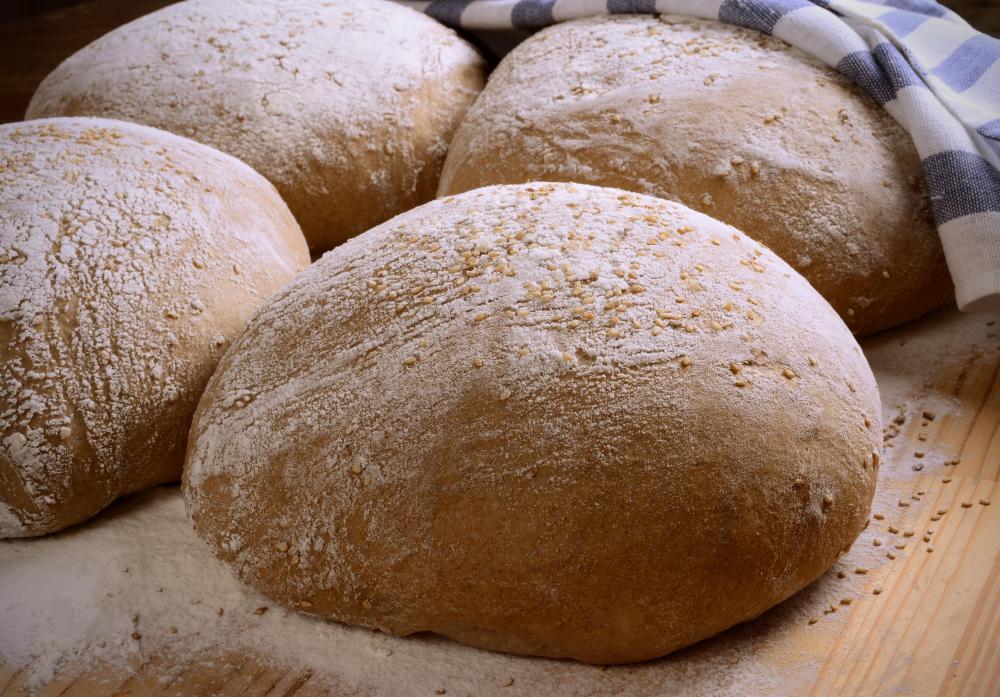
![The best rye flour to use depends greatly upon the type of bread that is being baked.]() By: fabiomaxThe best rye flour to use depends greatly upon the type of bread that is being baked.
By: fabiomaxThe best rye flour to use depends greatly upon the type of bread that is being baked. -
![Some bakers prefer to avoid white rye because it has a light flavor.]() By: food pictures studioSome bakers prefer to avoid white rye because it has a light flavor.
By: food pictures studioSome bakers prefer to avoid white rye because it has a light flavor.

Discussion Comments
@anamur-- If you are making pumpernickel bread, why don't you just get the whole grain rye flour that's packaged especially for making pumpernickel?
If you are really worried about nutrition level of the rye flour, you could do as @feruze said and mix different rye flours together. I personally don't have the time or patience to think too much about flour and how to combine them. So I just get the ones that say pumpernickel bread flour and make my bread with that. Those actually come out really well and it sounds like it's close to what you're looking for anyway.
Regardless of what you decide to do, make sure that the flour is fresh. I know the different appearances of the flour can be confusing. But sometimes flour changes color when it is no longer fresh too. So always check the production dates on the package to know when it was milled. The fresher the rye flour is, the better the baked goods will turn out.
@anamur-- Yea, rye flour can look differently based on how light or dark it is. If it is darker, it's because it's coarser and has more bran and germ. The lightest rye flour usually has no bran or germ, it's just the endosperm of rye. Like the article said, the darker the flour is, the more flavorful it will be.
I think you should go for medium rye flour that is not extremely fine. The nutrition of rye is in the bran and germ and to get that, you have to get slightly coarse rye flour. But at the same time, if it is too coarse, it will be difficult to knead and bake with it.
So you can either get medium rye flour that is not too light or dark in color. Or you can get the dark rye flour and mix it with white wheat flour to make it less dense. It really depends on you but the end result will be fairly similar.
I'm planning on baking some rye bread soon but I'm not sure which type of rye flour I should get. I checked out several groceries including an organic one this weekend and saw many varieties. What confused me was that the flours all labeled as rye didn't really match one another in terms of color. Some were whitish, some yellowish and others were grayish in color.
I'm looking for a healthy flour that is nutritious and rich in fiber. I'm also looking for flavor, I don't want a bland bread, although I don't want something extremely spicy either. I want my kids to enjoy this bread too. Since rye is usually said to be spicier and stronger than wheat flour, I don't want to overdo it on the flavor scale.
What kind of rye flour should I go for?
Post your comments