
At HomeQuestionsAnswered, we're committed to delivering accurate, trustworthy information. Our expert-authored content is rigorously fact-checked and sourced from credible authorities. Discover how we uphold the highest standards in providing you with reliable knowledge.
How Do I Choose the Best Casement Replacement Windows?
Choosing the best casement replacement windows is usually a matter of understanding the options and researching the differences between construction methods and materials. In most cases you’ll be able to find a range of casement windows to replace either existing casements or other styles of windows in a home or office. Understanding the pros and cons of what you currently have can be a good place to start, at least in terms of defining your ultimate goals. Sometimes the best replacement will be a direct mimic of what is already in use, though you may also elect to upgrade the materials, the quality of the glass, or the associated hardware. How easy the window is to install and how durable it is against things like high winds and storm water might also be factors depending on your particular situation. In general it’s a good idea to look at a couple of different alternatives before making a choice, and talking with a specialist or window installation expert is often also beneficial.
Window Basics

Casement windows open outward on hinges controlled by a rotating handle. This distinguishes them from traditional sash-style windows, which usually open up and down or side to side on a fixed track. Generally, casement windows offer considerable light penetration and viewing space. Their handles can sometimes be tricky, though; although the handle opens and closes the window with little pulling or pushing, locating and maneuvering the handle can be awkward, especially when blinds have been installed. Many manufacturers offer handles that fold down or tuck away when not in use, and some have locking mechanisms to prevent accidental cranking by children or pets.
Overall Effectiveness and Quality of Construction

When choosing the best casement replacement windows, it’s often really important to consider effectiveness as well as cost. Ideally you’ll want a window that is made of sound material and fits well — and can be sealed well — into your existing window frame. You will usually need to measure the frame or consult a professional to assess what’s already in use in order to get the sizing specifications right. A window that’s poorly made or doesn’t fit well will usually lead to disappointing results.
Consider Different Materials

The building material used can also influence the effectiveness of the window. For example, vinyl casement replacement windows usually are reasonably priced, but early versions in the 1990s often presented leakage and insulation problems. As of 2010, the grade of vinyl had improved to the point where insulation became a minimal concern.
Other types of casements are steel, aluminum, wood clad, and fiberglass. Metal casement replacement windows conduct moisture and heat, which usually makes them less than satisfactory insulators. Fiberglass, vinyl, and wood insulate well, with wood usually considered to be the best. While wood can rot once paint cracks, wood clad typically has a vinyl covering, thereby making the unit maintenance-free.

Vinyl windows are usually easier to install than wood or metal because there is more give in the material. The most natural appearance is usually achieved with wood, followed by the look of manufactured materials. Vinyl products come in various shades with consistent color, which can disguise or at least minimize the appearance of chips or dents.
The Double-Pane Difference
Another consideration is glass construction. Double panes can help keep out extreme temperatures such that a home can remain cool in warmer months and warm in colder months. It’s usually important for you pay attention to both listed R-factors and U-factors for the entire window when considering double panes. The R-factor measures the effectiveness of insulation. In general, the higher the R-factor number, the better the insulation. The U-factor measures the amount of heat transfer, and the lower the U-factor, the better the window is at keeping temperatures constant.
An e-coating can be also applied to glass surfaces, which is something that might be worth considering. This typically helps keep heat from transferring in or out of the home. Krypton or argon gas can be injected between double panes, thereby helping to insulate and prevent heat transfer.
AS FEATURED ON:
AS FEATURED ON:


-
![Casement windows come in a variety of materials.]() By: KadmyCasement windows come in a variety of materials.
By: KadmyCasement windows come in a variety of materials. -
![The ease of installation is something to consider when choosing casement replacement windows.]() By: auremarThe ease of installation is something to consider when choosing casement replacement windows.
By: auremarThe ease of installation is something to consider when choosing casement replacement windows. -
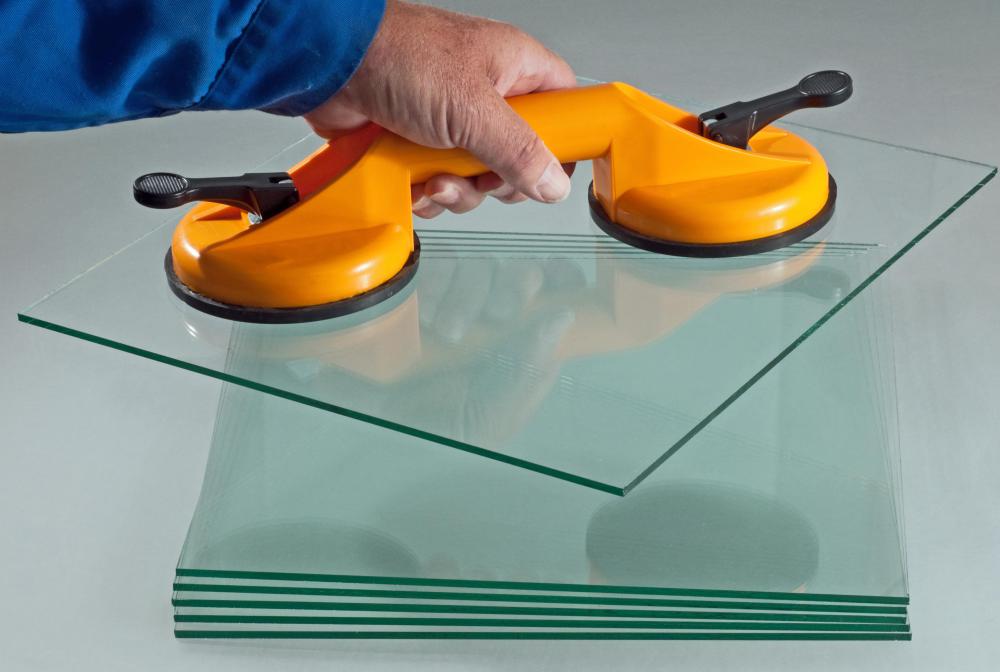
![Coated glass can be used in casement windows to reduce heat transfer.]() By: Bruno TCoated glass can be used in casement windows to reduce heat transfer.
By: Bruno TCoated glass can be used in casement windows to reduce heat transfer. -
![Vinyl windows are usually easier to install than wood or metal.]() By: HalfpointVinyl windows are usually easier to install than wood or metal.
By: HalfpointVinyl windows are usually easier to install than wood or metal.



Discussion Comments
@Mammmood - It’s my understanding that vinyl replacement casement windows are the most efficient actually. I think it’s notable that the article mentions that you can cover the wood windows with vinyl.
I’ve heard that vinyl is good at keeping your house warm during winter and cool during summer. I don’t know the science behind that but I think it makes sense. I also believe that it would be much easier for you to install.
@SkyWhisperer - I think that R factor and U factor are really important if you want to justify the replacement window cost. The article doesn’t say but there’s a formula you can use to figure out these values.
You can find the formula online but you can also visit your local home improvement store and they should be able to tell you. The formulas will tell you what value you need if you need to keep your house at a certain temperature. It’s basically an efficiency calculation.
Even if you need to spend more on the replacement windows it’s worth it in my opinion because you will save money on your utility bill in the long run.
I like the wood replacement windows myself, not only for their overall effectiveness but because of the décor. Really all casement replacement windows can be visually appealing but wood is especially attractive with houses that have wooden siding.
We almost bought such a house years ago but it was outside of our price range. However the house was thermally efficient in every way and the windows played an important role in that.
I don’t know if the wood was covered with vinyl as the article talks about, but I wouldn’t doubt it. The owner spared no expense in updating every feature of that house.
Post your comments