
At WiseGEEK, we're committed to delivering accurate, trustworthy information. Our expert-authored content is rigorously fact-checked and sourced from credible authorities. Discover how we uphold the highest standards in providing you with reliable knowledge.
How do I Care for Someone with Asperger's?
Asperger's syndrome is a mild form of autism that usually results in difficulties carrying a conversation and interacting with others in social situations. Children and older people with the condition might display obsessive tendencies, refuse to listen or show sympathy to others, and avoid interactions and relationships. Caring for a person with Asperger's can be difficult, and at times frustrating, but a knowledgeable, compassionate caregiver is essential in promoting an individual's safety, security, and wellbeing. Parents or caregivers must realize that, while the condition cannot be cured, certain steps can be taken to help afflicted persons live normal, successful lives.
The most important step in caring for someone with Asperger's is confirming that the individual does indeed suffer from the condition, and that symptoms are not related to other conditions, such as attention deficit disorder, depression, or obsessive-compulsive disorder. Medical professionals and psychologists can conduct interviews with patients and their caregivers to check symptoms and make proper diagnoses.

Once Asperger's is determined to be the cause of a patient's problems, a caregiver should learn everything possible about the individual's condition, symptoms, and triggers. Having extensive knowledge of the disorder and how it affects a specific person is key in alleviating symptoms and making life as easy as possible. Many caregivers keep detailed records of behavioral outbursts and successful strategies for deescalating an episode. People with Asperger's usually have difficulty explaining their feelings and problems to their caregivers, so being able to retrieve past information about what has worked and what has not is extremely helpful in easing future situations.

It is very common for people with Asperger's to obsess on a certain activity or subject to the point that excessive amounts of their daily lives revolve around them. A caregiver can try to turn unhealthy obsessions into positive life skills. An autistic child, for example, may obsess over sports history and statistics, while shunning personal responsibilities and schoolwork. A creative parent can encourage the child to apply their abilities to other aspects of life, from math and history class to completing chores, by suggesting that he or she employ the same strategies used to compute, organize and remember baseball statistics.

A parent or caregiver should inform an autistic individual's school or workplace of the condition, and explain the teaching and support strategies that have proven successful at home. Most educators and employers can arrange special accommodations and make sure that situations are handled properly. A well-informed team of teachers, employers, caregivers, and doctors can ensure that a person with Asperger's is awarded every possible chance of success and happiness.
AS FEATURED ON:
AS FEATURED ON:









-
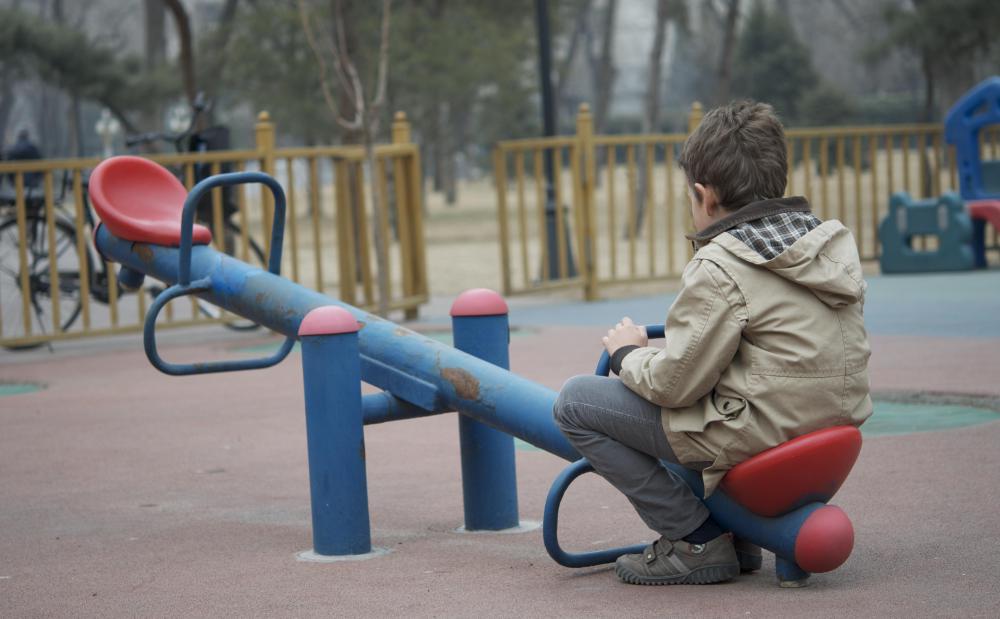
![Children with Asperger's may avoid interactions and relationships.]() By: mariazinChildren with Asperger's may avoid interactions and relationships.
By: mariazinChildren with Asperger's may avoid interactions and relationships. -
![Children with Asperger's may have difficulty communicating and interacting with others.]() By: godferChildren with Asperger's may have difficulty communicating and interacting with others.
By: godferChildren with Asperger's may have difficulty communicating and interacting with others. -
![Children with Asperger's may display obsessions over certain activities or subjects and completely neglect responsibilities and schoolwork.]() By: SabphotoChildren with Asperger's may display obsessions over certain activities or subjects and completely neglect responsibilities and schoolwork.
By: SabphotoChildren with Asperger's may display obsessions over certain activities or subjects and completely neglect responsibilities and schoolwork. -
![The school of a child suffering with Asperger's syndrome should be informed of the condition so teachers can develop strategies to ensure the child's success in the classroom.]() By: Igor MojzesThe school of a child suffering with Asperger's syndrome should be informed of the condition so teachers can develop strategies to ensure the child's success in the classroom.
By: Igor MojzesThe school of a child suffering with Asperger's syndrome should be informed of the condition so teachers can develop strategies to ensure the child's success in the classroom. -
![Occupational therapy is often used to help children on the autism spectrum, including those with Asperger's, to improve their ability to move their bodies so they can use scissors, ride tricycles and catch balls.]() By: g215Occupational therapy is often used to help children on the autism spectrum, including those with Asperger's, to improve their ability to move their bodies so they can use scissors, ride tricycles and catch balls.
By: g215Occupational therapy is often used to help children on the autism spectrum, including those with Asperger's, to improve their ability to move their bodies so they can use scissors, ride tricycles and catch balls. -
![Children who frequently act out may have Asperger's.]() By: Monart DesignChildren who frequently act out may have Asperger's.
By: Monart DesignChildren who frequently act out may have Asperger's. -
![Someone with Asperger's may have issues with hygiene skills.]() By: GangSomeone with Asperger's may have issues with hygiene skills.
By: GangSomeone with Asperger's may have issues with hygiene skills.



Discussion Comments
All of the posts here and every other sit I have visited are very familiar. I have been married to a brilliant man with Asperger's for 15 years. We have no children together, thank god. His own children are alienated from him and mine also since we married.
Here is my advice to those neurotypicals who live with an Asperger's individual. Don't expect any real normal life. If you are OK with that and can tolerate or cut others out of your life for your Asperger's loved one, then stay. You will learn more than you ever imagined.
Without these brilliant people, we would still be in the dark ages. Try with all your might to not take the snide remarks personally. Set healthy boundaries on behaviors. Leave the room when you want to slug them. You will constantly be defending this person's behavior to everyone. People do not understand Asperger's and will not tolerate the behavior. If you can do things for yourself, you will be healthier mentally to deal with the challenges your life will bring.
If you are not able to stay mentally and physically healthy, get out now!
If you have a child with Asperger's, learn all you can and help them learn cognitive skills to survive this cruel world they have to exist in.
I was in a relationship with someone with Asperger Syndrome, and he ended it - twice. And I loved him very much.
I think the thing to remember is that your own emotional needs can never be met while in a relationship with an Aspie. When my father died, he was unable to console me. When my child was bullied at school quite badly, he could not feel any concern. Whenever I needed a hug, or attention, or to have a conversation with another person, or to feel important, he was not the person who was able to support me.
In a good relationship, people feel safe and wanted and respected and needed and important. Aspies haven't got the ability to demonstrate that you are important to them, if you indeed are.
Life with an Aspie is lonely lonely lonely, desperately, painfully, painfully lonely. You will need them more than they will ever need you, and your needs will never be fulfilled. Not even something as simple as an impromptu hug or caress or pat on the head or a stroke. They will never feel joy at having you around, being sat next to you. The reverse is true: they need distance from you, don't want to be touched, never initiate affection.
Human beings cannot thrive without interpersonal connection, affection. Aspies can and you - the non Aspie - will remain forever starved of affection. You won't thrive.
I met this wonderful man who virtually swept me off my feet and wrote a poem called, “Can she love me!” I was taken in and fell in love with him. He asked me to spend Christmas with him in the Alps and I gladly went and spent two months in the snow having fun. The first sign there was something wrong was when he took himself into a room to be alone and didn't want to be disturbed. I let him have his space. He was often distant, but then at night in bed he wanted to be so close and the sex was wonderful.
We had planned to go to Barcelona for a break and it has been years since I'd been there and I wanted to explore immediately and enjoy all the place had to offer. He, however, couldn’t leave the room, was tired, exhausted and couldn't cope. I was annoyed at first and expressed my displeasure and he retorted very angrily and I felt in the wrong. We had planned to fly to the Canary Islands and he informed me that when we landed he needed to be alone. At the airport he left me, and I was heartbroken. A week later he came back, and we have been together ever since.
I have been to hell and back with the angry outbursts and his verbal abuse of my behavior. His selfishness has no bounds, he thinks only of his own needs, making meals for himself and ignoring me, making himself drinks. Yet when I make dinner, I always include him and consider what he would like to drink and pander to his needs. His life is spasmodic. He goes on extremely long walks and then does no exercise for weeks. He obsesses over chess to the exclusion of all activities. He will sit in a room with his back to me for hours. I have felt unloved, uncared for and ignored. Why do I stay? He has moments of brilliance when he is warm and kind, wants to touch me and allows me to touch him. I once stroked him in the middle of the night and kissed his back and he woke shouting, “What the hell are you doing?” Being rejected by him is a daily activity and after having spent days with him in his flat, he asked me to leave, saying he wanted to be alone again.
My health has suffered from being with this man and my life has been consumed by him, his behavior and his needs. I feel somehow addicted to him like a drug. Writing this post has helped me rationalise what has happened to me and realize that none of this is my fault. He has Asperger’s big time, but it's something I have never discussed with him for fear of his anger.
He is very critical of his kids, yet they have all done well in life. His girls are beautiful women and his son successful as a teacher, and married with a baby daughter, yet he doesn't seem to acknowledge all this.
I am hopelessly in love with this man and I am finding it very hard to let go, but letting go is something I will have to do for my own sanity. He is bad for me and is bringing me down. I always look forward to seeing him and I need to see him for the monster he really is and get on with my own life.
Yes, those of us who are married to or have an Asperger husband, we do have the same experiences. We can go on and on about the ways and times he blames us for anything seemingly out of the blue, decides to make either our birthdays or Christmases a nightmare because that day he “gets an angry mind” for some out of the blue reason, forgets to or just doesn’t buy gifts for birthdays, tells us he wants to hang himself, centers all his income on himself and on his very special interests while his wife ends up living on credit, satisfying all household needs alone. He then blames us for all of it.
One might be married to the sweetest, most charming man for a year. Then, after a year or so, one is married to a man who lives in a parallel, self-centred world. And then they want sex, not understanding that a good sex life is built on a common good life. Yes, we seem to have been given the role and expectations he has of his mother, where he only is the center. If he suggests anything nice, it is a sort of “donation” from his side of a weekend away or a bottle of wine, but can end up in a disaster, because he chooses to interpret that something we have said or done gives him a reason to blame us. And off he goes, and then plays insulted afterwards. He demands acknowledgement for his high position at work and respect!
As a specialist within social and emotional problem areas for children, I gradually understood there was something wrong. I became anything, and asked myself if I really was to blame! But the blame came “out of the blue.” Having been married to a loving husband before (I became a widow in my early fifties), and having two adorable children with my previous husband and close and hearty relationships with all my friends, I did not recognize myself through my new husband’s judgment of me. I cried. Then I became angry, then decided to do something.
I realized (after four years) that he had Asperger’s syndrome, and joined a support group for those of us married to husbands with Asperger’s. And did that help? Yes! I was not alone. Every step of the way we recognized each others’ problems. We lived the same life of loneliness, blame, anger and walking on eggshells in our lives.
We were not guilty. He was not guilty either. His mind works very differently. One has to read about how his mind works to understand him. Will I continue to live with him? I am still learning. I have decided to just walk away from him when he gets into his “red zones” of anger, arranges the ladder and rope in the tree to hang himself, etc. I pretend to walk away, but just walk around the house to see what happens. And yes, when I, the one who is at fault and the target for his anger, has left, he climbs down from the ladder and the rope, goes to the kitchen to make a cup of tea and sits down to continue working on the computer, which is his special interest.
After a while, I decided to tell him that I have joined a support group to get help. He laughed, because nothing is wrong with him! He ridiculed the group. I told him I go there because I, for the first time in my life, need psychological support because of his behavior, and get it. And that it helps me live with him. I develop my own strategies. I told him about my observations of him after he believed I had left him to himself. Then it stops for a little while. Still, after six months, he denies he has a problem. It is still, as some say, a roller coaster life.
I will see how it goes. I do not want to ruin my own life. But I will try to see if I can help him by ignoring all his blaming and anger, telling him right then that I know it is not me who causes it, and then leave him alone for an hour or two, so he can pull himself together and deal with his angry emotions.
If it does not improve, I will leave him. I want to have a life, continue to have a loving relationship with my children and also my future grandchildren, and be my own self, a happy, loving and wise woman. To all of you, I suggest you read about the problems an Asperger’s partner has in life, and join an Asperger’s support group. If you don’t want to become a replacement mother for an adult self-centered “child” with anger problems, don’t continue. You also have a right to live and devote yourself to a normal life with your children and friends. You have developed survival skills while living in an Asperger’s relationship. It may be that it is time, not only to survive, but to start living your own life again. I have given myself three years to make this decision.
I'm a 17 year old girl with Aspergers and I also have social anxiety disorder, depression, and I used to have anorexia and PTSD. Let me just say it is horrible! I hate the term aspie. It's not cute and I hate knowing I'm classified as autistic because it makes me feel totally devalued and hopeless, like I'm mentally messed up for life and there's no hope in escaping that diagnosis.
Also, I always feel socially isolated. I have a hard time making and keeping friends and until recently, I have had a hard time growing up/maturing emotionally, still do though. I wish there was a cure to rewire the brain and make it easier to interact naturally but I don't know what else to do besides learn how through therapy.
Also, I hate social networks like facebook. I have them, but i get so much anxiety and always feel like everyone's judging me and hates me. It's so hard and now I'm afraid i'll never be able to get married and have kids because my husband will get sick of me and my annoying/messed up behavior and my kids will turn out messed up and autistic too. Sorry if I insulted anyone here. I'm just speaking my mind!
I have been with a man for four years long distance. I need help as I'm beginning to see he has this syndrome. I thought I was going crazy until I read up on this stuff. I could write columns on his behavior. Can anyone talk to me?
I am 43 years old and I live with my partner, aged 48. We first met approximately 20 years ago when he worked as a door supervisor at a nightclub. We had a relationship for five years before going our separate ways but after five years apart, we got back together. That was about 11 years ago.
Two years ago, my partner asked me to move in with him. Our relationship over the years had been fun, and it was not long before I fell madly in love with him and I felt that to be living together would be the icing on the cake for me. I told my daughter, rented my home out and moved in with him. That was the exciting bit.
Just before moving in together, I was made redundant. I received a fairly good severance but, due to my partner having credit card debts, the money soon ran out. I felt that as we were now together we had to help each other and in the beginning I did not have a problem with the arrangements. It was only when speaking to him about contacting a debt counselor and/or his creditors, that I first saw the first signs of anxiety in him. It was a little odd, watching the panic in him as he went over in his mind the things I suggested he say in a telephone call. He became very anxious, even to the extent of snapping at me, which I felt was a complete over-reaction to the situation. To watch a fully grown man tie himself in knots over this was mystifying.
Over the next few months, my partner began to exhibit more traits which made me question his mental health. One early occasion which came to mind was one day when he called me at home and asked me whether I had had a chance to put the vacuum around the place! I let that go, feeling that it was, at the time, just his sense of humour. Little did I know that this was the beginning of a very hard time for me and my daughter.
It was about three months after we moved in together that I began to question his mental state. We had spoken about compromise before I moved into his place, about his making dinner when he is off work, basically sharing everything, going out etc. I can honestly say that in the time I have been here, he has made dinner on only two occasions. When I suggest that I take a day off on my birthday or Mothers’ Day, he says things like “That’s OK, we can get KFC”.
Another occasion that comes to mind, quite sadly – was our first Christmas here. My parents, happy at last that their daughter had finally settled down, came for dinner – as did my partner’s brother. I am sad to say however that that Christmas was the worst one I can recall in my whole life.
In the morning before my parents were due, my partner decided that that was the time for the whole house to be vacuumed and told my daughter to begin work. I am far from work-shy but I had to draw the line at housework on Christmas day! My partner then spent the whole day sulking, casting dirty looks at my daughter, making snide remarks etc. The day was ruined.
What struck me the most was his inability to see how daft he looked glaring at my daughter from across the room. My parents later told me that it was their worst Christmas ever. My daughter at the time had just turned 14, but to see her the victim of the wrath of a man was painful for me. I could not understand how an adult could behave that way, let alone towards the daughter of the woman he loved and in front of my family and his brother.
I should add that I am intelligent, intellectual person with qualifications in psychology and human behavior. I have a degree in law, a counseling diploma and have spent years trying to figure people out while also trying to understand myself. I began to feel that there was more to my partner’s behavior.
My partner felt it was often his place to say when housework should be done, and didn't seem to understand why that would irritate me.
His lack of social etiquette was even more shocking. even to the extent that, after our Christmas meal, he suggested to my parents that they use our bedroom to work off some food and make room for dessert! He laughed and seemed oblivious to the fact that no one else was. On a few occasions since, he has made sexual references in conversations with my parents, so much so, my sister told him it was not appropriate to do so – this was at another family Christmas, yet just last week he did it again – I was so embarrassed. I cannot understand why when told, he acknowledges what was said, yet does the very same irritable thing again.
This relationship feels one sided. As long as his dinner is cooked, clothes washed, house cleaned, food is on the table etc he is OK. But there is a complete lack of understanding of my needs (can you believe that we have not had an evening out or a holiday despite all the words (I use the term ‘words’ rather than promises as it is clear to me that he does not recall everything he says), but to be honest at this stage, I would not feel comfortable going anywhere with him socially.
At times I feel he is getting worse. My daughter, now nearly 15, tolerates him. This is not what I wanted nor expected in a relationship. My partner cannot communicate with her other than to chastise her for not doing something or for doing something but not to his standards, yet he at times exhibits a very slothful attitude, preferring to lie around in bed all day, but criticizing anyone else who chooses to do the same. That reminds me, if it is not me or my daughter he is criticizing, he manages to criticize practically everyone on TV which takes away the enjoyment and deeply annoys me. His children do not come over and his family just tolerates him.
To say I am disappointed would be an understatement. I have loved this man for years, I always thought he was a good listener, but did not realize that these problems would make me consider leaving him. I hate to see the look my daughter gives him, I hate the way he speaks to her (and he uses such horrible language towards her I wouldn't dare write it) and I hate the way he makes me feel. I also hate the fact that at last I am with a man I love but who is emotionally or mentally unable to understand what is wrong and the part he plays in this relationship. Everything he says begins with “As long as I am happy...”; no consideration given to my happiness at all.
I cry every other day at the lack of emotional support I have at the moment. Attempts to discuss this with him have at times been acknowledged, but he flies off the handle and it makes it more difficult.. He has a problem understanding my teenage daughter and often criticizes my parenting skills, saying how soft I have been with her (he thinks she is lazy because she doesn't act the way his parents taught him to) yet forgets that he walked out on the mother of his three children and that my daughter’s father left me before she was born. Not that I should justify myself, but I am the eldest of four sisters, bought my first place just before my 25th birthday and have been working since leaving university. My daughter is a beautiful, typical teenage girl and we have a good relationship. The only thing I am happy about is that I played a huge part in the development of her self-esteem and have also educated her to some extent on the effects of asperger's on an individual.
I feel I am becoming more and more depressed by the day – not wanting to deal with his tantrums when I feel pressure at work. All this makes me want to leave him, and move back to my own place. The thought of a peaceful mind as a single woman again is sometimes better than wondering what mood he is in when I get home and whether I can live with his behavior in the long term. On the other hand, I know he cannot help it, but is there any help for me?
I am fed up of walking on eggshells around him, and tired of repeating myself. Even up until last night as he had spent the day moaning that my daughter had not done any housework, even though the house is spotless, I said that I felt he could not communicate with her properly, and is always chastising her, which he then tried to justify by saying “she should take pride in her environment”, and this morning before even saying “morning” (she had a friend staying over), he knocked her bedroom door to tell her to wash up.
I recognize a lot of his belief stems from the way his parents treated him and the habits and patterns instilled in him as a child. One of his most irritating statements is ‘good school is old school’ and no matter how weary that statement makes me (my parents were also very strict), he keeps saying it. I can say until I'm out of breath that the way our parents were is not necessarily the case now. He ignores it.
I'm tired. I feel cursed when it comes to relationships; I loved one man for seven years before he physically abused me, but I left him and he went to prison. The second man, my daughter’s father, left me after 13 years, when I was pregnant and now this – to have been in love with a man for nearly 10 years, move in with him, only to learn he has a mental condition. His nephew has autism.
I don’t know what to do – I am depressed, suicidal, lonely and in a great deal of pain which the man I love cannot or will not even try to understand. At times I want to go – I cannot see what I am gaining out of this relationship and if that’s the case consider it best to live alone. At other times, I know he cannot help some of his behavior, but my attempts to guide him cause him to flare up, what I say is ignored and his behavior is repeated again. It is the yo-yo effect that is getting to me.
I now have a good job and with it a lot of responsibility. At times I feel as though I had two children. We had plans to get a new car, bathroom, holiday etc, but I cannot even plan for tomorrow when I feel so depressed; I always feel that for one step forward, he says or does something which makes us take two steps back. I tell him this but nothing changes and I have to repeat myself. We are going around in circles. Why should I invest in something which may not, in the long term, work out? He has dyslexia, cannot organize his finances, is over £50k in debt. The bottom line is he will not be able to stay here and manage alone, but I want a partner not another child.
Apologies for the rather long blog, but as you can see, I am in a great deal of pain and do not know where to turn.
Would appreciate some thoughts on this. --mx
I met a man last year whom I have recently discovered has either aspergers or something very similar. I haven't dated much. Our conversations we had were inspiring, exciting, intelligent. He had passion like I've never seen before and more intuitive than any man I have met. His naive honestly and vulnerability was charming. He seemed to be able to "read my mind" and often I felt like we were so alike. He understood so much without words, it seems. So many extraordinary wonderful qualities, and I fell in love with him.
But, certain behaviors were unusual, and as time went on, I began to personalize them. He told me he was an introvert, reclusive, didn't have friends doesn't like his family, and this confused me as he was so extrovert and opposite when he was with me. But he would become cold and mean very quickly. I blamed myself for saying that "insensitive" word, or he got angry because I shouldn't have "bothered" him so much. Then we slept together, and it was wonderful. He was respectful and loving, but the next day he left to do photography, or astrology or archaeology or one of his many interests for the day and I didn't see him again for two months. He called me however, told me he had a "serious pain" and it could be colon cancer. He told me this is not a good time to date. He also told me that him meeting me made him realize "what a mess his life really is".
Since then, he refuses to reply to any of my texts, emails, calls. Although I haven't left many it has now been months since I have heard from him.
I ended up in counseling over this. It is so sad. I blamed myself for not having dating experience. He made me feel like I messed up so much. The counselor suggested he had aspergers and I began to research. I cried so hard when I realize this is definitely my ex boyfriend. That behavior was not his fault, and I thought he was just being a jerk.
The big question I have for someone out there is, Is there anything I can do to help him? He desperately wanted to be "just friends" but my heart was broken, and I just couldn't. Can I help him in any way now that I know this information? I believe he knows he has aspergers as his "studies" suggests that he seeks improvement from these symptoms, but maybe he is in denial? Would it send him over the edge if I talked to him about this syndrome? Or would it give him comfort to know I can now be the friend he needs and he doesn't have to pretend anymore?
@anon167357: If you're not in the U.S., I'm not sure what the laws are in your country, but try this. Tell him that, under no circumstances, is he to contact you *ever* again. With these kinds of people, it's either all or nothing, so you have to make up your mind that you're going to sever all contact, full stop. That's your only option, if you are concerned about this guy's effect on your mental and physical health.
Then, if possible, change your phone numbers and e-mail addresses and online identities.
If he shows up at your door, do not let him in. Tell him to go away. If he does not, call the police. It sounds harsh, but it isn't. He is not "unwell." Just because he has Asperger's doesn't mean he gets to ride roughshod over you, or that he is incapable of understanding what "go away" means. Call the police. Have them escort him off your property and get a no trespass order or the equivalent, and a no-contact order against him, if necessary.
This is not being overly harsh. I'm assuming you've tried to talk with him about your health issues, etc., but it hasn't done any good. For your own peace of mind and good health, tell this guy to hit the road, and then do whatever is necessary to cut off all contact with him. He will, I promise you, find another person for his host as he plays the parasite.
I met my friend on a chat line six years ago, and it didn't take long before he gave up his home to land on my doorstep!
I fell in love with this guy ten years younger than myself, and he was quite nice to me at first but i soon learned things were about to change.
He has given me six years of torment. Yes, i know he is unwell but i am too. He is selfish, unloving, unpredictable and self-centered.
I have come to hate him. He is constantly wanting to invade my space, and if i don't let him into my home i am evil. He kicks my door screens. I can't take it anymore.
I have my own serious health issues to contend with, yet i can't even be left alone on my visits to the hospital.
He sees me as his comfort blanket, and if he hasn't got his blanket he kicks off. I took him in, brought him clothes, found him a flat, and did everything i could to help him.
I now need him out of my life. He is making my health deteriorate but he will not step back or go away. I need help with this guy but don't know where to go. Someone, for my sanity please help or advise me.
I think that I may be dating someone with Asperger's Syndrome. I am not sure. I just know that he has a different quality about him. We have been dating for a little over a year now. He is a 33 year old who has never been in a long relationship until me. He said that they all left. I get upset because we have been together for a year and I don't feel he cares about me. I just want a hug every now and then and in the beginning there was a little more affection. He says that he is not and affectionate person and he has always been this way, that he has never been close to anyone and when he has dated they all left because they couldn't deal with it. He said that he doesn't know how to give me what I am asking and then he said "trust me I've tried".
He said he is thirty three years old and that he can't change – it's the way he's always been. He has other friends but he said, “I only have two friends and one only comes over to get away from his wife for a bit” and that I am the only person who has ever called to actually come see him. He doesn't really talk loud or take over conversations. He is the opposite. He lives on his own and has a job. He is very quiet and although we do talk about some things, we never talk about emotions or what exactly we are and when I try to bring it up, it comes out all wrong and it turns into this big deal.
He does go and eat dinner at his parents nightly and does have some things that are routine but nothing extreme. Just eating at 10 and watching TV. He watches a lot of sports but that doesn't mean anything either. I am not sure if he has Asperger's. He has never mentioned it and I don't think he knows if he does have it.
It's just when he said he has never been close to anyone that just I don't know. It hurt me because we have been together and he doesn't even feel close to me. That was like a dagger to my heart because I love him so much. He said the we have only been together a year and that it takes him a long time to get close. He mentioned that we only spend on full day together, which is saturday, but I am over there five nights a week but he said we only have one day that we spend the whole day together and that doesn't give us a chance to be close. I told him that I have been here for him a year and that I may get upset sometimes because I feel that he doesn't care for me, but I am still here. When everyone else left after a couple weeks a couple months. I am still here.
Now I think he wants to be done with me because he says I want something he doesn't know how to give me. If he has Asperger's, I could understand a little more. I want to mention to him or someone. Maybe someone will read this and help me because he is my heart.
I am 23 years old. I have achieved so much by having done my GCSEs, A Levels, University and almost three quarters of the way through a teaching course. I have been a born again Christian for five years.
Right now though, I still find every day life interacting with other people 'normally' really hard! I have always tried my best to be loving, caring and nice to people but just feel like I've had enough now because I feel too different to most people. I have never in my entire life fallen behind on deadlines either until recently.
I have loved and yet hated life! I am just so screwed up! I am living on the edge all the time and my past memories of having been bullied and isolated never go away even though I've tried. I wonder when my days as an aspie will end but they never do! I have tried counseling for four sessions and constantly prayed for healing but nothing seems to work!
I may be seen as somebody who looks at the black sides of everything but life is hard and hell as an aspie! I may have achieved a lot so far in my life but now I have lived as an aspie long enough to feel like I'm falling apart and fed up.
I think what is the point in working so hard if yet I just do not feel accepted as normal. I know I will never be normal and have never got over my diagnosis. I have tried to get over it for long enough but just feel like enough is enough.
Anyway, I am very sorry if I have offended anyone. It's just that I don't know where else I can just pour my broken heart and soul out.
@Garden Turtle: How wise you are! You are so correct in your statement of famous people and Asperger’s. My friend amazes me with his knowledge and wisdom. He is also a very loyal, honest person. I can’t say trustworthy, as he does go off the rails at times, but I do remember him saying to me this would happen but not to worry, he would always come back. (And he did)
Even after going off with another woman whom I can honestly say was not of a pleasant nature, he still returned to me. I think it was alcohol that attracted him to her. She took advantage of him while he was off his head on vodka and all I could do was sit back and watch. It broke my heart to witness their carrying on.
I have befriended alcoholics in the past but never have I seen anyone behave the way my friend did while drunk. It was very unpleasant to witness. He thought nothing of telling me the intimate details at great length, even though I didn’t want to hear it since we were once an item. ( But true to his word, he came back.)
It was never a warm, loving relationship on his part. How could it be? He didn’t now how to be warm or give affection, but at times when he felt threatened, he would cling to me. I made the most of those times since it was the only time I felt his closeness, the warmth of his body next to mine. We had sex in the past but it was more of an act he felt he should do but it soon turned into just a hand in hand, foot on foot. In his way, I suppose it was some sort of a closeness. I so wanted him to love me but if I asked if he did he would reply his heart is closed. At least his was still in one piece; mine had been broken.
As the years went by, I realized he was different from others. This one was special in a funny sort of way. He can be charming. It doesn’t happen very often but hey ho, it happens now and again, especially if he is threatened by another male on what he classes as his territory. (Maybe that’s his way of saying I love you.) It’s more likely he is lost without me. I have become like a comfy pair of slippers.
He can be very distant, yet I love to see him when he is happy, dancing, singing or acting the fool; it can be quite entertaining. No point in trying to change him. It’s what makes him special, as hard as it is to live with.
He used to say he and I were joined at the hip but now he insists we are just friends, but he will still climb in my bed when it suits, but no touching of course. (But still foot on foot. I don’t know what happened to the hand in hand.)
It can deeply hurt when you are rejected or pushed away, and his memory is so poor he has forgotten how we used to be. (If only I could forget). What a crazy mixed up illness Asperger’s is, but guess what? I am mixed up, too!
I can relate to anon’s story almost identically. It is like being in a no-win situation. I don’t know how to deal with my friend. I have tried so hard to put a little quality in his life.
Not only is my friend living a life in torment, but my life is tormented too, so please if you are suffering with asperger’s, do let me know how it affects your friends, loved ones, family or write regarding your fears, how you yourselves feel, share your thoughts and feelings and help others understand.
My friend is climbing the walls simply because I have had to take time out to deal with my own health. I am very poorly so why is he being so unkind and making me feel so guilty? Need I have asked that question when I know the answer? Yes, it’s his illness: Asperger’s! He feels he is losing his friend, his prop and is feeling lonely and very anxious.
How am I feeling? I feel as though I am letting him down, guilty, very worried that he will go into panic. This is where we get the no-win situation.
Come on, someone, please come and talk to me. I don’t care how this topic affects you, just come over, and share your troubles because I am troubled too. Jill.
P.S. My concentration is not so good so please excuse any errors. We are unable to understand unless we read or are told no more than I would expect you to understand my health problems.
Try and understand that as friends, partners, family, we have not been trained to deal with the complicated issues, plus the crises that go with Asperger’s.
When you care for someone but get so little back it can very difficult not to scream, “What do you want from me?” and in the next breath, “Go away! Get out of my face!” It is simply us trying to recover a little of our own space. I am sure you are all aware it affects us too. My friend is climbing the walls.
@Jitterbug: Asperger's must be terrible to have to live with. Your words touched my heart.
You have described my friend, whom i believe to have AS.
I have heard him say so many times he does not fit in, that he is all alone.
But who is to say what is normal? There is an old saying 'we are all the same but different' so ease up on yourself; you're not to blame.
May i ask, do you find you say the wrong things when under stress do the words just blurt out? my friend does the same. He goes through an agony of remorse after the outbursts.
My name is Jill, by the way. I have just posted an anonymous email about my friend who has not been diagnosed, so if you read it, please give me your views and if you can relate to some of his symptoms.
It must be so very hard not to be able to show your feelings and emotions but we can't have every thing in life.
Asperger's sufferers tend to have a very high IQ so that's a plus in their favor. You see what you have lost in some aspects of this blasted syndrome, you have gained in others.
Try not to be negative. I know it's hard, but pick out your good points, write them down and remind yourself of them from time to time.
I'm an outsider with different health issues but it doesn't make it any easier.
With my friend, it's like I'm on the other side of the window looking in, not fully understanding his actions.
Yes his words hurt, yes i need a cuddle but i try to understand his illness and his small gestures of maybe a bounty bar pressed into my hand or his foot pressed against mine. It means a lot.
It's swings and roundabouts with ups and downs. My health problem is more of a physical nature with me. I can get grumpy and want to be left alone to go to bed.
Who are we to judge one another? It's just two very different illnesses. When i am poorly he wants my attention, but how can i give it when i am poorly myself?
Hope i am making some sense. I can't give him my attention and he can't give me the hugs that i so desperately need, so added up we are both missing a little something.
Life isn't perfect but hold your head up high, turn your frown upside down and hey! Look at you -- we now have a smile.
Keep smiling sufferers, careers, partners, family and friends. Thanks to sites like this, we are able to chat and try to understand one another.
I befriended a man with what i believe to be asperger's. He has been in hospital because of his out of control behavior. He was diagnosed with very high adrenalin plus anxiety.
Deep down i know he is a nice guy and i am very fond of him. He has latched on to me and sees me as his prop, guide, crisis adviser, provider and carer.
This man came to me six years ago and has displayed some very odd outbursts and behavior. He is totally wrapped up in his own paranoia and his past, where he had an unhappy childhood where his father used to beat him.
He is very intelligent, a good impersonator and obsessed with the news and politics. It saddens me to see him so alone and desperate with nowhere to turn other than to me.
I fear for his safety as he has walked away from his family, carrying all his complications. The behavior and cruel outbursts shocked and deeply wounded me. I have health problems myself and am finding it so hard to cope with his demands.
This guy invades my home, privacy and life, constantly phones or hammers on my door. There are times when i am very ill and need my space to recover yet i get called names. He screams at me, and asks why i am being cruel to him. It seems he doesn't see me ailing. I am to be there for him.
I've been there every step of the way. I have only told you a very small part of my story.
This young man is ill. i have been a carer all my life but i am not as young as i used to be and the stress that comes with this guy has brought my health problems on in leaps and bounds.
There's no point talking to him. His memory is so bad he forgets what has been discussed; everything revolves around him anyway. It's all part of his illness.
On a good day, he can be sweet with funny little gestures but they can take some working out. I know in his cold heart he really cares. It's just such a shame he can't express or understand his feelings. All he feels is panic if i am not around, but now because of my serious health problems, I need help.
Someone out there please help and advise. I don't know what to do. He is under the mental health but they are not seeing what i see.
If i step out of his life, I worry what will happen to him. I am sure my story is one that many have heard before. Bless you. All health sure is your wealth.
Plicketytick and Jitterbug, I sympathize with you. I have an adult male friend who I was dating who has Asperger's. I only learned this by being a school psychologist with some sound professionals I can seek for help. This guy frustrates me to no end, mostly through basic habits like lacking the attention span to sustain a conversation that involves anyone other than him, not being able or willing to adhere to any kind of schedule for fear that someone else is trying to control him by telling him what to do, and enduring awkward situations where I cannot win, or lose. I get yelled at for not just trying to give directions (tell him which way to turn) but also getting yelled at for not telling him which way not to turn, (he blames me for causing him to make an error). It is very challenging living with him. I've tried to distance myself from him, but after yelling at me, he experiences loneliness and wants to be close to me.
Perhaps the most difficult thing for me is dealing with someone who I know will always lack emotional reciprocity. For those days that I desire someone to read my feelings and just respond with a hug, it's not to be present with this person who is part of my present life. He doesn't look forward to another marriage, and yet, he won't just let me go.
Anger is something he feels only belongs to him when others are being mean to him. Other than that, he does not believe that he does anything that would give a person reason to be angry with him.
Yes, I am frustrated. I feel like I am the only one willing to tolerate him and his idiosyncrasies. His social circle is incredibly small, and without me it would be even smaller.
i have asperger's syndrome. i would not wish it on anyone.
i can't seem to fit in in any situation and the feeling is so hard for me to explain.
i would like to let plicketytick know that when she describes her husband, i can see myself.
I seem to say the wrong words almost at every turn.
i often say hurtful things that i do not mean. i don't know why; the wrong words just come out.
Also i am hurt by others' words when maybe i shouldn't be.
i do not believe that your husband can stop the hurtful words by himself (i can't), but at the same time i am pretty sure he does not mean them. (i don't). when i act out inappropriately, it is like
something that i can't seem to control. and after,
well, there is sometimes irreparable damage.
My husband has Aspergers. It's very obvious, but he won't acknowledge it. I've been studying this topic for several years and I have no doubt.
Our son has it and is doing very well because of the help we've gotten for him. Anyway, my husband blows up at me about money problems and has been doing this for about 10 years.
I've finally had enough. But after his blow ups, he is calm and sweet and good-hearted, and it's hard to leave him. He has many endearing qualities. I know that somehow he needs to "check" himself and learn to deal with frustration without coming after me. I also think I need to help him work through it.
Could anyone out there, especially an Asperger man, tell me what it is you need from your wife? All these years I've thought I was being a pretty good wife, but he tells me now that he should have divorced me years ago, that I don't care about him and that I don't care about our family.
But two weeks after he says things like this, he seems to have forgotten all about it and says that he thinks our marriage is going pretty well, But then he'll tell me other things at another time all over again and he continually brings up any past errors of mine and repeats them over and over.
I don't know what he wants from me. He used to want to be alone so I found my own projects and interests. But then he complained because we have no common interests. In the past, we've done puzzles together and the other night he was doing a large puzzle and I decided to go sit and do it with him, (since he complains about not doing things together). After an hour or so I got the feeling he didn't want me there. Finally, he blurted out, go watch tv.
He also tells me he would like to live alone, have his own place and enjoy his freedom. I'd gladly give him a divorce (except it would make our kids sad) but then if we talk divorce, he gets sad and says our marriage is mostly good. What do you think he really wants/needs from me?
I believe my husband has aspergers and feel it is far past time that we got a diagnosis. His anger at times is a huge problem. We are in Colorado.
There are several famous people who had or have Asperger’s Syndrome. It is said that Albert Einstein and Thomas Jefferson had AS. It has also been implied that Bill Gates has AS.
John Schneider’s son has Asperger’s Syndrome. Many highly motivated and successful people have AS and have been very productive.
Post your comments