
At HomeQuestionsAnswered, we're committed to delivering accurate, trustworthy information. Our expert-authored content is rigorously fact-checked and sourced from credible authorities. Discover how we uphold the highest standards in providing you with reliable knowledge.
How do I Bleed a Radiator?
 Nicole Madison
Nicole Madison
Nicole Madison
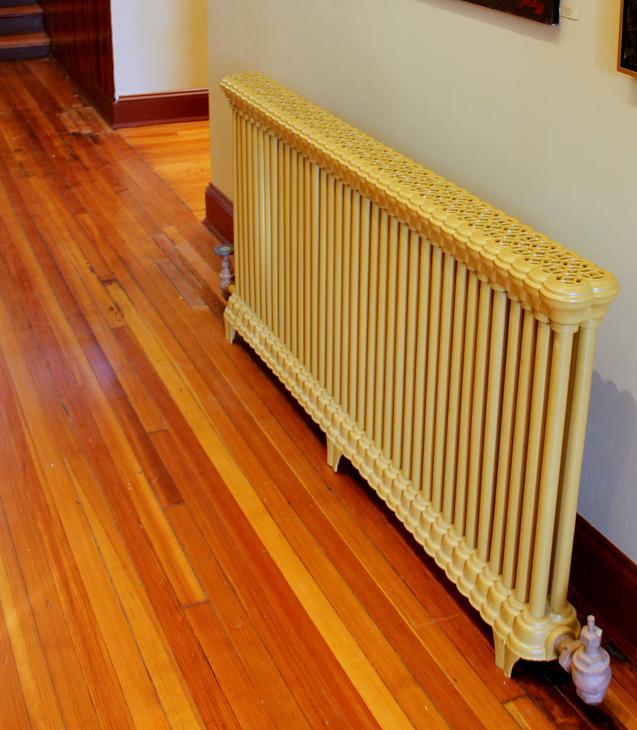
To encourage your heating system to work at optimum efficiency, it is important to bleed your radiators on a regular basis. Though it may sound difficult to bleed a radiator, it is actually quite easy to do. There is no special training required, and all you need is a radiator key and a small bowl.
If the heat in your home isn’t circulating well or the bottom portion of your radiator is warm while the top portion is cold, there may be air trapped inside the radiator. When this happens, it reduces the radiator’s ability to heat effectively. This trapped air may even lead other parts of your heating system to function poorly. Sometimes, most of a radiator will fill with air, and in such a case, there will be no noticeable temperature difference — the whole radiator will be cool to the touch.
As you prepare to bleed a radiator, you will most likely be starting with a system that has been turned on. As such, there should be warm water in the radiator. Before you begin, turn the central heating system off.

You’ll need to have a bleed key to bleed a radiator. If you don't have one, you may be able to buy a new one from a hardware store or use a flat screwdriver, if the bleed valve allows for it. This valve is typically positioned at the top of a radiator, near the end. Insert the bleed key or screwdriver into the bleed valve and turn it counterclockwise. Don’t turn it too much; a half a turn is usually enough.

As you turn the radiator key, the valve will open and you will hear a hissing sound. This is completely normal and is simply caused by the air escaping. Once water begins to leak out of the radiator, it is time to close the valve. To do so, turn the bleed key clockwise for half a turn. You can then move on to the next radiator that needs to be bled before turning your central heating system back on.
When you bleed a radiator, keep a small bowl or rag handy to catch the water that drips down. If you have a sealed heating system, be sure to do a pressure check and add water if needed. Once you’ve done so, you are finished and may turn your heating system back on. Store your bleed key until the next time you need it.
Nicole Madison
Nicole’s thirst for knowledge inspired her to become a HomeQuestionsAnswered writer, and she focuses primarily on topics such as homeschooling, parenting, health, science, and business. When not writing or spending time with her four children, Nicole enjoys reading, camping, and going to the beach.
Learn more...
Nicole Madison
Nicole’s thirst for knowledge inspired her to become a HomeQuestionsAnswered writer, and she focuses primarily on topics such as homeschooling, parenting, health, science, and business. When not writing or spending time with her four children, Nicole enjoys reading, camping, and going to the beach.
Learn more...AS FEATURED ON:
AS FEATURED ON:


-
![A radiator key opens the bleed valve to release excess air.]() By: RZA radiator key opens the bleed valve to release excess air.
By: RZA radiator key opens the bleed valve to release excess air. -
![A radiator.]() By: John MA radiator.
By: John MA radiator.

Discussion Comments
When adding water to your radiators to fill them up, when do you need to stop? I live in a three story house and I don't know how much water I need or when to turn it off.
The bottom half of my radiator is cold, but the top half is hot. What do I do?
my radiators needed to be bled, but only air is coming out -- no water.
I try to bleed my valves and air just comes out and no water then the air stops all together.
3 story georgian, built 1919, 13 radiators,gas boiler in basement, city water with manual feed valve and overflow, we bleed first turn on of the season, I will add water till it overflows (i.e., pressure is released) then we start on the top floor and work toward the furnace.
I use a key and rag. We repeat after the system is warmed up. The water is hot but never been burned. On a quiet night, if there is still air, you can hear the radiator gurgle, just bleed the noisy one(s)! this is how my wife's grandad did it. he built it, now it is hers. The biggest hassle is the R&R of the covers.
I had a leak from my boiler, and it was fixed, but they drained the system. now I get noises from the tank when the system boots up. guests in that room thought it had been raining outside heavily - the noise is terrible. I bleed two radiators constantly, but still have noise from the tank and the pipes.
please help just moved into a house with my kids and its freezing! radiators are warm at the sides but just the middle is cold when i try bleed it water comes out? please someone help.
If no water comes out and just a small hiss, is this enough?
when bleeding the system, start with the bleeder closest to the boiler in the direction of travel and work your way down the line till you get to the last heater.
I have never bled radiators before, yet my bedroom is absolutely freezing, but the rest of my house is comfortable. Someone told me bleeding is not necessary. I am not sure what to do.
When I had the furnace replaced, the plumber installed new bleed valves on all the radiators, these could be opened with either the radiator key or a screwdriver. If you have any work done on your furnace, it might be worth the extra bucks to have the bleed valves replaced when the plumber is at your house, especially if your valves are old an/or painted over.
If you can't find a bleed key in your area try the local music (instruments) store. A drum lug key works just as well.
I can tell the radiator needs bleeding as it's only hot at the bottom, so I've undone the valve all the way and taken it out (there wasn't even any hissing) and no water came out - I assume that's because there is so much air inside? With the valve out will the air inside the radiator still come out?
I was reading this radiator info as we have been having similar problems including not being able to turn the valve with the key. As I was reading this, I noticed that the editing had been done by one Bronwyn Harris. My name is Bronwen. Needless to say, I don't meet many other women with my name.
I have a new boiler fitted in my flat. However my heating doesn't work. When i turn the heating on the boiler starts to heat water and i can hear the radiator starting but then it stops and won't heat. I have bled the radiators so only water comes out now. Any ideas on why the boiler stops heating?
My boiler's pressure is too high. Am I getting the pressure down by letting some water escape from the radiators?
i need to keep adding water to system daily, no visible leaks.
If you do not have a radiator key or one valve has rounded, I have found a pair of needle nose pliers works nicely.
When I bleed my radiator, water flows from it like a faucet. Is this OK? I suspect not.
For anyone that needs a radiator key - try a local Ace hardware. I live in an area with many older houses and the local Ace hardware had a big dish of these keys near the cash register. They have been
selling a lot of them lately. $1.89, so not a big investment and my house heated up nicely after I bled the radiators.
my Uncle left me a old house with radiators. I want to bleed the radiators but have no key. What do I do?
I just bought a radiator key after my 25 year-old key broke last week. I went to bleed the radiators and got the familiar hissing of air, but no water came out.
I checked to see if water would come from the radiators that I bled last week. Nope. From this thread I take it that the boiler is not pressurized.
How do I repressurize the boiler? It is a one year-old furnace, but the water tank is probably 60 years old and there is no gauge to indicate pressure.
Should I fiddle with the various knobs and see what happens? Also, the high temperature today is 10 degrees F, so I am kind of concerned.
My radiators were cold on one side of my house after i had a boiler installed. It was summer at the time. I did not turn on the heat until a year later. I bled the radiators, buckets of water came out and the radiators heated up. A lot of air came out. Mrd
I bled my rads earlier and now the hot water or heating is not working. I have re-set it but it's still not working. I don't know what to do!
My radiators downstairs are cold in the middle and bottom but piping hot at the top and the overflow pipe has sprouting water for the past eight months. Please, any suggestions on what i could do myself would be most apprdciated. thank you.
My central heating is not working after bleeding some radiators.
I have an old radiator heating system. I've bled the radiators and got water out immediately. Problem is, the bottom 3/4 of the radiators are cold - only the top is hot. Any suggestions on how to fix this problem?
My downstairs radiators are always warm. On my second floor I have to let the air out of the radiators many times during the winter?? If the heat is turned down and then back up that is when I have to let the air out of the ones on the 2nd floor. I have an American Radiator Company boiler system--can't find anything about them. I don't understand the gauges. I do have a closed water system and rarely have to add water. I would like to know proper maintenance on my system.
I live in an old row house with cast iron radiators. When I bleed the radiators, I get air from two of them (top 3rd floor and water from the others (the heating system is on). What could be the problem and should I add water to the system? If so how? How do I check the pressure and what should it be.
hi, we are bleeding the radiators in our home and the one's on the 2nd and 3rd floors are remaining cold. any suggestions on how to fix this problem and make them warm?
I have an old house with iron cast radiators. How do you bleed these? I took out the pressure valve, no water came out. Is there another place on them to bleed? Some of them turn on and other don't. Can you give me some suggestions?
OK, I went to bleed my upstairs radiators and all that came out was air,...no water. Is that because the water only rises as it is heated ? or what? I read that when I turn on my boiler that the gauge should read 10-12 psi (which it did when I turned it on) but I don't want to turn it on and let it run to build pressure and then "bleed" it to see if water comes out. I'm afraid it'll blast out way too fast and way too hot.
I checked the valves coming out of the floor and they are all the way open. I guess I need some help here,..any answers or recommendations ??
If nothing comes out when you turn the key that means that you need to re-pressurize the system by adding water at the boiler. There should be a valve that you can turn on and a pressure gauge at the boiler to tell when it is re-pressurized.
Hello wiseGeek. I have managed to thread one of the bleed valves, so I can't bleed the front half of the radiator - any suggestions? Thank you
I don't know what a bleeding key is????
After bleeding all the radiators in the flat, I switched on the boiler but non of the radiators seems to be heating up and I find the boiler makes some terrible noise on and off. What do I do next?
Josie
i was wondering when bleeding radiators how much water should you take out ?
thanks. I'll give it a try.
Look where the main water supply comes into your house. Follow the pipe that leads to your boiler. Somewhere along there should be a ball valve where you can shut the water feed on & off. On ours, just after where that valve is there is a regulator..(not sure what you call it) It's about the size of a large grapefruit. That is what I tapped with a wrench. Once I did that,the water ran in. If you placed your hand around the pipe you could feel the cold water feeding in. Hope this helps you.
Shelzbells: Where do I find the auto water feed? And congrats!
where do i buy old radiator keys?
I finally fixed mine!!! The auto water feed was turned on but must have been stuck, I took a wrench and banged the valve once and it immediately then filled up. I then went back upstairs and opened the valve on the cold radiator. A LOT of Air gushed out, and after 10 seconds or so, water also came out. Now all of them are working normally.
The second floor radiators are cold and when I bleed them I get some air but water never comes out...what should I do?
I am having the same exact problem as cpslot, I get water from almost all of them. 2 are cold and only a small amount of air comes out, but no water. another is hot but no water comes out. Is water supposed to fill them automatically?
I have an old 3 story house with hot water radiator heating. the ones on the 1st and 2nd floor are hot and when I bleed them, water comes out. The 3rd floor radiators are cold and when I bleed, I get some air but water never comes out...what should I do?
Phil Murphree
i don't have central air-so does my thermostat heat need to be on or off?
must water flow before I turn off the key? What if there is no hissing sound?
I live in an old row house with cast iron radiators. When I bleed the radiators, I get air from two of them, and water from the others (the heating system is off). Also, I get nothing at all from another radiator. Any thoughts? thank you
Post your comments