
At WiseGEEK, we're committed to delivering accurate, trustworthy information. Our expert-authored content is rigorously fact-checked and sourced from credible authorities. Discover how we uphold the highest standards in providing you with reliable knowledge.
How do I Become an Air Hostess?
If you are searching for a career that combines frequent travel with customer service, you might want to become an air hostess. This type of airline employee, sometimes also referred to as a flight attendant, stewardess, or cabin crew member, is responsible for attending to the safety and comfort of flight passengers. While the steps necessary to become an air hostess vary from airline to airline, the process generally involves the fulfillment of preliminary physical, legal, and educational requirements as well as the completion of an intensive training course.
To ensure that air hostess candidates are physically suited to the job, most airlines require applicants to meet three preliminary qualifications. First, you must fall within a height range of approximately 64 inches (163 cm) to 72 inches (183 cm). This ensures that you will be able to easily reach overhead compartments and will also be able to stand and move comfortably through plane cabins. Secondly, you must demonstrate a level of fitness which will allow you to meet the physical demands of the job, from lifting luggage and pushing meal carts to opening heavy exit windows in emergency situations. Third, you must be at least 18 years of age, although many airlines have a minimum age requirement of 21.

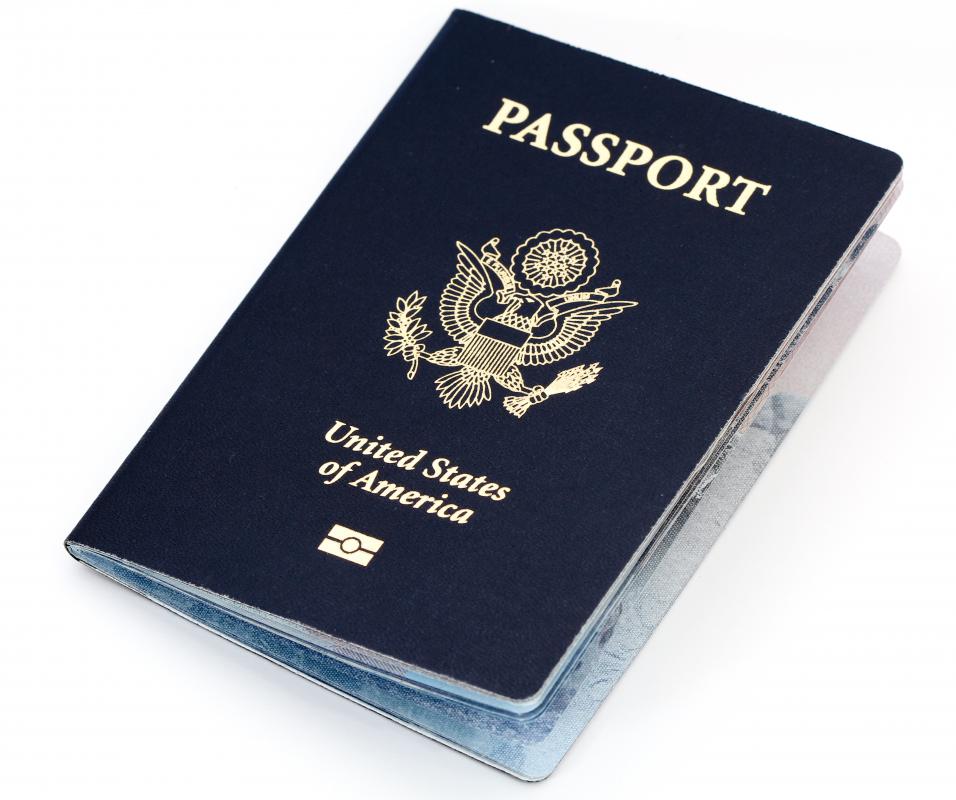
Another consideration when applying to become an air hostess is your legal eligibility for the job. In most cases, air hostesses must be legal residents of the country in which their airline is based. If your airline offers international service, you will need a valid passport.
Typically, successful air hostess applicants must have completed high school or passed an equivalency exam. As the position requires a high level of interaction with passengers, prior customer service experience can reinforce your application. Since cabin crew members are likely to encounter passengers from many different countries, knowledge of one or more foreign languages can also increase your desirability. In addition, the job requires the ability to respond to medical emergencies; thus prior first aid training can further strengthen your candidacy.

Even if you have met these preliminary qualifications, you must normally complete a formal training course, usually administered by the hiring airline, before you can become an air hostess. Here, airline hiring policies can vary. Some require the completion of a training program before a candidate can be hired. Others hire untrained candidates on a probationary basis, upgrading them to full employment once training is successfully finished.

These training courses, which typically last around five weeks, prepare applicants for the full range of air hostess duties. You will learn to carry out normal air hostess functions, such as serving drinks and meals. In addition, you will receive training in assisting a wide range of passengers — young or disabled travelers, for instance, or nervous fliers — in a friendly and efficient manner.

Perhaps the most important element of air hostess training, though, is safety instruction. As a cabin crew member, you are responsible for maintaining your passengers’ safety. Therefore, you must be prepared to respond calmly, quickly and appropriately to unexpected situations, from a choking passenger to a crashing plane. You must be able to communicate with and instruct your passengers effectively and administer basic first aid treatments. In case of emergency, you must also be able to carry out established crisis procedures, deploy necessary apparatuses like rafts, and assist passengers in operating breathing and flotation devices.
AS FEATURED ON:
AS FEATURED ON:









-
![Air hostesses, or flight attendants, are responsible for the safety of passengers.]() By: Simon CosteAir hostesses, or flight attendants, are responsible for the safety of passengers.
By: Simon CosteAir hostesses, or flight attendants, are responsible for the safety of passengers. -
![An air hostess is responsible for serving drinks during a flight.]() By: jwblinnAn air hostess is responsible for serving drinks during a flight.
By: jwblinnAn air hostess is responsible for serving drinks during a flight. -
![Air hostesses who fly internationally must have a valid passport.]() By: charles taylorAir hostesses who fly internationally must have a valid passport.
By: charles taylorAir hostesses who fly internationally must have a valid passport. -
![An air hostess must be prepared to guide passengers through unexpected situations like a plane crash.]() By: ArselAn air hostess must be prepared to guide passengers through unexpected situations like a plane crash.
By: ArselAn air hostess must be prepared to guide passengers through unexpected situations like a plane crash. -
![Because they are working with many people in a confined space, flight attendants must be able to act quickly and stay calm under pressure.]() By: arquiplay77Because they are working with many people in a confined space, flight attendants must be able to act quickly and stay calm under pressure.
By: arquiplay77Because they are working with many people in a confined space, flight attendants must be able to act quickly and stay calm under pressure.



Discussion Comments
Which institution is best to carry out an air hostess training program?
I'm 17 and my dream is to become an air hostess. I've been doing a lot of research on it and would like to know on what to do when you're done with high school. What do I study? Do I go straight into training or do I first need a college degree?
I am 18 years old and I have worked in a nursery for one year and also I have been working in customer services for about 10 months and I am also 5'2 and I can also speak a little bit of French and German, but I do not have a driver's license. Do you have to be able to drive?
I am 17 years old and I want to become an air hostess, but I don't know much about this career. Please help me.
I'm 16 years old but I want to be an air hostess. It's my dream. Please can you tell me whether I am eligible for this job or not.
I want to be an air hostess and work with the airlines and I am just nine. I really really hope my dream comes true.
I am just 15, but I really want to become an air hostess. It is my dream which I really wish would come true, but I really don't know anything related to this job, nor do I have any work related to it. I have travelled in a plane only one time, but for that I'm sure if I will get a perfect guidance in this job, I will do much, much better
What happens after training? How old to you need to be? Do you get situated with an airline or do you get to choose which airline you would like? Do you go with small airlines first and then work your way to more large air line businesses?
I have wanted to become an air hostess all my life and I am 15. I always wonder what is the best possible way to start off this career. I have had plenty of experience at an airport and know the basics of because part of cabin crew. i have also done work experience at Aberdeen Airport, Scotland and managed to deal with many passengers and different airlines.
I would like to start my air hostess career over in America but I do not know how it would work out? Please help me with my career in the future.
Do you still have to be 5'0 or has that changed? And, do you need any qualifications because I want to make sure that I have all my qualifications.
Post your comments