
At PracticalAdultInsights, we're committed to delivering accurate, trustworthy information. Our expert-authored content is rigorously fact-checked and sourced from credible authorities. Discover how we uphold the highest standards in providing you with reliable knowledge.
How Do I Become a Pharmaceutical Engineer?
The most direct way to become a pharmaceutical engineer is to pursue an undergraduate degree in chemical or mechanical engineering, and follow this with master’s-level education related to pharmacology. Many of the biggest firms recruit directly from university programs, and in these cases getting hired is often as easy as scheduling an interview and making a favorable impression. Some research into the field more broadly can help you find a good fit and make the right impression, though. There are typically many different branches, encompassing everything from research and development to production, management, and even sales. Choosing the track that’s right for you might take some experimentation and networking. Most of the time, once you’ve been hired you’ll need to earn what’s called a “certificate of competency” in order to work. This certificate is usually offered by the International Society for Pharmaceutical Engineers (ISPE) and tends to be valid worldwide; while it won’t guarantee you a job, it might help set you apart as a candidate if you procure it while still in the job search phase.
Understanding the Job Generally

Pharmaceutical engineers work in research facilities and manufacturing plants that produce drugs. They can have a number of different responsibilities, but in most cases it’s their job to work out the chemical components of safe medication manufacturing while also considering things like workplace implications and safe handling. To do this job well, you’ll typically need a science background so that you can understand the process from a biological perspective but also the analytical acumen to organize and orchestrate the larger framework of production and manufacturing. Experienced pharmaceutical engineers are able to work in a variety of fields, but no matter where in the discipline you’ll end up you’ll need a lot of expertise. Education, then, is usually one of the most — if not the singlular most — important component of success.
Educational Background

Enrolling in an engineering program at a college or university is a good first step. While undergraduate education in anything related to the science will typically work, employers often give more consideration to candidates who have a background in chemical or mechanical engineering. Once you have completed a bachelor's degree, you may increase your chances of getting a job by going on to earn a master's degree in something more specific, ideally pharmaceutical engineering. Candidates with a master's degree in pharmaceutical engineering may have a better chance at landing interviews with potential employers.
Consider a Graduate Degree

Master's programs typically accept students who have an outstanding undergraduate record. Usually, a GPA of 3.0 on a 4.0 scale in chemical or mechanical engineering is required, along with high scores on admissions tests, such as the Graduate Record Examination (GRE) in the US. Students graduating from other science majors may also be considered if they complete the standard pre-requisite courses required for the pharmaceutical engineering program. These courses cover topics such as differential equations; business math and statistics; thermodynamics; chemical kinetics; and heat transfer and mass transfer.
The Master of Science program in pharmaceutical engineering provides in-depth training for those who want to become a pharmaceutical engineer, and is usually considered essential for anyone who hopes to do more than simple entry-level work. Some areas of study include pharmaceutical processing and manufacturing; validation and regulation; reaction engineering; drug metabolism, delivery and discovery; and instrumental analysis.
Choosing Your Track
Master's programs generally have two tracks: drug substance manufacturing and drug product manufacturing. The substance manufacturing track focuses on the chemical reactions and separation processes used to manufacture the active ingredients of a drug. The drug manufacturing track, by contrast, focuses on the processes required to produce the final drug. The requirements can vary from place to place, but in general you’ll need to successfully complete at least 30 credit hours to graduate, and a high cumulative GPA is often needed to get the attention of hiring managers.
Earn a Certificate of Competency
A certification of competency from the International Society for Pharmaceutical Engineers (ISPE) is another tool that may help improve your chances of getting a job offer. The ISPE awards the Certified Pharmaceutical Industry Professional (CPIP) certification to individuals who demonstrate technical knowledge, leadership skills, professionalism, innovation and vision. All these characteristics are necessary to become a pharmaceutical engineer.
AS FEATURED ON:
AS FEATURED ON:


-
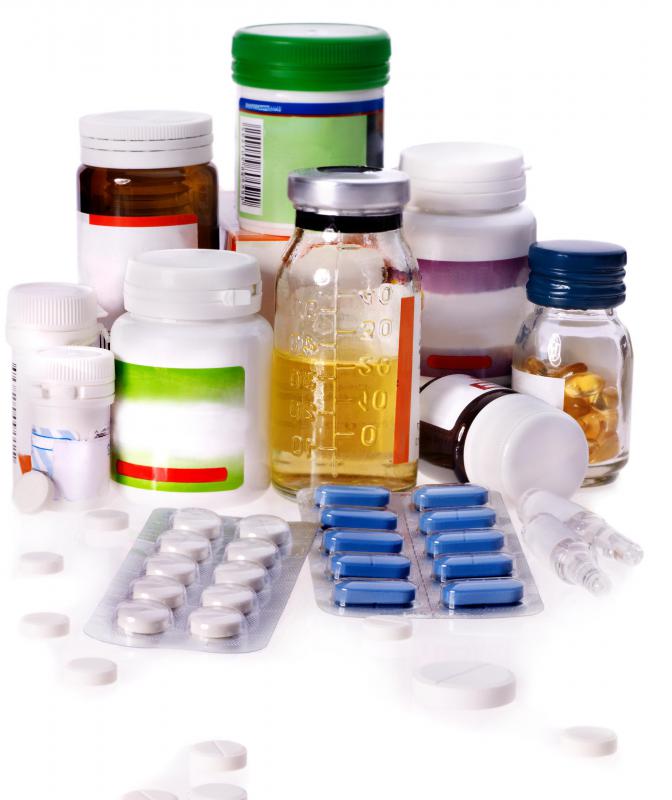
![A pharmaceutical engineer works to create pharmaceutical products.]() By: Gennadiy PoznyakovA pharmaceutical engineer works to create pharmaceutical products.
By: Gennadiy PoznyakovA pharmaceutical engineer works to create pharmaceutical products. -
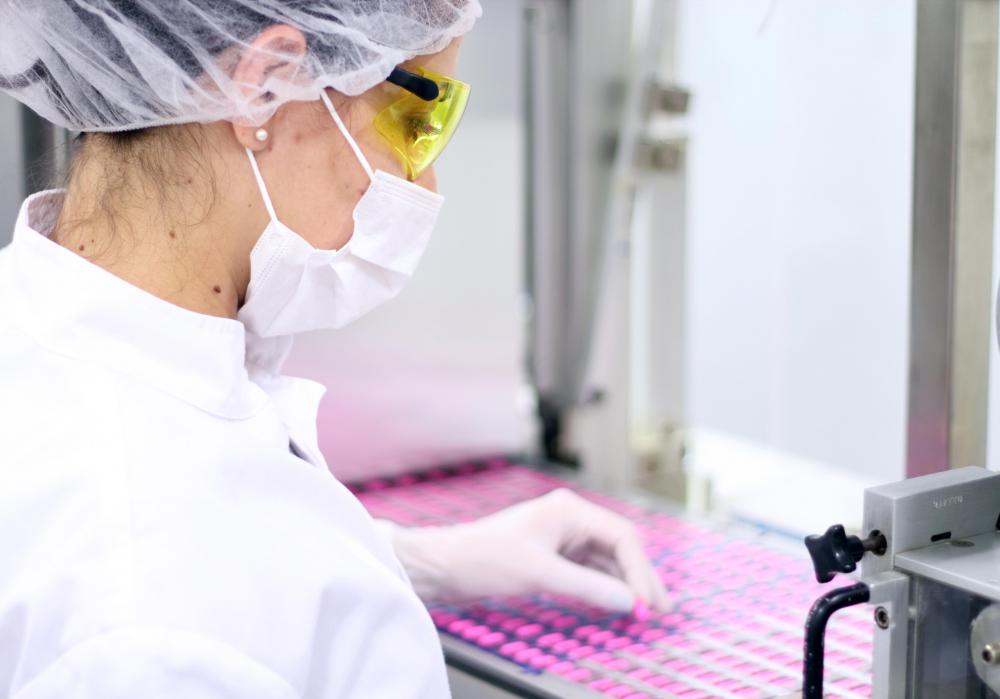
![Becoming a pharmaceutical engineer involves learn how to design and construct pharmaceutical manufacturing plants.]() By: RGtimelineBecoming a pharmaceutical engineer involves learn how to design and construct pharmaceutical manufacturing plants.
By: RGtimelineBecoming a pharmaceutical engineer involves learn how to design and construct pharmaceutical manufacturing plants. -
![Many pharmaceutical engineers have an extensive background in chemistry.]() By: CreativaMany pharmaceutical engineers have an extensive background in chemistry.
By: CreativaMany pharmaceutical engineers have an extensive background in chemistry.

Discussion Comments
Is it accepted if one chooses maths, physics, chemistry and engineering drawing in order to become a pharmaceutical engineer?
Post your comments