
At WiseGEEK, we're committed to delivering accurate, trustworthy information. Our expert-authored content is rigorously fact-checked and sourced from credible authorities. Discover how we uphold the highest standards in providing you with reliable knowledge.
How do I Adjust to a Blended Family?
 Michael Pollick
Michael Pollick
Michael Pollick
A blended family includes children from previous marriages as well as children born during the current marriage. Many people associate an ideal blended family with the American sitcom The Brady Bunch, in which a man with three boys married a woman with three girls. The step-siblings had to learn to adjust to life within the new dynamic of a new family.
One major adjustment many children must make in a blended family is a change in privacy and personal space. A large family may have to live together in a space designed for one spouse's original family, at least temporarily. If you are a child in such a family, you may be asked to give up part of your room or to move into an unfamiliar house. The key is to remain flexible and non-territorial. The room could be divided into equal parts, or bunk beds could be installed for maximum floor space. Consider living with a new step-sibling as a chance to bond with a friend, not a competition for attention from parents.

If you are one of the parents of a new blended family, you should understand that these adjustments will take some time. Before assigning rooms for the new family, carefully consider such factors as age, personality, interests, and birth order. Younger step-siblings may adjust well to communal living, but older step-siblings may bristle at the perceived loss of privacy. The oldest child of one parent may not mesh well with the youngest child of the other, or aggressive children might not respect more passive step-siblings. Be prepared for some unplanned room switching as siblings learn more about each other.

A difficult part of living in a blended family is the inevitable comparisons with the past. Original family members may be reluctant to accept step-siblings at first, since they serve as daily reminders of the present reality. Parents should understand how difficult it can be for children to let go of their past, especially following a divorce or the death of a parent. Playing the role of step-parent can be especially difficult, since children can honestly claim one is not their "real" parent. Some experts suggest allowing the children's original parent to act as the disciplinarian, since the role of a step-parent is already so challenging.

Parents and children living in a blended family often bond through shared activities. It may fall on parents to initiate the first family outings, but eventually, step-siblings should plan their own adventures. Attending sporting events or artistic performances involving step-children is also a good way for new parents to establish a bond. Children in such a family can be very sensitive about apparent favoritism, especially when it applies to original children over step-children.

One way to adjust to a blended family is to keep titles such as step-mother or step-brother optional. If you are a child and feel a strong bond with your new mother, it should be okay to call her Mom, rather than the excruciatingly correct step-mother. The same holds true for parents. Many children respond positively when a step-parent introduces them as his or her children, not 'my husband's kids' or 'my step-children'.
Michael Pollick
A regular WiseGEEK contributor, Michael enjoys doing research in order to satisfy his wide-ranging curiosity about a variety of arcane topics. Before becoming a professional writer, Michael worked as an English tutor, poet, voice-over artist, and DJ.
Learn more...
Michael Pollick
A regular WiseGEEK contributor, Michael enjoys doing research in order to satisfy his wide-ranging curiosity about a variety of arcane topics. Before becoming a professional writer, Michael worked as an English tutor, poet, voice-over artist, and DJ.
Learn more...AS FEATURED ON:
AS FEATURED ON:









-
![A blended family may consist of children from previous marriages as well as children from a current marriage.]() By: WavebreakMediaMicroA blended family may consist of children from previous marriages as well as children from a current marriage.
By: WavebreakMediaMicroA blended family may consist of children from previous marriages as well as children from a current marriage. -
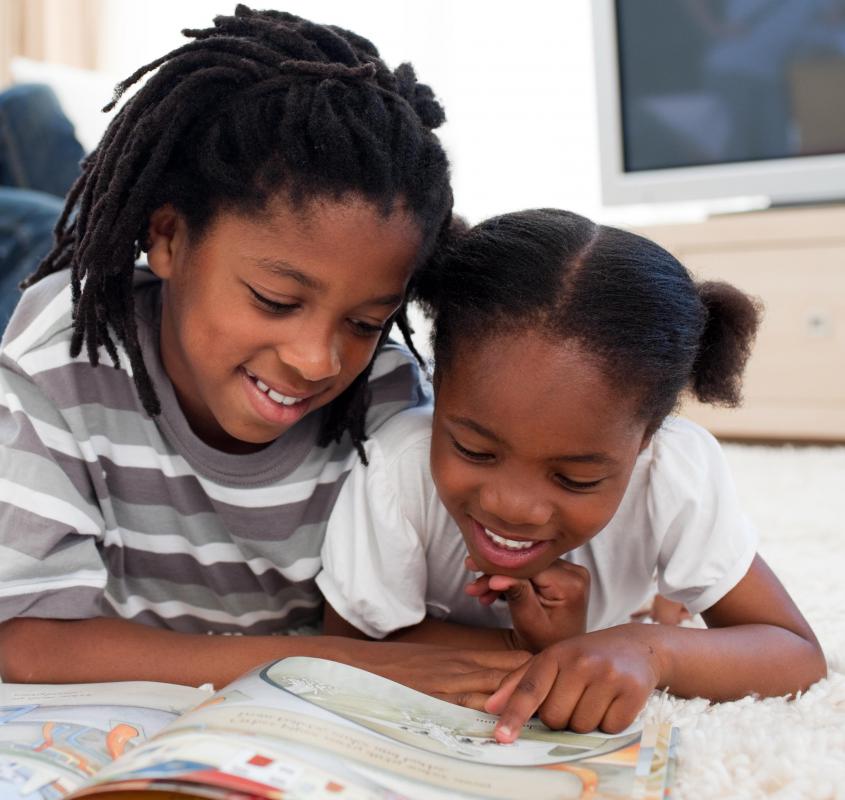
![Step-siblings have to adjust to the new dynamics of the household while ensuring that their personal needs are met.]() By: Alena OzerovaStep-siblings have to adjust to the new dynamics of the household while ensuring that their personal needs are met.
By: Alena OzerovaStep-siblings have to adjust to the new dynamics of the household while ensuring that their personal needs are met. -
![Spending time together on a picnic can help strengthen a blended family.]() By: micromonkeySpending time together on a picnic can help strengthen a blended family.
By: micromonkeySpending time together on a picnic can help strengthen a blended family. -
![Step-siblings may fight until they can get used to each other.]() By: Vesna CvorovicStep-siblings may fight until they can get used to each other.
By: Vesna CvorovicStep-siblings may fight until they can get used to each other. -
![Making sure children get equal personal time with parents can help a blended family.]() By: Marcel MooijMaking sure children get equal personal time with parents can help a blended family.
By: Marcel MooijMaking sure children get equal personal time with parents can help a blended family. -
![Children who are part of a blended family may become overly attached to their parent.]() By: Lee PrinceChildren who are part of a blended family may become overly attached to their parent.
By: Lee PrinceChildren who are part of a blended family may become overly attached to their parent. -
![Parents and children in a blended family often bond through shared activities.]() By: inesbazdarParents and children in a blended family often bond through shared activities.
By: inesbazdarParents and children in a blended family often bond through shared activities. -
![Having to share living quarters with a step-sibling can create conflicts among children in a blended family.]() By: IlikeHaving to share living quarters with a step-sibling can create conflicts among children in a blended family.
By: IlikeHaving to share living quarters with a step-sibling can create conflicts among children in a blended family. -
![Some children may feel they are unfairly treated by a non-biological parent.]() By: stefanolunardiSome children may feel they are unfairly treated by a non-biological parent.
By: stefanolunardiSome children may feel they are unfairly treated by a non-biological parent.




Discussion Comments
If you are blending two families that both have kids, you need to know that it will take some time for the kids to adjust. If at all possible, I would recommend not forcing them to share a bedroom together.
They will need their space to get used to everything and if they have to share a room this can be very hard for them to adjust to.
When we married our kids were all different ages, and this was one of the things we tried not change. It might not be possible to do because of limited space, but sure makes a difference if they don't have to share their room right away.
I am part of a blended family, and it was something that was a slow process. Anytime you put kids together in a situation like that, there will be some conflict and stress.
Even though I didn't want to do it at the time, one of the best things we did was have some blended family counseling. This gave each of us a place to have a voice and talk with someone who was objective.
My parents probably felt like they had to drag us to counseling, but looking back I can see that it was very beneficial for all of us.
Any way you look at it, a blended family takes a lot of work. There will be blended family issues that come up often that are unique for each family and must be dealt with. It is not only an adjustment for the kids, but the adults as well.
If the kids are not thrilled about the situation, that will add some more stress. Many of these issues can be worked through given enough time and understanding. It is important to take into consideration each person who is involved and what they are feeling. This will not be the same for any family or any individual.
Post your comments