
At TheHealthBoard, we're committed to delivering accurate, trustworthy information. Our expert-authored content is rigorously fact-checked and sourced from credible authorities. Discover how we uphold the highest standards in providing you with reliable knowledge.
How do Doctors Repair Torn Ligaments?
 Tricia Christensen
Tricia Christensen
Tricia Christensen
Repairing torn ligaments have posed a significant challenge for physicians in the past. Previous repairs, including grafting tissue, or placing artificial prostheses to replace ligaments, were relatively unsuccessful. Often patients would have to undergo multiple surgeries to maintain a repair, or would have to have prostheses replaced.
Some of the torn ligaments most difficult to repair are those around the knees. Torn ligaments in the knees can seriously impair walking and may as well, end a successful career for professional athletes. Knee replacement is often the preferred method of repair, and though the technology has improved, it still does not provide the benefits of healthy ligament tissue surrounding the knee.

Another common type of repair for torn ligaments uses a graft from the patient’s body or a cadaver, called an allograph, which is then connected to the tear site. In some cases, minor tears may not be surgically addressed. What we commonly call sprains and strains are usually the result of stretched or torn ligaments or tendons.
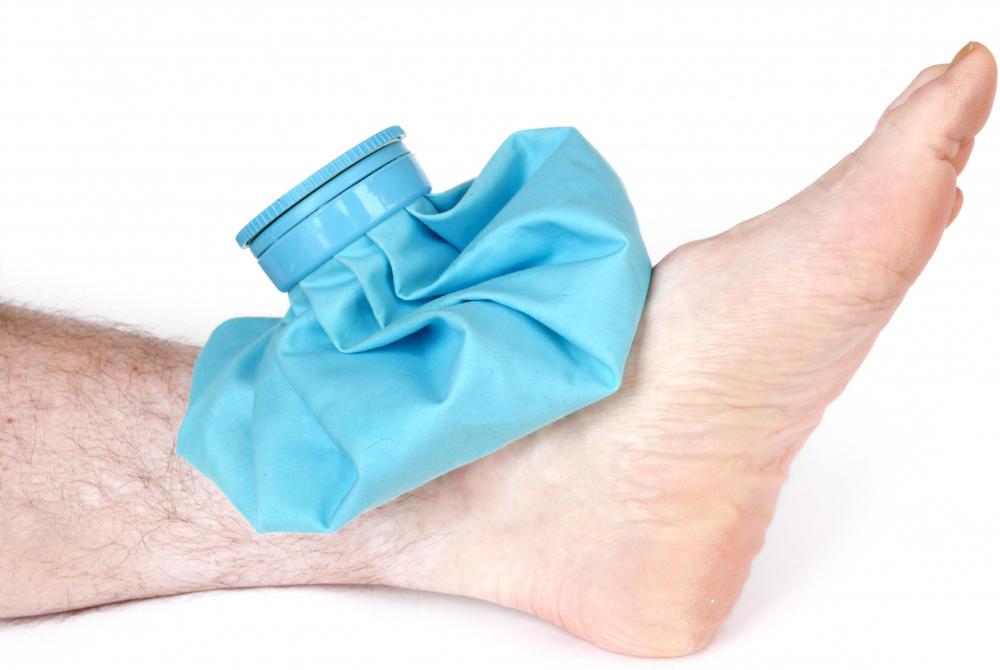
Frequently, a minor tear is addressed by resting torn ligaments, using icepacks to reduce swelling, and elevating the area where torn ligaments are present. If rest, elevation and icing do not produce a total cure, then surgery may be considered to repair significant tearing.

Recent studies into stem cell technology are a promising alternative. Certain stem cells, called tenocytes, when injected near the source of an injury, may actually begin to rebuild the tissues that form both tendons and ligaments. Studies in rat populations showed that such injected cells would migrate to the area of torn ligaments and begin to actively work on rebuilding the area.

Studies on this new technology, published in 2006, suggest a completely non-invasive way to repair torn ligaments that has a far greater chance of total recovery of function to affected areas. As well, injection of stem cells poses less risk to the body than traditional surgery. Injection of stem cells does not require anesthetics and may ultimately replace surgical techniques for repair.

As promising as this research is, stem cell technology is still in its infancy, and it may be quite some time before stem cells would be routinely used to repair torn ligaments. In 2006, scientists may also have found a way to address some of the ethical issues surrounding stem cell production by being able to extract a single cell from an embryo without harming the embryo. Finding new ways to harvest stem cells may eliminate issues regarding stem cell ethics, and may point the way toward curing torn ligaments, as well as many other diseases and conditions.
Tricia Christensen
Tricia has a Literature degree from Sonoma State University and has been a frequent TheHealthBoard contributor for many years. She is especially passionate about reading and writing, although her other interests include medicine, art, film, history, politics, ethics, and religion. Tricia lives in Northern California and is currently working on her first novel.
Learn more...
Tricia Christensen
Tricia has a Literature degree from Sonoma State University and has been a frequent TheHealthBoard contributor for many years. She is especially passionate about reading and writing, although her other interests include medicine, art, film, history, politics, ethics, and religion. Tricia lives in Northern California and is currently working on her first novel.
Learn more...AS FEATURED ON:
AS FEATURED ON:


-
![Woman wearing a splint for a torn ligament in her finger.]() By: LockStockBobWoman wearing a splint for a torn ligament in her finger.
By: LockStockBobWoman wearing a splint for a torn ligament in her finger. -
![A diagram of the knee, showing the anterior cruciate ligament, medial collateral ligament, and lateral collateral ligament.]() By: AlilaA diagram of the knee, showing the anterior cruciate ligament, medial collateral ligament, and lateral collateral ligament.
By: AlilaA diagram of the knee, showing the anterior cruciate ligament, medial collateral ligament, and lateral collateral ligament. -
![A minor ligament tear may be addressed by resting and icing the injured area.]() By: Mark HerreidA minor ligament tear may be addressed by resting and icing the injured area.
By: Mark HerreidA minor ligament tear may be addressed by resting and icing the injured area. -
![Torn ligaments in the knees can seriously impair walking.]() By: DirimaTorn ligaments in the knees can seriously impair walking.
By: DirimaTorn ligaments in the knees can seriously impair walking. -
![Studies in rats showed that certain stem cells can migrate to the area of torn ligaments and begin to work on rebuilding the area.]() By: lculigStudies in rats showed that certain stem cells can migrate to the area of torn ligaments and begin to work on rebuilding the area.
By: lculigStudies in rats showed that certain stem cells can migrate to the area of torn ligaments and begin to work on rebuilding the area. -
![Knee ligaments are among the most difficult to repair.]() By: .shockKnee ligaments are among the most difficult to repair.
By: .shockKnee ligaments are among the most difficult to repair.




Discussion Comments
Get some Deer Antler Velvet tablets and NutraJoint. This is about $50. If you have inflammation, take tumeric as well. This is the trick.
Can a scapholunate tear cause symptoms of carpal tunnel?
If the sprain is a year old, can it still be rehabilitated with stem cells? Or does the intervention need to come immediately?
What about in the relatively distant future? Will they probably be able to fix my wrist? I am a musician. What can be projected for future treatments (10-20 years from now, or more if necessary)? Because I would like to form my life goals accordingly.
I dug a 6 feet deep, 12 feet long trench for a week and my left hand side had a lot of pain afterward. So I went to see the therapist and he kept pressing me so hard on the spot. From then on I have had lots of pain below the curve of my elbow on my back
What am I suffering from? Do I have a broken ligament? This is really scary. Someone help, please.
I have a torn talo fibulo ankle ligament from playing tennis. I've had heat and ice supervised therapy for one month now. My ankle is still weak and I'm having minor pain. When, if ever, will I get back to full competitive tennis? I am young but worried. Is surgery a necessary option?
I have arthritis in my right shoulder and tennis elbow. When they gave me a steroid injection, it made my whole arm numb for two days. My back and neck hurt constantly. I have been referred from the knee doctor to the elbow and shoulder doctor and now to the back and spine doctor, and none of these drugs gave me any relief. They say ask your primary but she tries to avoid me or has me see a nurse practitioner who thinks I'm there for holistic healing? I don't know why they bother saying you are injured and pass out braces that I can't put on because my whole body hurts.
For any ligament injury the best and only response that seems to heal ligaments is prolotherapy. Because it is not based on a drug and isn't a surgery, doctors don't get to hear about it often. Naturopaths who have trained in it are the best places to get treatment.
I've had prolotherapy in seven ribs where the ligaments were so over-stretched from injury that I needed a chiropractor tjree times per week just to be able to move. I can now lift weights and do things normal people can. Same for my knee. I had a knee injury 35 years ago and it is being repaired by prolotherapy. Now going for my foot.
Look up prolotherapy on the web and then find yourself a local Naturopath to see if your injury can be helped.
I slightly tore ligaments in my knee about a month ago and my doctor said I would be OK in 10 days to two weeks. Two days later I tried paying football and did it again. What should I do?
An MRI showed a fracture and a torn ligament in my wrist. One doctor said to repair the tear with wire and put the arm in a cast but the doctor I went with didn't do anything for the tear and only put my arm in a splint. Now three months later, my fracture is healed but my hand keeps swelling up when i do heavy work. Advice please!
About 5 weeks ago I tore a ligament in my right metatarsal by falling down three stairs and I'm going back to the hospital on Thursday to have it X-rayed but it still hurts. Could this be because it's going stiff or maybe getting better? I really hope they take the plaster off on Thursday because it's stopping me from doing things I want to do, for example, going to football.
I have a right shoulder ligament tear, and it got dislocated three times in the last seven years. my doctor said i have to undergo surgery. can the stem cell treatment rejoin my torn shoulder ligament or is surgery is the only way for it?
I fell on a train platform and I have torn ligaments in my knee and I'm just hoping that the bruising doesn't turn into gangrene. What can I do for the pain? Will physical therapy really work?
Last summer I was kicked by horse in the knee. It cause the ligaments on the left side of my right knee to stretch. However, it is now February, and my knee still pops out of place when i try to run or play almost any physical sports. I am an athletic person, and I've tried just about everything to help my knee get better, but it still hasn't made much progress. What should I do?
I was playing with my Jack Russell Terrier three weeks ago and he started running around the house really fast and then rammed into the side of my left leg, causing my knee to pop out of socket.
I went to the emergency room, and the doc just said to rest it and keep it straight. I am still having trouble with it feeling wobbly and unstable. If it was only a sprain, shouldn't my knee be better by now?
Hi anon461, yes it is possible, in a partially torn ACL stem cell therapy is used, but in scenarios where it is a complete tear it is used after the injured ligament has been "repaired" (stitched back together)
You can look online for more info.
I went to a little get together at my brothers house, an i guess i was so excited that when i jumped up and landed i heard a popping noise. The next morning i couldn't even bend my leg or walk down my steps.
i went to the er and they told me i have an torn ligament in my left knee. It hurts and now i am on crutches and have a knee brace. how long will i not be able to work? Help. i want to go back to work.
I tore a ligament in my ankle a few days ago, but I still put weight on it and haven't gone to a doctor for treatment. Is this bad?
When I am playing "tumabang Preso" (Filipino game) i ran and stop to get my "pamato" and then when I turned to my left my body and my thigh twisted while my leg didn't, i heard a pop in my knee. I think my ligament is torn. i have a hard time walking. what should i do?
i sprained my ankle almost two weeks ago, now, but i still can't walk. How long will it be before i can walk again?
euphrates: I know this is a little late, but I am in a similar situation. I 'stretched' the ligaments on the left side of my right knee, waited in A&E for two hours before being seen for no more than 10 mins and then being sent back out to wait for a note from the doctor as I requested. the stupid cow didn't even give me any medication or even a x-ray. I can't describe the feeling. as of right now, I don't really have anyone to lean on. Friends are distant and my family are too, so yeah.
I've had suicidal thoughts but could never go through with it because of my faith in God and also my baby sister whom I adore thank God.
I've been in so much pain, and the stupid doctor basically told me to just rest it and that it might not get better until a few months! I don't know what to do or who to even complain to about the way they go about their business. She told me if it doesn't get better than see my GP doctor?
The GPs are even worse, and the only way to get seen is to have an emergency appointment which you have to wait for hours in our local surgery. I know our health care is free and other countries are not so fortunate, but why do the doctors here in london not care properly? i have to use paracetamol as nurofen irritates my existing stomach problems, and I also suffer from depression and have not been diagnosed with anything as of yet.
Oh, I don't know eh -- everyone has problems and mine are a dime a dozen. good luck to you all.
About four months ago I hit my knee pretty hard playing volleyball. I wore a brace for a while and the pain went away. It's recently come back much more severe and in the exact spot as before. Could this be a ligament injury? Please help.
I have two torn ligaments. One on both hips. My doctor told me that I will need to go into surgery. He said I will be on crutches for at least six months! He said that the grinding sound was the ligaments and that that popping sound was the ligaments too. I would advise everyone on this to go see a doctor!
i am 16. i have a bright future in sports. but i was told that i tore ligaments in my hip. it sometimes stops me running and causes serious pain. is there a way to repair these ligaments and will i still be able to preform as well as i do now after the ligaments are repaired?
please help. while i was doing long jump, my right ankle got twisted very badly. For the last four months i am doing massage, but the pain still exist. natural grip also does not exist. help.
While playing football (Soccer) I jumped and landed on my right foot and my ankle got twisted. The pain was i unbearable. Even then after six month's massaging my foot with an ointment regularly the pain still feels the same.
While kicking the ball i experience it very much. Can you help me? I want my ankle to become as it was before. I play soccer for a local club and due to my ankle i've been on the bench for almost four months. Any help which can fix my problem, i will do it. I just want my ankle to get OK; that's what i want.
can you replace a ligament with a tendon?
I had a severely strained ligament in my foot from twisting my ankle on a run. Three weeks later, it was getting worse and it was to the point where I couldn't walk, let alone run. I stopped running for a week, but it still felt the same.
But then I went to the chiropractor and he administered laser treatment on the ligament. Laser treatment is a fairly new type of injury therapy and it supposedly cures injuries incredibly fast. My foot was painless after four days of treatment and massage. It was incredible.
I was injured at work and have two torn ligaments and a host of other problems in my ankle. I am trying to research this and I am not getting any definitive answers before I talk to an orthopedic surgeon. Can anyone help me with a source that addresses this problem? Thanks.
This is a great article. It makes me wonder why we aren't funding so much more research into stem cell research. I just got out of surgery last friday to replace all the ligaments in my left knee (LCL, ACL, MCL, & PCL) and I have been searching the internet to find out what I can eat to help in the healing. I know when I broke my hip and thigh I ate a lot of calcium to asist in the healing and that helped dramatically. Anyone have any ideas? Thanks. ~SFCC
LeAnn, I've just had an MRI today to confirm a torn lateral ligament in my elbow. Almost a year ago I hurt it but was treated only for "tennis elbow" with an course of anti-inflammatories, and later, an injection in the joint. The drugs never fully stopped the pain. A couple of months ago I started hearing clicking every time I moved that joint, I have a diffuse burning sensation that comes and goes unexpectedly (not necessarily with use of the arm), and now I can't extend my elbow fully and I'm always in pain. Does this sound like your symptoms? I sympathize. --DP
i sustained torn ligament(s)in my left groin in early December last year. i had no idea how serious this was but three months later it is as though they have not healed at all. what, please, is the prognosis? why hasn't my GP referred me for surgery? especially as i am in BUPA.
his ongoing reluctance has got me into negative thinking as to why, political etc, for example, won't they get better by themselves? he hasn't even bothered to find out how many ligaments are torn.
i am really fed up: i thought Doctors did as they were told, especially if a patient is insured. doesn't he who pays the piper call the tune? well not in health care, apparently.
the position is greatly aggravated by the fact that the torn ligaments were, i am told, the cause of the DVT i suffered in January. for DVT one must walk; for torn ligaments, one must rest. i am in a cleft stick; caught between a rock and a hard place; in a no-win situation.
and to cap it all, i have bipolar. *Help*!
hi, i have torn knee ligament since 2004, would i recover and what should i use to treat myself.
Prolotherapy
hello, after reading the website, i was wondering if there is anything the person at home to help quicken the ligament recovery, for example what to eat or what not to eat etc? can you help me pls, thank you. Leslie(singapore)
After a year the knee is doing fine but this elbow pain I can only compare it to the pain I went through after the total knee replacement....only this pain is worse and nothing helps. Thanks for your fast reply.
LeAnn~
I fell and dislocated my elbow over a month ago but they set it wrong and went 2 days before finding this out. I don't think the bone is broken but I've never known such pain, and I had total knee replacement that didn't hurt this bad. I'm thinking I have a torn ligament or something..tell me your thoughts.
Thanks,
LeAnn~
Can stem stells be presently used to repair a torn ACL knee ligament?
Post your comments