
At TheHealthBoard, we're committed to delivering accurate, trustworthy information. Our expert-authored content is rigorously fact-checked and sourced from credible authorities. Discover how we uphold the highest standards in providing you with reliable knowledge.
How do Doctors Remove Moles?
There are four primary methods of mole removal that doctors or other medical professionals may use. The most common is surgery, in which the mole must be dug out of the skin with a scalpel or sharp knife. Small incisions will usually heal on their own, but larger cuts — typically those requiring stitches — can sometimes leave a mark or scar. Patients concerned about scarring often look into the second removal options, laser excision or radiosurgery, both of which are less invasive — but may not be appropriate for deep moles. Freezing and burning are also possibilities.
The technique that a health care provider chooses to use when removing a mole usually depends on the type of mole at issue. Moles are skin aberrations that are known scientifically as nevi, and they come in many different shapes, sizes, and types. Some simply look like large freckles, while others are raised off of the skin and form bumps; some are dangerous and can be signals or precursors of conditions like cancer, while others are just discolorations. Some removal methods are better than others depending on the type of nevi at issue.
Surgical Removal

Surgery is the most traditional way to remove moles, and it can be used for pretty much any variety or type. The word “surgery” sounds intimidating to a lot of people, but at least where moles are concerned, the procedure is usually very simple. Most of the time, the procedure can be performed quickly and easily in a single visit.
The doctor will typically numb the area surrounding the mole with a local or topical anesthetic, and will then remove the mark with a scalpel. In the case of raised moles, this often involves a bit of skin shaving or scraping. Moles that extend deep into the skin tissues are harder to get out, and often require stitches; in most cases, though, a simple bandage is all the wound needs to protect it while it heals. After a week or so, once the tissues have had a chance to repair themselves, the doctor will remove the bandage to check for re-growth and infection.
Lasers and Radiowaves

Some dermatologists perform laser excision and the related practice of radiosurgery as alternatives to scalpel work. Both of these techniques involve topical applications of heat or radio waves to isolate and eliminate the mole in question. These methods are touted as scar-free, pain-free ways to remove moles, but are usually only effective for certain types of blemishes. Those that are particularly large or that deeply penetrate the skin are not usually good candidates, and topical removals are rarely able to actually get rid of the entire mole in these cases. Though the skin’s surface may look clear after the procedure, people often see re-growth after a few weeks or months.
Freezing

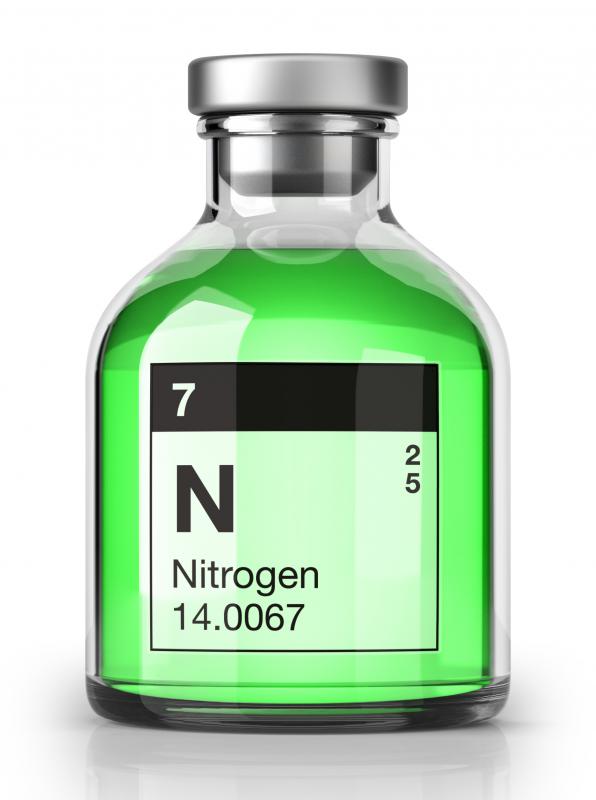
Small nevi can often be eradicated through a process known as “freezing” — usually just another name for cryotherapy. Doctors using this method will apply a small amount of liquid nitrogen, also known as dry ice, to the site of the blemish. Application must be precise, and as such, medical professionals typically use special applicators that let them both target the area and dispense only measured doses. The liquid nitrogen will cause the mole to swell and “bubble up,” but its cells will soon die and it will fall or flake off.
Burning

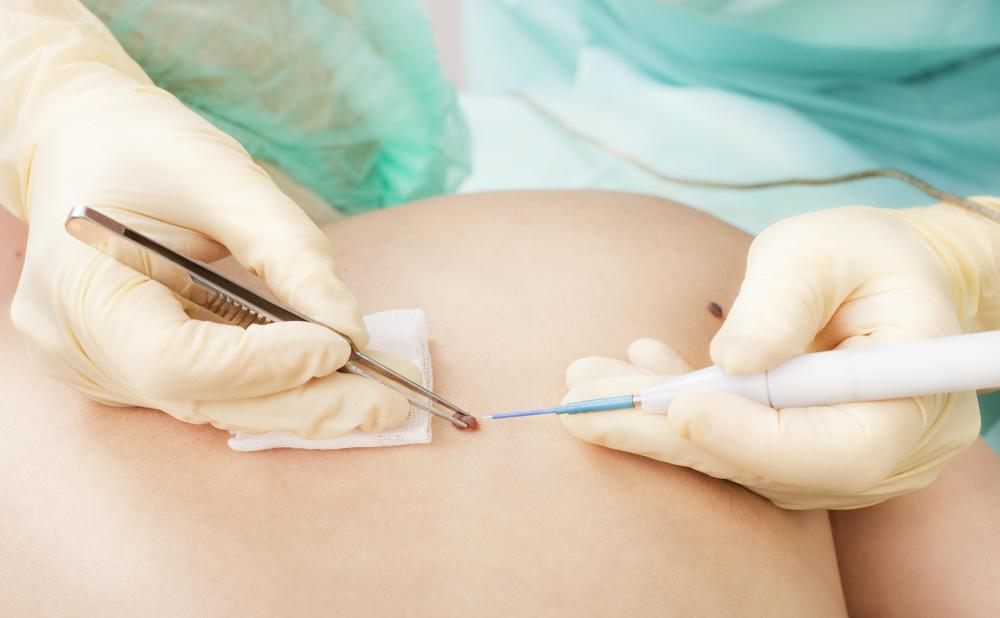
Cauterization, commonly known as “burning,” is another common way in which medical professionals remove moles. This method typically involves a small cauterization wand through which heat and electrical currents pass. Once the offending mole has been numbed, the doctor will press on it with the wand until the cells have died and the mole has shrunk or fallen off. Many patients report that cauterization is the most painful of all professional removal methods.
Home Remedies

People who want to be rid of moles without seeing a doctor or dermatologist often try a range of home remedies, some of which are more effective than others. Many pharmacies sell topical “mole removal” creams or gels that can be applied like lotion. Some are specially formulated with ingredients like copper peptides, which are thought to promote healthy skin regeneration. While some people swear by these products, others find that they have basically no effect.

Homemade concoctions or therapies are also popular, though again, they tend to have mixed results. Medical experts usually discourage patients from being too aggressive on their moles at home, as some self-removal attempts can end up causing a lot of damage. This is particularly true where at-home freezing, shaving, and burning are concerned. Stubborn moles may only be able to be removed by a professional.
The Importance of Professional Mole Evaluation

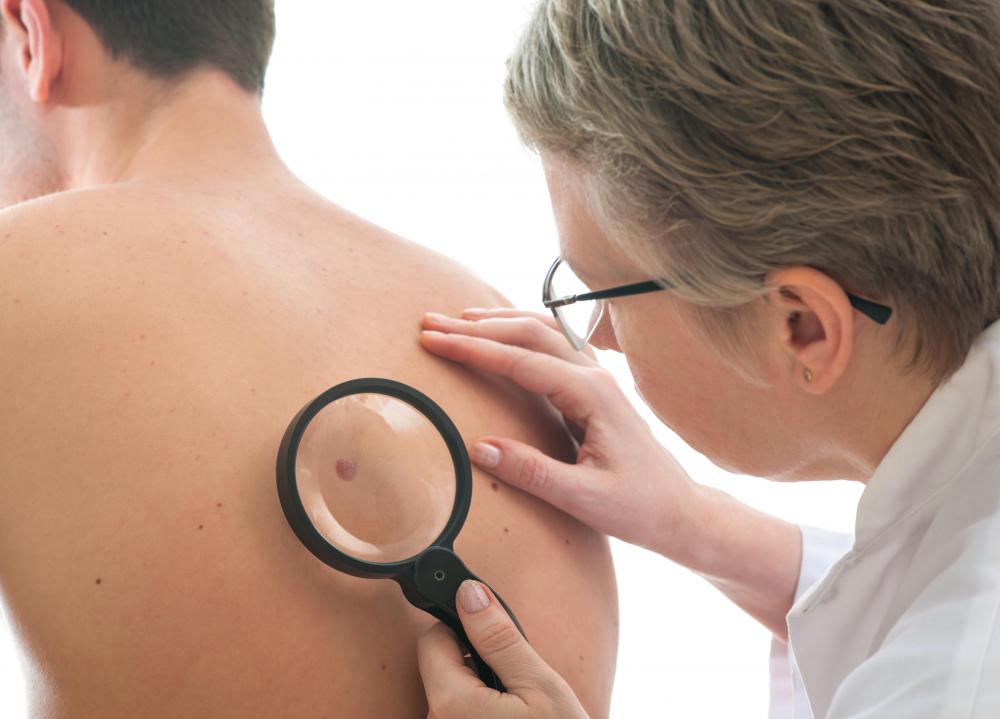
In general, dermatologists recommend that even small moles be evaluated for signs of skin cancer or other potentially serious conditions before they are removed. Even moles that look benign or are generally not bothersome might be early indicators of something more dangerous. When medical professionals remove moles in the office, they typically send portions of the excised skin to a pathology lab for testing as a precaution. People who suffer from large moles, who notice a lot of new growths at once, or who think existing moles might be getting bigger are usually advised to get a professional opinion before engaging in any sort of self-removal program.
AS FEATURED ON:
AS FEATURED ON:


-
![Flat skin mole.]()
Flat skin mole. -
![A raised mole.]() By: paulandlaraA raised mole.
By: paulandlaraA raised mole. -
![Woman with a mole above her upper lip.]() By: donatellinaWoman with a mole above her upper lip.
By: donatellinaWoman with a mole above her upper lip. -
![Doctors can use a scalpel to remove moles.]() By: ittipolDoctors can use a scalpel to remove moles.
By: ittipolDoctors can use a scalpel to remove moles. -
![Liquid nitrogen may be used to remove moles.]() By: Gman73Liquid nitrogen may be used to remove moles.
By: Gman73Liquid nitrogen may be used to remove moles. -
![Dermatologists typically recommend that even small moles be diagnosed for skin cancer or other potential problems.]() By: Alexander RathsDermatologists typically recommend that even small moles be diagnosed for skin cancer or other potential problems.
By: Alexander RathsDermatologists typically recommend that even small moles be diagnosed for skin cancer or other potential problems. -
![Electric scalpels are used in electrocauterization.]() By: starman963Electric scalpels are used in electrocauterization.
By: starman963Electric scalpels are used in electrocauterization. -
![Surgery is the most common method for mole removal.]() By: Fly_dragonflySurgery is the most common method for mole removal.
By: Fly_dragonflySurgery is the most common method for mole removal. -
![To remove a mole, doctors may cut or burn it off.]() By: MilissentaTo remove a mole, doctors may cut or burn it off.
By: MilissentaTo remove a mole, doctors may cut or burn it off. -
![Laser surgery for moles usually leaves fewer scars than other invasive surgeries.]() By: mkrberlinLaser surgery for moles usually leaves fewer scars than other invasive surgeries.
By: mkrberlinLaser surgery for moles usually leaves fewer scars than other invasive surgeries.





Discussion Comments
Liquid nitrogen is not 'also known as dry ice.' Liquid nitrogen is, well, liquid nitrogen and is around -320F. Dry ice is CO2 in solid form, and is around -112F.
My dermatolgist said by law they have to send moles into the lab for cancer evaluation. Yet I hear that moles are burned off. How can they send it to a lab if it is burned off? If some moles don't have to go to the lab, how can I tell if the doctor is not scamming me by saying it has to go the lab when maybe it doesn't?
I have no insurance so I am concerned about paying for lab tests if its not necessary. Why don't I get a say over what I want sent to the lab or not? It's my body.
My doctor froze a skin tag on my upper thigh and the tag fell off, but three days later, there's a hard yellow center, and the skin around it is pink but not "hot".
Is there any risk in removing flat facial moles?
I have just had mine frozen, but I am on day five and still nothing has happened. Is this right?
I know if it's a matter of freezing the spot, is freon also able to be used? They use propane in Dr Scholls' wart removal. I went to a dermatologist and I think I heard him tell the nurse to pass him the freon, then he pumped up the pressure in the container that is consistent with freon, which is a liquid until pressurized. My question is can freon be used to freeze off a mole instead of surgery?
@Naturesgurl3: Just go to the doctor. I had mine done there. They just give you a shot and then use a scalpel to take it off. It is completely painless, I promise.
I just had mine done two hours ago. Your dermatologist tells you before you go in to put a topical anesthetic cream on before you go in for the removal procedure (around an hour before you go in). He then removes the film that keeps the cream on, cleans the area, then injects you with a shot that numbs the area completely. He waits for it to kick in and he removes it with a scalpel. Then he burned my capillaries to stop the bleeding. He put a bandage on and was done! It was completely painless, and I can't wait to see my results when I can take the bandage off!
I am 17 and I have about 20 very tiny beauty spots on my face. About four or five of them are a bit bigger than the others. What can i do about them? I don't want them, and I want to use a treatment that doesn't leave any mark or a hardly visible one.
Are there any way to remove facial moles without stitches?
I have one on my lip that I want to get removed, since it seems to be getting larger and darker, but I really don't want to have stitches on my face.
Are there any other ways to discreetly remove skin moles?
@naturesgurl3 -- Although there are a lot of different ways to remove moles at home, you should consider if you really want to do it, as there is more of a risk of improper removal or infection if you do it yourself.
However, if you do decide to remove a mole by yourself, there are a couple of methods.
Some people say that applying a poultice of crushed cumin seeds for several weeks will take them off; others say that onion juice will do the trick.
I've also heard that putting fresh pineapple juice on moles will cause them to disappear.
If you decide to freeze it or cut it off yourself, be sure to only use sterile equipment, and clean the wound very thoroughly afterward.
If it is too large, or too painful to do yourself, be sure to see a dermatologist instead -- there's no need to go through that pain if you don't want to.
Are there any ways to remove moles naturally?
I have a small mole on my leg, and I try to avoid going to the doctor's as much as possible, so I wanted to know if there were any home remedies for this kind of thing.
Does anybody know?
Post your comments