
At AllThingsNature, we're committed to delivering accurate, trustworthy information. Our expert-authored content is rigorously fact-checked and sourced from credible authorities. Discover how we uphold the highest standards in providing you with reliable knowledge.
How can I Calm a Cat at Night?
 Mary McMahon
Mary McMahon
Mary McMahon
Many cat owners have struggled with cats that stay awake at night, especially kittens. Since cats are naturally nocturnal animals, this behavior is not unusual, but it can be frustrating. There are a number of ways to encourage a cat to adopt a diurnal sleeping schedule, so that he or she will relax at night while you sleep. Be aware that, if your cat has suddenly started to become very active at night, this can be the sign of a medical problem or an unwanted visitor; cats might get active at night when a skunk moves in under your house, for example.
Like many predators, cats are programmed to expend immense amounts of energy hunting and to spend a lot of time sleeping to regain energy that is lost during hunting activity. One of the best ways to calm a cat at night is to change your feeding and play schedules to encourage the cat to calm down in the evening and sleep. You can do this by offering your first feeding later in the day, rather than waking a cat early in the morning to feed it, and giving the biggest meal at night around half an hour before bed.

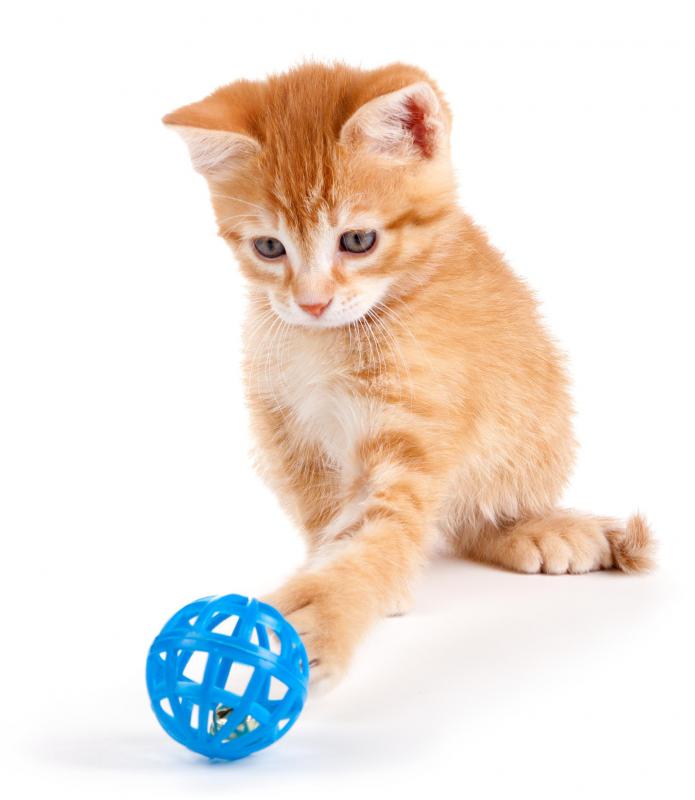
It is also important to play with your cat, especially if it lives indoors all the time. Play and environmental enrichment will help your cat to stay healthy and happy, and you can also tire your cat out with good play sessions. Try having a brisk play session, followed with a big meal, and then settle down for the night. The exercise and the meal will encourage your cat to relax as well. If your cat sleeps in your bedroom, keep the room dim and set up a warm, soft space to encourage your cat to sleep. Some cat owners prefer to keep their cats out of the bedroom, in which case, a heated sleeping pad and a regular sleeping spot are good ways to calm the cat in the evening.

Some cat owners feel like there's no good reason to try to change the cat's schedule, and simply choose to shut it out of the bedroom at night and provide the animal with toys for amusement while they sleep. Putting the cat in a special place at night where it can run and play and not disturb anyone may be the best solution. Cats can be quite noisy at night, however, especially if they are seeking their owners' attention. Remember not to reward your cat with a response when he or she disturbs you at night; unless the cat is obviously in physical danger or distress, ignore any cries or you'll encourage the behavior.

If you have tried to calm a cat at night without success, you can also talk to a veterinarian about prescription medications that can encourage your cat to adopt a regular sleeping schedule. The veterinarian may also have additional suggestions derived from his or her years of experience in veterinary practice to try before resorting to drugs. Remember that punishment of any kind is not recommended for cat training, as you may end up ultimately confusing your cat.
Frequently Asked Questions
Why is my cat so active at night?

Cats are naturally crepuscular, meaning they are most active during dawn and dusk. This behavior stems from their ancestors' hunting patterns. Domestic cats may retain this instinct, leading to heightened night-time activity. To mitigate this, provide ample playtime before bed to tire them out and encourage a more restful sleep.
What can I do to help my cat sleep through the night?

Establish a consistent evening routine that includes interactive play sessions to expend energy. After playtime, feed your cat a substantial meal, as cats often sleep better with a full stomach. Creating a comfortable sleeping area away from noise and disturbances can also promote a peaceful night's sleep for your feline friend.
Are there any products that can help calm my cat at night?
Yes, there are several products designed to calm cats, such as pheromone diffusers, which mimic calming natural chemicals, and calming collars infused with soothing scents. Additionally, some pet owners find that gentle music or white noise machines can create a relaxing environment that helps cats settle down at night.
Can changing my cat's diet affect its nighttime activity?
Indeed, diet can influence a cat's energy levels. Feeding your cat a balanced diet with the right amount of nutrients is crucial. Some experts suggest that a high-protein, low-carb diet can help regulate energy levels. Always consult with a veterinarian before making significant changes to your cat's diet.
How can I tell if my cat's nighttime activity is a sign of distress or a health issue?
If your cat's nighttime activity is accompanied by unusual behaviors such as excessive vocalization, restlessness, or changes in appetite, it could indicate distress or a health issue. Sudden changes in behavior warrant a visit to the vet to rule out medical conditions such as hyperthyroidism or anxiety disorders.
Is it okay to ignore my cat when it's active at night?
While it may be tempting to ignore your cat's nighttime antics, it's important to address the underlying reasons for their activity. Ignoring them could inadvertently reinforce the behavior. Instead, focus on providing daytime stimulation, a consistent routine, and a comfortable sleeping environment to help align their sleep patterns with yours.
Mary McMahon
Ever since she began contributing to the site several years ago, Mary has embraced the exciting challenge of being a AllThingsNature researcher and writer. Mary has a liberal arts degree from Goddard College and spends her free time reading, cooking, and exploring the great outdoors.
Learn more...
Mary McMahon
Ever since she began contributing to the site several years ago, Mary has embraced the exciting challenge of being a AllThingsNature researcher and writer. Mary has a liberal arts degree from Goddard College and spends her free time reading, cooking, and exploring the great outdoors.
Learn more...AS FEATURED ON:
AS FEATURED ON:









-
![Playing with a cat is vital to its mental health.]() By: Benjamin SimenetaPlaying with a cat is vital to its mental health.
By: Benjamin SimenetaPlaying with a cat is vital to its mental health. -
![Keep a warm, soft place for your cat to sleep.]() By: RumoKeep a warm, soft place for your cat to sleep.
By: RumoKeep a warm, soft place for your cat to sleep. -
![Cats are nocturnal animals, therefore generally active at night.]() By: cynoclubCats are nocturnal animals, therefore generally active at night.
By: cynoclubCats are nocturnal animals, therefore generally active at night. -
![Veterinarians may provide helpful advice on how to calm a cat at night.]() By: orelphotoVeterinarians may provide helpful advice on how to calm a cat at night.
By: orelphotoVeterinarians may provide helpful advice on how to calm a cat at night. -
![Cats may act out if their littler box isn't regularly cleaned.]() By: Africa StudioCats may act out if their littler box isn't regularly cleaned.
By: Africa StudioCats may act out if their littler box isn't regularly cleaned.


Discussion Comments
My cat keeps getting inside my bed -- seriously, inside my bed.
I agree that regular exercise is really important, especially for cats. Besides the fact that it will promote a cat’s health and general wellbeing, exercise does give cats a better sense of schedule. Most cats do not participate in activities that other animals do, like going on walks or running on a wheel. But the cat should be given toys and activities that engage them and give them opportunities for physical activity.
Catnip toys have always worked well for me, as they force the cat to engage with a toy in order to receive a reward. My cat has played for hours with these kinds of toys, giving her a much needed energy boost that usually translates into later tiredness.
Cats are stereotypically viewed as being quite solitary animals, so the article really touches on something when it says that owners should play with their cats regularly. Most cats do enjoy being alone most of the time, but even the most solitary cat enjoys occasional play. It is also possible to buy a cat toys that engage them.
And although its true that an overly lively cat might be showing symptoms of illness or anxiety, for many pet owners, it is hard to discern cat symptoms of more serious illness from simple personality characteristics. That’s why it’s important to make sure that your cat has regular check ups and veterinary visits.
I have also found that books about different cats can be very helpful in discerning the reasons for issues like these, as they outline how different breeds vary in their temperaments and desires.
Post your comments