
At DelightedCooking, we're committed to delivering accurate, trustworthy information. Our expert-authored content is rigorously fact-checked and sourced from credible authorities. Discover how we uphold the highest standards in providing you with reliable knowledge.
How can I Bake an Excellent Cherry Pie?
 Mary McMahon
Mary McMahon
Mary McMahon
Cherry pie is a quintessential summer dessert and, for many consumers, few things taste as good as a piece of pie on a July evening. Many cooks have varying success with this dessert, however, because the ingredients are delicate and finicky, and people often have very different opinions about how it should taste. There are several steps involved in making a great cherry pie, and some trial and error may be required before you create one that is perfectly sweetened to your taste. You may also save yourself a great deal of trouble by investing in a cherry pitter, a device that easily halves the time required to prepare the key ingredient.
The first thing to understand when making cherry pie is that there are two primary groups of cherries: sweet and sour. Sweet cherries include varieties like Bing and Rainer, and although they are delicious, they are usually not suitable for desserts. They are too sweet and tend to fall apart; these crisp cherries are often best enjoyed fresh and raw.

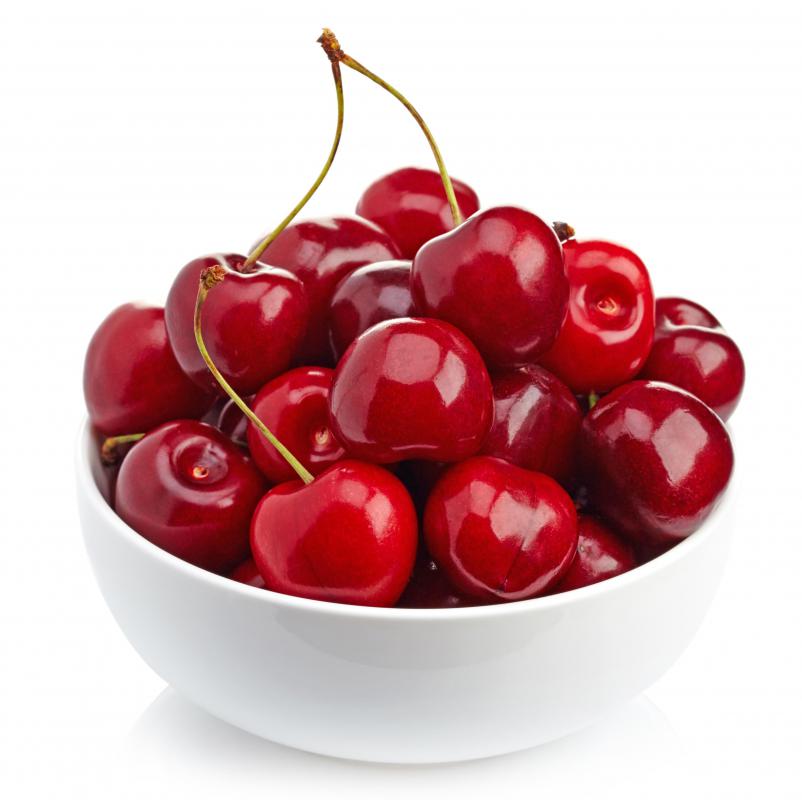
Sour cherries, also known as pie cherries, on the other hand, are ideal for pies. Although they are extremely delicate when fresh, they hold their shape well when baked, and the tartness mellows into a sweet, complex flavor when they are well seasoned. It is crucial that these cherries be used fresh, however, ideally within one to two days of picking. Preserved or canned cherries will often yield a disappointing and overly sweet dessert. Because pie cherries are highly seasonal, you only have two months a year in which to truly enjoy them: June and July, when these tasty cherries ripen on the tree.

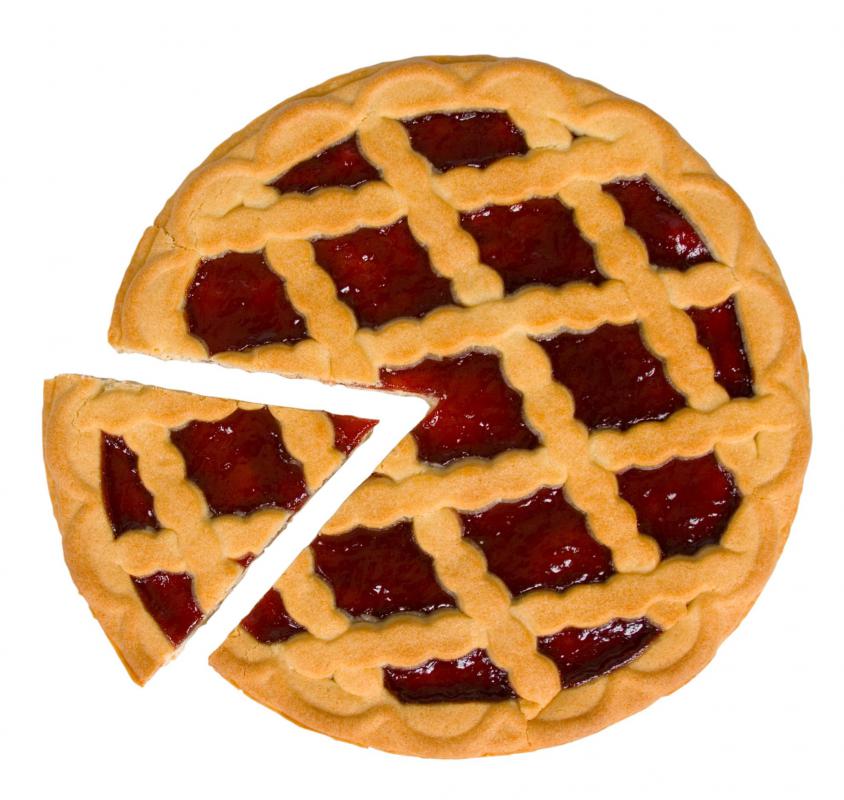
Like many pies, one made with cherries needs a strong crust as a good foundation. Use a flaky, slightly savory crust to offset the sweetness of the filling, and pre-bake the bottom crust so that it will not get soggy. Cherry pie can be prepared as a crust-on or lattice top pie, depending on whether or not you want to showcase the ruby red color of the cherries and the rich scent of the dessert. In either case, do not overhandle the crust or it will become hard and rubbery.

The core of the filling is, of course, cherries. Most recipes call for between 4 and 6 cups (620 and 930 grams) of pitted pie cherries, which should be placed in a colander after pitting to allow them to drain slightly. Add 0.5 to 1 cup (100 to 200 g) of sugar, depending on taste, along with 0.25 cup (32 g) cornstarch and 1 to 2 tablespoons (7.5 to 15 g) of flour. These thickeners are crucial, and will prevent the filling from turning into cherry soup. Next, add several tablespoons (1 Tbsp = 15 g) of butter and 1 teaspoon (5 mL) of vanilla, along with lemon zest, and finish off with spices of your choice. Cinnamon, cardamom, and cloves all add unique flavors to the pie, but make sure not to use them to excess; allow the flavor of the cherries to come through.

If this is your first cherry pie, consider making several cherry tarts with varying levels of sugar and spices to find the optimal seasoning. Bake in a 350°F (190°C) oven until the crust is golden brown, and allow to cool before serving. For some variation, serve the pie with ice cream or add sour cream to the filling.
Mary McMahon
Ever since she began contributing to the site several years ago, Mary has embraced the exciting challenge of being a DelightedCooking researcher and writer. Mary has a liberal arts degree from Goddard College and spends her free time reading, cooking, and exploring the great outdoors.
Learn more...
Mary McMahon
Ever since she began contributing to the site several years ago, Mary has embraced the exciting challenge of being a DelightedCooking researcher and writer. Mary has a liberal arts degree from Goddard College and spends her free time reading, cooking, and exploring the great outdoors.
Learn more...AS FEATURED ON:
AS FEATURED ON:


-
![A cherry pie with a lattice top.]() By: Elena BlokhinaA cherry pie with a lattice top.
By: Elena BlokhinaA cherry pie with a lattice top. -
![Cornstarch is often used to thicken the filling in cherry pie.]() By: Yuriy AfonkinCornstarch is often used to thicken the filling in cherry pie.
By: Yuriy AfonkinCornstarch is often used to thicken the filling in cherry pie. -
![Cherry pie is often best when made with fresh, pitted cherries.]() By: Harris ShiffmanCherry pie is often best when made with fresh, pitted cherries.
By: Harris ShiffmanCherry pie is often best when made with fresh, pitted cherries. -
![A dash of ground cloves is all that's needed in a cherry pie.]() By: bergamontA dash of ground cloves is all that's needed in a cherry pie.
By: bergamontA dash of ground cloves is all that's needed in a cherry pie. -
![A little cardamom can give a cherry pie a unique flavor.]() By: margo555A little cardamom can give a cherry pie a unique flavor.
By: margo555A little cardamom can give a cherry pie a unique flavor. -
![Fresh cherries pitted by hand are the key ingredient to an excellent cherry pie.]() By: baibazFresh cherries pitted by hand are the key ingredient to an excellent cherry pie.
By: baibazFresh cherries pitted by hand are the key ingredient to an excellent cherry pie. -
![After the cherries are pitted, they should be place in a colander to drain.]() By: DreadlockAfter the cherries are pitted, they should be place in a colander to drain.
By: DreadlockAfter the cherries are pitted, they should be place in a colander to drain. -
![Some people add sour cream to a cherry pie filling.]() By: dream79Some people add sour cream to a cherry pie filling.
By: dream79Some people add sour cream to a cherry pie filling.




Discussion Comments
You mention the names of "sweet" cherries but not the sour ones for pies.
Cherry pie is my husband's absolute favorite. If he has several choices of pie, he will always go with cherry first.
One of the best investments I made was a round piece of metal that goes around the edge of the pie crust to keep it from becoming too brown. This only cost a few dollars, but is so much easier to use than cutting small pieces of foil to place around the crust that never seem to stay on very well anyway.
One trick I learned to help the bottom of the pie crust get soggy, is to brush it with egg whites. It can be quite frustrating when you go to all that work to make this delicious pie and the crust is soggy.
Also, make sure that you bake the filling long enough so it is not runny. If you are making a double crusted pie, you want the filling to be bubbling out the slits or holes you have in the top of the crust.
Most importantly - if it doesn't turn out perfect the first time, just keep trying. It will always taste good and the more you do it, the easier it gets.
I can think of nothing better than a slice of homemade, warm cherry pie with some ice cream. I have made a few cherry pies when in season, and it seems like those that turn out the best are when the crust does not get soggy, but stays firm and flaky.
I also like to use quick cooking tapioca for my thickener. This seems to set up nicely with just the right texture.
It can be a bit time consuming if you do all of this from scratch. Especially if you pick your own cherries, pit them and make your own pie crust, but the results are well worth it! I like make enough for at least two pies. One to eat and one to freeze or give away.
Post your comments