
At TheHealthBoard, we're committed to delivering accurate, trustworthy information. Our expert-authored content is rigorously fact-checked and sourced from credible authorities. Discover how we uphold the highest standards in providing you with reliable knowledge.
How can I Avoid Carpal Tunnel When Typing a Lot?
 Tricia Christensen
Tricia Christensen
Tricia Christensen
It can be challenging to avoid carpal tunnel syndrome for people who type frequently, or for those who work in jobs that require repetitive motions of the fingers, hands and wrists. Some people may be less able to avoid it because certain conditions like thyroid disease, rheumatoid arthritis, and diabetes make the condition more likely. Still, all efforts should concentrate on prevention, as repetitive motion injuries can seriously impact your ability to do your job. Make sure that you put as little stress on your wrists as possible, angle your body and hands correctly, practice some basic wrist exercises, and regularly take breaks.
The first step to avoid carpal tunnel syndrome is making certain that your working environment will put the least strain on your wrists. Your body position and the position of your keyboard are important. When you place your hands on the keyboard, your lower arms, wrists, and hands should extend out at a 90° angle from the upper arms. If you hands are lower or higher when you type, you'll be more likely to develop carpal tunnel problems.

The body should be in a straight but relaxed position, and your knees should also bend at a comfortable 90° angle with the feet on the floor. If your chair is not adjustable, consider a footrest if your feet do not touch the floor. Work that you must type should be easy to read, and you should not have to hunch over in order to type. A stand where you can rest papers you must copy can be helpful.

Many typists fall victim to carpal tunnel syndrome because their wrists rest below the keyboard, and they must angle their hands upward in order to type correctly. A wrist rest below the hands can keep the hands more appropriately positioned for typing. Further, typists who are working on keys with a high resistance may injure their wrists because they strike the keys too hard. Adjusting the keyboard tension makes it easier to type without pushing with as much force.

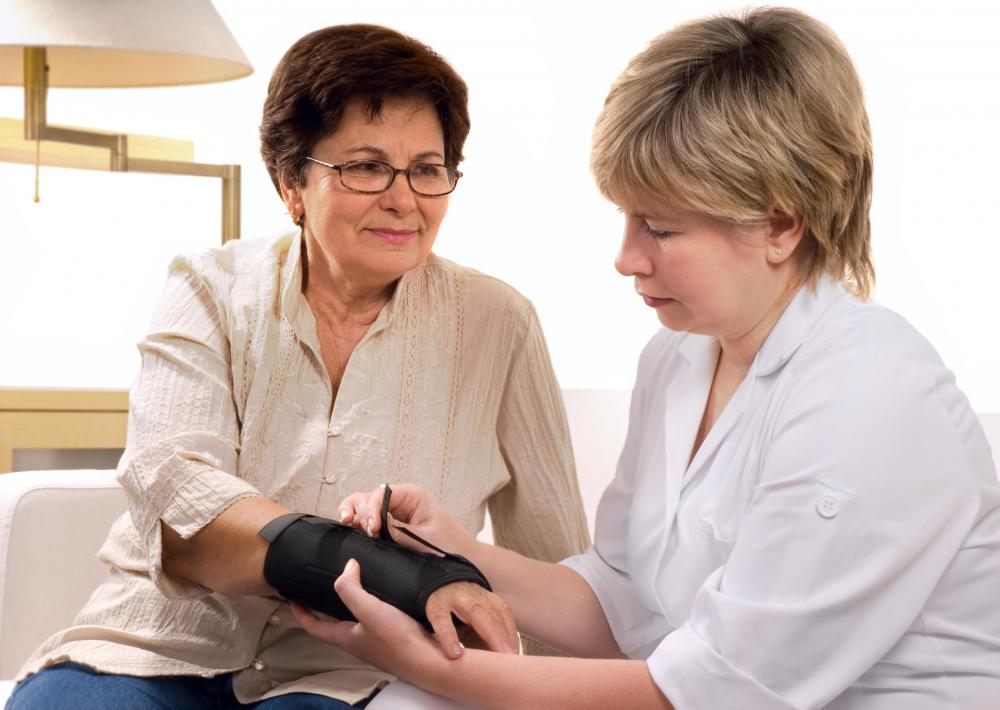
Even with good body positioning, some people still find themselves typing at awkward angles. This may simply be bad habit, and may make it harder to avoid carpal tunnel syndrome. A good correction to poor hand position are wrist braces or gloves that restrict up and down and side to side movement of the wrists. They allow your fingers to do the work while the wrists remain stable.

Typists can also perform wrist exercises, essentially warming up the wrists before beginning work. There are many exercise suggestions available, but the simplest of these is merely shaking the hands out, or making a fist for five seconds with each hand. The goal is to find exercises that will be easy to do and will take a short amount of time.
One essential that is often overlooked by typists is the benefit of taking breaks. It’s best when these breaks rest both the wrists and the eyes, so walking away from the keyboard for a few moments is a good idea. Ideally, a break and a stretch should be taken at least once an hour. Wrist warm up exercises should be repeated prior to beginning to type again. It can be a good idea to incorporate a few stretches of the body as well, as long periods of sitting can be detrimental to the whole body.

Many companies and individuals know the cost of losing good typists to carpal tunnel syndrome and encourage frequent breaks and even company-wide exercises once an hour to keep their workers healthy. If your company offers no such policy, ask for these breaks anyway, since most employers do not want to pay your disability if you develop carpal tunnel syndrome. People who are self-employed or students should make sure they take hourly breaks. Try setting a timer if your work distracts you easily and you lose track of time.
Tricia Christensen
Tricia has a Literature degree from Sonoma State University and has been a frequent TheHealthBoard contributor for many years. She is especially passionate about reading and writing, although her other interests include medicine, art, film, history, politics, ethics, and religion. Tricia lives in Northern California and is currently working on her first novel.
Learn more...
Tricia Christensen
Tricia has a Literature degree from Sonoma State University and has been a frequent TheHealthBoard contributor for many years. She is especially passionate about reading and writing, although her other interests include medicine, art, film, history, politics, ethics, and religion. Tricia lives in Northern California and is currently working on her first novel.
Learn more...AS FEATURED ON:
AS FEATURED ON:


-
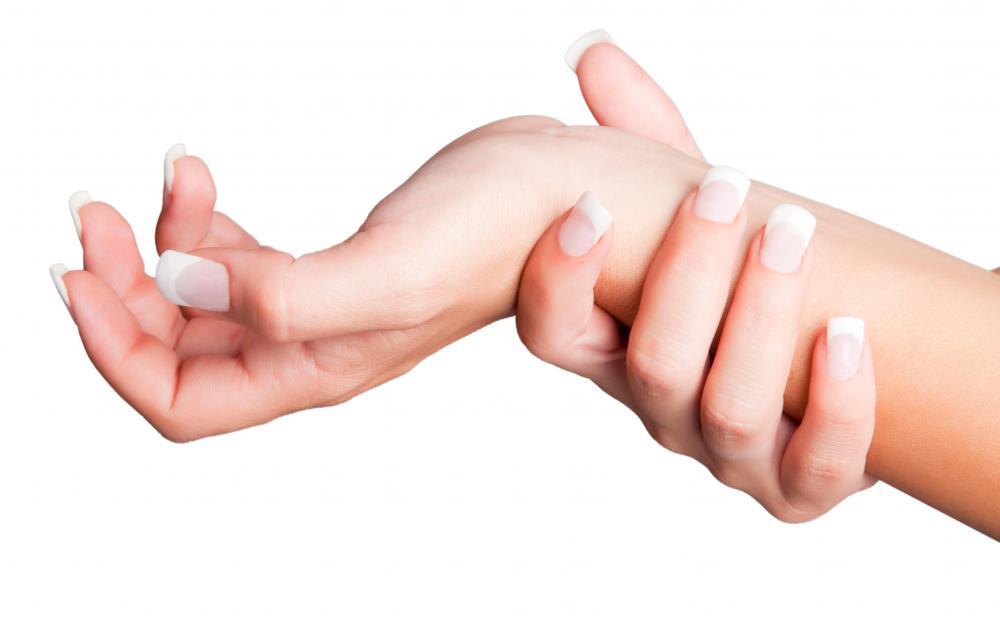
![Stretching and warming up the hands and wrists before typing can help avoid carpel tunnel syndrome.]() By: Andres RodriguezStretching and warming up the hands and wrists before typing can help avoid carpel tunnel syndrome.
By: Andres RodriguezStretching and warming up the hands and wrists before typing can help avoid carpel tunnel syndrome. -
![Many people who type frequently or perform repetitive motion with their hands can suffer from carpel tunnel syndrome.]() By: ruigsantosMany people who type frequently or perform repetitive motion with their hands can suffer from carpel tunnel syndrome.
By: ruigsantosMany people who type frequently or perform repetitive motion with their hands can suffer from carpel tunnel syndrome. -
![Typing for long periods every day can lead to carpal tunnel syndrome.]()
Typing for long periods every day can lead to carpal tunnel syndrome. -
![Splints can be worn to help ease carpal tunnel pain.]() By: Alexander RathsSplints can be worn to help ease carpal tunnel pain.
By: Alexander RathsSplints can be worn to help ease carpal tunnel pain. -
![Adjusting your keyboard or adding a wrist support can help relieve the symptoms of carpal tunnel when typing.]() By: Minerva StudioAdjusting your keyboard or adding a wrist support can help relieve the symptoms of carpal tunnel when typing.
By: Minerva StudioAdjusting your keyboard or adding a wrist support can help relieve the symptoms of carpal tunnel when typing. -
![Individuals with carpal tunnel syndrome may experience numbness or tingling sensation in the fingers.]() By: maticsandraIndividuals with carpal tunnel syndrome may experience numbness or tingling sensation in the fingers.
By: maticsandraIndividuals with carpal tunnel syndrome may experience numbness or tingling sensation in the fingers. -
![The keys on a keyboard are sometimes too resistant, causing strain for typists from striking the keys too had.]() By: WavebreakmediaMicroThe keys on a keyboard are sometimes too resistant, causing strain for typists from striking the keys too had.
By: WavebreakmediaMicroThe keys on a keyboard are sometimes too resistant, causing strain for typists from striking the keys too had.




Discussion Comments
Baltic amber bracelets help a ton.
I've done a lot of data entry. Unfortunately, wrist rests don't make it any easier for me. I have very bony (weak) hands and wrists, and even 'soft' wrests seem to restrict blood flow. What helps me the most is jogging. It's all about blood flow.
@seag47 – Yes, office supply stores carry them. They really do make a big difference in the comfort of your hands and wrists while typing. I have one at my desk at work, and I couldn't live without it.
They look like long, skinny, rectangular pads. Mine is black, covered in cloth, and stuffed with what feels like rubber. I think some are stuffed with beans or rice, as well.
They are so squishy, like little pillows for your wrists. However, they are firm enough to keep them in place.
@Oceana – They wouldn't be laughing if they had your job! People who ridicule carpal tunnel syndrome have jobs that don't require constant use of their wrists and fingers.
I recently got a data entry job, and I read a lot about how to avoid carpal tunnel syndrome. I think the best option for me is to get a wrist rest.
What do these look like? Would I be able to find one at an office supply store?
I do a few exercises to ease my carpal tunnel symptoms. I don't have full blown carpal tunnel yet, but I have been experiencing pains, so I'm doing all I can to keep from damaging the area.
Other than balling up my fists once an hour, I also flex my wrists with my fingers held outward. I point my fingers and hands straight up for twenty seconds, and then I reverse the position, holding them straight down for the same amount of time.
I also keep a stress relief ball on my desk. I squeeze it every half hour or so, and that seems to help, too.
My coworkers make fun of me for this, but I always sit with perfect posture and with my hands and wrists at the proper angle. I type a lot at my job, and I am really afraid of getting carpal tunnel.
One of my coworkers said that he could measure a 90 degree angle by using my back, but this little joke didn't deter me from my mission. As much as I type and click the mouse all day long, I can't afford to fit in just so that I don't get laughed at. I need my wrists desperately.
Latte31- How to avoid carpal tunnel syndrome is simple. Take frequent breaks.
People that type constantly or cut or work in a factory often suffer from this condition.
Another carpal tunnel solution is to buy an ergonomic keyboard and mouse. Relax the Back sells the keyboard which sells for about $20. The mouse can be found at Staples. Both of these products add comfort and put less stress on the hand muscles.
This is the best help for carpal tunnel syndrome that is in its early stages.
The carpal tunnel signs are pain and a feeling of numbness in the hand. The carpal tunnel statistic shows that over 250,000 people are affected with this condition.
However, there is carpal tunnel help for those afflicted with this condition. There is surgery if the condition is really bad. About half of the cases of carpal tunnel results in surgery.
Post your comments