
At WiseGEEK, we're committed to delivering accurate, trustworthy information. Our expert-authored content is rigorously fact-checked and sourced from credible authorities. Discover how we uphold the highest standards in providing you with reliable knowledge.
How are Shoes Made?
The shoe-making process is usually somewhat complex and is almost always very time consuming. Specific steps usually depend on the type of footwear at issue, and as a result it can be difficult to set out universal instructions or descriptions. Making sandals, for instance, is usually a different enterprise entirely from making hiking boots or formal wear, and custom-made pairs tend to have a different set of specifications than do those made in large factories predominantly using machines. Even still, there are some parts of the process that are more or less standard. Shoemakers almost always start with a pattern, for instance, and usually set out the design and any embellishments before beginning; it’s also common to start by building the “last,” which is basically the skeleton and core framework. The pattern must then be cut and stretched over the last, and things must be closed and sealed off. Polishing, trimming, and buffing usually come at the end.
Design Process

With very few exceptions, the manufacturing process begins at the design table. Artists and stylists decide what they want the finished product to look like through a series of sketches that get progressively more detailed until there’s basically a working pattern. The most important part of this process is setting out the looks and basic appearance for the footwear, but in many cases even these preliminary sketches make some notes about the sorts of materials and the kinds of tools that may need to be used. Ideally the end result is a sort of “map” directing manufacturers when it comes to the product as a whole, including soles, tops, and any embellishments like laces or bangles.
Forming the Last

Once a shoemaker, who may also be called a cobbler, has a pattern or plan in hand, he or she needs to get started actually building each pair. The first step here is usually the creation of what is known as the “last.” The last is the form over which the shoes are molded, and it is usually made of wood or plastic. It determines the fit and feel of the final product, as well as its performance. The last is involved in both the beginning and end of the construction process, and essentially acts as the basic form or structure. As a result, cobblers typically make a variety of different sizes and widths depending on the customer’s needs.
Patterning

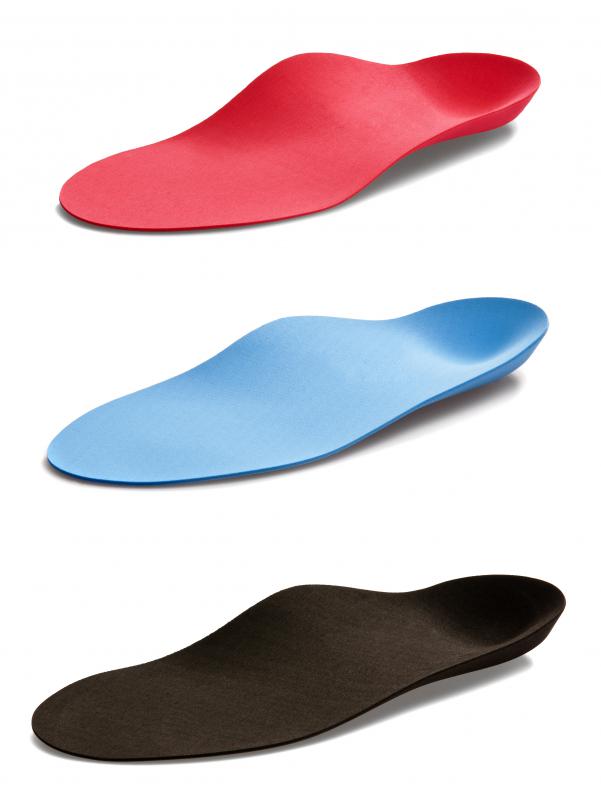
A shoe doesn’t usually become identifiable until it has some sort of material covering the last, and this part happens during pattern cutting. Pattern cutting is where specific parts are produced. These parts generally consist of the sole, which is the bottom part; the insole, which is the layer of foam or other material that is placed directly under the foot; the outsole, which directly touches the ground; the heel, which is the bottom back part that can be high or low depending on design specifications; and the upper, which is the part that actually holds the shoe on the foot.

Cobblers typically cut all of these parts individually, then collect them together and begin actual assembly. Precision is really important here. Missteps or poor measurements can lead to a number of different problems, both in terms of fit and wear.
Closing, Stretching, and Attaching
Once everything is assembled it’s time to start actually piecing things together. Collectively, this is known as “closing.” The uppers are pierced, punched, wedged, ridged, and then placed with lining and sewn together. During a process known as “stretching,” the upper is stretched over the last. This tends to be easier with more flexible fabrics and linens, and can be more challenging with stiff materials like leather. A certain amount of force is often required to stretch the upper on to the different points of the last in order to give a defined shape.
During attachment the cobbler actually bonds the upper and the sole together. This is often done with cobbler’s glue or another strong adhesive, but a lot depends on the type of shoe at issue. Sometimes bolts, screws, or stitches are a better option.
Finishing
In most cases things aren’t actually done until the footwear has been “touched up” by the cobbler. Formal shoe finishing usually involves the final cutting, trimming, cleaning, and polishing that makes the product ready to hit store shelves. If the shoes are being made for a certain business or brand, they are usually tagged and boxed for distribution during this time as well.
Role of Machines
Modern cobblers often depend on the help of a number of machines. In some instances the entire manufacturing process can be more or less automated, which is often the case with many mass-market footwear choices. The automation process often brings the cost down, which allows manufacturers to make more and charge less for each pair.
Even very expensive custom-built products often make use of some machine help, though, particularly when it comes to making precise cuts, stitching through tough material, and measuring patterns. It is of course possible to build shoes entirely by hand, but this does tend to be less precise and is often much more expensive.
AS FEATURED ON:
AS FEATURED ON:









-
![A shoemaker or cobbler making a boot.]() By: tieroA shoemaker or cobbler making a boot.
By: tieroA shoemaker or cobbler making a boot. -
![The insoles or interior padding of a shoe is produced during the pattern cutting phase.]()
The insoles or interior padding of a shoe is produced during the pattern cutting phase. -
![There are a wide variety of different shoe types, from sneakers all the way to sandals.]()
There are a wide variety of different shoe types, from sneakers all the way to sandals. -
![Shoes like hiking boots must be made using many different kinds of fabrics and material.]() By: Alexandr VlassyukShoes like hiking boots must be made using many different kinds of fabrics and material.
By: Alexandr VlassyukShoes like hiking boots must be made using many different kinds of fabrics and material.



Discussion Comments
@clintflint - I also know a couple of people who experiment with making sandals, either with recycled rubber or with leather. I think they are more simple to make than the average shoe, because you only need to cut a flat base and then attach the straps in whatever way you want.
It would be kind of awesome to be able to make shoes, but I guess you'd have to be able to make them very strong, particularly women's shoes. I can imagine what would happen if you made and sold a woman's shoe that snapped. It could really injure whoever wore it. And there is so much pressure put on the heel because of the way the shoe works.
It reminds me of the movie "Kinky Boots" which is about a small shoe making company that decides to specialize in boots for drag queens, because they often weigh more and need a particularly strong heel (as well as particularly outrageous boots).
It's a pretty cute movie if you feel like having a bit of a laugh. It's also got a surprisingly large amount of information about the shoe making process.
Making shoes doesn't have to be that complicated, depending on what kind of shoe you want to make, of course. Lately it's become more fashionable to wear felt shoes, that are basically made from wool, with a rubber sole if you want.
Making them takes a lot of work, because you basically make the felt in the shape of the shoe, and making felt takes a while and requires strenuous movement, but you can make any color and any size you want.
Or, alternatively, if you just want a pair of felt shoes, you can look online for someone else who makes them and sells them. I've seen them in Fair Trade stores as well.
She has found a couple of places that sell shoes that are a lot more comfortable, but they are very expensive. They last a long time though, so she tries to save up and get those.
I think the one store she likes the most is one which specializes in shoes for people with foot conditions (although the shoes are for anyone). They actually pay attention to whether or not the shoe is going to be good for your foot, rather than just on how it's going to look.
I have feet that are two different sizes and my feet are wide width. Why is it so hard to find a cute pair of comfortable shoes? I see so many shoes I would like to wear but they are all medium width. Is it that hard to make wide width shoes? what is the problem?
Did you know that many old shoe makers and cobblers develop what is called "cobbler's femur"? When traditional cobblers would work, they would do a lot of work with the shoe on the top of their leg, including repeatedly striking the shoe to get it in shape.
This repeated trauma to the bone would cause the bone to build up a little shelf, almost like a callus builds up on a foot. Sometimes the shelf would grow quite pronounced, and even stick out over the knee, causing pain to the cobbler.
Since more and more cobblers work on machines now, cobbler's femur has declined somewhat, but it still makes you think twice about those glamorous ladies shoes, right?
How are specialized shoes, like comfort shoes or walking shoes made differently than normal shoes? Is it just a difference in pattern, or what?
I guess what I'm asking is, what makes the difference between a casual tennis shoe and a designer walking shoe? Or how does a women's "comfort" shoe differ from a normal pair of women's shoes?
Is it just a design and materials difference, or are there actual physical considerations taken, or what?
When I was in Italy, I was lucky enough to get to go to a shoe making factory that specialized in leather men and womens shoes. It was so cool to see how they work, and how complicated the patterns are, even for the mens shoes.
If you have never seen anybody making shoes, let me tell you, it's harder than you would have ever thought. So much craftsmanship goes into making those shoes that it makes sense why fancy leather shoemakers charge what they do.
I was so glad that I got to see how shoe making actually works -- it gave me a better appreciation for what I wear, and I also got some great discount shoes from the factory store!
Post your comments