
At DelightedCooking, we're committed to delivering accurate, trustworthy information. Our expert-authored content is rigorously fact-checked and sourced from credible authorities. Discover how we uphold the highest standards in providing you with reliable knowledge.
How are Sausages Made?
 Mary McMahon
Mary McMahon
Mary McMahon
Sausage is a common food all over the world, eaten at breakfast, lunch, and dinner depending on locale. It has been made for centuries among many cultures, with long culinary traditions surrounding the craft. Traditionally, this form was an efficient use of all parts of a slaughtered animal, and was easy to preserve via drying or smoking. As meat became easier to keep fresh, sausage remained popular because of the wide variety of delicious types and flavors.
Traditionally, sausage consists of meat stuffed into the scraped intestines of an animal, frequently the animal it originated from. The intestines are scraped to ensure cleanliness and also to form a thin outer membrane that will keep the meat encased. The meat is ground and then forced into the long membrane, which is twisted periodically to form elongated tubes of meat. Modern sausage is sometimes made with artificial casings, but most butchers are able to provide traditional forms.

The magic is in the type of meat, the seasoning used, and the preparations made before the meat is turned into sausages. Sausage is made from all sorts of meat, including pork, beef, chicken, turkey, and venison. Some will mix these meats to create a balanced flavor, with poultry becoming more common in the 20th century due to the lower fat content and preferred flavor. Sausage is also made from a variety of cuts of meat, although traditionally it is made with liver and offcuts, so that the slaughtered animal could be utilized efficiently. Many cultures also have a tradition of blood sausage, which mixes blood from the slaughtered animal with the meat, resulting in a dense, black product which is highly prized.

Sausage is seasoned with a wide variety of things, ranging from fruits and vegetables to herbs. Many fruits such as apples are popular, lending a sweet, summery flavor to the meat. In addition, most is salted and peppered, with some types being extensively salted to assist with the preservation process. The spicing determines the ultimate flavor, and is infinitely variable.

When making sausage, the cook usually starts with a freshly slaughtered animal. The intestines are cleaned and set aside while the selected meat is chopped and loosely cooked with any seasonings. A common recipe begins with caramelized onions mixed with apples and fresh herbs. The meat is added and the mixture is stirred carefully to ensure even distribution of all the ingredients. Then, the meat is forced into the casing, which is usually held in a device called a stuffer while the cook works.

After the sausage has been stuffed and twisted, it can be kept fresh and eaten in a few days, or it can be cured. This is often done by smoking or wind drying, although it can also be cooked and canned. The choice to leave it fresh or cured depends on the desired flavor. Cured varieties tend to be more mellow in flavor, while fresh is more meaty. Fresh sausage is often used in sauces and soups where fresh meat would normally be used, and can be frozen for future use.
Mary McMahon
Ever since she began contributing to the site several years ago, Mary has embraced the exciting challenge of being a DelightedCooking researcher and writer. Mary has a liberal arts degree from Goddard College and spends her free time reading, cooking, and exploring the great outdoors.
Learn more...
Mary McMahon
Ever since she began contributing to the site several years ago, Mary has embraced the exciting challenge of being a DelightedCooking researcher and writer. Mary has a liberal arts degree from Goddard College and spends her free time reading, cooking, and exploring the great outdoors.
Learn more...AS FEATURED ON:
AS FEATURED ON:


-
![Blood sausage.]()
Blood sausage. -
![Apples are often included in sausages.]() By: xiangdong LiApples are often included in sausages.
By: xiangdong LiApples are often included in sausages. -
![Fresh sausage should be eaten within a few days.]() By: cynoclubFresh sausage should be eaten within a few days.
By: cynoclubFresh sausage should be eaten within a few days. -
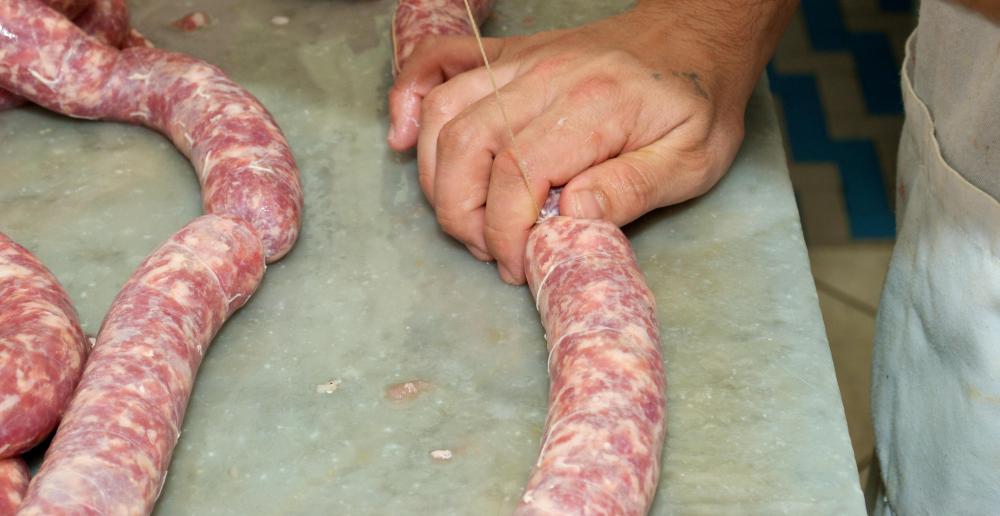
![Sausage meat is typically stuffed into artificial or natural casings and tied then off at specific lengths.]() By: lucamedeiSausage meat is typically stuffed into artificial or natural casings and tied then off at specific lengths.
By: lucamedeiSausage meat is typically stuffed into artificial or natural casings and tied then off at specific lengths. -
![Some sausages are hand-stuffed by trained butchers.]() By: aboikisSome sausages are hand-stuffed by trained butchers.
By: aboikisSome sausages are hand-stuffed by trained butchers.



Discussion Comments
If a sausage is made from pork it will contain more fat because manufacturers use fatty meat to reduce the cost of their work, making a lower quality food product. They are enabling unhealthy food because the meat is not lean enough.
Post your comments