
At TheHealthBoard, we're committed to delivering accurate, trustworthy information. Our expert-authored content is rigorously fact-checked and sourced from credible authorities. Discover how we uphold the highest standards in providing you with reliable knowledge.
Has It Been Proven That a Vegetarian Diet is Really Healthier?
The short answer is a resounding yes; it has been conclusively proven through extensive worldwide studies by independent, highly respected international health advisory boards that a vegetarian diet is significantly healthier than one which includes meat and animal products. This is true for all ages, infant to adult, and includes pregnant and lactating women.
Studies have found a direct statistical correlation between decreased meat intake and increased health benefits. The chances of developing chronic diseases including high blood pressure, diabetes, coronary heart disease, obesity, kidney failure, osteoporosis and cancer, is markedly decreased among vegetarians and vegans by as much as forty percent. Along with this favorable news, chances for longevity might increase by some twenty percent. Owing to these benefits, health insurance companies commonly offer discount rates to vegetarians and vegans.

For decades, a common public misconception was that a vegetarian diet lacked protein. The meat industry began a series of promotional commercials with slogans such as “meat is real food,” implying a vegetarian diet was somehow lacking. As more information came to light about the benefits of being vegetarian, the public misconception changed. It then became, vegetarians can get enough protein, but it isn’t easy, which is equally untrue. Not only is it easy to eat a balanced diet, the idea that it requires special effort whether vegetarian or vegan is highly overstated.

The concern is when the entire diet is limited to a few foods, as is the case in many third world countries where rice, for example, might be the only staple. In industrialized nations, however, where people eat a variety of foods on a daily basis, eating too much protein is likelier than eating too little, even for vegetarians and vegans.
The British Medical Association (BMA) was first to shed light on the many benefits of a vegetarian diet in a 1986 report. Based on a large volume of research, it concluded that vegetarians not only tend to have lower cholesterol, but also significantly reduced instances of coronary heart disease, obesity, high blood pressure, certain types of cancers, gall stones and large intestine disorders.

Beginning in 1983, the China study, looked at 6,500 participants over the course of several years, documenting their dietary habits, lifestyles and health. This comprehensive study was a combined effort of the Chinese, United Kingdom and United States. The first results were made public in 1989, and were unequivocal. The less meat consumed, the lower the risk of developing common chronic diseases as noted above. The study also debunked the Western myth of promoting meat as a necessary source of iron. Among the largely vegetarian-based diets of the Chinese, the average vegetarian had twice the iron intake of the average U.S. citizen.

The highly respected World Health Organization (WHO) offered their own findings on vegetarian and vegan diets in a 1991 report. WHO not only confirmed the results of the BMA and the China study, but also found that meat and dairy-rich diets promote other diseases as well, including osteoporosis or low bone density, and kidney failure. WHO went so far as to predict the cancer crisis the world now faces, based on the meat-rich dietary trends of Western nations. The report candidly faulted governments for public Dietary Guidelines that promote meat and dairy as necessary foods, urging more vegetarian-based policies where animal products are relegated to optional status.

Another organization to weigh in on the matter of vegetarian and vegan diets was the Physicians Committee for Responsible Medicine (PCRM). This group consists of some 5,000 U.S. doctors, including the editor for The American Journal of Cardiology, William Roberts. Criticized by some as biased for their humane ethics, the PCRM reviewed over 100 published studies from around the world. It confirmed that significantly lower disease rates are directly linked to vegetarian and vegan diets. In their 1995 report, the PCRM urged the U.S. government to update dietary policies to reflect these findings. In 1996, government policies addressed this for the first time, stating that a vegetarian diet is healthy, meets Recommended Daily Allowances, and does not lack protein.
About the same time as the previous studies were being conducted, The Oxford study was underway. Gathering data over a period that spanned an excess of 13 years and involved over 11,000 people, it not only confirmed lower rates of heart disease, diabetes, cancer and other diseases among vegetarians, but also found a 20% decrease in premature mortality rates. Simply put, if you eat a vegetarian or vegan diet, you have a 20% better chance of living longer than if you eat meat, according to the study.
The positive findings of vegetarian and vegan diets are also echoed by the American Dietetic Association (ADA), which ranks among the list of proponents. The ADA is one of the most highly respected advisory boards worldwide.
Criticisms have been leveled in some cases as to how data was interpreted, or the politics of those supporting it. However, until such criticisms are backed by redundant, solid, peer-reviewed research that causes organizations like the ADA, BMA, and WHO to reverse their positions, one might assign detractors' sour grapes. For over two decades the body of worldwide medical evidence supporting vegetarian and vegan diets has been growing, is overwhelming, and to date, is indisputable.
Supported by the most highly respected health organizations in the world, the average citizen with no bone to pick either way can assuredly take it to heart that a meat-free diet is not only healthier, but the benefits are statistically significant, if not profoundly beneficial. If interested in transitioning to a vegetarian or vegan diet, see What is the Easiest Way to Switch to a Vegetarian Diet?”
AS FEATURED ON:
AS FEATURED ON:


-
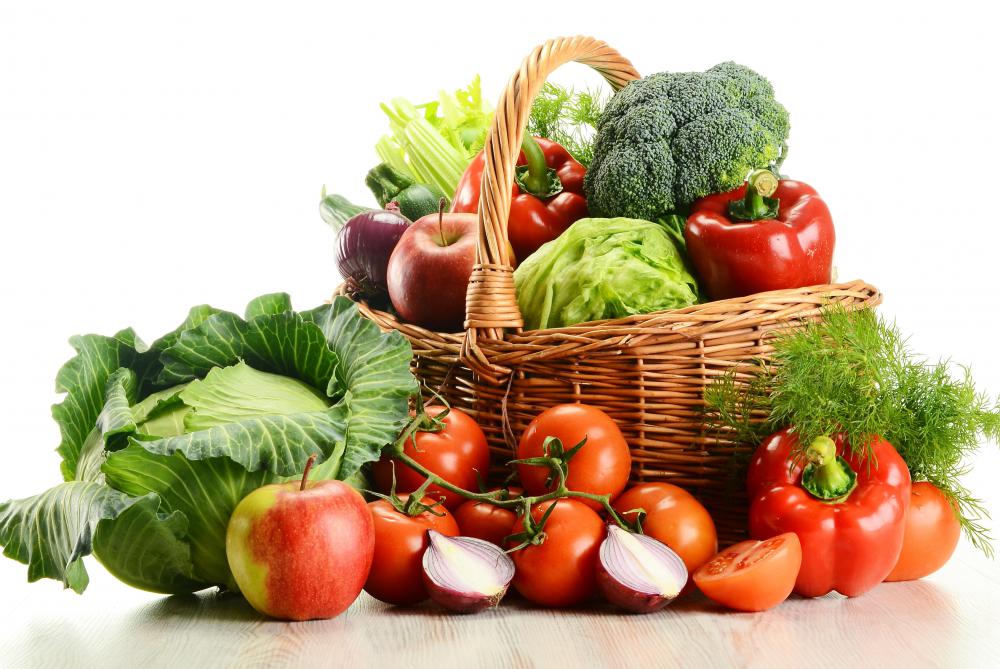
![A balanced vegetarian diet can be very healthy.]() By: monticelllloA balanced vegetarian diet can be very healthy.
By: monticelllloA balanced vegetarian diet can be very healthy. -
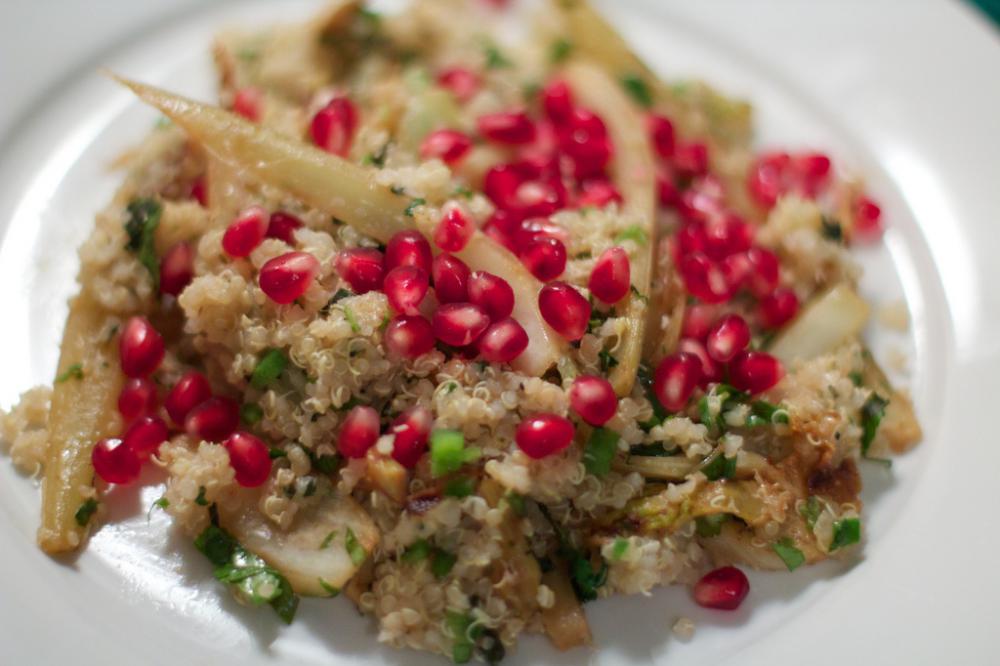
![Quinoa pomegranate fennel salad, a vegetarian dish.]() By: James CohenQuinoa pomegranate fennel salad, a vegetarian dish.
By: James CohenQuinoa pomegranate fennel salad, a vegetarian dish. -
![A vegatarian dish.]() By: Marco MayerA vegatarian dish.
By: Marco MayerA vegatarian dish. -
![High blood pressure is much less likely among vegetarians.]() By: pearlHigh blood pressure is much less likely among vegetarians.
By: pearlHigh blood pressure is much less likely among vegetarians. -
![Vegetarian meat crumbles are made of textured vegetable protein.]() By: VidadyVegetarian meat crumbles are made of textured vegetable protein.
By: VidadyVegetarian meat crumbles are made of textured vegetable protein.



Discussion Comments
For the person who has never met a rational vegan, Hi! I'm vegan because I think it makes sense. I think it's totally rational. The reasons that meat-eaters give for eating meat are usually somewhere along the lines of, "I could never give up meat because I love it" and "I don't want anybody to tell me what to eat". Neither of these is at all rational or at all relevant to what is ethical or healthiest to eat.
It doesn't make any sense to me why we think it's OK to drink the milk of a pregnant cow. It doesn't make any sense to me why people can love a pet, but torture and kill and eat another animal, especially when countless studies prove that eating animal products is not only totally unnecessary, but healthier. Because it's how I've always done it is not a reason.
It does not matter if you live to 100 years of age being a vegetarian. All that means is you craved a good meal for 100 years. I think about the, "I’m not drooling” syndrome. So I am a happy omnivore. Ever notice how nearly all the herbivore animals are placid? Is this why the vegan diet is being pushed? To make us dull and non responsive? More than likely, knowing the media.
People spend way too much time dwelling on food and arguing with each other. How about you all just eat what makes you happy and ignore everyone else's opinion?
Getting online to argue with each other's food preferences or belief system is simply pathetic. Honestly, you should all be ashamed of yourselves.
I'm trying to write a paper. Every website is just name calling and useless fighting for no good reason. Just live and stay out of each other's business.
Being vegetarian or that kind of thing is the most stupid thing you can do. I am a doctor and I can say that some patients who have Alzheimer's have been vegetarian at some time their lives. Some people who have sclerosis and lose their vision have been vegetarian at some time in their lives.
As far as being a vegan, I cannot totally support that. I am a multiple sclerosis patient. It's a debilitating disease with no cure. The nutrients recommended to carry on without much progression for sometime can only be found in non veg foods. What would you suggest here? Is veg better?
With all due respect, I have never met a strict vegan I felt was fully rational. Something is missing.
The studies purporting vegetarian diets to be healthier than omnivorous diets generally suffer from a great deal of confounding. These studies compare vegetarian diets vs. everyone else, or in other words, vegetarian diets vs. the diet of the average American (which everyone can agree is terrible). The results are then extrapolated to form an unsupported conclusion that meat is the factor accounting for the difference. Not the soda, not the nitrates found in processed meat, not the refined grains, not the trans fats, not the preservatives, etc. Things that both vegetarians and health-conscious omnivores generally make an effort to avoid, but that the average American does not.
In other words, they're comparing a diet of beans, sweet potatoes, kale, oatmeal and green tea to a diet of hot dogs, french fries, and coca cola, and then proclaiming meat to be the reason for the difference. This is an idea that can not be deduced from the study.
What happens if they compare a diet of beans, sweet potatoes, kale, quinoa, and green tea to a diet of herring, blueberries, spinach, roasted chicken, oolong tea, and quinoa? Then all of this "conclusive evidence" vanishes.
"Correlation does not equal causation" is drilled into every statistics student's head for a very good reason. You can't say X causes Y simply because you wish it to be true. You can't extrapolate a simple correlation to a broader conclusion that the study does not support. That is bad science.
Here's an example. Let's say a study found that people who own two or more pairs of basketball shorts have a 30 percent lower chance of heart disease. So simply owning two or more pairs of basketball shorts reduces your risk of heart disease by 30 percent, right? All you have to do is to go buy two pairs of basketball shorts and suddenly your cardiovascular health will improve? Of course not. The result can be explained by the fact that people who own basketball shorts are more likely to exercise regularly than those who do not. The greater likelihood of regular exercise is simply a confounding variable.
I have tried veganism (not for me) and vegetarianism. It's all right being a vegetarian, but there are times when my body and mind and taste buds simply crave poultry and fish. Don't try to sway others to your point of view; to each her/his own. I mostly eat vegetarian meals but when I get tired of them, I have grilled chicken breast or tuna.
Thank you for leaving the meat to us meat eaters.
There simply is no conflict here when looking at the only real evidence there ever is, and that's empirical evidence.
Healers of all sorts (and their patients) have been able to successfully heal from all manner of 'incurable diseases' for centuries, by switching to a plant based diet. Reversals of cancer, adult onset diabetes and heart disease are very common in those severely restricting or eliminating meat.
No study is without flaw and no study can be relied upon to yield 'the complete picture'.
No undertaking in coming to a valid conclusion will ever yield the truth without thoroughly examining the empirical evidence (events that actually occur).
B12 is found in many plants, but is far more plentiful in animal flesh. However, what makes that nutrient bioavailable is our intestinal microbiota. I've seen two studies (somewhere over the years, but no longer have them), that showed B12 deficiency is just as prevalent among meat eaters as vegans and vegetarians. (I remember them, because I started researching in order to be able to successfully defend meat-eating).
For those sincerely seeking knowledge, I suggest the movie "Healing Cancer Inside Out". The second half is devoted to scientific studies, 'other studies', empirical evidence (via interviews with MDs, alternative practitioners and patients themselves).
I have been vegetarian for more than 10 years and it is one of the choices I will always be happy and proud of.
Among friends and family, it is said that my person is the healthiest they know. I also look younger and hold an IQ of 140. My decision to become vegetarian was primarily inspired by respect and love to other living beings, or by Ahimsa, a word derived from sanskrit language, meaning kindness and non-violence towards all living beings including animals, of course.
Let me say that the time to survive without killing others who have the right to live --as much as all of us-- is approaching, and that we will not be able to continue this predatory rhythm of life. Giving meat to some people while others starve because we chose to feed people who are addicted to meat instead to feed more people who starve is not fair. Scientific evidence suggests that humankind would be set free of hunger and famine if everyone on earth became vegan.
The planet will not be able to support either on behalf of people craving for an hamburger. We continue deforesting and harming the environment. This high price of harming our common land will be once included in your steaks and hamburgers, and they will be so expensive that you all, meat addicts, will have to become vegans.
"Why are there no hunter-gatherer vegetarians?"
Lacking agriculture, hunting is the most efficient means of collecting certain nutrients. But it's been shown by nutritional anthropologists that in pre-agricultural societies where the men hunted and the women gathered, the latter actually contributed more to the nutritional needs of the tribe.
Today we know how to raise crops, and what plants have what nutritional value. We also don't have mammoths we can hunt. When circumstances change, so do solutions to problems we face.
Actually life expectancy has never been as high as now and that's mostly due to modern medicine. What you have to compare is not that we have been surviving on animal products for so long, but how life expectancy changes due to a vegetarian or vegan diet. We need proteins, which is why we eat meat. However, there are plenty of plant-based proteins that fulfill the same purpose.
Most studies that indicate that a vegan diet is healthier are done by vegans with no research qualifications and with biased variables. Most of the studies compare a healthy vegan diet with an extremely unhealthy omnivore diet. Not only is this extremely biased, it's also extremely unscientific.
In order for this clam that "vegans rate healthier" to be verified, they must do in-depth medical studies where the only variable in diet is their protein source.
Most studies in medical journals indicate that an omnivore's diet is healthier then a vegan diet. They also indicate that vegans are more likely to get cancer, more likely to have fertility issues, and interestingly have on average an IQ 5 points lower than their countries' average, and if that person was a vegan or vegetarian during their developmental stage (0-25) that their IQ was up to 20 points lower than the average.
This may seam a little far-fetched, and most vegans reading this will strongly object. However, most evolutionists suggest that our evolution from the Homo rudolfensis and Homo georgicus to today's homo sapiens are due to them beginning to eat meat. Before our evolution to meat eaters, over 60 percent of our energy was used to simply digest meat. This seriously limited their brain capacity. The homo rudolfensis and georgic had stomachs four times the size of our stomachs today and had brains under 1/4 the size of ours. It's around those times that animal carcasses began to have knife marks on their bones that human brains began to grow, as less energy was spent digesting food and more energy was available for brain development.
Now I don't know about you, but I value both my cancer free body and my high IQ, so I won't be becoming a vegan or a vegetarian anytime soon.
It's simple, as far as diet is concerned. Eat meat, die of a chronic disease, eat veggies and die of old age. I've been vegan for a year and an omnivore for 49. I have become healthier then ever, so all this arguing about what's what is pointless. Unless you live it, don't bash it, or endorse it.
It seems that a lot of people are misguided as to the benefit of being a vegetarian and/or vegan. I have been a vegetarian for many years and I am as strong as any man my age and younger (50). I can still do 50 plus push ups and jog and have great stamina. There has been extensive research done on this and it has been proven that they are healthier if they eat a well balanced veggie and/or vegan. I guess by your statements you have not heard that there is a kick boxing champion also who is a full-fledged vegetarian (absolutely no meat).
If any of you can recall the China report where the experiment of removing meat from the mass general population, and it has been confirmed by a non-partisan research that tumors, cysts and cancer directly increased with the consumption of meat. And, it was also proven that when meat was removed from the diet or greatly decreased these illness decreased proportionately.
Protein, which many think and hold as evident for the reason to eat meat, is found in several veggies and nuts, commonly called vegetable protein, and is far more healthy than meat protein. Those of you who are commenting that we adapt, the earth has been here for millions of years, and a slew of other unfounded statements seriously need to reconsider reading the China report.
I have also witnessed the slowing down and reversal of the onset of high blood pressure, diabetes and other heart diseases because individuals tried the veggie/vegan lifestyle before they judged and the results were amazing.
As for my personal testimony, of all the children in my family (eight) and with a history of high blood pressure and diabetes, I am the only one who is not on some kind of medication and one other brother to my knowledge (he is retired Air Force). I also witnessed my mother, who is nearly a 40-year diabetic decrease her meds way down to almost none.
Of course, being up in age as she is, her body cannot fight as hard as it used to, but she is much better off. But this happened only after she visited a lifestyle change center which taught her how to prepare her meatless meals. I truly wish that our comments were centered around actual evidence. Try it for yourself.
As the saying goes, "don't knock it unless you have tried it".
I had a heart attack at 37 eating an omnivore diet. I was put on simvastatin, zetia, niaspan, toprol xl, Altace, protonix, and plavix for the last eight years. I went from 253 to 292 trying to eat healthier and dieting all the time.
I became a vegan in August 2010. Today I am 6'2 and weigh 207. My primary care and cardiologist have taken me off all the meds except plavix. During the last eight years I have had five stents placed. My total cholesterol is now 114, blood pressure is 106/68 with a resting heart rate of 52. I am 45 years old and haven't felt this good since high school.
I weighed 220 when I graduated. Meat, dairy and eggs can be consumed but don't need to be. If we were designed to eat raw meat and eggs, why do we have to cook them to kill all the bad stuff in them? And to drink the infant milk for another species is just stupid. Thank you Dr. Esselstyn for saving my life.--
Michael S.
If a vegetarian diet is not healthier, then how did I heal from my chronic illnesses almost completely, when I quit eating meat?
If you want real evidence, do things for yourself and don't trust the paradoxical studies that different scientist groups are making. Also, many yogis are living on a very small diet (two bananas a day and like), and are healthier than anyone even in their old age.
If I were to criticize something passionately without actually doing my own research, (both theoretical and practical), and forming a theory that actually has a basis in reality, then I would probably be more interested in anonymously proving that I'm a really smart person by being argumentative and sounding really convincing rather than giving a crap about what the truth actually might be and seeking it, as well as sharing on what my own experience is.
I'm always weary of those who argue zealously and emotionally about the so-called truth when all they're seeking to do is refute what another person shares. They remind me of the way I used to be when my actions reflected the apparent truth that I couldn't care less. I was judging myself based on my thinking rather than doing. As a result, I was delusional.
Despite Post #4's claim, humans have been around for far longer the "60,000 years."
And despite Post #4's claims, humans -- and our hominid ancestors before us, for millions of years before Homo Sapiens Sapiens left Africa -- have been omnivores all along. Just as chimpanzees are today.
Veganism is a cult, nothing more.
There are some lunatic vegan cultists out there. They never seem hold up vegan Adolf Hitler as one of their success stories, even though he loved animals.
anon210591: So do you have a source for the inuits' short life span?
And can you tell me if the online sources are true or not about the vegetarian myth?
And the same teeth with pandas. Most of their life is filled with eating bamboo, but it's completely different with a human's usual fruit or veggies, and how about the difference between the human digestive system and the herbivore?
There have been not significant studies done saying vegetarian or vegan diets are any healthier. Most people don't realize there is a big difference between bean and nut protein and the protein from meat.
Not only is there no significant health difference between veggie diets and a well balanced omnivore diet, but vegetarians and vegans are usually more physically weak from not getting the proper type of protein.
No, it won't kill you, but it will reduce muscle mass and weaken bones. Do not listen to the propaganda. If meat was so bad for you we wouldn't have kept eating it for our entire existence.
@anon86599: pandas have flat teeth for grinding bamboo, and the sharp teeth they do have is for tearing through it, very similar to our canines which are meant for fruit and other veggies. Do your research before making a claim like that: "Humans are not designed to eat primarily plant based diets."
Of all who posted, I want you to give me one biological indication that humans are designed to eat meat, and as for the history of eating meat and other animal based products, farms were not always available or supermarkets so humans had to eat whatever they could to survive.
And there was a post earlier on how people in the arctic, like eskimos, eat whale blubber and have no long term health effects. Most, if not all, have short life spans. Enough said.
Pathetic. your sources are all anti-science Animal Rights propaganda fronts which have been thoroughly debunked by actual scientists.
For example, Colin Campbell, author of "The China Study" has been shown to have deliberately skewed and misrepresented his faulty data to suit his needs.
And the PCRM -which literally doesn't have HALF the number of accredited doctors or physicians on staff as you disingenuously assert- is nothing more than a propaganda-peddling front organization for the vicious animal rights terrorist cult calling themselves PETA.
You should be ashamed of yourselves, passing off propaganda and pseudoscience that may have a very adverse health effects for anyone gullible enough to believe this garbage.
"More to your point, humans are adaptive. "
Yup, because we're naturally omnivores, perfectly capable of safely digesting meat, contrary to the lies presented here by animal rights cultists.
Re: "Great article - unfortunately no amount of evidence will be enough to convince some people..."
There is no evidence in this article. There are a lot of references to studies, but no direct citations. Nice try.
The study does not take into account those who live in arctic regions that are void of plant life. They eat nothing but meat and blubber - and have for generations with no ill effects.
Where can I find the BMA Study? I'm doing a paper on vegetarianism.
Great article - unfortunately no amount of evidence will be enough to convince some people.
Hey anon150232, a better question might be to ask:
"How can we not be meant to be vegan, when every other mammal on the planet gets weaned off milk?"
I don't see any mammals apart from humans that, in effect, are never really weaned, since they continue to drink cow's milk, cheese, etc.
Maybe have a bit of a think before posting next time, eh?
For the person who has posted all these comments, you have not made one valid one on why we should be eating meat! Although the b12 issue looks valid. go do some homework honey and see how the body actually uses b12.
it isn't something that needs to be consumed daily. The problem with a lot of people is that they don't like hearing that veggies are good for you.
All your points make me laugh. Milk is for babies, not for adults! The studies are there so do your research! Studies since the 1900s have shown that meat is bad so get over it.
How can we be meant to be vegan when at birth we sustain life on breast milk as do all mammals?
The references here are laughable. The PCRM is an animal rights group. They got their original funding from PETA. The actual China Study is a series of observations that prove nothing. A young blogger, Denise Minger, took Dr. Campbell's book of the the same name apart at her blog. The ADA is a vegetarian organization at Loma Linda University, a Seventh Day Adventist university. In case you're not familiar with the Adventists, it's part of their religion to practice and promote vegetarianism!
The US government has funded several "studies" to prove the correlation between meat and heart disease. So far they've not been able to make that link. Why? Because it's a big fat lie.
A careful review of the studies cited to support your argument for a vegetarian diet shows that the studies are either seriously flawed or the conclusions of the study do not support your claims, but in fact, support a omnivorous diet as being best. The major dietary culprits in cancer and arterial plaque are in fact, plant oils, not animal fats.
Could you please post the references and provide links to them when applicable when you mention a study or finding?
It would make your argument much more credible.
Who said humans have only existed for 60 thousand years? Homo habilis was one of our ancestors in the genus "Homo". This is the earliest ancestor in this timeline and it is the one that is relevant to us. Please educate yourself before making baseless comments.
Anon: compare the amount of meat that the average american eats daily today with the amount of meat they ate only 50 years ago. This isn't about going vegan. It's about eating less meat. It never ceases to amaze me how people will take this kind of information and jump to "they want me to be vegan". The point is to drastically decrease our meat intake. Simple.
It has long been common knowledge that very few animals, if any, are physically capable of making their own B12. Scientists found that animals were in fact ingesting B12 in their diets.
This follows that, in fact, scientists found B12 producing bacteria that were present in the soil and on plants. So, the argument that we're naturally meat eaters because of a vitamin that is actually found in the plant kingdom is weak and flawed.
Not only this, but our daily requirement is negligible amounts and we have a very efficient storing system of B12 in our liver, which gives rise to the fact our ancestors didn't retrieve their B12 from animals, but rather bacteria. Today's enormous pressure for the vegetable industry to yield large and perfect crops has forced farmers to extensively use pesticides, herbicides and harsh chemicals which have been found to kill these aforementioned bacteria, which explains why vegans require supplements. B12, one of many vitamins, cannot be the basis of your entire argument surely, because that seems almost void of all meaning.
To Author: Recent studies show the link between heart disease and meat is wrong. It is actually processed meats and their increased sodium content that is to blame.
Were these studies done on meat eaters who make nutritionally sound choices or meat eaters in general? I'll bet the latter, which means a man living on fish, chicken and veggies gets lumped in with a guy living off bacon and Mt. Dew.
To anon86302: Fossil evidence of modern man has been found in Africa dating back 200,000, not 60,000 years. And the the precess used to determine it's age, carbon dating, has nothing to do with DNA.
While flat teeth are associated with herbivores, this is not an infallible indication. Pandas, for instance, have the sharp teeth indicative of carnivores and yet live almost entirely on vegetation. Even if your oversimplification pertaining to the role of teeth as a dietary indicator was viable, would not a naturally omnivorous animal also have flat teeth (like in pigs)?
Without jumping into the "healthier" fray, there is one solid, undeniable piece of evidence that humans are meant to eat some sort of meat product, whether that is fish, eggs, dairy or meat. One word: B12. This vitamin is essential for sustaining life. Essential. And it does not occur in the plant kingdom. Period. But humans must have it to live.
Modern vegans get B12 either by taking supplements, or by using products such as textured vegetable protein or nutritional yeast flakes that have B12 added to them.
It is highly unlikely that any native people ever had a wholly vegan diet, simply because of this necessary nutrient. Most primitive people ate mostly fruits, nuts and berries because that was what was available, but they did occasionally eat some sort of non-plant product. Perhaps they caught fish, or ate wild birds' eggs, but it's a biological fact they ate something besides plants once in a while.
My point is not to get caught up in the "humans are naturally vegan" thing because the evidence very loudly says otherwise. Tout the vegetarian/vegan lifestyle's health benefits all you want, but when people make the "not ever meat-eaters" argument, they are on shaky ground, indeed.
Humans have not existed for "millions of years," but for about 60,000 years, according to DNA research that places the first modern human at about that point, in Africa.
More to your point, humans are adaptive. It wasn't possible to have a vegetarian diet in all cases in the past. People ate what the surrounding land offered, and lived pretty short life spans for a myriad of reasons. They likely did not live long enough to suffer the long-term effects of a meat diet. They also ate untainted meat, not like the meat you eat today.
And I have no idea why you assume there were no vegetarian ancestors. Where edible plants, berries and fruits were plentiful, there likely were many peoples who did not hunt simply because it would not have been required. Our teeth are clearly the flat, grinding teeth of vegetarians, not the pointed teeth of a meat eater. It's no surprise our bodies do better without meat.
It's kid of disturbing to see none of the evidence against in this article. The weight of evidence might well support the idea that vegetarians live longer lives (researching that topic is what brought me here) but thirty seconds online will tell you it's far less conclusive that it's presented here.
Seeing such a skewed presentation of things on this site is rather disconcerting.
If this is true, why have humans been so successful as a species having subsisted on animal products for millions of years? It must confer some benefits. Why are there no hunter-gatherer vegetarians?
Post your comments