
At HomeQuestionsAnswered, we're committed to delivering accurate, trustworthy information. Our expert-authored content is rigorously fact-checked and sourced from credible authorities. Discover how we uphold the highest standards in providing you with reliable knowledge.
Does Cedar Actually Repel Moths?
Cedar-lined storage chests and closets have long been used for long-term storage of out-of-season clothing, in the belief that the cedar will deter moths from destroying the clothing. The damage moths cause to natural fibers is caused not by the moth itself, but by the larvae that hatch out of the eggs the moth lays. Cedar has a strong smell, which might hide the odor of wool, but some forms may also kill the larvae over time.
The heavy scent of the cedar is thought to mask the smell of wool, effectively hiding it from the moth seeking a home for her eggs. That is, it doesn't repel moths so much as it camouflages the moth's natural target. If the smell-disguise in fact does deter moths, then any masking smell would work as well, and people have packed old garments away with sprigs of lavender, tansy and rosemary tucked in them for literally centuries.

If the scent-deterrent works — and there's only anecdotal evidence that it does — then it only works on the egg-laying moth. Packing away garments already hosting moth-eggs will yield a cupboard full of rotting wool. Since the larvae are repelled by strong light, shaking and hanging clothing in the sun for a few hours before folding for storage should ensure that what is being stored is larvae-free.

Mothballs have been used to destroy the emerging larvae, but this method is less popular than it once was. The smell that mothballs leaves on clothing is reason enough to avoid their use, but a further deterrent should be toxins they contain. These chemicals slowly vaporize, creating a toxic vapor that kills moth larvae, but which is also dangerous to people and pets.

A report from the University of California at Davis suggests that one type of cedar, Eastern Red Cedar (which is actually a juniper), does kill moth larvae over a period of time. The wood contains an aromatic oil that, in sufficient concentration, like in an airtight cabinet, will kill small moth larvae. If there is too much air circulation, as in a closet, concentration of the vapors will remain insufficient to kill larvae, although the scent might deter adult moths.

Whether other junipers — or juniper essential oil, which is made from another form of juniper, and from the berries, not the wood — will protect clothing from moths, has not been determined. Even Eastern Red Cedar is only effective against moth larvae for a few years, after which the aromatic oil has evaporated. The presence of a pleasant cedar-scent in grandma's old hopechest is not proof that the box will protect woolens from munching moths.
AS FEATURED ON:
AS FEATURED ON:


-
![Recent research suggests that the scent of Eastern red cedar, also known as juniper, is effective in repelling moths.]() By: Aleksey StemmerRecent research suggests that the scent of Eastern red cedar, also known as juniper, is effective in repelling moths.
By: Aleksey StemmerRecent research suggests that the scent of Eastern red cedar, also known as juniper, is effective in repelling moths. -
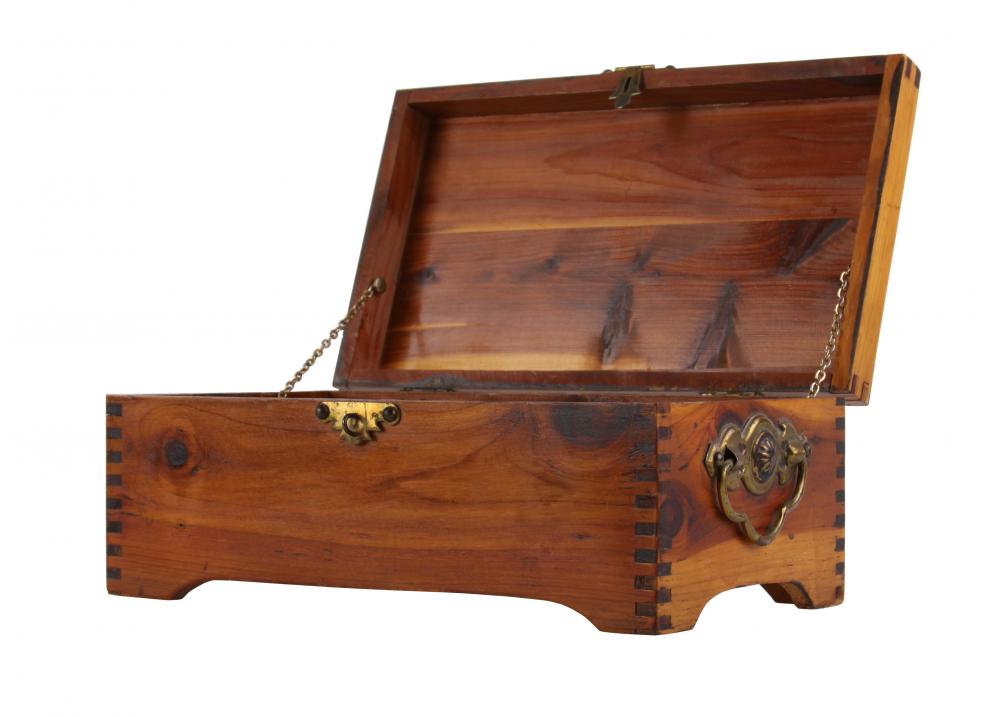
![Some people use a cedar chest to store moth-sensitive material.]() By: pattiguerreroSome people use a cedar chest to store moth-sensitive material.
By: pattiguerreroSome people use a cedar chest to store moth-sensitive material. -
![Moths.]() By: Eric IsseléeMoths.
By: Eric IsseléeMoths. -
![Cedar camouflages the moth's natural target rather than actually repelling the moths.]() By: Vitalii HulaiCedar camouflages the moth's natural target rather than actually repelling the moths.
By: Vitalii HulaiCedar camouflages the moth's natural target rather than actually repelling the moths.



Discussion Comments
@anon952800: Adult clothes moths only live three weeks. I seriously doubt the cedar killed them.
I noticed I was seeing more and more moths, so before a six week long trip, I hung up some cedar in a few places. I just got back, and there are piles of dead moths all over the place! I only saw two live moths, but it looked like they barely alive and sort of fluttered downward toward the ground after being disturbed.
I read in some article that the ancient traders of the mid-east used Patchouli (plant sprigs) oil to protect their wool valuables from insects. This was their main money maker, so I thought what the hey! Give it a shot! That was 25 years ago and I never had a problem, and I love the scent! I soak or paint the oil on any old wood scraps I find that fit where I need it. The oil is thick, so some woods absorb it slower than others but I let is sit, then use it. I've also rolled up wet wood in silicon parchment. The ends are open to allow vaporization, but the paper protects the fabrics from touching. Give it a try!
Try vanilla! A tablespoon in a spray bottle with about half a cup of water might work. It's supposed to be a good insect repellent.
Cedar can repel moths, as long as the wood is unfinished. This way the essential oils in the wood, which is a naturally very oily, will evaporate and give off a scent.
If it is finished cedar or if the cedar furniture is quite old, the amount of essential oil remaining will have decreased considerably. There are less chances of old cedar furniture to repel moths.
It's also because of this essential oil that it can stain clothes. It's always a good idea to prevent direct contact between clothing and cedar, especially if clothes are being stored for the long term.
@ddljohn-- I haven't used the hangers but I do use another product containing cedar oil that works very well.
I think cedar in general doesn't contain enough of the essential oil to mask the scent of wool. But these cedar products which contain a lot of the essential oil give off a strong scent.
I've been keeping one in my sweater closet for the past year and I haven't observed any moth larvae damage so far.
Has anyone used cedar hangers to repel moths? Does it work?
we use hypnogo no fly zone moths to protect our canvases in storage and have started using this at home too. All natural and can be recycled too. They sell this stuff for cheap online.
I appreciate how this article told how to get rid of moths and larvae, and didn't just rehash the same old wives tales.
Well done.
I recently came across an article in a women's magazine on how to repel moths, and they went with the cedar method for moths repellent -- obviously the magazine writer didn't do their research...
Thanks, wisegeek, for letting us all know the truth!
I had always heard that cedar was a natural moth repellent, and that it could even kill moths.
Now I know better -- I'm glad I read this though, especially because it did have some good advice on how to get rid of moths.
Unfortunately I love to wear natural fibers, but I have a ton of house moths, so I'm always looking for natural moth repellents.
Since cedar is apparently out, are there any other good choices as far as natural moth repellents go?
Post your comments