
At WiseGEEK, we're committed to delivering accurate, trustworthy information. Our expert-authored content is rigorously fact-checked and sourced from credible authorities. Discover how we uphold the highest standards in providing you with reliable knowledge.
Does Alligator Blood Really Contain Antibiotics?
 Michael Pollick
Michael Pollick
Michael Pollick
As strange as it may sound, alligator blood does indeed contain antibiotic components called peptides, and it is hoped that one day these components can be synthesized for treatment of many human diseases and bacterial infections. There is already some preliminary evidence that certain antibiotic peptides found in alligator blood can kill drug-resistant bacteria such as methicillin-resistant Staphylococcus aureus or MRSA and even the HIV virus associated with AIDS.
Research into the antibiotic and other medicinal properties of lizards and amphibians is not new. The recently approved diabetes drug known as Byetta is largely based on the chemical structure of a Gila monster's saliva, for example. Secretions from frogs and other amphibians have also been studied for their unique medicinal properties. The formal study of alligator blood is said to have originated from observations of alligators in the wild.

Biologists observing the behavior of alligators noticed that even though alligators often engaged in violent territorial behavior and damaging encounters with other animals, very few ever developed fatal infections from their injuries. Even spending most of their time in bacteria-infested swamp water did not seem to affect the healing process. Such natural resistance to bacterial infection is not rare in wild animals, but the blood of alligators seemed to be especially resistant.

Samples of alligator blood were eventually gathered for serious scientific inquiry and the results surprised many of the researchers. Concentrated human serum and concentrated alligator serum samples were each exposed to 23 strains of bacteria, including the one responsible for MRSA. The human blood serum managed to kill off 8 of the 23 bacteria cultures. The alligator blood serum killed all 23 bacteria cultures, including MRSA. It also significantly reduced the overall level of HIV in a sample of infected human blood.

Because of the promising results of these tests, scientists hope to be able to synthesize the chemical structure of the alligator blood peptides and develop similar antibiotics for humans. Currently, therapeutic levels of alligator blood would be too toxic for humans, but there is hope that a suitable synthetic version could be produced as a cream for topical infections and as a pill for systemic bacterial infections within the next decade.
Michael Pollick
A regular WiseGEEK contributor, Michael enjoys doing research in order to satisfy his wide-ranging curiosity about a variety of arcane topics. Before becoming a professional writer, Michael worked as an English tutor, poet, voice-over artist, and DJ.
Learn more...
Michael Pollick
A regular WiseGEEK contributor, Michael enjoys doing research in order to satisfy his wide-ranging curiosity about a variety of arcane topics. Before becoming a professional writer, Michael worked as an English tutor, poet, voice-over artist, and DJ.
Learn more...AS FEATURED ON:
AS FEATURED ON:









-
![Experiments have shown that alligator blood may be able to kill the HIV virus.]()
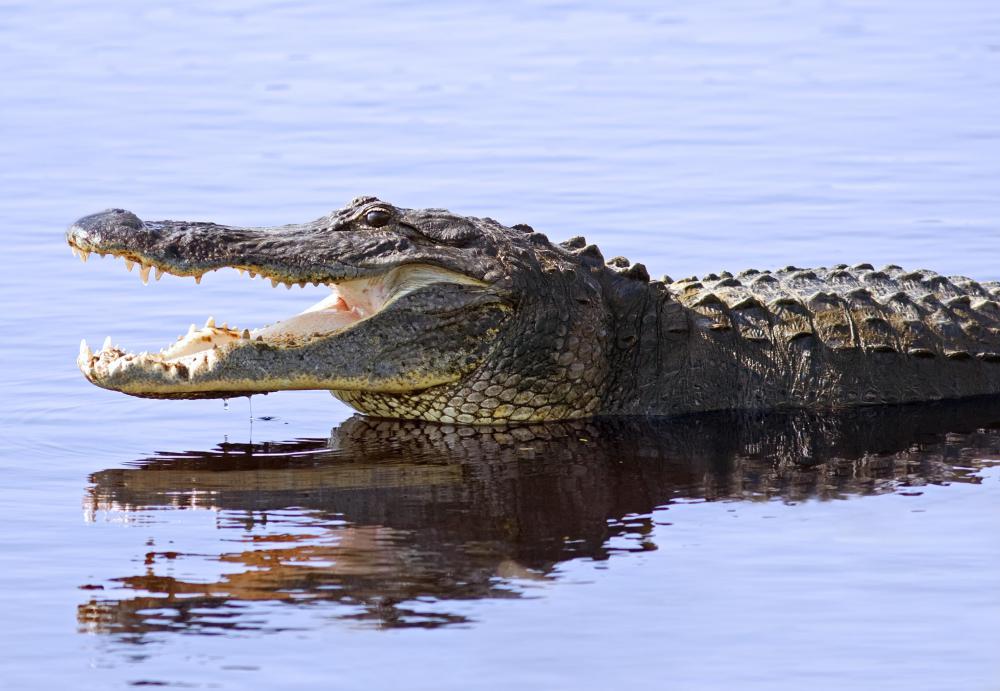
Experiments have shown that alligator blood may be able to kill the HIV virus. -
![Researchers have found alligator blood samples to be more antibiotic than human blood samples.]() By: luchshenResearchers have found alligator blood samples to be more antibiotic than human blood samples.
By: luchshenResearchers have found alligator blood samples to be more antibiotic than human blood samples. -
![It is hoped that one day the antibiotic components of alligator blood can be synthesized to treat bacterial infections in humans.]() By: ognianmedIt is hoped that one day the antibiotic components of alligator blood can be synthesized to treat bacterial infections in humans.
By: ognianmedIt is hoped that one day the antibiotic components of alligator blood can be synthesized to treat bacterial infections in humans.


Discussion Comments
This sounds like something that could really hold a lot of potential for something like the HIV virus. I know they are constantly doing testing and research in this area.
Realizing how an alligator has such a strong resistance to bacterial infections is certainly worth researching. It means they must have a very strong immune system and rarely get sick or run down.
I also never realized how much research has been done on frogs and lizards. I see these all over the place in the summer, and never knew their saliva had such strong medicinal properties.
I am trying to imagine the pleasant surprise when researches realized how powerful alligator blood is. Then when they did further testing and their blood killed all of the bacteria cultures, I find that amazing.
A few years ago I went to the doctor for a sore on my chin. I had no idea where this came from and it looked really nasty. At first, the doctor was concerned it might be a super bug. They took cultures of the area to find out, and determine what kind of antibiotic I needed to be on.
Thankfully it was not MSRA, but if it had been, I know it would have been much more difficult to treat. I hope they make a lot of strides in their continuing research using alligator blood.
I also think it would be interesting to somehow follow the research that is being done in this area.
I find it so interesting that certain properties in alligator blood could help with so many human diseases.
Whenever I see alligator pictures I just know that is one animal that I want to stay far away from. At our state fair one year they had a man who worked with alligators and put on a show. I can't imagine why someone would be interested in doing this.
Alligator blood must be pretty potent if it can really do what the research has shown. Most people don't ever realize exactly how their medications work or what the source is, they just take them and hope they take care of their problem.
I don't think I would have a hard time taking a synthetic version of alligator blood if I knew it would be beneficial for me.
I believe that when there is something unusual is noted in nature, it has a purpose. Natural selection leads to development of features that promote survival of the individual and propagation of the species. I perceive nature to be economical in spite of all the seemingly excess pollen produced. Just one example of seeming waste of energy and material.
Would it be possible that alligator blood would help curing autism, cancer, or other serious ailments?
Post your comments