
At AllThingsNature, we're committed to delivering accurate, trustworthy information. Our expert-authored content is rigorously fact-checked and sourced from credible authorities. Discover how we uphold the highest standards in providing you with reliable knowledge.
Do Animals Laugh?
 Tricia Christensen
Tricia Christensen
Tricia Christensen
A dog, a chimpanzee and a rat walk into a bar. The dog huffs, the chimpanzee lets out some excited squeaks, and the rat makes chirping sounds that are inaudible to the human ear. Clearly someone told a joke, because scientists now believe that some animals laugh. It's not clear why they laugh or what they find so funny, but some animals do indeed seem to indulge in laughter.
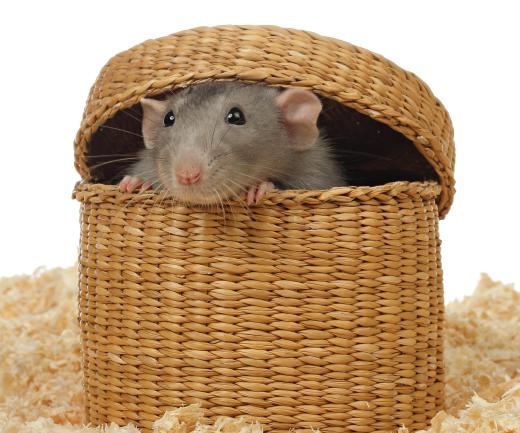
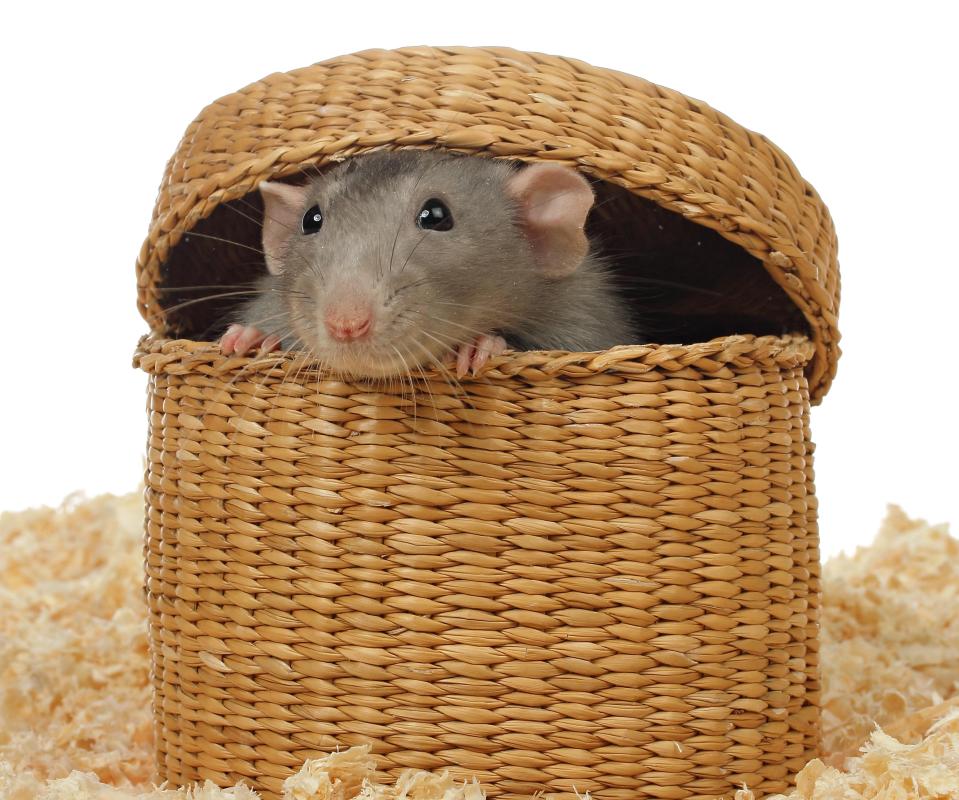
Animal studies on rats, monkeys and dogs show that certain sounds they make are indicative of laughter. Rats, for example, make highly pitched squeaks when playing with each other, and monkeys also appear to make laughing noises during play and interaction. The chuff or huff of a dog when he is excited to see you all suggests laughter.

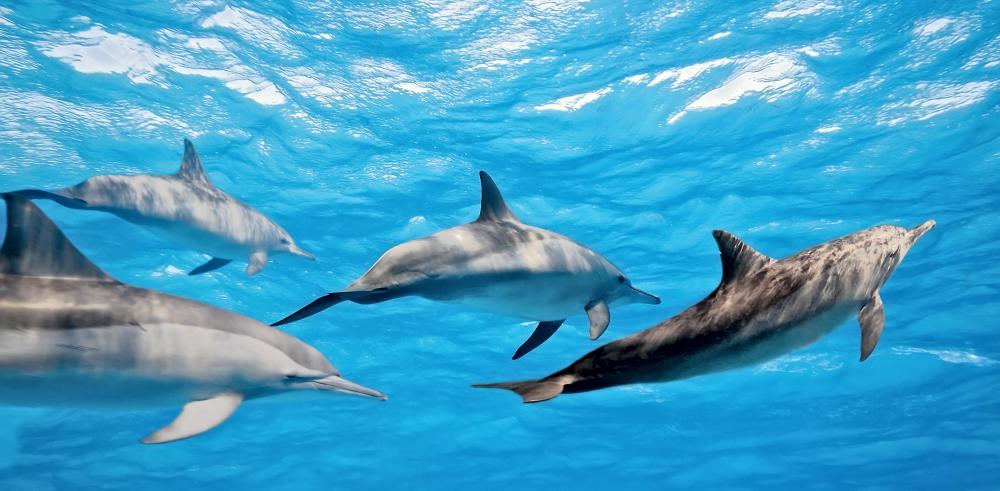
Some other scientific studies suggest that other animals may laugh too. For example, intelligence studies on dolphins have shown that two dolphins can refer to a third dolphin by name. Given the range of vocal performance by dolphins and whales, it would not be surprising to find out these animals laugh, as well.
What puzzles scientists is what the animals are laughing about. Some studies suggest that they laugh when they are excited or happy. Others believe that laughter is used to gain the attention of their owners. It’s possible that animals laugh when they are enjoying play. Clearly, none of the animals appear to be telling knock knock jokes, but a dog might laugh at the sound of his owner’s knock on the door.

It’s possible that they laugh because it confers health benefits to them, just as laughing is very good for people. Laughter can lower blood pressure, ease stress, produce dopamine and growth hormone, and actually be good for the circulatory system. Preschool children may laugh as often as 400 times a day. Since some animals have about the same intelligence level as a two year old human, maybe these animals laugh for the evolutionary benefits achieved by laughing. A chimp that laughs, for example, may be a bigger chimp because he stimulates growth hormones.

Though humans do like to anthropomorphize animals, they can’t really see the smiling face of a dog as actual smiling. When a pet owner hears that long huff from his dogs, he many recognize them as laughing at or with him, or possibly at some very good joke they heard about the neighbor’s cat.
Frequently Asked Questions
Do animals really laugh?
Yes, certain animals exhibit behaviors that are analogous to human laughter. Researchers have observed laughter-like responses in various species, particularly in primates like chimpanzees, who produce panting sounds during play. Rats also emit ultrasonic chirps when tickled, which is considered a form of laughter.
What is the purpose of laughter in animals?
Laughter in animals often occurs during play and is thought to signal a non-threatening intent, helping to establish social bonds and reduce aggression. For example, in primates, laughter can facilitate bonding and communicate playful intentions. It's a way to reinforce connections within a group and encourage social play.
Can animals laugh in the same way humans do?

Animal laughter is not identical to human laughter, as it often lacks the complex emotional and cognitive components associated with human humor. However, the physiological responses, such as the panting in chimpanzees, share similarities with human laughter and serve comparable social functions.
Which animals are known to laugh?
Chimpanzees, gorillas, bonobos, and orangutans show laughter-like behavior during play. Rats have been found to emit chirping sounds when tickled, and even dogs have a panting behavior that is suggestive of laughter. These responses are widespread among mammals known for their social structures.
How do scientists study laughter in animals?

Scientists study animal laughter by observing their responses to stimuli such as play or tickling. They record vocalizations and body movements, and in the case of rats, use specialized equipment to detect ultrasonic vocalizations. Ethological studies and neuroscientific methods help in understanding the mechanisms behind these laughter-like behaviors.
Is animal laughter a sign of happiness?

While it's difficult to attribute human emotions to animals directly, laughter-like behaviors in animals are generally associated with positive experiences, such as play and social interaction. These behaviors are thought to indicate a state of enjoyment and relaxation, similar to the way humans express happiness through laughter.
Tricia Christensen
Tricia has a Literature degree from Sonoma State University and has been a frequent AllThingsNature contributor for many years. She is especially passionate about reading and writing, although her other interests include medicine, art, film, history, politics, ethics, and religion. Tricia lives in Northern California and is currently working on her first novel.
Learn more...
Tricia Christensen
Tricia has a Literature degree from Sonoma State University and has been a frequent AllThingsNature contributor for many years. She is especially passionate about reading and writing, although her other interests include medicine, art, film, history, politics, ethics, and religion. Tricia lives in Northern California and is currently working on her first novel.
Learn more...AS FEATURED ON:
AS FEATURED ON:









-
![Zebra's sometimes appear to laugh.]() By: Duncan NoakesZebra's sometimes appear to laugh.
By: Duncan NoakesZebra's sometimes appear to laugh. -
![Chimps enjoy a good laugh.]() By: KletrChimps enjoy a good laugh.
By: KletrChimps enjoy a good laugh. -
![Dogs make a huffing sound when they are playing, as if laughing.]() By: kinakoshibaDogs make a huffing sound when they are playing, as if laughing.
By: kinakoshibaDogs make a huffing sound when they are playing, as if laughing. -
![Even rats make shrill sounds when playing.]() By: mariesachaEven rats make shrill sounds when playing.
By: mariesachaEven rats make shrill sounds when playing. -
![Studies show that monkeys can make certain sounds that are indicative of laughter, especially during play.]() By: sugar0607Studies show that monkeys can make certain sounds that are indicative of laughter, especially during play.
By: sugar0607Studies show that monkeys can make certain sounds that are indicative of laughter, especially during play. -
![Some studies suggest that dolphins might be capable of laughing.]() By: crisodSome studies suggest that dolphins might be capable of laughing.
By: crisodSome studies suggest that dolphins might be capable of laughing. -
![Whales have a wide range of vocal abilities.]() By: s1000rrWhales have a wide range of vocal abilities.
By: s1000rrWhales have a wide range of vocal abilities. -
![Two dolphins have been shown capable of referring to a third by name.]() By: guentermanausTwo dolphins have been shown capable of referring to a third by name.
By: guentermanausTwo dolphins have been shown capable of referring to a third by name.





Discussion Comments
Seagulls make noises that sound just like hysterical laughter. Since they do this all the time, I'm guessing it isn't related to humor, though.
I have fed a flock of seagulls before, and after they scarfed down each serving of bread crumbs, they all began to laugh loudly and inch closer to me. Though it sounded just like laughter, I believe that it was a demand for more food.
It kind of made me nervous! Here I was, surrounded by an army of gulls with a limited amount of bread, and they were all laughing at me in a threatening way.
I know that hyenas laugh, but they don't do this because they are happy or because they think something is funny. I've read that when they laugh, they are frustrated.
There is a lot of competition in the world of hyenas. There are power struggles and fights over food, and the scary laughter is not funny at all.
@shell4life – Some animals are very animated, and it is easy to assume they are laughing. I am almost certain that my dog is laughing at times.
He actually grins and shows all his teeth when I get home. Then, he starts blowing air out in what almost sounds like a sneeze but isn't.
It doesn't sound anything like a human laugh, but since it is accompanied by a smile and excitement, I think it's an animal version of a laugh. He definitely huffs and puffs when he's happy.
It's hard for me to picture a laughing animal other than a monkey. It's easy to assume that a monkey laughs, because it has that huge grin and makes high-pitched noises. I don't know of any other animal that smiles that big and makes noises at the same time.
I was just listening to a crow laugh. I had not grown up with the idea that they laugh. At 43, I think I heard my first laugh from a crow. Maybe he was looking at my life.
I know that I have seen the crows in my neighborhood laughing many times. It's a different sort of call from their usual deliverance of information; it's even different from their private family communication. Frequently several crows would land on the roof of the house when there was a party and pry moss from the gutters of the house and proceed to throw the moss at the guests. They didn't look for food under the moss and would break out in a loud and rancorous laughter when they managed to hit someone.
merci beaucoup. Looks like the business...
Hi Harry,
The research on this study was funded by the Royal Society of London, and conducted by St. Andrews University. It was headed by Dr. Vincent Janik. The study is published in
The Proceedings of the National Academy of Sciences, also called PNAS.
I'm not sure what issue, but no doubt you could look online for abstracts and order the article, or a copy of it from interlibrary loan if you have access to a university library.
Best,
T. Ellis-Christensen
I'm looking for documentary evidence to support the claim that you make above: specifically that dolphins have been observed referring to an absent dolphin by it's "name" (presumably signature whistle). I've found half a dozen mentions of such a discovery but no reference to the research which revealed it...
Post your comments