
At WiseGEEK, we're committed to delivering accurate, trustworthy information. Our expert-authored content is rigorously fact-checked and sourced from credible authorities. Discover how we uphold the highest standards in providing you with reliable knowledge.
Can You get Pregnant with One Ovary?
 Tricia Christensen
Tricia Christensen
Tricia Christensen
You generally have the same chances of conception whether you have one ovary or two, as long as the remaining one is attached to a fallopian tube. Missing other parts of the reproductive system can also make it harder to conceive, but pregnancy is often still possible. There are several signs you can look for to see if you're still fertile, and many treatments available if you do have problems conceiving. There are some health risks linked to conceiving with one ovary, however, so it's important to discuss fertility with your medical provider.
Signs of Fertility

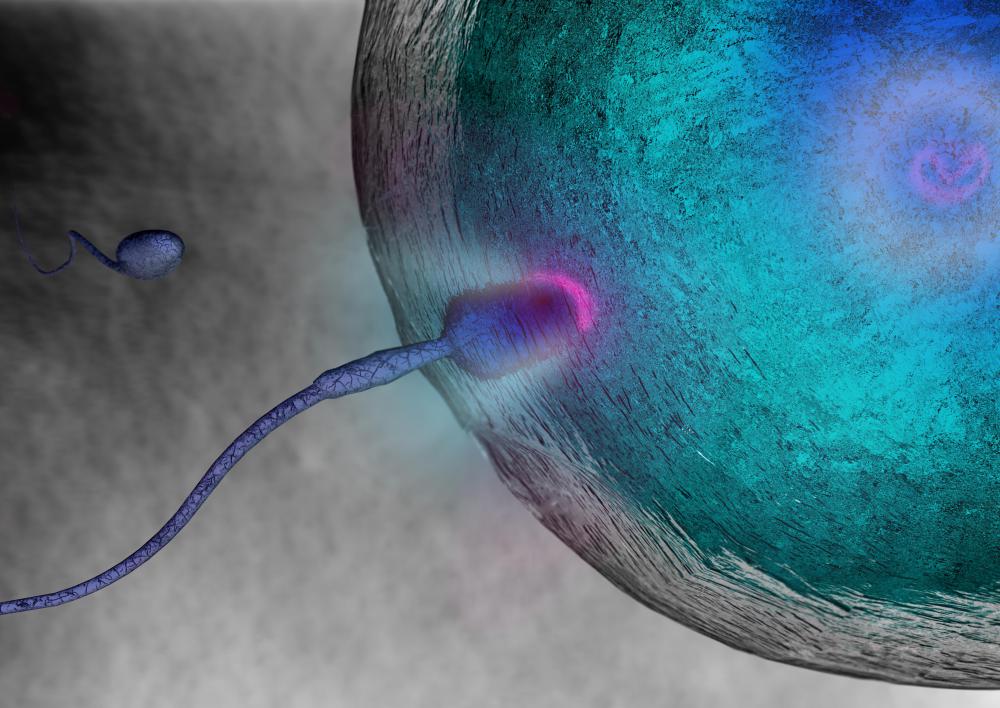
The main thing to watch for when you want to get pregnant and only have one ovary is ovulation. To get be able to conceive, a woman's body must first release an egg, which then travels down a fallopian tube. If it meets a sperm cell and becomes an embryo, it will implant in the walls of the uterus. Otherwise, it will die, and it and the lining of the uterus that builds up every month will be expelled from the body during menstruation.

When a woman has two ovaries, they typically take turns releasing an egg every month. If there's only one, then it usually takes over for the missing one and releases an egg each menstrual cycle, and a period should still occur. You may no longer be ovulating if your period gets irregular or stops entirely, which means that you may not be able to get pregnant naturally.

You can also track your basal body temperature, which often changes at specific points in the menstrual cycle. When doing this, it's essential to take your temperature the very first thing in the morning at the same time every day to ensure accurate readings. When you ovulate, your temperature generally rises at least 0.2°F (about 0.11°C) for three consecutive days. You can also check the consistency of your cervical mucus; if you're ovulating, it should be thinner and clearer than normal in the middle of your cycle.
Risks

Women who conceive with only one ovary may be at higher risk for ectopic, or tubal, pregnancies. This is a situation in which the embryo implants outside the uterus, usually in a fallopian tube. Fetuses in these pregnancies cannot survive, and are either miscarried, absorbed back into the body, or must be removed. Several studies show that women with only one ovary may also be more likely to conceive children with Down's Syndrome. Additionally, you may experience a normal, age-related loss of fertility sooner, since your body only has half of the eggs.
Exceptions

There are some situations that can make it more difficult for you to get pregnant naturally if you only have one ovary, like having one ovary and one opposite fallopian tube. Though this makes it less likely that an egg will pass into the uterus during ovulation, it still happens sometimes. Additionally, if one of your ovaries has a problem, you may not be able to get pregnant if the other one is removed. Doctors will usually evaluate both of your ovaries before removing one, however, and alert you to any possible fertility issues. Regardless of how many ovaries you have, if both your fallopian tubes are blocked or removed, it's unlikely that you'll be able to conceive naturally.
Treatments

Doctors usually advise all women, no matter how many ovaries they have, to try to get pregnant using natural methods for at least 15 months before consulting fertility experts. If you haven't gotten pregnant in that time, both you and your partner should be tested, since he may have fertility challenges too. When you show clear signs of infertility, like a lack of a period, it may be better to see a fertility expert sooner. Sometimes a remaining ovary may have scarring or the fallopian tube may be blocked, preventing the passage of an egg. Surgery can sometimes clear scarring to make ovulation easier.
Another fertility treatment for women in this situation includes in vitro fertilization (IVF), in which a specialist puts a fertilized egg directly into the uterus. Some women also try fertility-enhancing medications, like gonadotropin-releasing hormone (GnRH), human chorionic gonadotropin (HCG), and follicle-stimulating hormone (FSH). Though studies show that the pregnancy rates for women with one ovary with IVF or on fertility medications are about the same as those with both ovaries, the women with only one need higher dosages of medication and take a longer time to get the ovary to the same state of stimulation.
Even if none of the treatments work and you're told you can't conceive, it's best to still practice safe sex and use protection to avoid pregnancy. In some cases, the seemingly impossible occurs, and women who were thought to be previously infertile become pregnant unexpectedly. Using condoms and spermicides not only reduces the risk of pregnancy but also the spread of sexually transmitted diseases, and so should be used even if pregnancy seems very unlikely.
Tricia Christensen
Tricia has a Literature degree from Sonoma State University and has been a frequent WiseGEEK contributor for many years. She is especially passionate about reading and writing, although her other interests include medicine, art, film, history, politics, ethics, and religion. Tricia lives in Northern California and is currently working on her first novel.
Learn more...
Tricia Christensen
Tricia has a Literature degree from Sonoma State University and has been a frequent WiseGEEK contributor for many years. She is especially passionate about reading and writing, although her other interests include medicine, art, film, history, politics, ethics, and religion. Tricia lives in Northern California and is currently working on her first novel.
Learn more...AS FEATURED ON:
AS FEATURED ON:









-
![Female reproductive system.]() By: chartFemale reproductive system.
By: chartFemale reproductive system. -
![Women generally have the same chances of conception with one ovary or two.]() By: Valua VitalyWomen generally have the same chances of conception with one ovary or two.
By: Valua VitalyWomen generally have the same chances of conception with one ovary or two. -
![Some studies indicate that women with one ovary are more likely to concieve a child with Down's syndrome.]() By: karelnoppeSome studies indicate that women with one ovary are more likely to concieve a child with Down's syndrome.
By: karelnoppeSome studies indicate that women with one ovary are more likely to concieve a child with Down's syndrome. -
![Women who conceive with only one ovary may be at higher risk for tubal pregnancies.]() By: 9nongWomen who conceive with only one ovary may be at higher risk for tubal pregnancies.
By: 9nongWomen who conceive with only one ovary may be at higher risk for tubal pregnancies. -
![With IVF, fertilized eggs are placed into a woman's uterus.]() By: Giovanni CancemiWith IVF, fertilized eggs are placed into a woman's uterus.
By: Giovanni CancemiWith IVF, fertilized eggs are placed into a woman's uterus. -
![When a woman has two ovaries, they typically take turns releasing an egg each month.]() By: Marin ConicWhen a woman has two ovaries, they typically take turns releasing an egg each month.
By: Marin ConicWhen a woman has two ovaries, they typically take turns releasing an egg each month.





Discussion Comments
Four years back, my sister had a ovarian cyst and had her left ovary removed. Is there any chance for her to get pregnant? She has regular periods and also let me know her ovulation period time.
One of my friends had a surgery recently and got her left ovary removed. What are the chances of her to get pregnant? Her age is 28 now.
I could not get pregnant until I had an ovary removed because of an ovarian cyst. Then I had three healthy sons, No Downs, just healthy boys.
I had my right ovary removed 18 months ago due to an an ovarian cyst. It was misdiagnosed. By the time they took me seriously, I had septicemia and spent five days in ICU.
The infection was so bad and I was told my left Fallopian tube was damaged and the chances of getting pregnant would be very slim. But I have just found out I'm about pregnant. So yes, you can get pregnant with one ovary and in my case, damage to your other side. So don't give up. Maybe it's just taking a bit longer.
It took me over a year to get pregnant with one ovary, but it was only two months after doing a trial of Conceiveeasy, so I highly recommend it!
I'm pregnant with twin babies, but one baby is in my tube, and the baby has a heart beat. Any problem for another baby?
My girlfriend has an ovary tumor on her right side. She is 21. We checked with various doctors. All are saying she needs an operation. She is under too much stress after finding out about this. She has pain and is unable to sleep.
For me, a baby is not as important as it is to her. I want to know if the tumor can be removed without removing the ovary, or if the ovary has to removed, also. Can she still be a mother? Can she be a mother or not?
My ovaries are enlarged in size. Can this affect my pregnancy?
I didn't even know I had only one ovary and got pregnant the first month we tried. I didn't find out until the birth of my second child when I had a c-section. The doctor was surprised too! I have had monthly periods my whole life.
I had PCOS, and had to have one ovary and its tube removed. A year after the surgery, and good health, good diet, regular exercise, and failed hormone therapy (clomid), I switched over to Fertility Blend for women. I got pregnant the following month (I am six weeks pregnant).
Yes you can get pregnant with one ovary and one tube. Just make sure you lose some excess weight, practice meditation/ deep breathing, and switch to non-refined foods/no soda healthy-wholesome diet. Be patient, it will happen! And go natural (avoid hormone therapy- get second opinion!).
I'm 23 and two years ago I had my left ovary removed due to a tumor. My husband and I decided we wanted to try to get pregnant and anticipated we might have difficulty doing so. I got pregnant the first month I was off of birth control! And I'm also medically considered obese, and still had no problem getting pregnant.
@clintine: At age 24, you're not in the high risk category for having a Down Syndrome child. That's a genetic disorder and, as far as I know, has nothing to do with whether you have one ovary or two.
Also, an ectopic pregnancy is a risk anytime, not just for women with one ovary.
Do what is good for anyone: eat right, exercise, take your vitamins, etc. Good luck!
I had my left ovary removed a year ago and I'm 24 years old now. My surgeon told me that it would be better for me to conceive after two years. I have my periods every month.
I'm just worried about the risks of getting pregnant with one ovary, such us ectopic pregnancy and Down Syndrome. Me and my boyfriend are planning to get married the next year to come, in 2013 or 2014. I hope I can conceive and have a healthy and normal child. What are some health tips to take good care of my ovary in preparation for pregnancy.
The best thing is knowing that you're not alone. I'm twenty-three and getting married in three months. Two weeks ago, I was admitted into hospital with the most excruciating pain, caused by a torqued ovary. Within 10 hours, I was in theater having both the 11cm diameter cyst and my left ovary removed. My fiance and I have been terrified that this may affect our chances to conceive after our wedding, but this site has given me so much hope.
We weren't planning to have children for another few years, but after contemplating not having any at all we've decided to start trying as soon as we're married, just in case the same thing happens on the other side. Thank-you to all the wonderful women out there sharing their own stories. They are extremely reassuring.
I had a surgery when I was 20 years old where my right ovary and left tube was removed. This means I have only one ovary and tube on the opposite side. Can I conceive or not? Please help me.
I had one of my ovaries removed when I was 9 years old because it had grown to the size of a golf ball. I am now 21 years old and never had a period. This worries me because I want to be able to have children.
So I had my left ovary removed when I was 18. It was about the size of a large grapefruit.
I am now 21 and have always wondered if I will be able to conceive. I have read many stories about women who are still able to conceive, so that really does give me a lot of hope. Another thing I've always wondered is, if once you've had a cyst removed, is it possible the same thing will happen to your other ovary? This is something that has always worried me. I would really love to have kids someday. Any answers for my questions?
I have one ovary since I was 14 years old. My right ovary was removed due to cyst which was heavier than the ovary and it turned the ovary which made the circulation stop. Since then I have never a problem with my periods and I am 33 years old and have a son and a daughter. So if you have one ovary, please do not worry.
I am 26 years old and had my right ovary removed due to a cyst when I was 17.
I have had regular periods since.
Is having regular periods a strong sign that everything is OK and I can get pregnant?
I was eight when I had my left ovary removed because it was full of gangrene and the size of a grapefruit. I am now 34 and had a beautiful daughter three years ago. We have been trying to have another for 2 years. I'm now going to a fertility specialist.
In my case, I don't think it has anything to do with one ovary - it's the PCOS. At least 1 in 10 women have it. Of course I was diagnosed with that at 17 and have never in my life had a regular period, so it's hard to say if losing an ovary before puberty has anything to do with that. That is my opinion and I have not ever had a straight answer from a doctor on that.
It is interesting to see that other very young girls have lost ovaries. I always thought something was wrong with me. The doctors back then even blamed it on tap and tumble because my ovary was flipping over my fallopian tube and back - which is what caused the gangrene. Of course, before they did experimental surgery, they told my parents to take me home for a couple of days before transferring to Children's Hospital in St. Louis because they thought I was full of cancer and didn't have long to live! It's a good thing medical science has come a long way since 1985.
@anon198767: See post no. 87 for the truth. Your ovaries produce an X chromosome, regardless. Your *male* partner determines the sex of the child. If he contributes an X chromosome, your child will be a female. If your partner contributes a Y chromosome, then your child will be a male.
Your doctor should be honest with you about this issue. There is no way to determine the sex of your child in advance, but having a missing ovary has nothing to do with a child's gender.
I had four boys after an ectopic pregnancy, losing the right tube and part of my right ovary. My partner desperately wants a girl. Does this mean I can only have boys? I can't get a straight answer from my doctor. Some say yes and some say no, so I'm confused. Does anyone know the answer?
I had my right ovary removed when I was 14 years old and I have had a regular period since. I am 35 now and I have no children. I am afraid that I cannot have children although I have no medical issues, my hope is wearing thin. I have lost many relationships because of this. I am happy that I have found women who have had the same issues. You all give me hope. Thank you and I'll keep you guys posted!
I am 29 years old. I've just found out that I have a 7 cm cyst on right ovary and 6cm on the left. The doctor thought at the ultrasound that they were both solid, but after the CT scan she says they look like they are filled with watery fluid. She has scheduled me for a second ultrasound in six weeks. If they haven't shrunk she says I will have to have surgery and she cannot guarantee that she can save either ovary.
Against her advice, I have stopped taking the birth control pills that I've been taking for 14 years because obviously they haven't helped with the cysts, and I feel that they may have helped them along in the first place.
I am seeing an acupuncturist and have started eating a healthier diet and I already exercise regularly. The cysts were not causing any pain, my periods have always been normal and the cysts were just discovered during my yearly exam. My boyfriend and I were just about to try for a child. Does anyone know if cysts that big have been known to shrink? And if not, I am considering trying for a child because she cannot guarantee saving either ovary. I am definitely going to get a second opinion after the next ultrasound. Any advice?
I was 39 years old, endometriosis, one ovary, and a tipped uterus. All of the odds were stacked against me. I went to my doctor and asked her about pregnancy, she told me that if I got pregnant it would most likely take one to two years and that I should start trying immediately due to the odds stacked against me. Two weeks later I was peeing on a stick and it was positive! I now have a beautiful, perfect soon to be four year old little girl. Don't lose hope, it is possible!
I want to thank you and ask you a question. i am 25 years old. i have been married for eight months, and
i discovered that i have one ovary with a bicornuate uterus with a rudimentry horn. the doctor says the the ovary has a small cyst in it. can i get pregnant and can you tell me how these cysts occur?
I'm 21 years old and i had my right ovary removed when i was born. i had a cyst that destroyed my ovary and they said i might not have children. But now, i have a three year old beautiful daughter. but now I'm scared because the only ovary i have has a cyst and I've been getting a lot of pain, so i have to see my doctor. I'm praying it is not that bad because i want to have more children.
To all those who worry about only having one ovary, don't stress. I was told that I was never going to be able to have children at a young age. My fallopian tubes never fully developed, and neither did my ovaries. Well, let me just tell you I am now 29 and have two beautiful children. My husband and I did every medical procedure under the sun to get pregnant the first time. And nothing. So we called it quits. And decided to just move on with our lives. That turned out to be the key. Six months into relaxing and enjoying life, I found out I was pregnant. And eight months after my daughter was born, I was pregnant with my son.
I know first hand how stressful it can be when all you want is a child of your own, but you have to trust me when I say that the more you stress the less of a chance you have in conceiving. Relax and enjoy your husbands company. Don't even think about having a baby and before you know it you will be pregnant and enjoying the birth of your child. Hope this bring someone comfort. May god bless you in your journeys.
This site has given me hope! Four weeks ago i was admitted to the hospital and they found a cyst the size of an apple on my right ovary. I am only 21! They told me i would still be able to have children but I'm worried about my period. I'm already a few days late and i plan to have lots of children in the future. It's nice to see I'm not the only one who had gone through this!
I'm 30 yrs old with four kids. I have a left ovarian cyst and my monthly period was irregular. I want to have at least two more babies. what should i do? is it possible for me to get pregnant soon? Please help.
I'm replying to all women who have a question about ovary removal. When i was 15 my right ovary was removed due to a cyst and I was told i would never have kids. Well, somebody lied because at 25, i got pregnant out of the blue. i have a very healthy little boy named gavin. he is awesome. god works in ways unknown. it can happen for you!
Any thoughts on one ovary and an IUD and getting pregnant the first try unprotected other than the IUD? It supposedly happened that way but I have my doubts.
I have a third of my right ovary and fallopian tube after two operations to remove cysts. I have not gotten pregnant yet.
So, over the last two months I went to a fertility clinic who assessed my blood samples. My FSH indicates I have a low ovarian reserve. My AMH was 0.37 meaning I only had a 20 percent chance of them getting six eggs during the IVF stimulation process. I cried and I prayed to God to give me a child.
I am contemplating IVF seriously now but my boyfriend and I aren't very stable and I am not confident if I will get his support even though he says so. I am 37 and I really want a baby. At the moment my period is nine days late and the pregnancy test was negative so that means I didn't ovulate this month - another setback. I wish life was easy.
i was 17 and my dad make me have an abortion and he never took me back for a check up. now I am 23 and i want to get pregnant but every time i take the test, it says I am not. i went to the doctor and she says my eggs are not growing. My question is can i do something to help my eggs grow? and can i still get pregnant?
Please don't give up hope. I am the mother of two boys, 16 and 18. Five years ago my ovary was removed. In 2008 I got pregnant and now my baby girl is two years old and I am pregnant with our fourth!
Just take extra care of yourself, be calm and relax if you are trying. I am so happy at 41.
During the 12 week scan for our first pregnancy they discovered a huge cyst on one of one of my wife's ovaries. The cyst ruptured that very night and we spent months worrying about her and the baby. A healthy baby boy was born.
She had an operation three months later which required them to remove the right ovary and fallopian tube. We really thought it would mean that we would struggle to get pregnant the second time but just found out we're pregnant again after two months of trying. This was quicker than with the first child! So I think you shouldn't give up hope if you have one ovary/fallopian tube.
i have only one ovary and now i would like to have one child but after the operation i have no children, so please give me suggestions.
My girlfriend has endometriosis and less than half of one ovary, and is due in july! Greatest thing to happen ever!
I had my right ovary and fallopian tube removed after a 3kg tumor destroyed them. I have a two year old and we are about to start trying for our second baby. I have been told my chances are as high as a woman with both ovaries, so fingers crossed.
I have only one ovary and fallopian tube due to having the other removed because of a large cyst, that was when i turned 18. I then developed another smaller cyst on the remaining ovary, but still managed to get pregnant with my daughter after 12 months, and during the pregnancy the cyst disappeared my daughter is now two.
I've had no problems since I have just come off the pill again and now trying for baby number two. I just thought i would share this as i am living proof that, even with one ovary you can still get pregnant. good luck to everyone.
I have just come back from having a scan in which they said they can see a 5 inch cyst on my left ovary. I had surgery in 2004 to remove my right ovary and tube due to a large cyst. My doc has said that as i have already had one ovary and tube removed, they are not keen on removing this new cyst.
I am 31 and have no children. My partner and I are getting married this Dec, and will want to try for a baby once we are married. I have really mixed emotions, trying to keep positive.
I'm 27. I went off the pill at 24 and thought I'd have no trouble conceiving. after 2.5 years of trying naturally, my hubby and i had tests and procedures done and i found out i have two ovaries that work great, but only one is attached to a fallopian tube.
in aug 2010 i had my "tube" flushed out and got pregnant instantly. i miscarried after six weeks but we are hopeful that if it happened once it will happen again. we r doing everything we can, like taking temperatures and using ovulation tests.
we have been told by the doc it just needs to be perfect timing but it's very likely to happen again. trust me. i know it's hard, but keep your hopes up and stay positive. good luck to all!
My daughter-in-law is going through this right now. in a couple of hours she is having surgery to remove a melon sized cyst and most likely her left ovary. This site has given me hope and I will pass along the site address when she is ready. Thank you!
I am 33, and had my right ovary removed. Doc did drilling in my left ovary and said it will help in getting pregnant. Having regular periods, but it's been like four years and still nothing. So frustrating. Can someone answer: does having regular periods means that you are passing an egg (and not just the lining of the uterus, even with one ovary? Thanks.
At 21 years old i got pregnant and at four months through my pregnancy i had a strong pain on my right side, it hurt so bad. I was rushed to hospital where i found out through a sonogram, i had a melon sized cyst tangled with my right ovary.
I had emergency surgery and had the cyst and right ovary removed. My baby at the time, since i was four months pregnant, did fine. She was born at 38 weeks healthy 6lbs 12oz. I'm now 22 years old and pregnant again! I'm seven months pregnant. So yes it is possible to get pregnant with one ovary. At first i thought that i wasn't going to be able to or that it was going to take forever to get pregnant if i ever wanted another child.
This pregnancy was unexpected but when i found out i was excited. I hope this post helped someone that had any doubts about getting pregnant with one ovary, it is possible! Good luck.
I had one ovary and one fallopian tube on the same side removed due to a softball size ovarian cyst. I had severe abdominal pain on one side and ended up having emergency surgery.
At the time, I was age 30 with a four year old child. I wasn't sure if I wanted to have more children. I was happy with the one child. My surgeon told me that even with just the remaining one ovary and one fallopian that my fertility was the same as before the surgery. I was not too concerned.
Two years later I got married. My husband and I decided to try for a baby. I'm 34 and my husband is 47. I have regular cycles like clockwork. It took me eight months to get pregnant. We got pregnant the old fashioned way. Trial and error and a lot of patience. I delivered a full term (40 weeks exactly) baby weighing just under 7 lbs. It's possible. It does happen.
My right ovary was removed by the doctor 10 months ago. She has said a child will not come. My period is regular. My left ovary is sound healthy. can I get pregnant? What is the solution? Please answer me.
Dreamer73 - Are you pregnant yet? I'm in the same boat and worry too.
My sister has one ovary and her other ovary failed when she was 19. She is now pregnant but not ready for a child. She is worried that if she has an abortion will she be able to have another pregnancy with one ovary?
I had one ovary removed eight years back. now i am 30 years old with only my right ovary. I married one and a half years ago. Usually my periods are regular, but two months ago i had delayed periods but the urine test negative so I consulted my doctor. Last month my cycle was regular as usual. Now again my periods are delayed for seven days and i was happy as i was trying for a baby. just now i did a test which came negative. i felt very sad. Please help me.
I'm 29+1 years old. Just last year I had to undergo surgery due to dermoid cysts. My left ovary was destroyed and had to be completely removed by a cyst that was larger than a football. And all but 1/3 of my right ovary had to be removed due to a cyst the size of a grapefruit.
I've been told my odds of conceiving and having a child are next to none. I'm not currently in any kind of relationship where I'd be wanting to think of children, but want them nonetheless. Children are my life. I've worked with behaviorally troubled children for 10 years.
I haven't faced the facts yet, however I believe in God and that everything happens for a reason. I have faith and hope. I'm not sure if my future holds natural born children however intense the feelings for them are. But children I will have!
I had my left ovary removed when I was 25. I got pregnant at 37 with my first daughter and had my 2nd daughter when I was 39. So it's very possible. If you have regular periods you can be assured that your other ovary is working well. I use ovulation sticks when trying. And bingo just got the right time. So happy. I'd spent over ten years thinking I'd never have kids. Stay positive.
I am 35, and just had right tube and ovary removed due to ectopic pregnancy. I miscarried when I was 20 and not gotten pregnant since until recently which had bad results. I was completely surprised to even get pregnant so hold your head up high and I will try again and so should everyone who wants a child. All we can do is wish for the best.
I am 38 and having one of my fallopian tubes removed. I had been told I had scarring in the other fallopian tube as well. I did not have children. Five months ago i felt nauseous and tired. Even as a nurse the possibility of pregnancy never crossed my mind. After testing I can say I am now expecting a baby girl. Have faith, if a child is your wish. Get help if necessary. Best wishes to all future mothers.
I am 33 and pregnant with a very large cyst growing from my right ovary (think beach ball sized). I will have to have my ovary removed. I was worried that I wouldn't be able to have kids but this site and everyone here has really reassured me that I can still have more children with one functional ovary.
Wow, this website has not only gave me hope in getting prego, but it lets me know I am not alone.
Back in Jan. 2005 I had a teratoma that was removed on on right ovary and the doctor said he was able to save it. Then on April 2005 my right ovary and Fallopian tube ruptured inside of me and I was bleeding internally. I almost died, according to my doctor. I had to have a blood transfusion and all.
I still have my left ovary and Fallopian tube and my periods are regular every month but this month it only lasted for four days. is that normal? My boyfriend and I have been trying since last month and I really want to have a child. does anyone think I have any chance of getting preggo? Thanks guys. You guys are awesome!
Not to worry. My sister with one ovary got pregnant recently. She got married in August 2010, and was pregnant in september. Previously she had ovarian cancer and they removed one. So guys, don't worry and everything will be for good.
I'm 15. The only thing I really want in life is to have children and be a mother. I have to go to the hospital tomorrow to get my results. I haven't had my period in over a year and I might have a cracked ovary. I may have to go on the pill. What are my chances of having children. Somebody please!
You will not run out of eggs, you release one egg from either ovary each month, so if you only have one ovary, they will just come from that ovary instead, there is no way that you would use all your eggs before you go into menopause. You have to look at the three things: are you ovulating? Are your tubes clear? are you getting healthy sperm? If yes to all, then it will happen!
I only have one ovary as well and have been trying for about 1.5 years now, not sure what is happening but we will figure it out. Just don't stress yourself out! My aunt had to have both her tubes and one ovary removed and because of advances such as IVF, she has three beautiful children.
Just live and enjoy life! If we are meant to conceive we will! Good luck!
In 2007, I had my right ovary removed due to torsion as well. I was 27 years old at the time and have never been pregnant. I knew something was wrong even before then because of the constant irregular periods that I would have. Sometimes I would go as long as eight months without a period.
After my right ovary was removed, I noticed that my periods were more regular, but my doctor put me on birth control pills just to keep me regular, but I wanted to be regular on my own so that I could become pregnant.
I still had no luck after two years.
Then I went to a infertility reproductive endocrinologist, GYN Doctor. She gave me a pelvic exam and lo and behold, I had a 5cm cyst on my left ovary -- the only one I have left. I was devastated because I knew that would be my last chance to ever become a mother. However, a few months later, she performed a laparoscopic surgery that left little scarring and I was fine.
I had what was called dermoid cysts. If your doctor finds one on one ovary, chances are you will eventually have them on both ovaries. The doctor who removed my ovary back in 2007 should have seen the other cyst, but I went in the emergency room with no insurance and doctors only do what they have to, but I still felt something was wrong with that doctor's expression.
She told me I would still be able to have children with one ovary, but it wasn't happening.
Thank God there are some real doctors out there who are about finding solutions to our problems. I suggest if you are still having any problems and your doctor is not finding any solutions for you, find another doctor.
A regular GYN, who is young is not that experienced with female reproductive problems. See a reproductive endocrinologist GYN doctor.
I am here to tell you because I have found such a wonderful doctor. I am now seven weeks pregnant with my first child at age 30 with one ovary, so yes, it is very possible.
My doctor also told me, once she removed the cyst from my left ovary that I would be pregnant in no time and she was right. Find a good doctor! There is hope, so don't give up! Good luck to you all and God bless all the good ones.
My daughter started menstruating when she was nine, and at age 11, she had to get her left ovary and tube removed due to ovarian torsion just two weeks ago. Now I am worrying and wondering if she will be able to conceive. Also, will she have any other problems in the future?
I had an ectopic surgery in 2002 and had a cyst removed in 2004. The doctor says my chances of getting pregnant are low. But I've been trying on my own and still no result. I'm 37 now and i don't know if my chances of being a mother will be possible or not. I have my menses every month. If i can get an answer to my question, it will be great.
i got my left ovary operated on last june due to cysts and appendix as well. as a result I'm left with one -- my right ovary, which is in good condition. will i be able to conceive? Please someone tell me.
good site. I'm only 19 and i had a left ovary removed six months back and now I'm pregnant, so don't loose hope. god will give whatever you have to god. Today me and my partner are very happy and thanking god a lot.
my question is, is there any danger for this?
i had an ovary and fallopian tube removed at age 16 and was told by the docs that if there was a problem with the other side i might never have children. he said that it all looked fine though! i had my first child at 19 and my second child 18 months later at 21. At 26 i had twins too. all conceived naturally, and we are now trying for another baby.
I'm now almost 32, so don't lose hope. I'm now trying for my fifth, and it may take a little longer but as long as there is no medical reason stopping you there is no reason why you can't have children. I am blessed and hope you all will be too!
I'm 18 and next month 19. i have cysts on my both ovaries. can i get pregnant? my period should have been here by now. could i be pregnant?
I'm bern, 19 years old and have a one year old healthy and active baby boy. I have cysts in both my left and right ovaries, and my doctor wants me to have an operation as soon as possible, but i only feel pain during my period and i have a regular cycle. my right ovary is the worst one, but i feel more pain on my left. What is it?
And if they remove it, can i still bear a child? My husband and I want to have a second baby but we are facing this problem right now. I'm so stressed and can't accept the fact that they will remove my ovaries.
Can the doctor only remove the right ovary?
My doctor say my left ovary has a cyst, but it's not that dangerous. Can anybody help and advise me?
For the ladies, post some encouraging words. I'm really hoping and very happy for you. I hope it will happen to me too. Let's pray and believe God will do miracles on us.
I lost my left ovary to cancer just a few months ago. I'm only fifteen so I was worried about being able to conceive, but after reading this I feel a lot better.
I had an ovarian cyst when I was 12 (1992) which was removed along with my left ovary. My fallopian tube was left in place. Two years later, I had another cyst on my right ovary which was peeled from my ovary which was left in place.
I had my daughter in 2006 which no problems. I became pregnant in three months without trying, but not avoiding.
I was 19 and I had a cyst removed in 1998. I gained a lot of weight and nothing worked to lose the weight. That's when it was discovered that I had a cyst on my left fallopian tube. That tube was badly damaged and it had to go. I lost a lot of fluid from the surgery.
I still have a normal period every month. I'm in my 30's now and having kids is heavily on my mind. I don't want to wait until it's too too late but I have to rest assured that when it's time for it to happen it will happen.
I'm 32 and had my right ovary and tube removed two weeks ago. I had quite a large cyst on my ovary (22cmx14cmx16cm), surprisingly with no symptoms at all. I went for a check up as I felt my tummy was bigger than normal size.
I did lot of exercise as I thought I was putting on weight, but that didn't help.
So ladies please go for a check up if you feel your tummy is bigger.
I was born in 1996 and two days after I was born, I had my left ovary removed because of a cyst. I'm not sure if the fallopian tube was removed but when i first started my periods they were not regular. I think i went about five months without having one, but now they are starting to get regular.
I'll find out next month if they actually are, but i was just curious to see if i was able to get pregnant in the future because i was in this group thing and we all had to say one interesting thing about ourselves and that's what i shared and someone asked if i could get pregnant and i said i don't know so i was just curious and I've been researching and it seems like i will be able to because I'm sure that i have my right ovary and fallopian tube.
I was 17 when i was taken into hospital. I had to have my left ovary and left fallopian tube removed due to a 14-pound cyst. I am now 27 and quite worried that i will never become the mother that i have always wanted to be. What are my chances?
@anon94767: Sometimes, women do bleed a little after sex, especially virgins. It does not mean you have a cut in your ovary. Sex cannot (to my knowledge) cause a cut in your ovary.
I don't know if you are pregnant. You'll have to wait and see if you have a period at your scheduled time.
I recommend you see a female nurse or doctor and have her explain how your childbearing organs work, because you obviously do not know what you need to know in order to have a responsible sexual relationship. I am not being insulting--I am trying to help you be responsible and safe in your sex life.
We all have to learn these things, and someone must teach us. If no one ever taught you properly, please get someone like a medical professional who can give you the information and knowledge you need.
I am 20. I tried to have sex, and unfortunately i observed blood oozing. But I am sure his sperm didn't enter me. What does it mean? Am pregnant and do i get regular periods? How about the cut in my ovary? will it affect sex in the future?
i had an ectopic pregnancy when i was 22. I had my fallopian tube removed and the doctor told me i had an ectopic pregnancy because of the std my husband gave me. Will i get an ectopic condition again if i get pregnant? I can't afford to lose the other fallopian tube. Help. It's been a year and I'm having depression about this!
At age 12 I had a cyst that grew to almost nine pounds and I had to have my right ovary and tube removed. I had cyst on my left ovary but they decided to leave it there and place me on birth control pills to shrink them. They did. I then shortly after started my cycle monthly.
Sometimes it is a little off but it all depends on how well I am eating and how good my weight is at the time.
To give you all major comfort: We have been blessed with five beautiful children ages 2 to 12 years old. I have never been told by any doctor that I would not be able to get pregnant or have any difficulties getting pregnant.
So, don't lose hope! You are completely capable of having as many children as God has planned for you. I have learned recently just how important a good diet and exercise is for us women with this issue to keep cysts away from our other ovary. Hope this helps! Many blessings!
To women with tumors and fibroids and endo, you probably are producing too much estrogen. Decrease the dairy and red meat intake and try chinese bitters. It also helps unexplained infertility.
My baby girl was born premature and they found she had an ovary torsion so she had to have her left tube and ovary removed at three months of age.
I have been trying to find info for her. Will she start her period early or late or have it every other month? Will she be able to conceive without help from a doctor?
She is now almost seven and I've noticed signs she might be starting to go through puberty an I just found out yesterday I have the same problem and have to have surgery to remove everything on my right side. Hers is on her left and at the time of her surgery, the surgeon said he had never saw a case of this in an infant and it had to have happened while I was pregnant with her but normally it only happens in women 16 and up.
So please, if anyone has gone through this with their baby girl, I'd love to know the outcome. Around what age did your little girl start her period and did she have normal periods? Any info, please let me know. Thanks so much and I hope someone can help!
I had my left ovary removed, almost three years ago. I will be 40 next month. I have not been using any protection during intercourse for six months and I guess my question would be what would my chances be of getting pregnant. I am not sure whether or not I have a chance of getting pregnant?
my doctor said i have a cyst on my remaining right fallopian tube. I just took a pregnancy test. could the doctor have seen a tubal pregnancy instead of a cyst and not realized it?
My mom had an ovary removed at age fourteen or fifteen because of an ovarian cyst. Well, I'm the oldest of five children, and I was born when she was twenty-one. She even had twins!
She told me about it years ago after I first started my period so I knew it was in the family (it's somewhat hereditary). She has never had any major trouble because of it, although she does have lower than usual estrogen levels.
It's nice to know that even if the same thing happens to me (it hasn't yet, and hopefully won't ever) I'll still with all likelihood be able to lead a perfectly normal life and have kids just the same.
This is a great website. I was 16 when I had my first two cysts removed. One on each side. At 18 I had another one removed along with my ovary and tube. I am 21 and getting married in a few months. I have been afraid that we will not be able to have children as I have tried the last few months and have had no luck. After reading all these posts, I feel like I will be able to get pregnant!
I have three kids and now I'm 35 years old. I've been trying to have another baby for the past year. I had a c-section for my son and I believe something had happened to me with the c-section and I was never told anything by the doctors.
I have regular periods and ovulation times. Now I'm looking into what happened during the c-section. if anyone has gone through this, let me know. thank you.
I had my right ovary removed in 2007 and had three operations to remove a cyst. Ever since I have been trying to get pregnant.
Reading all these articles really does give me hope that one day I will welcome my bundle of joy in this world.
Thank you ladies. This is so comforting. At first I didn't understand the nature of my sickness and it used to leave me stressed out and sad, but now that I know I am not alone I feel strong and see the need to move on. thank you to all the brave ladies out there.
I had my left ovary removed at 26 years old. I got pregnant and had a baby one year later. That was 16 years ago and I have not gone through menopause yet, so I wouldn't worry.
About 18 months ago my partner and I visited a specialist due to inability to conceive. Turns out there were issues with sperm count/mobility which we suspected, but we were very surprised to learn that I too, had issues.
My test results came back with high FSH (10.6) and on further investigation the specialists diagnosed that I had been born with one functioning ovary, and one that had not developed properly. Now, I have always had regular periods so never suspected anything, although in hindsight I have always had ovulation pain on the left not the right.
Anyway, despite this we decided to try IVF/ICSI and lucky for us we got 11 eggs, 9 of which fertilized, and today we are the proud parents of a seven month old beautiful baby girl.
So, there is always hope and who knows what can happen.
good question. I was going to comment and talk about the medical theory. but i'll make this brief by saying, ask my kids.
I'm 21 years old. I have two beautiful kids, a son two years old and my daughter is nine months.
Well, when I was pregnant with my son I had a cyst growing. The doctor said it was normal and it would disappear after he was born. Well, it never got smaller nor bigger, so they left it alone.
Nine months later after having my son I got pregnant. At four months pregnant I was rushed to the hospital and was in so much pain on my right side, I was vomiting. The doctor gave me a medicine through IV. The pain calmed down and I went in for a sonogram and the doctors all came in to see and they found that blood wasn't flowing into my right ovary, because the cyst from my first pregnancy grew to the size of a football and got tangled with my ovary and killed it.
I went in for surgery and I was so scared my baby wasn't going to make it, but the surgery went well and my baby girl was still living in me. Five months later my beautiful girl was born healthy! I want one more child in the future but I'm worried it might happen again.
@Anon81952: If you got pregnant after you had your surgery, then you can probably get pregnant again. However, there is no way currently available to make sure you will have a boy.
As I have posted before, your body does not determine the sex of the baby. Your eggs contain nothing but X chromosomes. Your mate's sperm cells provide the other chromosome. If a sperm cell containing an X chromosome unites with your egg, you will have a girl. If the cell with a Y chromosome fertilizes the egg, you will have a boy. That's how it works.
It doesn't matter whether you have one or both ovaries. The chances of having either gender are still 50/50.
I am 33 years old and when I was 29 years old, i had pancreatic calculi. I had surgery done and at that time my left ovary was also removed because of the crystals. Now i am 33 and I want to get pregnant with a baby boy because i have a four year old daughter. Now i want a baby boy. Is it possible?
I used to look at this web page all the time. I had a cyst the size of a grapefruit in Nov 09 and ended up having to have my right ovary removed.
I was nine weeks pregnant at the time and when i had a scan everything was fine with the baby. When we went back for our 12 week scan the baby's heartbeat had stopped. I was so upset and also scared as i didn't know if i would be able to get pregnant again.
We have just found out this weekend that i am three or four weeks pregnant so i just wanted to let you all know that you are fine and everything will work out for the best in the end.
i wish you all so much happiness and hope that me putting this on here makes you feel better. Love to you all!
It's dreamer73, and i forgot to mention my ovary was removed due to a large dermoid cyst. I'm also worried that i may get another cyst on my remaining ovary, if i don't get pregnant soon. Any advice would be appreciated. Thanks.
I had my right ovary removed while having a c-section two years ago. My partner and i have been trying for another baby for over a year now, with no luck. I've had blood taken, which show I am ovulating. Is there any advice anyone can give me please, on what to do next? I feel time is running out now. I'm 37 and would love to give my gorgeous daughter a brother or sister. Thanks.
When i was 19 years old, i had a dermoid cyst on both sides of my ovary. My left ovary was removed as well as the tube and on my right side the doctor left me with 1/3 size of ovary (as he needed to removed the cyst attached to my right ovary).
After unplanned unprotected sex with my husband, i got pregnant. Then i took pills then after two years, we tried again and now we have two boys.
In other words, the size and number of ovaries you have is not a basis of not conceiving. However i was very careful about my weight though, so i didn't want to be overweight, as according to my gynecologist, it is easier to conceive if i was not overweight! And she was right!
I keep reading all these posts, and I have to say I must have been very lucky or had a great doctor.
My first cyst was when I was 19 it measured the size of a basketball, I had surgery and my ovary was saved. Now almost 10 years later they have found another one the size of a grapefruit. My husband and I were going to start trying for another baby soon but we now have to wait for direction of my doctor!
I send lots of baby dust to all of you and hope each and every one of you a happy healthy baby in the future!
Just after I had my sixteenth birthday I found out I had an ovarian tumor. The doctors estimated it would be no less the 20 pounds. I had to have it removed. It turned out to weigh 25 pounds.
Along with my tumor I had to have my right ovary and fallopian tube removed.
My remaining left ovary and fallopian tube were so deprived because the tumor was absorbing everything it left them the size a six year old girl's ovary and tube. It's been almost two years and that would make me almost 18.
Before I found out I had the tumor I never wanted kids. Now that the doctors tell me I'm at risk for developing another tumor, I'm totally freaking out that I may never have kids. I have been looking for someone who has been through almost the same thing and this is the first time I have found any similar stories.
I would love to hear some advice on my situation. I'm pretty bummed out about this entire thing.
I am a 22 year old girl. I had to have my left ovary and left fallopian tube removed because of a cantaloupe sized cyst on my ovary.
My boyfriend and I are going to start trying to have a baby soon, but I hear we have to wait up to 15 months to see if I can go to a fertility doctor or not. I'm not one for going to a fertility doctor. I want no part of it but I'm afraid to lose him if we don't go that route.
I guess though at least I can be thankful I have one good ovary and fallopian tube.
I had my ovary removed when I was 26. I had a huge cyst that that twisted my ovary and cut off all blood supply which resulted in gangrene (they thought I was going to die).
I had already had two kids. I was going through a divorce and figured no big deal. Well then I met the man of my dreams and wanted another baby. Well I had another baby boy. Now at almost 32, I want another. Oh, by the way, I have been pregnant 12 times and have three live children. Having a harder time this time but I think it's because I'm obsessing about it.
I have always had irregular periods. Sometimes they're on time and sometimes I skip an entire month. I have decided that after this post I am done thinking wondering and obsessing about this. Stress does nothing good for your body.
I'm a 40 year old with one ovary due to a cyst. i also suffer from lack of periods. i was put on provera for the last three months and then clomid on day 5-9. Is it too late for me to conceive? I'm worried and don't know if it is possible to still conceive with all these issues i have.
i have just been told i have to have my left ovary removed. but i have polycystic ovary in my right ovary.
I am 32 and really want children. i am so gutted and I don't know if i can have children. I did ask the doctor but he didn't really answer me so i am none the wiser! can someone please help me?
I had my right ovary and tube removed due to a very large cyst. It had wrapped around my ovary and twisted my tube. This was just two weeks ago.
I am 27 and happily married for four years.
I am really worried but I am told that my left ovary and tube are fine. I really want to have children soon and I am being told I have to wait up to six months.
This is hard to deal with because we had tried for the past three years to get pregnant and no luck. I just hope that I can heal soon and have babies someday.
Well, I'm 18, had one of my ovaries removed when I was two or three, and now I'm afraid I'm a.) Pregnant or b.) I'm developing a large cyst on my ovary again, because I have pain in my lower right pelvic region, especially during yoga, and even during intercourse.
I have a 4 1/2 year old and I also have a five month old. When I had my baby girl five months ago I lost one of my ovaries. I had a 10 cm cyst embedded in the ovary so the doctor couldn't save the ovary. They took the ovary during my c-sec. The doctor told me there would be no problems getting pregnant, but I'm starting to get concerned.
I really want to get pregnant again now because I want three kids and I want my now five month old daughter and the next baby really close in age- and then I'm done.
My boyfriend and I have been having sex a lot, no protection at all, and I'm still not getting pregnant. I realize it has only been five months since I've had my daughter and maybe my body is still a little out of whack. I was so disappointed to have my period the other day.
Any comments or suggestions from anybody? Greatly appreciated!
@Anon71699: look at post no. 27. The woman does not determine the sex of the child--the man does. Both of your ovaries are going to have X chromosomes no matter what. It is the sperm cell that unites with your egg cell that determines the sex of your baby. If the man contributes a sperm cell with an X chromosome, your baby will be a girl. If he contributes a Y chromosome, the baby will be a boy. People who say these kinds of things are just spreading old wives' tales.
I am a 14 year old girl. when i was 13 i had my left ovary removed from ovarian cyst. my right ovary is suffering from the same thing. i really really want kids. and i don't know what i am going to do if anything gets worst.
i had my left fallopian removed due to ectopic pregnancy. after eight months, i got pregnant with a baby boy, then after a year i got my second baby boy again.
I'm really looking forward to have a baby girl but they say that my left fallopian is removed so i won't be able to have a girl. is this true? I'm expecting my third child and it was a baby boy again. how to conceive a baby girl?
Hello, I am 31 and never been pregnant. I want to have kids and have tried for years. But in 2009 i had my left ovary and tube removed and feel that it is unlikely that i will ever have children. I am sad and lost that i wouldn't get the chance to experience how it feels to be a mother. And insurance these days won't help unless your rich. So is there something that I can do to become pregnant without being rich? Or adopting?
i had my left ovary removed in 2005 because of ovarian chocolate cysts. i got married three months back. i want to have a baby in 2011. my menstruation is regular. Can i conceive a baby so soon?
I am 21 years old, I had my right side ovary removed because of a cyst (baseball size) in 2007. The doctors found about it when I got pregnant and had awful pains as my daughter was growing, (she was squeezing it out.) So I got it removed during her birth (c-section).
Now I only have one ovary left, I was on DEPO for two and half years and stop because I am afraid I won't get pregnant again if I keep on birth control with only one ovary. The thing is that I don't want to get pregnant so soon! But now I don't know what to do. Please help me!
I am 18 going to be 19 next month. I was born with an ovarian cyst and had it removed at age two months. Have made attempts to conceive, but so far no luck. And to be a mother is a dream that i hope to come true.
I try not to lose hope, and with reading all of your comments it brings hope. Thank you so much for caring and sharing all of your stories. God bless and be with you.
I am so happy for your ladies.
As for me, i had my right ovary removed too. it was a size of a football at 22cm, so now am thinking if i could have a baby and i don't know if i can? so please what can i do to protect myself from this kind of sickness?
What am i supposed to do?
I pray for all you ladies out there. I've been down that road. Have some faith because I do. God bless!
i was 17 when i got pregnant and 18 when i had my son. in 2008 i found out i had cyst and endometriosis. i had two surgeries within three months of each other. in 2009 i had another surgery to have the cyst removed and the endometriosis burnt.
it's 2010 now and I'm 22. i had surgery two days ago. i had another cyst removed and my right ovary. the endometriosis was so bad that they had to take it. i was upset that i wouldn't be able to have another child. but after hearing other people's stories, it gives me hope.
I was pregnant when I was 21. At the ultrasound to determine the baby's sex they discovered I had a cyst the size of a two-liter bottle (that would explain why I looked like I was having twins).
Two days later I was in emergency surgery and they told me it was possible I would lose my baby.
Long story short, I now have a three and a half year old son who is healthy as can be. And we are trying for another. Thank you for all of your stories. It feels great that I'm not alone!
I had my right ovary removed last 2002 because of a cyst. I am a working wife, and we have now one child conceived during my ovarian cyst operation. i was two months pregnant at the time they diagnosed that i had a cyst in my right ovary.
My husband and i would be very glad to have another baby, but it cannot be this time because i need to continue working and no one will take care of the baby if ever. I've been using pills for six years for safety of not getting pregnant. I did not consult a doctor to use this method. i don't have regular check up also. My question is: should i still continue to use this method to prevent pregnancy? or I just stop it? i don't have now the chance to get pregnant because i have only one ovary left? Please give me advice for it. Thanks
my husband and i got married june 2008 and have been trying to get pregnant ever since. I lost my left fallopian tube due to a burst ectopic pregnancy in march 2009 and six months later had a 10 cm cyst removed from my right ( ovary didn't have to get ovary removed thank G-D) but the doctor doesn't know how functional it actually is.
now i have fully functional left ovary and no left tube and a working right fallopian tube with a not so sure how functional right ovary. i am still ttc. anyone know if it is still possible?
I am 22 years old and I was born with only my right ovary and right tube. I have been really worried lately that I will be unable to have children. Thanks you so much for this post, it gives me faith.
i had an ovary and fallopian tube removed at age 16 and had four children: one at 19, one at 21 and twins at 26, so it is possible to have children as long as there are no other problems. good luck to all those who want children!
Hey ladies I had my right ovary removed when I was 27 and at age of 33 I became pregnant and had a 7- pound, healthy baby boy. I want to add I got pregnant naturally (did not have to use fertility methods). So yeah, you sure can get pregnant with one ovary.
In 2004 they removed an ovarian cyst on my right side while I was pregnant. Everything went well after I went on full term. And I just found out I'm pregnant after five years. So don't give up and don't stress. It will happen when you least expect it!
I am so happy that you ladies still have tubes. mine were taken out with two ectopic pregnancies.
I still have hope with God on my side miracles can happen. All you ladies still can get pregnant with one tube. I pray for all of you and please keep me in your prayers as well. God be with you.
I have only one ovary (due to a cyst) and I am 39 years old. I have been trying to get pregnant for one year already and haven't been able to. I'm afraid i won't b able to ever have another baby.(I have a 13 year old). She wants to have a baby sister. Is it possible before i get older?
Two years ago they removed my left ovary because of a cyst. i'm 22 now, and happy for this article. now I know that i can still have a child. thank you.
My name is Ieshia. I am 21 and last year I got my left ovary removed because of a cyst and I want to have at least on child, that's my hope and dream, and I am happy to know I am not the only one going through this.
I feel that now, with God's blessing, I can have a child after reading these passages. I hope everything go well for you all. I will keep you all in my prayers and may god bless you.
I just found out that I have a cyst on my ovaries and I really didn't know much about cysts. So I've been visiting a lot of websites to find out more about them. There's many different types of cysts. My doctor didn't even tell me that or any information for that matter.
I'm really nervous about this problem because I'm getting married in a few months and my fiance' and I have been talking about starting a family shortly after. So I'm just worried that now I won't be able to get pregnant.
It's great to hear of other people's stories about their situations as well as them still being able to get pregnant, so I'm just going to try and stay positive. Thank you.
i was born without one of my ovaries and it is smaller than what it is supposed to be. i do get my period and sometimes have unprotected sex but just for a few seconds then my partner puts a condom on (he does not ejaculate inside me though). i think i might be pregnant; is this possible?
Thank you ladies for all the encouraging words. I am 27 years old and have had two surgeries in the last year. A large cyst took over my right ovary last year and I had to have it removed. I was told it was unlikely to happen again, but six months ago I had my check-up and they found another growth on my left ovary.
I prayed to God so hard that he could save it. It was a really tough time for me and my husband (we had just gotten married). I had another surgery just a few months ago, and they were able to save my ovary and were able to get one egg and make a frozen embryo. Now we're trying for a baby.
We've been trying for three months and since nothing has happened we are going to go for IVF, as my doctors don't want me to wait more than four months. Please pray for and wish me luck. I'm praying for all of you too. Hope and faith are the foundation of miracles. :) --Sharon
Wow! I feel SO much better after reading all of your posts! I'm 26 and my fiance and I have decided to start a family! Problem is, I have only my left ovary due to some cysts I had a few years back. I also have endometriosis so I'm a little scared that the scar tissue will interfere with conceiving, but it's comforting knowing so many women have dealt with the same thing. Thanks so much for taking the edge off!
I am 26 years old. I just finished reading all of your posts! I just had emergency surgery four days ago. The doctor removed my left ovary and tube due to torsion from a tumor that was on my left ovary. The right tube is inflamed from endometriosis. She thinks the tube will be fine and my right ovary looks fine.
I just wanted to thank you all for the posts! I have no children and it gives me hope that I will be able to have children! I know with God all things are possible!
I read a couple of the comments here and I wanted to say I am 27 years. old I have two children, a boy and a girl, so you can definitely get pregnant with just one ovary.
I have my left ovary still. I had to have my right ovary removed when I was 20 years old due to a large demoroid tumor and I conceived my first child, a girl, at age 22, my second, a boy, at age 25 and now we are trying for baby number three so God bless and nothing is too hard for God.
I had an ovary removed due to massive torsion (suspected cause was cyst) when I was 15. I was put on the pill to 'protect my future fertility' - or to reduce the instance of cysts. When I turned 30 I went off the pill and had a few ruptures, six months later I conceived a baby girl naturally. We are trying for a second natural miracle. Hang in there ladies, life finds a way.
When I was nine i was diagnosed with ovarian cancer. I had my right ovary removed and I was worried I wouldn't be able to have children. This gives me hope that my fiance and I can still have our own family (even though we are going to adopt later in life if possible).
I recently suffered from an ectopic pregnancy and the doctors went in and removed the pregnancy. Ten days later I had to be rushed back to the hospital and was bleeding internally from the same tube.
Turns out I suffered from a molar pregnancy as well (when the baby doesn't form but attaches itself to the wall). The doctor removed my entire tube. That was two months ago.
I just found out that I am now six weeks pregnant. I only have one ovary and fallopian tube. So if it happened for me, it can happen for you. Good luck ladies and stay hopeful and prayerful.
I was a case of subsequent ovary cyst appearing on my left ovary every 2 years. Twice my gyno removed the cyst. After that immediately I conceived and have a wonderful son. The very next year, I got a cyst on my left ovary. This time, my doctor suggested I get the ovary removed.:(. Hence, I have only one ovary left. Now that I want to have a second baby and have started my treatment called "Ovary Induction" this month and am just waiting to miss my periods. Please wish me luck and all the best to you all. :)
as i am reading the article, i see that my dream of being a mother is something i can look forward to. i myself only have one ovary and i was thinking the same thing like, i can't have kids. but i have been reading the articles and i see that i do have a chance of having kids. to all the women who have lost an ovary and became pregnant i congratulate you all on that because yes, i have tried like three times and nothing, and i have tried recently so now i'm playing the waiting game. but thank you ladies for allowing me to say i have high hopes now that with just one ovary i too. can become pregnant. thank you
i want to know if i can have kids. i have the same thing you all have :( and i want one bad.
My name is Brittany. I'm a 17 year old senior in high school, but in March of my 11th grade year, I was rushed to the emergency room for an emergency gallbladder surgery. When they went in to take out my gallbladder, they found a basketball sized cyst on my left ovary. The doctor said it weighed about 50 pounds and you couldn't really tell that I had ever had a ovary there in the first place. My parents didn't really want to tell me what all had been found during my surgery, because they know how much my future means to me. I want to be able to get older and have 4 or 5 little miracles of my own, but after the surgery I had to have about 7 months ago, I'm pretty scared that I won't be able to have any kids at all. I try to keep my feelings about this hidden from everyone else so they don't know how I really feel about it, and when the subject does get brought up, I just smile and bear it. I didn't know there was that many other people in the world who have went through the same thing I went through, but it makes me feel a little better to know that some of you have had God and blessings on your side, to be blessed with children. Keep everyone else going through this or people who have already gone through this in your prayers! Thank you for caring.
i go to the doctor friday. I may have a tumor on my left ovary. i'm scared as heck. i don't know what they do if i do have a tumor, or if i can have kids or not, help me please someone. i had two kids before. both of them didn't make it. :(
I put my question here before to ask if i can get pregnant or not because i have only one ovary. i'm here to say that i'm pregnant now, thank God! i'm 21 years old and i had surgery to remove ovary when i was 13 years old.
so believe in God and don't ever give up.
i just lost my baby yesterday. i was six weeks pregnant. my man has five kids. i have none now. that's the second baby i lost in two years. i am 18 soon be 19 and i have a cyst on my left ovary about 5cm. I don't know if that's big. can that be the reason why i lost my baby? Help me!
my name is kaylyn. i'm 18 years old and i had my right ovary removed at the age of 9. i have been trying to have a child but it seems to me like i don't have any chances. please help me out.
I have a question, if a woman has only one ovary and does not have periods, can she still get pregnant?
Anon46940, look at post no. 27. The woman does not determine the sex of the child--the man does. Your ovaries are going to have X chromosomes no matter what. It is the sperm cell that unites with your egg cell that determines the sex of your baby. If the man contributes a sperm cell with an X chromosome, your baby will be a girl. If he contributes a Y chromosome, the baby will be a boy. People who say these kinds of things are just spreading old wives' tales.
i had my left ovary out when i was 18 after i just had my baby boy and then i got pregnant again with another boy, but a lot of people are telling me i won't be able to have a baby girl. i was just wondering if that's true?
Of course you can! my mum had me like that. She had one ovary taken before she had me! Miracle huh?
Anon44247: No, this is not true. This is because your egg does not determine the sex of your baby. Your husband's sperm determines the baby's gender. Women only produce eggs with X chromosomes. However, men produce sperm with either an X or a Y chromosome. If the sperm cell with an X chromosome unites with the egg, the baby will be a girl. If he contributes a sperm cell with a Y chromosome and it fertilizes the egg, then the baby will be a boy. So your one ovary has no bearing on the sex of any of your future children.
my ob told me i only have one ovary after she did the caesarean operation on me for my second baby girl. me and my husband longed for a boy but old folks say, if the only ovary i have can only produce a girl then i don't have chance of having a boy. It is true?
i'm 30 years old. i got married in 2007. now i want to plan a baby so is this a right time for me? is my age is the problem for pregnancy?
Hi, yesterday my 16 year old daughter had to have her ovary on the left side removed due to cysts and her fallopian tube on the right hand side removed due to problems caused from having her appendix out a few years ago. What are her chances of getting pregnant in the future ?
hi, I became pregnant with my daughter in 2006 and they found a 11cm cyst on my left ovary. When my daughter was 9 mos old I had my left ovary removed and a month later became pregnant with my son. We are now trying for our third baby!
Hello ladies. my name is ashley and I'm 22 years old. I do not have any children. In May, I was diagnosed with a cyst on my right ovary of 11 cm and I had to get surgery. I had to have my right ovary removed and right tube removed. I hope and pray I turn out to be one of these miracle stories I've been reading up here. Is there any thing I can do or take to minimize losing my other ovary and increase the possibility of having a perfectly healthy baby?
yes i had my first baby in 2008. he was a blessing because I almost died many times but i was worrying if i can still have kids because everybody is telling me i can't.
I had my left ovary and fallopian tube removed 5 years ago, when I was 17 due to an ectopic pregnancy. I am now 22 and I'm pregnant. I'm in my sixth month, and I'm still shocked to be pregnant because my doctor told me I would never have children. I just feel like God has the final say so on everything.
All of the stories I've heard on here are nothing short of amazing. If you really want to have a baby, no matter what your case may be, go for it!
I'm not a statistic anymore, I'm a real miracle in the making. :)
Hi ladies. In 2004 i had a cyst the size of a cantaloupe. it was growing on my ovary and it had to be removed. i got married in 2006 and now am pregnant. I thought i wouldn't be able to have a child, but thanks to god, he has blessed me!
i am now 25. when i was 11 years old, i had a tumour on my right hand side ovary. so the doc has to remove my right hand side ovary. i underwent few chemotherapies..i got my first period when i was 18. even that through medication of progyluton i took for a few months. now i don't, and since i stopped taking it, i didn't get my period too. do i have a chance to be pregnant? i last got my period almost two years ago.
I have had two kids. and at the age 20 my doctor told me i need to get an tubaligation. because my first was stillborn. The doctors worked on her about 20 min. they pronounced her dead. 45 min after i held her, and gave her a kiss on cheek. then out of nowhere my daughter started crying. she is now going on 12 years old.she was a miracle. then i had my son 2 years after that when i was twenty. i had low placenta and labor was fine. after i had him the doctors rushed him out.. i didn't know where he was. i thought the same thing happened to him like my daughter.. the doctors sent me home 2 days later and wouldn't talk to me. they treated me like i was a crack head.. i don't smoke or drink. anyway i didn't see my son until he was a week old. and the doctors told me i needed a tubaligation.. because i could die if i get pregnant again..well anyway i had it done. my son is now 9 then on my 27 birthday february 16 2007. i was unconscious in my sister's bathroom. at 10 pm they did emergency surgery took my right ovary it was full of blood 5 lbs. and enlarged it. i am OK really.. docter told me that it was birth control that caused the cyst to enlarge.. i haven't been on birth control. i recently got married in july last year. and my auntie keeps telling me, i still could get pregnant with one ovary. Is that true? i am terrified to even use birth control.. i was told by my mom that i had a 50/50 chance that i wouldn't make the surgery.I had to have my sister present during surgery in case i needed a tranfusion.I know it has been two years and a half. but my auntie keeps telling me i still could get pregnant i don't believe her. not one bit for the last year she is still telling me that. how if i am sterile and an ovary gone..?can someone talk to me? i've been looking up tubaligation and chances of pregnancy. half of website say ten years after it is possible and some tell me it is effective and can't get pregnant.. if i do it will be a miracle, but i won't sweat it.
I'm 15, and a few months ago I had to have my ovary and fallopian tube removed on my left side because of a very large tumor connected to the ovary. I was just curious as to whether my chances of pregnancy were less that one with two ovaries. I also have sort of irregular periods now, and I'm wondering if that's a sign of a reduction of fertility..? Or even worse, early menopause? >.<
hi, i'm 21 years old, i got married 3 months ago and thinking of delaying pregnancy for 8 to 12 months. i'm hesitant because till this day we used (safety period) to delay pregnancy
but i wonder if its just the reason i didn't get pregnant or because i had a surgery ( removeing me right ovary when i was 13)
what do you advise me ??
to try to become pregnant soon ? or just wait ??
Hi Ladies. Have hope... I had my left ovary removed at age 13 due to a football size cyst. I'm 30 now and have two kids with another on the way.
I recently learned that I have had one of my ovaries cut into when I had surgery for an acute pain that turned out to be a cyst that ruptured. When they opened me up, the doctors found the cyst, on my ovary (which side I do forget) and they removed it (size of an apple).
I have never tried to have another child, I am a mother of two daughters ages 14 and 18. I have a new man in my life, and we are thinking of becoming parents together. He has no children I am now 41 and we have been not using any birth control methods for approximately 4 months now with no luck. Reading some of the prior posts has made me feel hopeful.
When my doctor sent me for a vaginal ultrasound in Sept 2008, and the tech noticed some of my ovary removed, she alerted me. I did not know - I was never told during that surgery so many years before that part of this was removed when taking out the cyst. I was told in 2008, by a woman who was doing the ultrasound on me. She was shocked when I told her I did not know it was cut into (some of that ovary was removed to retrieve the cyst). This surgery was roughly 4 years back. I still have normal periods but this year no baby- yet.
Part of me worries and part thinks, I will be a mother to another child soon. I have been told by the woman who did the ultrasound that I can have children with one full ovary, and the other has some ovary left. My tube is intact since I was never told different.
I would also like to mention, there could be so many other health reasons for not being "instantly pregnant". One can be due to being overweight, I believe it is POCS=Polycystic Ovary Syndrome (look it up) I for one do not have that but my dear friend did, and for a very long time, she was required to loose weight first. She was not able to loose weight right away, but with a few years = she did loose forty pounds and suddenly she was pregnant! She now has a one year old baby girl!
So, please do not give up hope. Also, I have been looking into Chinese medicine. Find a good Chinese Medicine Doctor or Acupuncturist. Try Chinese bitters. I *hope* I helped someone out there. Pray for me. -The 41 year old mother of two teens who so wants to be a mother all over again. I live in New England.
I had to have my right ovary removed during a surgery after my son was born. Now my husband and I want to start TTC within the next few months and this article has given me even more hope! Thank you!
Ladies who posted -- thank you so much for your positive stories about being able to conceive with one ovary! I had a cyst removed 3 years ago on my left ovary (grapefruit size) and am currently in my 3rd month TTC. You've given me more hope!
i had to have my left ovary and tube removed, in 2007, due to a tumor that was the size of a grapefruit. i had it for 4 years and was pregnant while it was there. the bigger my daughter got, the bigger the tumor. me and my hubby are talkin bout have another baby, but haven't been actively trying just yet. i still have reg periods, but have never been able to tell when ovulation is present. not sure if the egg came from the left ovary before/while the tumor was there. doc says it looks promising. all we can do is hope for the best!!!
hi everyone, well i had a ectopic pregnancy when i was 19 years old. i was told that a piece of my tube was removed so since that time i have had a total of 11 miscarriages that i know of and every time it's the same thing. as soon as i find out that i'm pregnant the same day or next day i start bleeding and well lose the baby. i don't know if it's because i get too excited or stress about not losing the baby.
so the last time i got pregnant was march 2008 and ever since i have not used protection. i'm about to be 25 and this bothers me everyday that every month i try and i get no results. i really want a baby and i feel that my husband will leave me if i don't give him a child. i don't know what else to do. i've been to different doctors some have actually said to me i don't know what to do i've never heard of anything like this before...i really feel like this is taking over my life! people say to stop thinking about trying to have a baby that it will only stress me even more, but i feel like it's a sickness that i have. i really hate to say it but do i need help?! and it hurts me even more because my younger brother is on his second child and i see how happy my family gets with the kids...i don't know what to do
my left ovary was removed about a year ago due to a very lary ovarian cyst that weighed approximately 35 pounds. my right ovary of course still remains, and my surgeon and doctors told me that i was still perfectly capable of conceiving. but what if they were wrong? i mean i am very young, i'm 19 years old and i was 18 when my surgery took place. my fiance and i have actually tried to concieve(call me crazy) and nothing has worked. we eventually stopped trying.
could my surgeons have been wrong, or if not, how would i go about conceiving in the future?
you can surely still get pregnant even if you only have one ovary. my left ovary was taken out when i was only 13yrs old due to ovarian cyst. i was told my chances of conceiving were slim. but low and behold i am 28 years old now, with a 16month old daughter and am currently 37weeks pregnant with a boy.
I'm 20 years old and I've been dealing with a growing cist on my left ovary which is the size of a baseball. Now I have to get my entire left ovary removed. Also when I was a baby I had to have a colostomy. I am wondering if this is going to cause complications in having a baby? Any advice is needed. Thank you
I had my left ovary removed and now my husband and I have been trying for a baby for the past year and nothing has happened. I was wondering what I should do?
I lost an ovary and fallopian tube due to a ruptured ectopic pregnancy when I was 21. I had my first child at 38 after one single act of unprotected sex. I had my second child at 40 after 1 single act of unprotected sex. My husband and I have scary fertility levels. He got a vasectomy, and I still make him wear a condom during my ovulation. :) I am now almost 47 with completely regular periods still. So, I think that losing an ovary does not need to mean a reduction in fertility or early menopause
I only have one ovary (due to an ectopic pregnancy), and have the same question.
Hello, I have one ovary removed and would like to know in addition to the information provided will I run out of eggs before a certain time (i.e age 30)? In other words, do I have a certain number of years left before conception is impossible because of the removal. I ask this because if one has 400 eggs during menstrual lifetime this means I have less eggs because one ovary is removed?
Post your comments