
At BeautyAnswered, we're committed to delivering accurate, trustworthy information. Our expert-authored content is rigorously fact-checked and sourced from credible authorities. Discover how we uphold the highest standards in providing you with reliable knowledge.
Can I Really get Addicted to Tattoos?
 Mary McMahon
Mary McMahon
Mary McMahon
Many tattooed individuals jokingly warn friends who are getting their first ink that they are addictive, and it's hard to stop with just one. This has given rise to the idea that it is possible to become addicted to tattoos. This is a bit misleading, however; addiction is extremely complicated, and while people may receive tattoos compulsively, it rarely crosses the line into truly addictive behavior.
Addiction itself can be difficult to define, and the language used to describe addition has shifted in response to more information about the way the brain works. As a general rule, an addiction is described as something that someone relies on, either physically or psychologically, and sometimes both. For example, heroin addicts develop a physical dependence to heroin because the drug actually modifies their brain chemistry, and gambling addicts are addicted to the process and experience of gambling on a psychological level.

When someone becomes addicted to something, he or she can engage in behavior that is harmful in pursuit of the experience or chemical required to satisfy physical or emotional needs. Addicts have difficulty prioritizing their life choices, opting for another hit of an addictive substance rather than the payment of a utility bill, for example. They persist with their behavior despite the physical, economic, and social consequences.

The tattooing process is certainly emotionally and physically intense. Some people get them for complex personal reasons, and the experience of designing and inking a tattoo can be filled with meaning. Physically, the process causes the body to release high levels of endorphins to cope with the pain, the same endorphins which are released during strenuous physical exercise and other periods of physical stress. Many people say that actions like running make them feel good, thanks to the endorphin release.

In order for someone to be considered addicted to tattoos, he or she would have to become physically or emotionally dependent on the process. In some cases, this may happen. Some people use tattoos to dull emotional pain, for example, while others may become attached to the rush of endorphins released during the inking process. If someone chooses to get a new one rather than coping with a situation, or pays for a tattoo before securing the rent, he or she may be addicted.

Becoming truly addicted to tattoos is, in all probability, extremely rare. People with multiple tattoos can cite a variety of reasons for wanting several pieces of artwork on their body, with ones commemorating various life events or symbolizing important concepts to the wearer. Because of the complex social and personal issues that surround tattooing, it can be hard to distinguish true addiction from a simple aesthetic appreciation. Since some people are accustomed to negative reactions to their body art, they may also be resistant to a suggestion that they are addicted and in need of treatment, which is something to consider before staging an intervention.
Mary McMahon
Ever since she began contributing to the site several years ago, Mary has embraced the exciting challenge of being a BeautyAnswered researcher and writer. Mary has a liberal arts degree from Goddard College and spends her free time reading, cooking, and exploring the great outdoors.
Learn more...
Mary McMahon
Ever since she began contributing to the site several years ago, Mary has embraced the exciting challenge of being a BeautyAnswered researcher and writer. Mary has a liberal arts degree from Goddard College and spends her free time reading, cooking, and exploring the great outdoors.
Learn more...AS FEATURED ON:
AS FEATURED ON:


-
![Some people may become addicted to the endorphin rush of getting a tattoo, which is similar to what runners experience.]() By: Gabi MoisaSome people may become addicted to the endorphin rush of getting a tattoo, which is similar to what runners experience.
By: Gabi MoisaSome people may become addicted to the endorphin rush of getting a tattoo, which is similar to what runners experience. -
![A person getting a tattoo.]() By: terexA person getting a tattoo.
By: terexA person getting a tattoo. -
![Woman with tattoos on her arm and back.]() By: Scott GriesselWoman with tattoos on her arm and back.
By: Scott GriesselWoman with tattoos on her arm and back. -
![Large tattoo being applied.]() By: philippe DevanneLarge tattoo being applied.
By: philippe DevanneLarge tattoo being applied. -
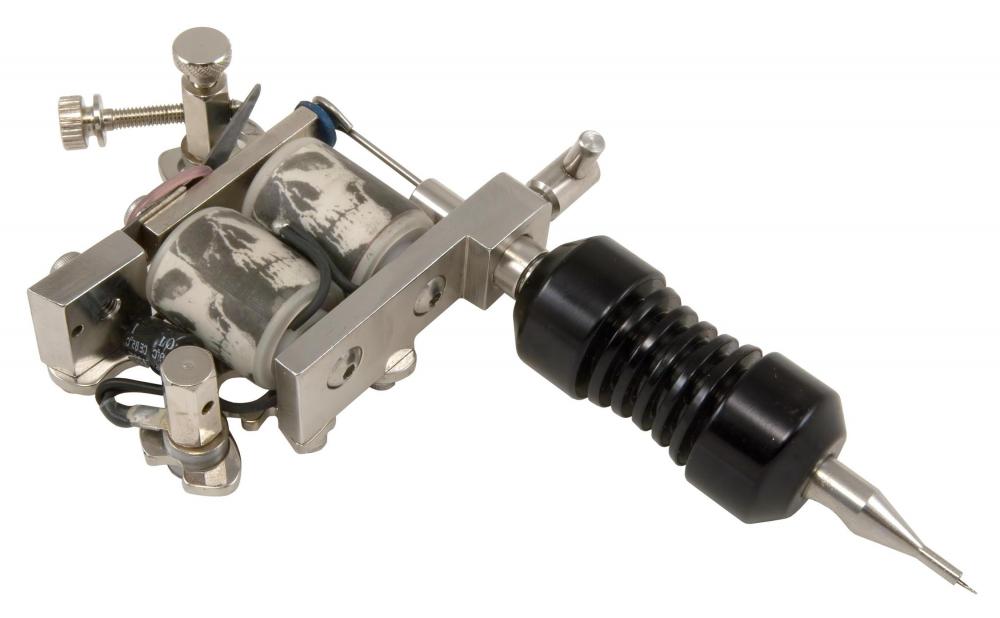
![A tattoo machine.]() By: Aleksandr LobanovA tattoo machine.
By: Aleksandr LobanovA tattoo machine. -
![A person would have to become physically or emotionally dependent on the tattooing process in order to be addicted.]() By: BlueSkyImagesA person would have to become physically or emotionally dependent on the tattooing process in order to be addicted.
By: BlueSkyImagesA person would have to become physically or emotionally dependent on the tattooing process in order to be addicted.




Discussion Comments
I'm 63 and got my first tattoo seven months ago, my third and fourth a week ago and planning my fifth, all on my lower arms. I've never been a rebel. Maybe I am just a late bloomer.
I have had my first tattoo done in 1992 at the age of 31. Now, I just got my last (probably not the very last one) tattoo no. 4 at 51, two weeks ago. Each of my tattoos represents something with a deep meaning to me, sort of marking the passages in my life.
I have them all done in a manner so I can sit in a boardroom and nobody sees the ink. Short-sleeve shirts show just a bit of one on my arm. I have a Master's degree and live a good life with my family. I've just always liked tattoos.
I don't judge others about what they do if their actions don't hurt others and I don't care what others think of my tattoos - my body, my business.
There are lots of good points in the comments excluding one. Post 8 is totally inaccurate and stereotypical. How can one group everyone, everywhere, ever with a tattoo as not being in possession of the right "faculties" to make valid life choices?
I currently have six separate tattoos and I'm in the process of designing a half sleeve. I'm also a qualified educator in the UK delivering courses and qualifications to young adults with behavioral difficulties, so, based on the aforementioned posters views should I be in such a role? Am I stable enough to be trusted with the education of others?
Furthermore, many of the contributors in the comments have expressed their feelings and views in a productive manner, which makes comments such as "I don't know how to express what I am feeling" completely useless in argument.
I am almost 33 and I have six tattoos. I definitely want more. I think the person saying that they are to hide turmoil and so forth is probably right in a very few cases.
For me, it is the thrill of seeing my idea painted out on my body. I am happier in life than I have ever been and still want more tattoos. Mine are not for any kind of attention or anything like that, they are for me and only me. No one else has to accept them or understand them. I do and that is what matters.
I think, for some people, tattoos are an addiction. I would put this particular addiction in the same category as plastic surgery addiction. For some reason, some people are never quite satisfied with the way their bodies look, so they try surgery after surgery to try to attain perfection.
I would say some people have the same attitude toward tattoos. They just can't get their bodies to express enough about themselves. There simply isn't enough skin, or "blank canvas." I am not passing judgment. What people do with their bodies is certainly their business. However, I think it's something every person who likes tattoos needs to be aware of. Sometimes, enough really is enough.
I don't see tattoos as a way to cry out for attention, I think they show commitment. To me, it's a commitment to love whatever you have on your body forever, and a lot of people these days cannot handle that.
In a world where people can flunk out of every life commitment, they can't handle the thought of committing themselves to a design. Now, am I saying anyone who doesn't have a tattoo has commitment issues? Of course not; it's not everyone's cup of tea.
But to me, there's something extremely comforting in knowing that while I may have different fingernails, hair, skin (because that stuff grows and gets cut or flakes off), or different clothes, it's something no one can ever take away from me. No matter what happens it'll always be there because it's a commitment. Said by a person with a tattoo.
I am a mother, not familiar with this tattoo thing. Well, i am a 70's child and back in the day, tattoos had just become popular at that time. Maybe they were already there. I just did not see them till then.
Anyhow, it seems to me, that the tattoos are something to make people notice you. And they seem to hide what is really going on with that person's inside turmoil or issues. Because to me, no one in their right faculties would just sit down and get a tattoo.
Just be honest with yourself. You are crying out for attention and don't know how to express yourselves. Plus, the pain in getting the tattoo. Something else is going on. Be honest, if you will. To me you are saying, "please notice me, i am here, and i don't know how to express what i am feeling" or "i don't know how to process what is happening to me inside".
I agree with the point that "Some people like shopping or reading. I like tattoos. "I used to really like shopping. I mean, i didn't go for a psychologist to prove that I'm a shopaholic because i know i was. when i felt upset or lonely i just bought things.
Right now, after my second tattoo, i seem to want more. I'm not interested in shopping as much as i used to be. i mean, i still love clothes but damn, i love tattoos. i just have a lot of ideas coming up in my mind and I'm so happy to see the great work done. it is really really beautiful piece of art. In planning to get another one. maybe I'm addicted, but as long as it does no harm, then let it be.
I've had two tattoos over the last two weeks. I have somehow stopped myself from getting a third. Maybe it's just my lack of inspiration that's stopping it. And yes, though it started out being impulsive, I love tattoos and it makes me happy. Have to confess that emotionally, I was at a bad place too.
So it sounds like you`re saying tattoos are as addictive as weed is, right?
Re: "Some people use tattoos to dull emotional pain..."
Totally agree. I found myself getting tattooed every time I went through an emotional phase. Relationship or life issues, I would head straight to the parlor. I stopped though. I didn't think it was healthy.
My first one was at 19 and now I am 24 with 24. Regardless, I love them and I want more until I'm satisfied with my artwork. Some people like shopping or reading. I like tattoos.
this has really helped me see that tattoos aren't really an addiction, but an exciting habit.
very good article, good quality info, thank you.
Post your comments