
At AllThingsNature, we're committed to delivering accurate, trustworthy information. Our expert-authored content is rigorously fact-checked and sourced from credible authorities. Discover how we uphold the highest standards in providing you with reliable knowledge.
Are We Really Going to Run out of Oil?
The short answer is "yes." Oil is a finite resource, formed millions of years ago by the compression of billions of tons of animal and plant matter, which collected in pockets under the earth's surface. In the century or so in which oil has been exploited as an energy source, a great deal of the entire supply has already been extracted.
A phrase that is coming into the common vernacular is "peak oil." This is defined as both the peak amount of global oil production — that is, that oil is being extracted from the earth as fast as is physically possible — and the moment in time the amount has been reached. There is no debate that such a peak exists; the only argument is how far in the future we will reach it.

It is estimated that some 800 billion barrels of oil have already been extracted. Campbell and Laherr ère, of Petroconsultants in Geneva, estimate that there is perhaps some 1000 billion barrels remaining, and that the peak will be reached around 2010. Since most analysts acknowledge that the peak will only be recognized once it has passed, there is a growing number of analysts who suspect this point has already been reached.

Most of the major oil fields have been in production for decades. Matthew Simmons, one of the leading bankers to the industry, believes the huge fields in Saudi Arabia have already peaked; they have been in production for 30-50 years and are already using tertiary techniques to extract the oil. Tertiary techniques are the third level of oil extraction, after the easiest methods have stopped yielding, and are correspondingly more difficult and expensive.

Many people shrug off alarm about the pending energy crunch with a belief that "alternative fuels" will fill the gap left by receding oil supplies. This belief is overly sanguine, given the degree to which the entire industrial and technological infrastructure depends on fossil fuel. Converting to other fuels will be a massive financial undertaking to dwarf the military buildup of World War II.
Formerly third word nations are becoming more industrialized and as a result, global demand for oil is increasing. Since alternative fuels are not "in the pipeline," a drop in the supply would have an earth-shattering effect on the economy.
Some analysts even believe that the depletion of the oil supply will result in the downfall of technological civilization. But in any event, you can expect that the struggle to control the dwindling supply to spark conflicts between oil-starved nations and those nations whose territories contain still-producing fields. Energy wars on top of a global depression will siphon off even more funds that might conceivably be used to convert to alternate energy sources.
It is clear ideal time to invest in alternative fuels and energy-efficient transportation is well before the need for them becomes critical.
Frequently Asked Questions
How much oil is left in the world?
According to the BP Statistical Review of World Energy 2020, the world has proven oil reserves of about 1.73 trillion barrels. This figure represents the amount of oil that can be technically and economically recoverable. However, as extraction technologies improve and economic conditions change, this number can fluctuate.
What is peak oil, and have we reached it?
Peak oil refers to the hypothetical point in time when global oil production reaches its maximum rate, after which it will decline. While some experts believed we were approaching peak oil, advancements in extraction technologies like fracking have delayed this event. The International Energy Agency has not confirmed that peak oil has been reached, as production rates are still influenced by market demand and geopolitical factors.
Can we find more oil reserves in the future?
It is possible to discover new oil reserves in the future, as exploration technology advances and previously inaccessible areas become reachable. For instance, Arctic regions and deepwater reserves hold potential for new discoveries. However, the rate of new discoveries has been declining, and there is no guarantee that new reserves will offset the depletion of existing ones.
What are the alternatives to oil, and are they viable?
Alternatives to oil include renewable energy sources such as solar, wind, hydroelectric, and geothermal power. Electric vehicles and biofuels also present alternatives to traditional oil-based transportation. These alternatives are increasingly viable due to technological advancements and growing investment, with renewables now accounting for a significant portion of new power capacity globally.
How does oil consumption affect climate change?
Burning oil releases carbon dioxide, a greenhouse gas that contributes to global warming and climate change. The transportation sector, heavily reliant on oil, is a significant source of global CO2 emissions. Reducing oil consumption through efficiency improvements and transitioning to cleaner energy sources is crucial for mitigating climate change impacts.
What economic impacts would we face if oil ran out?
If oil were to run out, the global economy could face severe disruptions. Oil is integral to transportation, manufacturing, and agriculture. A sudden shortage would lead to increased energy costs, inflation, and potential shortages of goods. Transitioning to alternative energy sources ahead of time is vital to minimize these potential economic shocks.
AS FEATURED ON:
AS FEATURED ON:









-
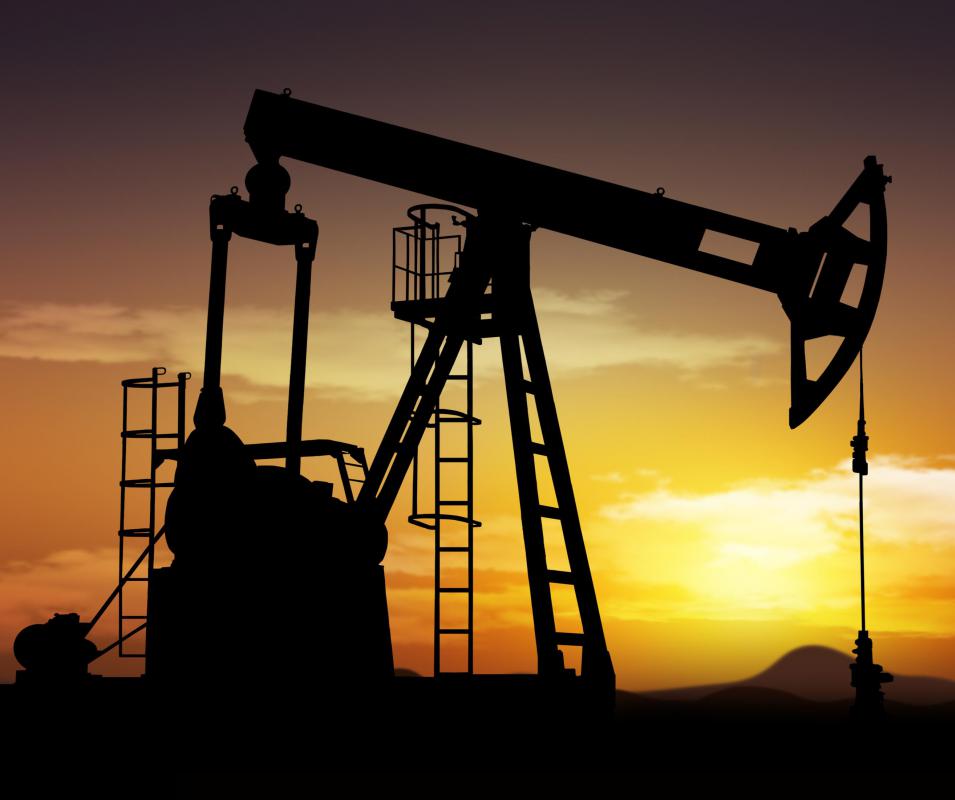
![A pumpjack oil well.]() By: EdelweissA pumpjack oil well.
By: EdelweissA pumpjack oil well. -
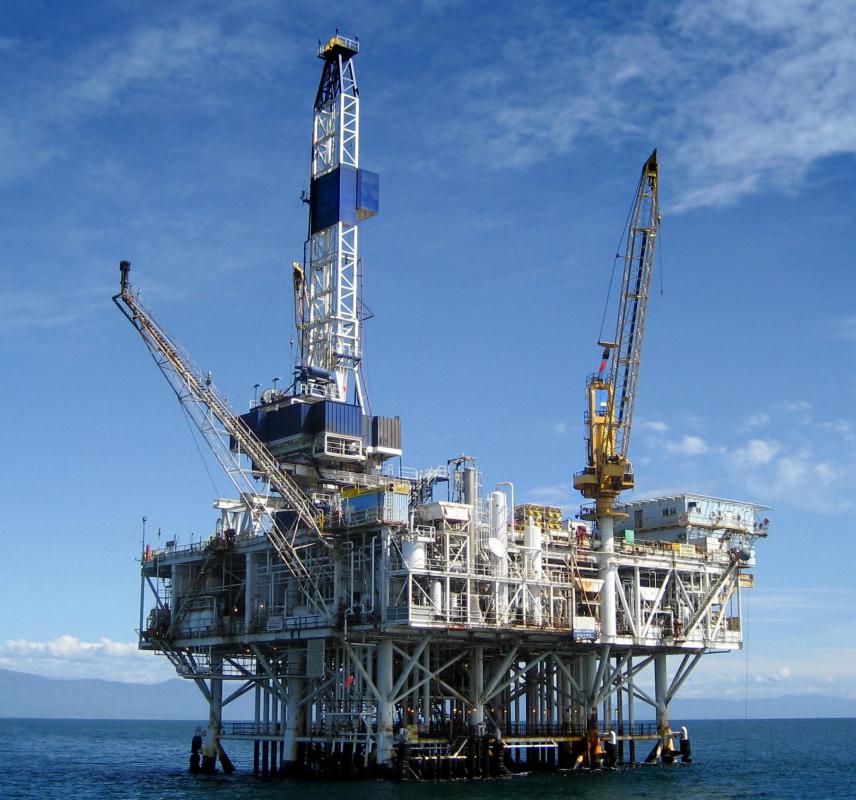
![An offshore oil platform.]() By: eyeideaAn offshore oil platform.
By: eyeideaAn offshore oil platform. -
![The world may need to decrease its dependence on fossil fuel.]() By: Anna LuryeThe world may need to decrease its dependence on fossil fuel.
By: Anna LuryeThe world may need to decrease its dependence on fossil fuel.

Discussion Comments
We could talk here about everything but the thing is we aint doing it, and you can project all your theories here but it won't help if we don't start today. And the numbers are so stupid: 50, 60 or 70 years with oil? What is that kind of a number. I alone have more chances to live longer than these numbers! As if we and our generation are telling generations that come after us that the oil was ours and not theirs. they aren't living today so they have no rights for oil.
we as humans are so selfish, especially our governments who don't do anything because it costs money, but we can still lose trillions of dollars to nothing when economy increases and we are still here, so it's all a big lie that they tell us.
They only think about right now and maybe a little bit about tomorrow, but one decade is a total mystery to them. And we the people are so stupid to believe them and don't force them into new economic and environmental systems that could secure the world from running out of oil or humans who destroy it.
I'm not concerned about whether we run out as much as I'm concerned about the EFFECT that the removal of the oil has upon the earth as oil is heavy and the core of the earth is hot, about 9000 degrees -- what effect does the removal of the oil have?
WHEN we will run out of oil is subject to a LOT of unknown factors:
1) We do not know how much oil the planet has.
2) We have not even located all of the accessible reserves, for instance, we only have vague guesses as to how much oil is under the Arctic Ocean or Antarctica.
3) The amount of RECOVERABLE oil is subject to change. For example, in July of 2008 the recoverable reserve in North Dakota was increased from 30 to 300 billion barrels--equivalent to adding 45% of the known Saudi reserves.
4) The efficiency of the conversion process whereby crude is transformed into usable products is subject to improvement--which means more product from less crude.
5) The efficiency of the conversion of the end fuel products to useful energy is subject to improvement.
6) Recycling of hydrocarbon based compounds into other products is still in it's infancy. In theory, we can recycle any hydrocarbon into any other hydrocarbon. This would permit us to perfectly recycle plastics and to manufacture gasoline type hydrocarbon fuels from any hydrocarbon, including plant cellulose.
Like most such issues, the initial assumptions regarding the question are vital to how you interpret the answer.
Most analysis is conservative and assumes that there will be no new fields found, no changes in extraction or conversion efficiency and only very limited increases in utilization efficiency. Such conservative answers will over state the problem in most cases.
The overall efficiency of finding, recovering, converting and shipping oil; and finally converting the fuel to usable form is very low--the final process of conversion from gasoline to motion is only about 20%, and the efficiency of conversion of crude to gasoline is 85%, so if you start with the refinery, the overall efficiency of a gasoline engine is 17%--but that doesn't take into account drilling and recovery costs or transportation and storage costs, so the actual efficiency of the process from beginning to end is much lower.
Our problem is not oil but energy (the number one use of oil is to create heat which is either used directly or transformed to mechanical or electrical energy.)
As a space-going species, we have access to direct, unfiltered solar energy ranging from radio frequency to charged particle streams.
Since the Earth-Moon double planet system intercepts 10,000 times as much solar energy as the Earth alone, our problem is not that we lack energy, but that we have failed to collect our most plentiful source.
It has been feasible to collect this energy in orbit and transfer it to the planetary electrical grid via microwaves since the mid-1970's. The efficiency of the process is not high--only about 5% of the initial solar energy would enter the electrical grid. But since the available energy is many thousands of times that used by our civilization, and the conversion and transmission processes are subject to improvement, this is not a major issue.
The advantages of solar power satellites are many and include:
1) Space based power plants are much harder to disrupt than current systems. This makes them resistant to terrorist or other attack.
2) The energy losses in collection/conversion do not increase the amount of waste heat on Earth. (Although transmission and use on the surface do result in a net increase of heat.)
3) The systems themselves are more efficient than similar Earth-based solar collectors due to the ability to operate nearly 24 hours per day; and they do not need complicated mechanisms to track the sun.
4) Since it is cheapest and most efficient to construct such facilities in space, using material from the Moon rather than Earth, the materials and energy used are not removed from Earth and the waste products (pollution) do not have to be disposed of on Earth.
5) Because of the lack of atmosphere the initial amount of energy received per square meter in space is much higher than on the planetary surface, so the facility can be smaller to produce similar power outputs.
The main reason that this type of process is not in use today is that it requires, as do oil and nuclear power, a large infrastructure and we have lacked the economic and political will to construct that infrastructure.
If nuclear, coal and oil-fired power plants were required to completely deal with their waste products, and that cost were passed on directly to the user (instead of the current method of dumping wastes and expecting the taxpayers to foot the disposal bill,) space based power systems would be directly competitive on a total cost basis.
is oil going to run out in about 50 years time?
Post your comments