
At TheHealthBoard, we're committed to delivering accurate, trustworthy information. Our expert-authored content is rigorously fact-checked and sourced from credible authorities. Discover how we uphold the highest standards in providing you with reliable knowledge.
Are Nightshade Vegetables Bad for You?
 Mary McMahon
Mary McMahon
Mary McMahon
Far from being bad for you, nightshade vegetables confer a number of health benefits because they are often rich in vitamins, minerals, and other useful compounds. As is the case with all elements of the human diet, however, some people find that they feel healthier when they do not eat these vegetables. For people with conditions that are sometimes made worse by what they eat, it may help to use an elimination diet to zone in on foods which cause complications and discomfort.
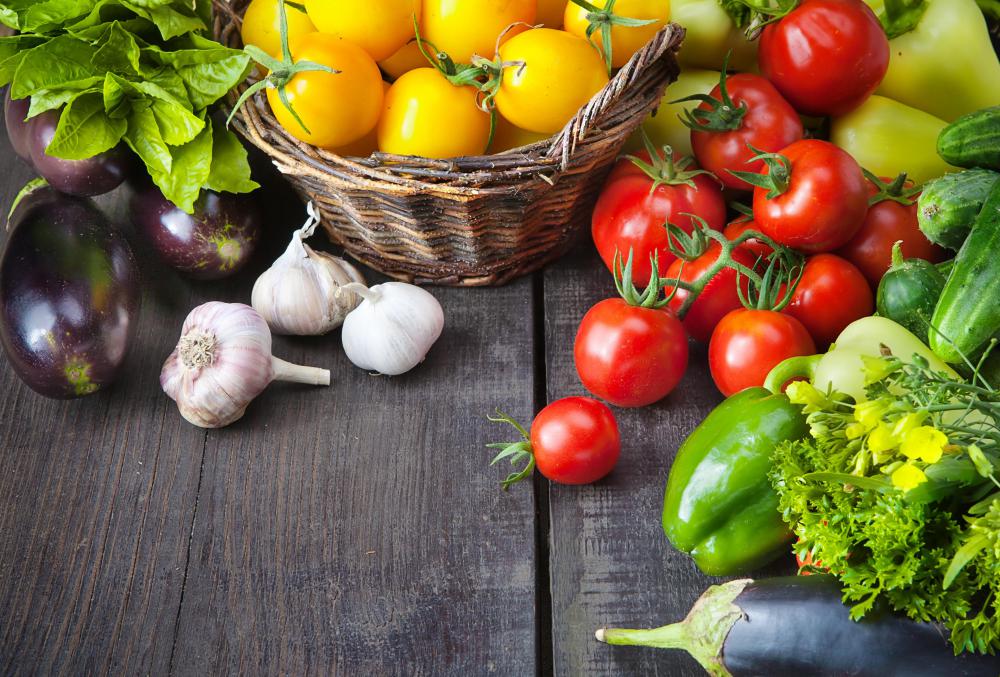
Nightshade vegetables are actually fruits, not vegetables — except in the case of the potato, which is a tuber — but because they are cooked and treated like vegetables, most people refer to them with this term. Eggplant, tomatoes, peppers, and potatoes are all members of the nightshade family that are used for food, and tobacco is another member that is cultivated for use by humans. All of these products contain trace amounts of alkaloids that can be harmful in heavy concentrations.

As a general rule, people should avoid consuming the leaves, stems, and flowers of members of the nightshade family, and they should only eat fruits that are fully ripened, without any green spots. Some members of the nightshade family, such as peppers, can be green when fully ripe, but green spots on tomatoes, potatoes, and eggplant are not desirable, as they can contain high concentrations of alkaloids. On potatoes, the green spots indicate that the tubers have been exposed to sunlight, and the potato has developed alkaloids as a self defense mechanism to make it unappealing to animals that might want to eat it.

The natural toxins present in trace amounts in mature nightshade vegetables do not appear to be harmful when these foods are eaten as part of a balanced diet. A high concentration of such food in the diet could cause issues in some people, especially if the food is underripe or poorly handled. Consumers can avoid problems by using fresh, fully ripened vegetables and carefully trimming away any green spots on potatoes.

Some researchers have suggested that these vegetables can be involved in gastroesophageal reflux disease (GERD), along with the more mundane heartburn. They may also be a culprit in inflammatory processes, such as those observed in arthritis, and some people believe that these foods can also exacerbate acne. While people may not want to take recommendations to eliminate nightshade vegetables from their diets at face value, going through an elimination diet can be a good idea, as it can help identify any problem foods.
Mary McMahon
Ever since she began contributing to the site several years ago, Mary has embraced the exciting challenge of being a TheHealthBoard researcher and writer. Mary has a liberal arts degree from Goddard College and spends her free time reading, cooking, and exploring the great outdoors.
Learn more...
Mary McMahon
Ever since she began contributing to the site several years ago, Mary has embraced the exciting challenge of being a TheHealthBoard researcher and writer. Mary has a liberal arts degree from Goddard College and spends her free time reading, cooking, and exploring the great outdoors.
Learn more...AS FEATURED ON:
AS FEATURED ON:


-
![Tomatoes are nightshade vegetables.]() By: martinleeTomatoes are nightshade vegetables.
By: martinleeTomatoes are nightshade vegetables. -
![Peppers, tomatoes and other nightshade family members need to be fully ripe before eaten.]() By: Vasily MerkushevPeppers, tomatoes and other nightshade family members need to be fully ripe before eaten.
By: Vasily MerkushevPeppers, tomatoes and other nightshade family members need to be fully ripe before eaten. -
![Some people believe nightshade vegetables can exacerbate acne.]() By: Ocskay BenceSome people believe nightshade vegetables can exacerbate acne.
By: Ocskay BenceSome people believe nightshade vegetables can exacerbate acne. -
![Nightshade vegetables might be problematic for arthritis sufferers.]() By: FentonNightshade vegetables might be problematic for arthritis sufferers.
By: FentonNightshade vegetables might be problematic for arthritis sufferers. -
![Potatoes are members of the nightshade vegetables.]() By: James MartinPotatoes are members of the nightshade vegetables.
By: James MartinPotatoes are members of the nightshade vegetables. -
![Many people eat eggplants, tomatoes, and other nightshade vegetables without incurring any side effects.]() By: KonstiantynMany people eat eggplants, tomatoes, and other nightshade vegetables without incurring any side effects.
By: KonstiantynMany people eat eggplants, tomatoes, and other nightshade vegetables without incurring any side effects.


Discussion Comments
@Pharoah - Yeah, there's nothing worse than accidentally poisoning yourself and your whole family. I've heard of people doing that with wild mushrooms, but never with nightshade vegetables. However, I guess there's a first time for everything, so it could happen.
I'm glad I never tried to get creative in the kitchen while making tomatoes. That could have been a real disaster for me and my whole family.
@indemnifyme - It is confusing to try and eat healthy. I feel like every time I turn around something that used to be good for you is now bad for you, or vice versa. Then a few years later, the health authorities change their minds. I think eating things in moderation and eating a varied diet is a pretty good answer to this.
I have heard some people advocate not eating nightshade vegetables because of inflammation. However, as some other posters have said, it is confusing because tomatoes and potatoes also contain things that are good for you. And, if I remember my history right, the Irish used to eat potatoes as a staple, and I've never heard anything about them being harmed because of it.
I think it's probably okay for most people to eat nightshade vegetables, as long as that isn't the only thing you're eating. Also, this shouldn't be too hard, because who eats the same thing at every meal anyway?
Nightshade vegetable plants can be bad for animals, but the plants have ways of making the animals leave them alone. Have you ever noticed the way a tomato plant smells when you touch it? It is a powerfully bitter aroma, and it can scare away a potential snacker!
@Perdido – Sweet potatoes are actually in a different family from regular potatoes. They aren't a nightshade at all, so you don't have to give them up.
Managing arthritis symptoms that are already present by avoiding certain arthritis food is not a bad idea. However, I don't know if you could actually prevent its onset by not eating regular potatoes and tomatoes.
I've heard that nightshade vegetables can bring on symptoms of arthritis. I don't know if they can cause arthritis in people who don't already suffer from it, but I do know that they can make it worse in people who do have it.
My mother has stopped potatoes because of this. She tells me that I should, too, because arthritis runs in our family.
Do I need to give up eating sweet potatoes? They are just so nutritious and packed with vitamins, so it doesn't seem like they could cause anything bad to happen!
@anon78469 – The alkaloid in green tomatoes is not as bad for you as the one in green potatoes. I also love eating fried green tomatoes, and I'm not afraid to do so.
I've never suffered any negative physical effects from eating fried green tomatoes, unless I stuff myself and become uncomfortably full. I would say you are safe to go on eating them.
Boy, is this confusing! I am fighting a pernicious inflammation of my hip bursae (bursitis) and was advised by my physical therapist to eliminate nightshade plants, of which I eat very little anyway.
What about all the advice for us to eat the Mediterranean diet which is heavy on tomatoes and eggplant? Presumably all those Italians and Provencal people would suffer more physically than other people, yet I haven't heard that they do. I've also been advised to eliminate dairy and gluten. Anyone know if that will help?
Not everyone has a problem with nightshade. If you feel like a different person, then you have found your source. It does work for me and not only if done right I even lost weight, not even trying to where my weight should be at.
anon78469: I've been doing some research on this, and it appears that the grease ends up absorbing the poison. At high temperatures it will break down, but while boiling doesn't seem to be sufficient, grease can reach a much higher temperature.
Also, I don't believe the nightshade alkaloids will build up over time, otherwise we'd see widespread cases of poisoning in people who eat large amounts of tomatoes and potatoes in their diets.
anon76208: I've come to the same conclusion as well. The green is chlorophyll by definition. A better test would be to lick a peeled section of potato to check for bitterness. The peel also seems to contain the vast majority of poisons in situations where there are high concentrations, so removing the entire peel in those situations may mitigate risk.
What about fried green tomato, which I love and have no adverse GI affect from? Am I just poisoning myself slowly or does cooking the green tomato in grease and flour batter actually dissipate the toxin?
I have to disagree with your suggestion to just trim away the green spots on potatoes. The green spots just represent chlorophyl formation, and the solanine can still be present in the rest of the potato, no?
Post your comments