
At AllThingsNature, we're committed to delivering accurate, trustworthy information. Our expert-authored content is rigorously fact-checked and sourced from credible authorities. Discover how we uphold the highest standards in providing you with reliable knowledge.
Are Guinea Pigs Good Pets?
Guinea pigs are small members of the rodent family native to South America, but they have been domesticated for several hundred years. They were popular lap pets in European courts, and their names have become synonymous with "test subject." Many people find them to be an excellent pet for a home or apartment.
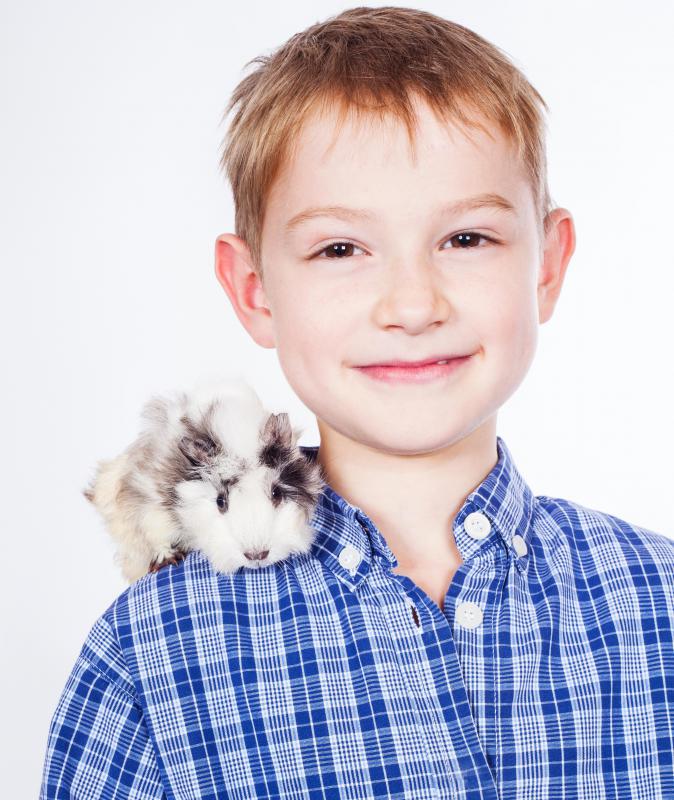
A guinea pig is often thought of as a good pet for children, and this is true, but as with all pets, parents must make certain the child is old enough to be gentle with the animal and mature enough to care for it properly. They are sociable animals and need homes where they will receive attention and affection. Being left in a cage and ignored is a harsh life for the animal since they are affectionate and love to be held. Owners should be prepared for this.

A prospective owner should get a good book on guinea pig care and read it carefully. The animal's needs are not elaborate, but at the most basic, one needs a roomy cage, safe bedding, a ceramic food bowl, a water bottle with a sipper spout, pellets, and timothy hay.
Some people put a little plastic or wooden shelter inside the cage, but this is not recommended for the first week or so at home. The rodent may retreat inside the shelter and refuse to come out, except to eat. A shelter should only be added after the pet has become accustomed to its environment.

Guinea pigs are strict vegans: they do not eat any kind of meat product and do not need dairy products or sweets. A nugget of corn or wheat cereal once in a while may be a nice treat, but these should not be given regularly. Pellets formulated especially for these animals should compose the bulk of the diet, along with timothy hay.
Some cages have ricks where hay can be placed for eating at leisure, but most piggies do not nibble throughout the day &mdsah; they will eat an entire rick-full and "week" for more. Incidentally, the “wheek!” is a noise that the animal does not make in the wild. It is a call reserved for humans opening the refrigerator, and the animal knows exactly what is in there: treats.

Within their limits, these rodents are fairly bright. They know what the refrigerator is for, or at least that opening the door means a treat might be in their future. Pets seem to respond to their owners coming in from being absent, and they certainly relish being picked up and loved. They return affection with nuzzles, head butts and gurgles of contentment.

The guinea pig is a prey creature, and so will mask illness. An owner should look for any nasal discharge or diarrhea and notice if the animal is not drinking water. These are sure signs of illness, and time is always of the essence when treating this rodent. If possible, the animal should be taken to a veterinarian specializing in exotic pets for treatment.
The animal’s cage should be kept out of direct sunlight and drafts. The room temperature should be fairly consistent to help keep illness away. Loud noises should be kept to a minimum, when possible.
One great advantage of the guinea pig as a pet is that it is quiet. It will wheek and squeak and gurgle, but not loudly. They rattle their water bottles and bang items around in their cages, but do not create much commotion.

When their cages are kept clean, these pets also have very little odor. People are rarely allergic to them, which makes them good pets for those who love animals but can't have a cat or dog. Most are also generally fastidious little animals and keep themselves groomed, although gentle brushing with a soft-bristled brush is also appreciated.
Guinea pigs are often packed with personality and friendliness. They rarely bite and are sociable, likable little animals. As such, they can make excellent pets.
Frequently Asked Questions
Are guinea pigs suitable pets for children?
Guinea pigs can be excellent pets for children due to their gentle nature and relatively easy care requirements. However, they do require gentle handling and a stable environment. Supervision is recommended to ensure that children learn to handle them properly and understand their care needs, such as daily feeding, regular cage cleaning, and social interaction.
How much space do guinea pigs need?
Guinea pigs require ample space to move around and exercise. A single guinea pig should have a cage that is at least 7.5 square feet, but larger is preferable. For two guinea pigs, a cage of 10.5 square feet or more is recommended. They also benefit from time outside their cage in a safe, enclosed space for additional exercise.
What is the lifespan of a guinea pig?
Guinea pigs typically live between 4 to 8 years, with proper care often extending their lifespan towards the upper end of this range. Their longevity is influenced by factors such as genetics, diet, exercise, and quality of veterinary care. Regular check-ups with a vet experienced in small animals can help ensure a longer, healthier life.
Do guinea pigs require companionship?
Guinea pigs are social animals and thrive in the company of their own kind. It's generally recommended to keep them in pairs or small groups to prevent loneliness and promote psychological well-being. Same-sex pairs or neutered males with females are ideal to avoid unwanted breeding. Companionship helps reduce stress and encourages natural behaviors.
What do guinea pigs eat?
A guinea pig's diet should consist of unlimited high-quality hay, fresh vegetables, and a small amount of fortified pellets. Hay is crucial for dental health and digestion. Fresh water should always be available. Vitamin C is essential as guinea pigs cannot produce it themselves, so foods rich in Vitamin C or supplements are necessary.
Are guinea pigs high-maintenance pets?
While guinea pigs are not as high-maintenance as some pets, they do require daily care that includes feeding, providing fresh water, and cleaning their living space. They also need regular grooming, especially for long-haired breeds, and daily interaction with their human caregivers to remain tame and sociable.
AS FEATURED ON:
AS FEATURED ON:









-
![A guinea pig cage offering space and comfort.]() By: mariesachaA guinea pig cage offering space and comfort.
By: mariesachaA guinea pig cage offering space and comfort. -
![Guinea pigs are strict Vegans.]() By: sasel77Guinea pigs are strict Vegans.
By: sasel77Guinea pigs are strict Vegans. -
![Guinea pigs need care and attention.]() By: MagaliceGuinea pigs need care and attention.
By: MagaliceGuinea pigs need care and attention. -
![Guinea pigs are excellent pets for older children.]() By: Belkin & CoGuinea pigs are excellent pets for older children.
By: Belkin & CoGuinea pigs are excellent pets for older children. -
![Wild guinea pigs are found exclusively in South America, where their range stretches from Peru to Argentina.]() By: Iryna VolinaWild guinea pigs are found exclusively in South America, where their range stretches from Peru to Argentina.
By: Iryna VolinaWild guinea pigs are found exclusively in South America, where their range stretches from Peru to Argentina.



Discussion Comments
Is a guinea pig a wonderful enough pet for an 11 year old girl? Are they really worth it? Do they smell bad? Does cleaning their cage suck? Are they fun? Are they like a dog, kind of? Can a piggy and a dog be good friends? Do they like water? Can they be potty trained? Please respond ASAP.
Most cages sold in pet stores are a glorified litter box. For those of you posting that your guinea pigs are walking around in poop or are lazy/fat, this is because you have your pig locked in a jail cell.
A guinea pig needs enough space to be able to run a complete lap unimpeded, so at a minimum, expect to provide a 5-foot-diameter kiddie pool for your guinea pig. It doesn't matter if you take your pig out a few times a day to run around; the remaining 98 percent of its life should not be spent in a litter box.
We recently got a guinea pig thinking it would be a great pet for our kids. What no one warned me about is that this thing poops continuously! Not only that, but it poops everywhere in its cage, then walks around in it. Then my kids want to hold and cuddle with it. I'm a little grossed out and wish that I had been warned.
It is so sad that people think that a guinea pig is just good for a child. Guinea pigs are great for adults too. And they are wonderful pets. They love to cuddle. As for male or female, well I would say a male. for a first time owner. They are more tame.
Females tend to be more hyper. I had a guinea pig and it was free. He just passed away. He was beautiful. But make sure you get a cage.
Yes they are! I am 11 and I just got one today and I feel so responsible and I already love it! Get one! And they are quite reasonably priced, also.
I really want a guinea pig but I need some good reasons on why to get one. Also, would it be OK to have a guinea pig with a dog, as long as they can't make contact? Is there any more important information that I need to know that could affect my decision?
You should get english breeds and if you want, you can get both male and female.
Guinea pigs require significant amounts of care and are not suitable pets. These are food animals that live very brief lives and should not be sold as pets. We have kept several and they require significant care if you do it right.
Is it okay to have a guinea pig while having a dog?
I would not recommend getting a guinea pig if you already own a cat, especially if the cat is known to be aggressive. A guinea pig is a prey animal in nature, and cats are natural predators. The quick movements of a guinea pig might remind a cat of a large mouse, so he or she might pounce on the guinea pig if given the opportunity. If you plan on allowing the guinea pig to roam freely outside of its cage, then a cat shouldn't be allowed in the same living space.
Some cats, however, may be a lot more laid back about things, so it's possible that a cat might not feel the need to attack a guinea pig once it's used to having it around the house. Some predator and prey animals do get along surprisingly well, especially if they were purchased around the same time, but it's a risky move for owners. Personally, I wouldn't want to be responsible for a guinea pig stressing out over the presence of an aggressive cat, even if that cat doesn't appear to be overly interested in him or her.
is it OK to have a guinea pig if you have a cat?
Thank you for these answers but I have a few more questions. Can they get fleas, chicken pox, or any other sicknesses I should be aware of before I actually get one? Is it good if you have no other pets at your home currently? I have none. How long does it take guinea pigs to settle in? How big does the cage need to be? Which gender is good for first time owners? I need answers, please.
i just got a guinea pig two days ago. I haven't seen him drink much water. one of his legs and ear are red and I don't see much hair on his leg. He his eating fine and nothing else seems off. How do I know if he is sick?
I am a twelve year old girl, and my one year old female guinea pig, or cavy, as they are also called, is affectionate and loves people and even our dog and cat, who she tries to groom if they come up to her. I think, however, that she must get lonely while I am away at school. Would it be a good idea to get another female cavy? Please help me!
When I was really little my family got one guinea pig, Ricky, and from there we ended up buying another, then he and the other one, Mixi, had two babies.
Then my mother rescued one, and she had two more babies. At one point we had seven guinea pigs, and my basement was their whole playground-they loved it. My favorite memory is training my first guinea pig Ricky to follow me, then the rest of them would follow him one after another. Soon I literally had a Guinea Pig train following me- the cutest thing you could ever see!
I love these guys, amazing little companions that kept me smiling for my childhood. Anyone who gets one of these little guys, make sure you have plenty of time for them. Just because they're a caged animal they should be handled and played with so much. Again, amazing little animals and very smart!
I really want a guinea pig but my mom doesn't want one. what should I say to her to convince her?
My husband and I are newlyweds. We were looking for a "first pet" and seeing as our apartment wouldn't allow dogs, we got a guinea pig. neither of us have ever owned one before, but i must say, Gus is a hit.
we love him so much, he rarely smells bad, has only nibbled us when he thinks we are holding food (our fault not his) and is hilarious. he gets what i think are called "the popcorns" and starts jumping and squealing around his cage, sipping water, eating food and doing it all over again until he exhausts and curls up for a nap. he loves to be held and cuddled and he's the perfect companion for me when my husband is away at work. we love our pig!
Guinea pigs make awesome pets if you take the time and effort to look after them. Make sure you get a good roomy cage for them (or even better make one yourself)
Also get two and buy or make them lots of toys.
If you are lucky enough to get a smart guinea pig you can train it tricks if you start at an early age.
Guinea pigs look good if you have a herd of four or five. they look so cute. Make sure they get time out of their cage or even better you could free range them (this is the best way they can be litter trained.) Do your research, people!
I really want a guinea pig but for some reason I'm scared. How hard is it to take care of?
How much do guinea pigs have to use the bathroom?
We recently lost one of our guinea pigs and are thinking about getting another. Is it possible to introduce a new pig into the same cage as the older one? Would we be better off with a very young or an older one?
Can they get lice?
My guinea pig hasn't been drinking water for two days! what could be wrong with them?
How do i make my mom get me a guinea pig? She doesn't want one but it is my dream pet!
why doesn't this article say they are grazing animals? while they need to be kept warm for the winter, most likely inside, when the weather's good they need a run and to grass for grazing!
Guinea pigs are great pets for kids and adults. their urine doesn't particularly smell if you change their bedding regularly. Everyone's urine smells and no way is it as bad as a cat's! I can't really smell it and I have good sense of smell!
They are adorable and comical and actually love to be cuddled and petted. Mine have been here for a week and they already know my three heavy handed children and run to them to be cuddled. Anyone wondering if they should get one, do it! It's great for children to be responsible for a pet.
I want a guinea pig, but i do not know if they would make a good pet for an 11 year old girl. Do guinea pigs have a strong odor?
does guinea pigs' urine smell worse than cats' urine?
Do guinea pigs smell bad?
@anon38772: Your guinea pig may indeed nibble at your fingers, but this is different from a true aggressive bite. Just don't get your fingers too near the mouth. Give the piggy a treat such as a carrot morsel, parsley sprig or other small, bite-sized vegetable or fruit bite from your hands. Once the piggy learns that only good things come from your hands, he will come to you so you can stroke his head. Most piggies also love to be rubbed under their chins. Their jaws will go slack and they get a totally, hilariously goofy look. Place a towel on your chest and put the piggy on your chest and sit with him on the sofa for a few minutes a day. This will also help him learn to relax and enjoy being handled and petted.
Keep giving the piggy love, treats and affection and he will come around before you know it.
I bought a guinea pig for my daughter for her 5th birthday. I am the only person who handles him (the novelty wore off already for my kids). When we first got him he ran if I went to pet him. now he is smelling my fingers but I don't think it's in a good way. I think he's going to bite me and he has already. What should I do to get him to relax a little bit and be handled?
Is it OK to have a piggie if you have a dog?
i had a guinea pig and she was very nice she didn't enjoy being cuddled much but she did like being petted and held in a lap females are the best to start out with and guinea pigs aren't so great for young children for they are fragile.
female and get two at the same time. and pigs must have lots of fresh sources of vitamin c. they're like us and cannot make their own.
the best guinea pig for a first time owner is a short hair, long haired piggies need more care ...obviously needing careful brushing even trimming and are more likely to attract blow fly
What breed of guinea pig is a good for a first time owner and a male or a female?
Post your comments