
At HomeQuestionsAnswered, we're committed to delivering accurate, trustworthy information. Our expert-authored content is rigorously fact-checked and sourced from credible authorities. Discover how we uphold the highest standards in providing you with reliable knowledge.
Are Fiberglass Swimming Pools a Good Value?
For people who plan on living in a home and using an in-ground swimming pool for a long time, fiberglass swimming pools are often a better value than poured concrete pools. Although the prefabricated fiberglass material is more expensive than concrete or vinyl liners in upfront installation, over time they can save homeowners money in chemical treatments, cleaning, energy costs, and repair. After considering how the pool is used, weather, soil type, and design requirements, many consumers are pleased with pools made from fiberglass.
Unlike traditional poured concrete, fiberglass swimming pools come as a pre-formed shell and are set in an excavated site. This gives them the benefit of quick installation. The interior fiberglass is sealed by the manufacturer to create a smooth, nonporous surface, which doesn't interact with the water or affect the pool's chemistry. It uses fewer harsh chemicals and requires less frequent cleaning than a concrete pool. This is important for people who don't want to scrub a pool or who have allergies to strong chemicals like chlorine.

Fiberglass swimming pools save money in other kinds of maintenance as well. Their structure doesn't develop cracks as easily as concrete, so they don't need to be resurfaced, replastered, or grouted. Even vinyl liners, which don't crack, eventually wear down and must be replaced. Fiberglass pools are particularly popular on the west coast, where earthquakes are a frequent occurrence, because they bend with the ground instead of splitting or popping. They can even withstand stray tree roots better than vinyl-lined pools.

Even with their benefits, fiberglass swimming pools aren't the right choice for everyone. They come in prefabricated styles, so while there are a wide variety of depths, shapes, and colors, they cannot be fully customized like concrete or vinyl. Fiberglass isn't ideal for certain cold-temperature climates, where homeowners must "weather" their pools by emptying them for several months, because the pools are designed to be filled to a minimum level at all times to keep the pressure inside and outside the wall even. They are not susceptible to damage from ground frost, however.
For people who are concerned about affecting the resale value of their home, it is even possible to dig up fiberglass swimming pools and move them to a new house or sell them. Most buyers are happy with a backyard that comes with a pool, however, especially one made of fiberglass, which has such low maintenance.
AS FEATURED ON:
AS FEATURED ON:


-
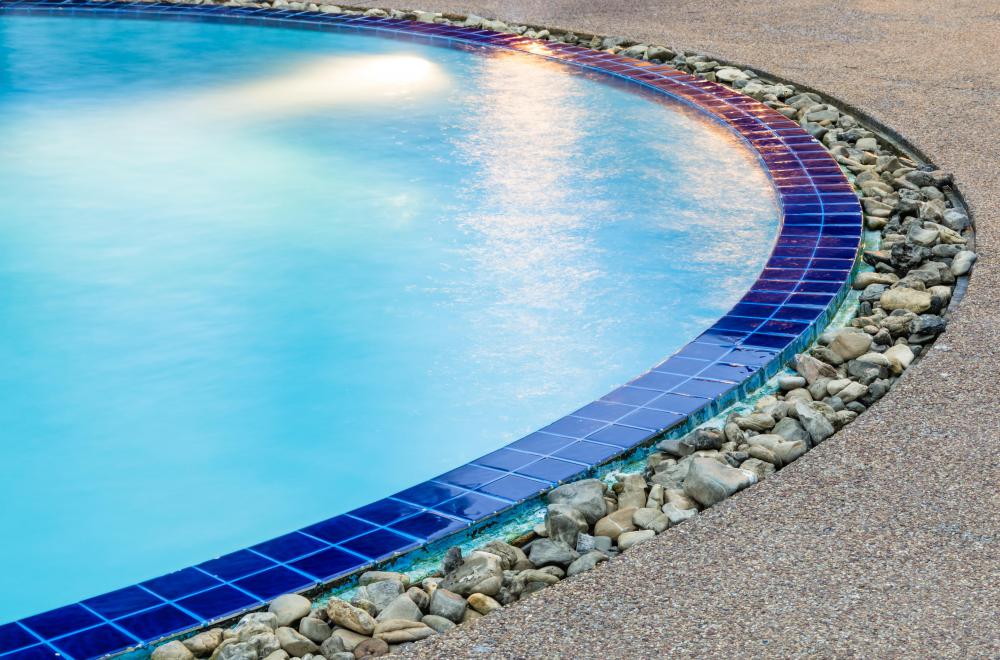
![Fiberglass swimming pools are sometimes a better choice than concrete for backyard pools.]() By: ViewApartFiberglass swimming pools are sometimes a better choice than concrete for backyard pools.
By: ViewApartFiberglass swimming pools are sometimes a better choice than concrete for backyard pools. -
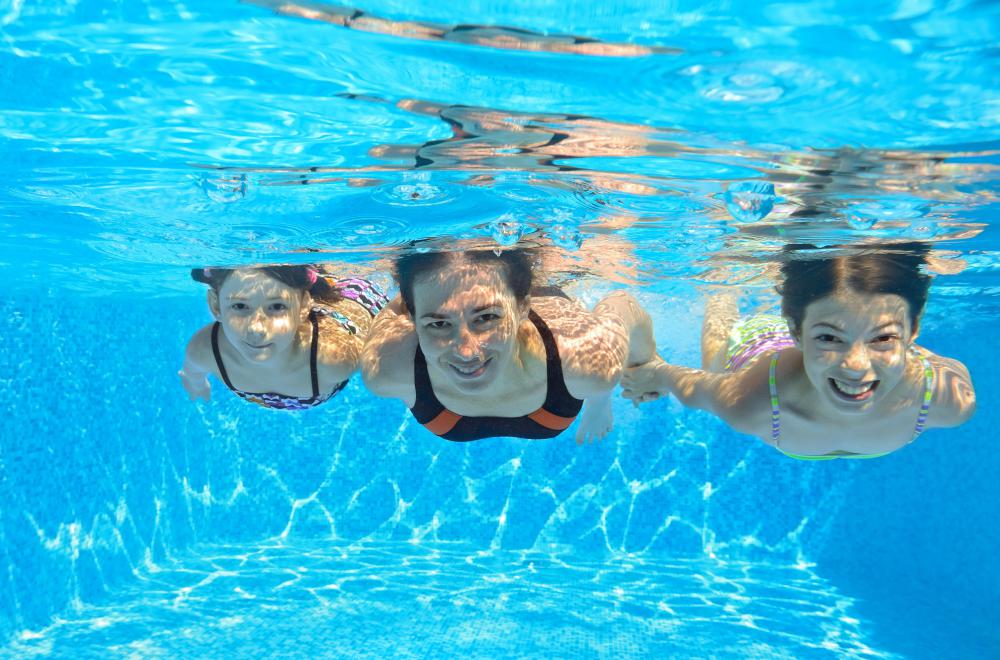
![Prefabricated fiberglass pools are more expensive than concrete ones or those with vinyl liners to install, but over time they are cheaper to maintain and repair.]() By: Iuliia SokolovskaPrefabricated fiberglass pools are more expensive than concrete ones or those with vinyl liners to install, but over time they are cheaper to maintain and repair.
By: Iuliia SokolovskaPrefabricated fiberglass pools are more expensive than concrete ones or those with vinyl liners to install, but over time they are cheaper to maintain and repair.
Discussion Comments
Generally, newer composite swimming pools are better than fiberglass swimming pools. At least, that is in my experience.
If liquid chlorine (a.k.a. sodium hypolchorite) is all you're using, you need to add cyanaric acid to your pool to stabilize the chlorine. Chlorine tablets (a.k.a. trichlor) contain cyanaric acid in them, which is why most pool owners don't have to monitor their stabilizer, however salt pools, liquid chlorine, and calcium hypochlorite chlorine only pools must ensure they maintain proper stabilizer levels.
And your water probably turned milkly because of low Calcium hardness levels.
Chemical users should try an all natural pool treatment. They work just as well and are safer, plus I don't get that "chlorine congestion" in my nose anymore.
I have a 20x40 fiberglass (fiber tech) pool. My ph=7.8, I use liquid chlorine. I am having a hard time keeping a good chlorine reading. It seems like I need to add 1 gallon of chlorine everyday.
Need advise...GG
I have a 12x25 fiberglass pool my ph was7.0 my pool supplier told me to add 5 pounds of ph plus.
After adding it by dissolving 2 pounds at a time my pool turned to look like milk.my real question is the next day I got into pool it was very very rough. Could putting that much ph plus in damage the surfice?.
Thank you
Dave
Post your comments