
At TheHealthBoard, we're committed to delivering accurate, trustworthy information. Our expert-authored content is rigorously fact-checked and sourced from credible authorities. Discover how we uphold the highest standards in providing you with reliable knowledge.
Are Delusions and Hallucinations Different?
 Tricia Christensen
Tricia Christensen
Tricia Christensen
Delusions and hallucinations are similar yet different. Hallucinations are visual or auditory-based delusions, where one may see things that are not there, or see distorted images. Delusions, however, do not have to be hallucinations, but can be beliefs held that are not consistent with reality.
Common delusions include beliefs of grandeur and of persecution. Both types are common with schizophrenia. Delusions of grandeur may also be present in manic episodes of bipolar disorder.

Delusions of grandeur may make a person think he or she is invincible or godlike. They may alternately think their very acts can control everything in their surroundings. These types of false beliefs can be quite dangerous to the person experiencing them. One might walk into traffic or jump off a building because one is convinced he or she cannot be harmed.

Persecution beliefs tend to make a person think that “everyone” is conspiring against him or her. The person may believe his or her private conversations are being taped or that a secret government conspiracy exists to steal the thoughts of the world. Usually those with delusions of persecution live very guarded existences, and may perform strange acts to prevent what they consider persecution. If confronted, those with persecution beliefs may become suddenly violent, although this is relatively uncommon.

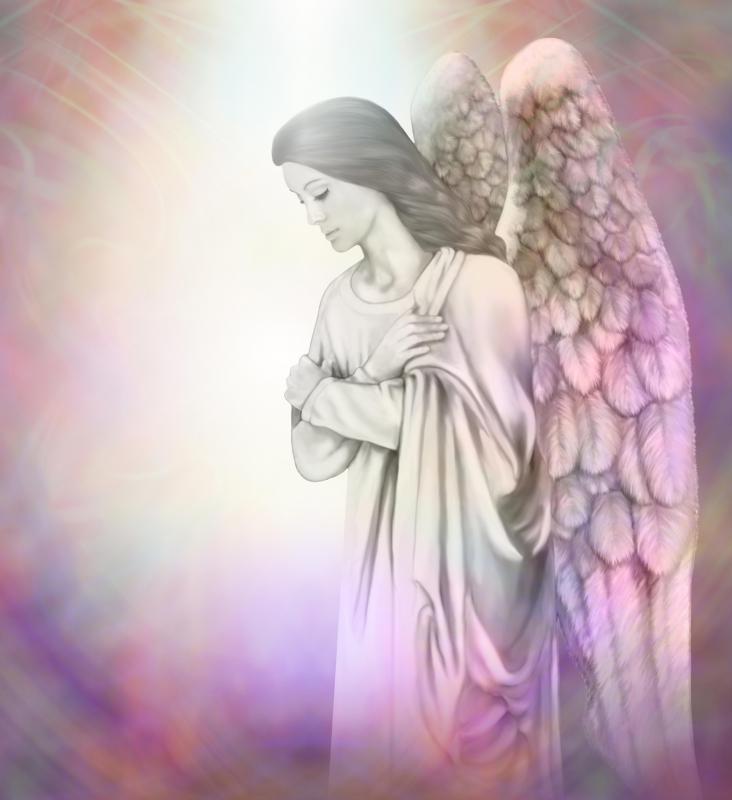
Both of these types of delusional thinking can be fueled by visual and auditory hallucinations. The person may feel someone else is talking to him or her. The person may also see people or animals that are not there. Delusions of grandeur may result from a hallucination that an angel or saint has visited the person and given them special instructions. Conversely, those with persecutory beliefs may see people not present who are coming to destroy them, and thus experience extreme fear.

Hallucinations may also be the result of taking drugs or medications with hallucinogenic properties. Native Americans made use of peyote to evoke visions during vision quests. Many in the drug culture of the late 1960s welcomed the visions brought on by drugs like LSD.
Hallucinogenic drugs can cause visual or auditory visions, but usually do not involve visitations. Instead, visual and auditory distortions of one’s surroundings are most common. The drug culture welcomed these distortions and felt that they opened their consciousness to a greater understanding of the world.

Those who purposefully used hallucinogens had a distinct advantage over those with mental illness. They tended to be able to distinguish between delusion and reality when drugs cleared their system. The schizophrenic usually cannot make this distinction without treatment. Even with treatment, some delusions may exist that the schizophrenic must try to block out. Those in manic states of bipolar may be slightly more aware that delusions are not real, and will be especially aware of this in depressed cycles. Again, medical treatment and therapy can help put a stop to delusional thinking or perception.
Tricia Christensen
Tricia has a Literature degree from Sonoma State University and has been a frequent TheHealthBoard contributor for many years. She is especially passionate about reading and writing, although her other interests include medicine, art, film, history, politics, ethics, and religion. Tricia lives in Northern California and is currently working on her first novel.
Learn more...
Tricia Christensen
Tricia has a Literature degree from Sonoma State University and has been a frequent TheHealthBoard contributor for many years. She is especially passionate about reading and writing, although her other interests include medicine, art, film, history, politics, ethics, and religion. Tricia lives in Northern California and is currently working on her first novel.
Learn more...AS FEATURED ON:
AS FEATURED ON:


-
![When an individual experiences beliefs that are not consistent with reality, like the belief that the government is taping conversations and every move a person makes, it is referred to as a delusion.]() By: diego cervoWhen an individual experiences beliefs that are not consistent with reality, like the belief that the government is taping conversations and every move a person makes, it is referred to as a delusion.
By: diego cervoWhen an individual experiences beliefs that are not consistent with reality, like the belief that the government is taping conversations and every move a person makes, it is referred to as a delusion. -
![Drug usage may cause hallucinations.]() By: CreativaDrug usage may cause hallucinations.
By: CreativaDrug usage may cause hallucinations. -
![When an individual sees or hears things that are not there, it is referred to as a hallucination.]() By: vlorzorWhen an individual sees or hears things that are not there, it is referred to as a hallucination.
By: vlorzorWhen an individual sees or hears things that are not there, it is referred to as a hallucination. -
![Delusions of grandeur may result from a hallucination that an angel has visited a person and given them special instructions.]() By: Nikki ZalewskiDelusions of grandeur may result from a hallucination that an angel has visited a person and given them special instructions.
By: Nikki ZalewskiDelusions of grandeur may result from a hallucination that an angel has visited a person and given them special instructions. -
![Hallucinations from hallucinogenic drugs can be visual or auditory.]() By: Monkey BusinessHallucinations from hallucinogenic drugs can be visual or auditory.
By: Monkey BusinessHallucinations from hallucinogenic drugs can be visual or auditory.




Discussion Comments
I agree that delusions and hallucinations are different. A delusion, of which I have had many, being much deceived in the course of my life as to the character of the real world, is what 99 percent of humans live their lives by, whether it is personally about themselves, their families, societies, or political or religious in nature.
All ideologies are delusions. Hallucinations, on the other hand, are sensory deceptions that seem real, and while I admit to having had a few of those experiences in my life (without the influence of drugs) the few that I did have never interfered with or negatively influenced my life as did the delusions! Delusions are society's lies.
I have relatives who were schizophrenic and they led deeply tragic and tormented lives. Their mind was so powerful that it overtook them, and they were unable to take hold of some solid truths which could have delivered them from an inherent disturbance over the dark state of the world.
Fixed delusions are strong delusions which it is very difficult to remove. People with fixed delusions will often ignore the entreaties of people around them because it has become a major part of their reality. And who are we to tell them otherwise? Luckily, we know that there is truth, and people who separate themselves from reality are in a dangerous position, and we should care for them by waking them up from their personal dream.
Sometimes a group of people in a cult or a religious group can be said to be participating in mass hallucination or delusion. Oftentimes there is a hypnotic or charismatic leader who draws people to follow him or her unconditionally and do ridiculous things which are harmful to themselves and to others.
Sometimes a hallucination can trigger a delusion or be a significant part of it. Dreams also figure into delusions a lot. Schizophrenia is basically dreaming while awake, and there are mental projections hovering around a schizophrenic individual, inciting fear or extreme feelings of euphoria.
Post your comments