
At TheHealthBoard, we're committed to delivering accurate, trustworthy information. Our expert-authored content is rigorously fact-checked and sourced from credible authorities. Discover how we uphold the highest standards in providing you with reliable knowledge.
Am I Addicted to Gambling?
Gambling takes many forms from playing the lottery to betting on horses to high-stakes casino betting. Many people enjoy some form of gambling as a fun, but infrequent hobby or pastime. However, some suffer from a gambling addiction that can wreak havoc on their personal and financial lives. It is similar to a chemical dependency, and is recognized as an addiction illness, however, statistics show that it leads to more suicides than chemical dependency.
When a person suffers from a gambling addiction, there are fewer outward signs than other addictions. He or she may feel depressed and suffer mood swings, but unless their financial situation is an open book to others, their problem may be severe before anyone notices. For this reason, compulsive gambling is often referred to as a "hidden" addiction.

Unlike an average person, a person suffering from a gambling addiction does not know when to quit. They gamble more than they can afford to lose. They might gamble their rent or mortgage payment, their grocery money, or even their entire life savings.
A gambling addiction is not about the money, it is about the action itself. The thrill of the bet and the possibility of the pay out is what stimulates the "high." When they lose, the individual becomes depressed, but not just because they've lost their money. They need to recover from this depression and seek more action to do so. Though any type of gambling can create addiction, video poker and slot machines are believed to be the most addicting forms. Largely because they are solitary activities, but create the same sense of action that fuels addiction. Similarly, because they are solitary activities, it can be difficult for anyone else to notice when there is a problem.

Signs that a person may be addicted to gambling include depression, mood swings, and suicidal thoughts or tendencies. These emotional signs coupled with an inability to pay bills or manage money, or excessive borrowing for unknown or suspicious reasons can also be symptoms of a gambling addiction. People suffering from this condition need to seek help from both a health professional and a financial counselor. They need to address the mental aspects of their addiction as well as recover from the financial strain they've created for themselves. Treatment typically involves heavy intervention from friends or family members as well.
AS FEATURED ON:
AS FEATURED ON:


-
![A gambling addict may be mentally stuck on trying to relive a past win.]() By: Yuri ArcursA gambling addict may be mentally stuck on trying to relive a past win.
By: Yuri ArcursA gambling addict may be mentally stuck on trying to relive a past win. -
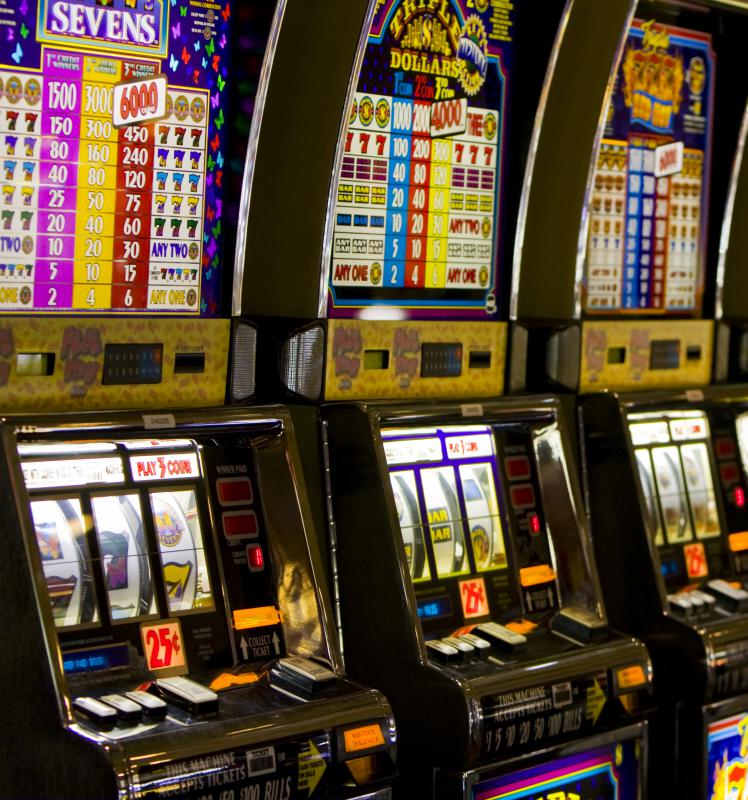
![Because they require minimal skill and can be played quickly, slot machines are among the most addictive gambling options.]() By: Mariusz BlachBecause they require minimal skill and can be played quickly, slot machines are among the most addictive gambling options.
By: Mariusz BlachBecause they require minimal skill and can be played quickly, slot machines are among the most addictive gambling options. -
![Playing the lottery is a form of gambling that could become an addiction.]() By: zentiliaPlaying the lottery is a form of gambling that could become an addiction.
By: zentiliaPlaying the lottery is a form of gambling that could become an addiction. -
![Serious gambling addictions may lead to bankruptcy.]() By: paulos1Serious gambling addictions may lead to bankruptcy.
By: paulos1Serious gambling addictions may lead to bankruptcy. -
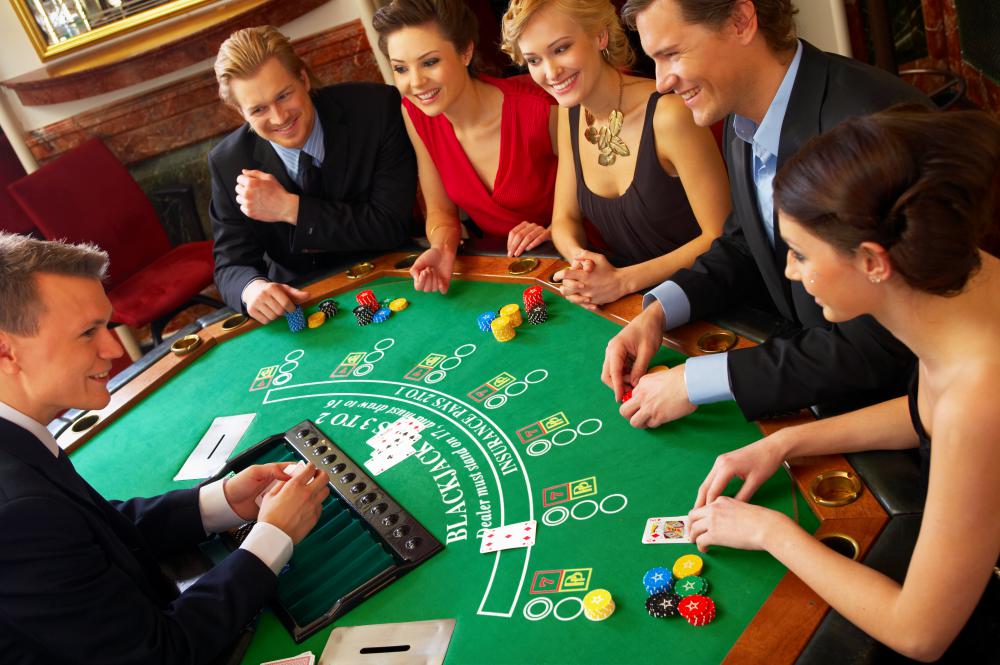
![Signs of compulsive gambling can include risking large sums of money at casinos.]() By: 18percentgreySigns of compulsive gambling can include risking large sums of money at casinos.
By: 18percentgreySigns of compulsive gambling can include risking large sums of money at casinos. -
![Signs that a person may be addicted to gambling include depression, mood swings, and suicidal thoughts or tendencies.]() By: PaoleseSigns that a person may be addicted to gambling include depression, mood swings, and suicidal thoughts or tendencies.
By: PaoleseSigns that a person may be addicted to gambling include depression, mood swings, and suicidal thoughts or tendencies.




Discussion Comments
The only way you can win is to remove emotion and play your preferred game, analytically learning it inside out like you would any profession. If you get a buzz, or emotional when playing, then gambling is not for you, since the first few wins can lead to heavy losses as you continue to chase. Good luck to you all.
I too have gambled (slots) for seven years now and feel very ashamed. Over the years I have self excluded from many online casinos. I have again stopped playing for three weeks now and I am beginning to feel better about myself. My advice would be not to gamble. When I first took to gambling it was purely for fun and it was after a big win that I became hooked. However, I think I still would have carried on regardless of any win. I have lost several thousands over the years but now it is time to save several thousands for my future and the only way I can do that is to work hard and save.
If you want to gamble, you need strong discipline. Otherwise, the quest to gamble is too strong and you will end up losing in the long run.
I live in Dublin.There is a gambling culture in Ireland generally. I have lost €3000 to online roulette. I found the comments above comforting. I have now banned myself from two online casinos and have no wish to go further. The problem is that as you are winning up to an ' uneven number' of say €680 - you say to yourself that you will stop after reaching €700. That's when a bad spin can make you chase your losses under the martingale. I think I am a clever guy - but chasing the losses is like a sheepdog chasing cars. You have no control on yourself. Yeah I'm sick that I lost that much - but I'm proud of myself now as I am trying to quit for good. I like the quote from the guy who said that online it's not money anymore - just numbers. If you actually saw your notes being handed over rather than an online number - it would bring it home.
I won 7000 euros in two weeks and I lost all of them in one day. The feeling is very bad. I have tried to stop to playing slots, but the feeling to want to play is so strong now.
I am 28 years old and if I were to guess, I'd say I have lost about $65,000 since I started gambling at the age of 18.
Well, I had stayed away from the casino for about a year until recently. I went once after a year of being away and won $2500. I took that and paid off some bills. A couple of days later I went back to the blackjack tables and left with another $500.
Well, needless to say, the third and fourth times, I lost it all back and went on strike with the casino once again. I figured I'd just try the online poker. I've lost $4000 in the last two weeks playing online poker. Now I am broke and have no money for upcoming bills and cannot afford to be so reckless anymore.
It's the thoughts of what I should or could have done with the money that really makes me mad. Makes me want to get it all back, but I can't. My savings are wiped out. It's just time for me to start doing the responsible thing and think about my family and what I need to do for them. I wouldn't be surprised if I'm gambling some time again in the future. But it's time for me to do some rebuilding before that day comes.
God bless all of you who are struggling with this terrible addiction. I know I am, and I'm hoping the day I look at gambling as a sinister and terrible joke for the rest of my life is near.
It's been nearly a year and I have not gambled online after closing a account I had. I have had moments sitting in front of the PC to open an account and pass some time, however, I know deep down it won't be an hour or so; it will become any spare moment in front of the PC losing hard earned money.
However, there is a land casino not to far away, and I have visited it a few times, but nothing like the hours and easy money transfers from your bank account. Losing cash in front of your eyes is a different feeling and gives some control. Instead of losing thousands, I've lost hundreds at the most at the land casino. It can be beaten but takes a lot of self control.
Please fellow gamblers, try to limit your losses if you can't fully give up. Losing hard earned cash stinks, and is heartbreaking. Think about it: you toil for a whole week getting up in the morning, coming home, and same routine for the next five days and to lose it all on a Friday night. It doesn't feel good at all!
I've lost everything. It started so innocently with a sudden loss in my life. It was just something to do to pass the time. Well, I passed the time and lost every penny I had -- to the tune of over $100,000. It was money given to me when my relative died.
I don't work because I can't, and I don't collect or take anything from the government so I'm just angry, sad and thinking bad thoughts.
It's my fault. There's no one to blame but stupid me. There's no way to ever recoup the losses; it's such a waste. What the hell was I thinking? Stupid, dumb me. I deserve to be broke and without a thing. You play the game, you pay the price. I feel for all of you and know we didn't really choose this. It just sucked all of us in one way or another. God help us all.
Although I'm not gambling thousands, it's starting to build up to that amount. I won £640 from a £20 free bet and the feeling was amazing, however I felt the need to reach up 700 so I deposited 40 of it. I lost.
I decided to deposit another 40 and lost, then bet 60 and lost, then 100, etc. I have now lost all that money and don't know what to do with myself. It's sickening.
The biggest reason why I feel ashamed about myself is that I promised my best friends I would book a holiday with them tomorrow. I'm 19, I've got to stop but I'm struggling. There's always the dark side in my head saying I can win that back. I'm really worried about what is going to happen to me when I'm even older.
I just lost about £480, and I'm a uni student. The feeling stinks!
Even I am in the same position as everyone. I won $4500 in online casinos. I told my father-in-law to search for land and I promised him that I would send the money to him.
One day when I was playing online, I thought I could make $1,687 to $2,000 so that I could withdraw a round figure of $2,000 dollars. This is where I started losing the money. I lost the whole $1,687 and then I deposited another $4,000 and then I lost that money too and then another $5,000. I lost that money too. There is no end to this.
I was actually playing the martingale system and just for 5 dollars I lost all the money. I don't know what to do now.
God please help me! I lost everything and afraid of telling this matter to my family and friends. Everyone will definitely scold me as this is huge money for us. Guys please control yourself when playing or else ban yourself from casinos.
Gambling is so addictive. I'm only 20 and spend the money I make on slot machines. I don't know when to quit or walk away. It's always just 20 more or I'll win more, eventually losing all my money! I wish there was a spending limit on slot machines! It's too hard to walk away.
As I write this, I am going through another gambling spell. Over the past decade, I have experimented with different forms of gambling. Initially, it was online roulette that had me hooked. I would win some but lose more. On one occasion, I received a new credit card through the post and a couple of hours later, I had maxed it out to the tune of £1500 on several roulette spins.
Blackjack, horse racing and sports betting have also been my downfall. In the end I arranged a form of insolvency that I have since completed after several years. It involved paying back around 70 percent of my debt with no interest.
I had managed to stay out of the bookies for a few months until recently. The £1200 that I had saved has finally gone to the bookmakers over the last three weeks. I am not as bad as I used to be though as my rent and bills are paid and I will see myself through to my next wage quite comfortably. As long as I don't go back into the bookies of course!
For me, the problem isn't the money I have squandered; it's the fear that I will do it again. That money is gone and it's important to realize that chasing it is the worst thing you can do. I have resolved to pull back from sitting in the bookies again. It's a horrible environment when you find yourself in there like a total loser, throwing your hard earned money away when you could be doing so much more in life.
I am trying to work out why the hell I gamble. I don't need to win big as I am not a material person. I don't even have a TV. I would rather read, walk or learn something. I just go through these phases. It's almost as if I feel like I don't deserve money and so I give it to the bookies.
I am hoping that I am successful in pulling back this time but I do have the fear that this is a lifelong affliction. I hate to think that it could strike me down at any point in my life. Perhaps it will teach me discipline and strength of mind. I’ve got to find a positive somewhere!
I am 27 and have lost thousands of pounds and possibly thousands of hours to this utter nonsense. Despite this, I feel quite lucky when I compare my story to some of the stories I have read on here. I hope you all find the strength to defeat the urge to gamble and please understand that you, as a human being, are worth so much more than the money you have lost. Forget the losses and move on. Move in the direction of your happiness and leave gambling in the past. That's what I am trying to do! You have my hope and love.
I've lost $700,000, most of it in the last three years. I lost $180,000 in the last 13 months. I denied my wife a new kitchen, a new car, etc., etc. and she didn't even know I ever walked into a casino.
If I had told her at the beginning, I'd be pretty well off. Shame and secrets, and then embarrassment and fear kept me from telling her. I was afraid I'd lose my family.
It all came out last week. She surprised me and dealt with it pretty well. I'm broke and she was OK. I promised not to go back, but one week later, yesterday I did. I had that setback of 2,000 bucks. This is it. I can't go back. I'm turning my paychecks to direct deposit to her account and I'm cutting up the debit cards, and closing all credit lines. The casinos are a cancer on the American people and the American economy. They need to all be closed down for the benefit of future generations.
I have been working for three years as a truck driver. I lost 25k through online poker and live blackjack. I have borrowed 15k from several banks and I'm paying off my debts now. If I have some money left, it goes straight to poker and blackjack. I'm getting sick of it.
Gambling stinks. I must stop it. There are a lot of other nice things you can do with that money in stead of giving it to casinos.
There's no way you can make money easily, You have to work and that's the only way. It's just the best thing to do, I'm going to quit for good this time, pay off my debts and starting living again. I've wasted three years of my life, but its better than four years.
By the way, if someone comes to you and says, you can make money gambling, don't believe that donkey, because no matter how much you win, you'll lose it all, even if you buy something with your winnings. You will never forget that moment when you won that big amount of money, and will definitely go back to play. Before you know it. you'll end up selling it all to chase losses. I hope we all get out of this fantasy world very soon.
I started gambling when I was 28 and lost almost all the money I earned from my very laborious job for three years. Then I moved somewhere else for my education. After I finished my study, I started a highly paid job. One day I came across the roulette game and started playing online and used a strategy without knowing that I was using Martingales theory. I was winning for a long time but finally lost everything I had. It was not surprising because I learned after a while that this is how it works.
I then got addicted to gambling and every time I went to the casino, I lost from $500 to $7,000 a day except only one day I was able leave with a $2,500 win. The bottom line is that I lost about $100,000. It is not only the lost money that I regret from going to the casino, but it made my life horrible. I can't tell how many nights I cried, felt a big pain, even cried aloud every time I left the casino with a big loss and promised myself I would not come back anymore and also cursed the casino. But I could not control myself and kept going to casino.
I prayed to God to free me from this addiction, I cried very loud and to myself I simply want my normal life back and don't want money from a casino. I knew it is impossible to win in the long run because of favorable odds towards the casino. After I read all these stories, I finally felt like not going to the casino ever again. This site is very helpful. The only thing I want to tell you is, the sooner you stop going to the casino, the better it is for having a normal life. Spend the money for yourself and your family.
The weirdest thing I have noticed about my gambling problem was I think I always wanted to lose. I made stupid bets with horrible odds just to lose it all. I felt so bad about the loss, crying and swearing I will never gamble again, telling myself I am going to be a better person from now on. In a weird way, feeling so bad feels so good.
I've been gambling for almost 10 years now, in land casinos and online casinos. It started with land casinos, and on the days when I can't go anywhere, it's online casinos.
A gambling addiction is hard to beat, but you can always outsmart yourself if you can't quit completely. The following is what I've done for damage control. Since the casino holds the best odds, you can't win. You can limit the amount you lose. Let's not even talk about online casinos because they are the most rigged. You're just playing with their software at a high price.
Anyhow, here's what you can do to reduce the chances of losing money. If you have credit card debts, call them and tell them you have a gambling problem. Tell them to disable the cash advance feature and also tell them to create a spending limit per day.
Call your bank and tell them to change your debit cards to a Bank ATM card only. This will prevent you from making any purchase advances or large ATM withdrawals. Tell them to lower your ATM limit as well.
If you gamble online, most of them offer an online chat. Just do something very rude to them and you will be placed on a blacklist, so you won't be back.
If you have to go a land casino, bring a budgeted amount of cash. Do not bring any ATM cards. Leave them all at home. If you lose the money you bring, forget about it.
This will make your life more manageable. It's helped me so far. In the back of my mind, I know I don't have any credit cards to use, no ATM to take money from, can't gamble online, and my only real option is a land casino, which I can prepare for. It's a lifelong battle, so you just have to plan to limit the amount you can lose. Good luck.
Use meditation and self control to refrain from gambling. Say to yourself you can control your gambling and you're not going to let it control you. Self exclude yourself from online gambling, where it's very easy to gamble, and convenient. It has to be the worst habit for gambling.
Now when you go to a land casino - the hard notes in your hands and giving them to the dealer hits one mentally. Now most debit cards have a daily limit for the amount of cash that one can withdraw on a daily basis. This works as a stopper, even for a day, which is something. Then slowly wean yourself off when you start to feel the pain of losing hard earned cash. Also look at some of the other people in the casino and have a look at their faces and body language. Have they won or lost? Most people lose. The ones who win, well they will just come back and lose it in due course.
Finally, think how much effort and toil it takes to earn your monthly pay, and how quickly one can spend it gambling in a space of a few hours.
These are some of the techniques how I am dealing with my habit, and so far, it's working. I have dramatically cut down gambling to a much more manageable level.
I have also discovered gambling is linked to some other life issues such as loneliness, unhappiness, grief, low self esteem, depression, health problems, relationship breakdown to name a few and when one has or is experiencing these issues and discoverer's gambling it is a dangerous combination - the excitement of winning create a buzz and a sense of temporary happiness, On the other hand losing creates more stress and aggravation, and so it continues until things get way out of hand.
I have been playing online bingo and slots for a few years. I've spent almost everything since on gambling sites and gone without things I need to fund it. I'm always over my overdraft, incurring bank charges every month, borrowing money to play so I can win losses back. I never won more than a few hundred pounds, until recently I won £2000, spent it and more then won another £2000, spent it back and more again and I was very depressed to the point of suicidal. Then I won £29,934 playing slots. I was over the moon. That’s a massive amount of money to me.
I only get £7000-ish a year, and the stupid site only let me withdraw £3000 a month so I started to play with it bit by bit and it's all gone back to them. I couldn't help myself. I have debts to pay of about £5,000 and a young son who keeps telling me what he wants for Christmas. I stupidly told my family about my big win and offered to help my sister pay her £9000 in debts. She just had a miscarriage and is really depressed and now I have to tell her I can't help her after all, because I gambled away all the money! I could have had a car, a holiday, been free of debt, helped my sister out and my son could have had a great Christmas!
I feel like such a horrible idiot. Gambling has made me not want to be here anymore. The stress when losing that money and panic inside me was unbearable but I kept thinking just a bit more and I'll win it back, until I was actually physically sick and broke into a hot sweat in a full on panic attack.
I wish I’d never won it. I wish I’d never signed up to any bingo site ever. I am not going to end my life over it and leave my son without his mum, though. I am going to try my best to get through this and not to do it again because there’s more to life than money and people like us need to open our eyes and see it again. It's not in a casino or computer.
All the best on your journeys, people. Don't end it all. You can beat this and you are not alone in the suffering gambling causes. If you think you are clever and can have the upper hand at a casino, bookies, online think again. You'll be feeling like crap before you know it.
I happened to come across this website and I read most of the posts and feel really bad for all of you. Everyone seems to know their problem and admits to it, but no one seems to be answering back on how to help someone with this situation. There are a few reasons you’re doing this and here is some help and advice. Read it all, please.
Here are some reasons why you keep going back. One, you’re a loner. As soon as you’re alone and no one is around or you feel lonely and have no other place to go, you will go to gamble. Two: You’re in a lot of debt the casino put you into and you’re trying to make quick money to catch back up because obviously you think in your head that out here it’s too hard to make a lot of money you need, quickly. Three: You have family or people you take care of and you have lost a lot, so you don’t want to upset your family so they don’t know and you quickly come up with money. Four: You’re bored with family, kids, and have no excitement so that makes you want to go gamble. Five: You’re depressed and have nothing going for you so to make yourself forget your problems, you go gamble. These are just a few.
Solutions: Family, religion, good deeds. First off, you will not find quick money anywhere, so get that out of your head. Second, do not try to go back to win back the money you have lost in the past. That will never happen.
The best thing to do is try to put all the bills and things you owe together into one bill so you can make one small payment monthly towards that to pay it off. That way, in your head, you have no reason to go back to the casino. You’ll have some money for daily spending, you won’t seem broke and you won’t make your family stressed or lose them.
Third, if you keep yourself busy at all times. you will not have time to think about going to gamble.
Fourth, if you get the urge, play free stuff like Solitaire, watch TV games or watch other people online.
Fifth, if you ever do go to a casino, always go with somebody no matter what, because the other person will pull you out when you need them to.
Remember: it’s never too late. If you’re paying off bills, even $20 monthly, you can work stuff out with companies. For boredom, there are other options, etc. In this life there are always solutions for everything except death. So don’t give up. You only have one life to live.
I just lost 1300 tonight on roulette. I wish I had paid my rent this afternoon before I got out of the house! I lost $4,0000 in the last three months. Also, I'm in debt for about $15,000 on my credit card. I have decided to quit many times, but I really don't know why I forget when I have money. I think the best advice is don't go near poker machines, because if you don't gamble the first dollar you will not gamble the second dollar.
I just say may God help us gamblers! I know the pain, suffering, loneliness and guilt. Gambling is worse than heroin or any other drug. If you haven't started, then never do. If you do gamble, the earlier you quit, the better, and at the end, I hope God punishes the casino owners and gives them the same pain and suffering which they gave us.
I have battled online casino gambling - with a few good runs and feeling happy for a few days, but feel dreadful when I have losing runs and lose, like £1000 in a day. Over say, about 2.5 years of online gambling, I probably either broke even or lost a few thousand. No biggie as such, but it does take toil on one's health and mental outlook, and then the stress and hassle for the next pay check.
So anyway, yesterday, I excluded myself from the online website for two years and will finally be able to go back to a normal life, earning money via the normal method of working and not thinking gambling is a get rich quick scheme. Gambling ropes one in, and it can ruin one's life quite quickly, like any addiction.
First, we need to recognize we are sick people, that there is a defect in our brains. I don't know how we became addicted. I come from a Muslim country, Algeria, lived in Italy for 30 years. Now I am 51 and I am in Japan, married with a kid.
The thing about gambling is that we live in a different world. We do not give value to the money and we are happy only when we get so hurt. It is like we are trying to reach the bottom line. Actually, the problem is not winning, because we come back and play again and again. It is the emotions that are missing in us that make us want to get back and if possible, gamble nonstop.
I am an addict because I cannot see anyone else like me. I always rush to place a bet and wait for the result. That waiting thing makes our hearts beat faster than usual. We do not care about the rest of the world, but afterward, we feel sad and depressed and look at the members of our families and feel so guilty.
The consequences can be devastating, but we still think we can resolve them. Our loved ones can give one, two, three, four chances, then they finally turn their backs, and when we arrive at this stage, we find ourselves alone. All the wins and all the money we could have or make, or all this adrenaline doesn't matter. This is killing our life because it is matches you against the the impossible.
Everyone has lost a lot of money, of course, and a lot of time. It is very selfish of us. We are sick, need to admit it and must change if we want to live with our loved ones. Otherwise, we go straight to hell. I mean, life without people we love has no sense. Please people, think about it. Is not worth it. I am writing you after I have spent a huge amount on my credit card. My wife still does not know anything yet, and I am afraid only of the worst.
I do not want to live apart from my daughter, but this time, my wife will not forgive me, and every day is dark for me as i cannot even tell her about it. Stay away from addiction people, please!
There is hope, folks. I have been a professional gambler for 20-plus years. During the past 15 years I only had two losing years. I work very hard at getting an edge. That's the trick. Gambling is not easy; it takes dedication and hard work. Instead of crying for help and saying gambling is evil, do your homework. Learn what games are beatable and which aren't.
For you kids out there who are scared to face your parents because you lost your savings, tell them, "If money was meant to be held onto it would have come with handles". Remember quitters never win. So cheer up folks, grab that paycheck, triple it and meet me in the winners lounge. --AJ
Finally, again, I realize that casinos and I just cannot mix. I have been going to casinos more than 10 years, and obviously, nothing good came out of it. I lost money (to the tune of some hundred thousands of dollars), wasted a lot of my own time, and missed so many chances to spend that quality time with loved ones.
Did I win some money during those trips? You bet I did! But did I get to keep the money? Absolutely not. If I win some money, I would feel elated and euphoric for a good one or two hours and then I stay and use the money (my own or the winnings) to play other slot machines! I just want to see the nice winning combinations on the screen. I want to feel the rush again and again! And after a while, money starts looking like pieces of paper. I even feel kind of "annoyed" when I reach in my pocket and do not see 100 dollar bills (because 20s would not last long enough). And I'm just shoving them in the machine, thinking the next pull would be "the one". (Then again, only in casinos do I treat money this way. Outside of casinos, I am so frugal and literally pinch pennies).
Well, you get the picture and the point. Just like someone else posted before, you just have to close that door and that chapter of your life. The loss? Forget about it. There will be no way will you get it back (your chance of winning it back is just as slim as winning the lottery).
Looking back, I know should have not chased my loss, because even if I win back thousands of dollars, the money will find it way back to the machines that same day because I want to "find out" if I am on a winning streak! And it almost always never happened. I just lose all the winnings again and also all my own money. Obviously, winning some thousands of dollars still does not satisfy me. I just foolishly aim for those big jackpots of hundreds of thousand or millions of dollars.
Anyway, I will try not to go the casinos anymore (and hope that I will keep that promise). I lapsed so many times because whenever I have some money, I quickly forget how painful my last trip was, and I would once again drive to the casino hoping that this time will be different.
And each trip is no different. I usually lose. And I would end up going to the ATM's to withdraw whatever I can get for the day and go to the cashier's to ask for cash advances.
Again, "slots are as addictive as crack cocaine, if not more", like someone said. You will spend all the money you have on you, just like a coke head will snort a hundred lines of coke at the same time if they can have that much.
So if you still go to the casinos, the temptation will be so big with hundreds of slots surrounding you, you will lose money I have been working hard to save money. But I lost most of my hard-earned money to slots. And now I have nothing to show for it. I feel disgusted and disappointed with myself.
Forget about chasing loss. Just forget it. Start working harder to make it up. Don't think that "one day" you will win it back. If you think you are that lucky, then try buying a lottery ticket. At least you don't "binge" as you do at the casinos.
Also, as someone said, setting foot in the casinos is one of the stupidest things a person can do. Being inside the casinos will make you spend money like it grows on trees. The only way that helps you not behave like that is to stay out of there!
I have to fight the temptation of going to the casino every day. As soon as I have time off or have nothing to do, I automatically think of going. Now my strategies are:
1) I just need to find something else to do so my mind will be occupied such as going out to clubs with friends, watching a favorite TV show, eating a favorite food (moderately of course), exercising, etc. If I find myself craving, I will watch clips of people winning jackpots on You tube. That will satisfy my eyes and my craving a little bit.
2) I think of how long the drive is (and how bad I would feel on the way home after losing a lot of money). Before the booming of Indian casinos, the one thing that deterred me from going to Las Vegas was the four-hour drive. Now, although it only takes me an hour and 20 minutes to drive, I try to discourage myself from going, thinking that it is still a long drive I have to make. Alone.
3) I think of how much money I will see disappear from my bank. My savings are literally shrinking every time I come back from the casino. Recently, I even learned a bad habit: withdraw cash advance with a 6 percent up front fee from the credit card! I feel nauseated when the credit card bill comes with a list of $2120 after $2120. I ask myself: "Why? Why do I have to be the "repeat offender?" I need to stop making them rich! And of course, sure enough, in the mail in the following month, they "reward" me $50 cash and a $20 dinner voucher. Big whoop! I lost tens of thousands here!
4) If I still feel like I want to gamble a little bit, I try to buy lotto tickets instead (only $5 a week). I cannot buy more than that because there is no instant gratification (Unlike being at the slot machines, if I don't win after putting in $100 bill, I will put more money in).
I am glad that I did reduce the number of trips to casinos, thanks to those strategies! I wish other people could do the same.
@anon333033: I suggest if you have a television, take it in to Cash Converters or somewhere similar to get the funds for fuel so you can get to work. You can always salvage some ounce of life if you're still working. Just don't gamble the next paycheck!
I'm a gambling addict. I have had some help before in the past. I have been going to the casino off and on since I was 16. I used to sneak in. I'm now 36.
I had been staying away for the most part for the last two years. I just relapsed. I spent my whole $1074.83 pay check there last night. I have a hour and 15min drive to work six days a week and I have to by all my own fuel for work and I drive 250 miles a day. I had to call in sick since I have no money to get gas to go to work. I'm also out of food and cigarettes. Now what do I do? I have to have a job.
This stinks. I want to quit gambling - for good this time. I'm so sick of it. I know I have a problem and it's slowly killing me. I'm so depressed. I just can't take much more. I have all my bills like electric, water, phone and cable, house payment and insurance that I'm late on. My electric and gas and water will be shut off soon. I can't take It. Right now all I can think about is how to get money to get gas for my truck so I can get to work so I can get a check again.
If anyone has any advice, please let me know of any ideas. Also, if all you want to do is tell me I have a problem, don't bother. I already know this and admit it. I do take responsibility for my own actions and poor decision making. I know this is no one's fault but my own. Please help.
Reading all these posts is like looking into a descriptive mirror on my daily life. Tonight, I just lost £200.00 and I'm currently £500 in debt to Wonga.
Basically, I have an almost uncontrollable addiction to betting on football matches, I think just because I know and watch so much football that I will or should beat the bookies and even when I do, it all goes back on eventually, whether it be the following day or week or month, I eventually lose it all.
I have no idea how much I've lost over the past few years, but I have lost about 4k in the past four months and have absolutely no savings. Having no savings was fine 5-10 years ago, but I'm 30 this year and still live at home with my parents, while everyone else in my life has a house, partner, etc., and I feel I have nothing good in my life.
The worst thing about gambling is the incredible moods and of late, real fits of anger. I'm literally tearing up my bedroom when I lose a big bet and my parents are really starting to get depressed and worried about me now. I am actually starting to get scared about my own actions as I am becoming more and more down and at times, suicidal.
My friends, have faith. I am proud that each and every one of you can admit you have a problem and that you need help. It's never too late.
It may seem like you have nothing left or that there's no way out, but God can help you. I've never gambled. In fact, I was in Vegas and didn't gamble a penny. But I have a dear friend who was addicted to heroin and it too ruined his life. He sold everything he had and became something he didn't want to be. He tried going to rehab up here, but he found if he was still seeing the people that were also involved in drugs he would relapse.
Did he give up? No! He took drastic measures. He moved to Florida away from everyone and began rehab. There he also found Christ. I tell you he's a different man. So far it's been almost a year since his last high or drink. He's a happier healthier person.
My friends, if you need help go get it, do what it takes to stay out of the casinos and with your families or at work. Get a sponsor or a buddy to help you through it. You can do it if you put your mind to it. And remember God loves you, no matter what.
Reading all of your experiences has given me some knowledge about where you guys are going in life. I can relate to some of these posts and how bad people feel after they had lost every dollar. I can relate to how it feels good when you win but when you lose, it's the most horrible feeling.
I am becoming this kind of person and I do not want to be like this. I also had to try to win back the money I lost. It's just doesn't work like that.
Just two days ago, I went to the casinos and I was not going to play but it happened. After six hours, I had put all my money in the machine and was doing well, but then it started to go wrong. I lost all my money and feel terrible. I still have to pay some bills and don't have money for that. I do not want to feel this terrible and stress about money. I needed to walk away and I didn't.
I do not know how much money I have lost over the year maybe $2,000 this year and before. I don't have any idea. I want to stop and not continue hurting myself financially. I want God to help me. I want to be able to know when to stop and quit playing. This is making me feel horrible and I don't want to feel like this anymore.
I am sorry for all of you who are having this experience. I just want things to get better and know how to control myself. I hope everyone else finds help and we can all begin making better choices.
I am at my wits' end. I've read certain posts where you say a big win draws you in. Well, in my case, I've been playing online with a major bookmaker now for close to four years. Every week I deposit £20 -- not a lot but over four years, a substantial amount and in that time I've won nothing.
One time I did withdraw £100 and wow, I've tried every slot and game going and the most I've won is £60 in one go. Pathetic.
One game I played on for six months gave me a highest win of £30 but I kept going like most on here in the hope I could hit the big win,
I now know this isn't going to happen. It's embarrassing. I don't dare tell anyone because they wouldn't believe me, but it's the truth and it hurts me every time I lose.
My problem is I'm a gambler and I keep going. I hope this hits a chord with people out there who are falling into the trap of online gambling. Sadly, it's gone too far for me. It's rage now at how stupid I've been. I wish I could turn back the clock. I wish it had never been invented in the first place. I rue the day I joined online.
I managed to stay out of casinos for four months, and a recent trip back made me lose thousand of dollars again ($20,000, to be exact).
I always thought if I bring between $5,000 and $7,000 dollars to play slots, I will at least have a chance to win a jackpot or two (It happened in the past). This time, nope, nothing, nada. I lost a few hundred here and a few hundred there, and I ended up losing all the money I brought, plus the advance from my credit card. And still no jackpots. Did I win $400 one time at one of the machines? Of course, but after you've lost about $700 on a machine, you will not leave that machine until it gives you some more. So, of course, I end up losing all that $400 and more to that machine.
And the slots, after swallowing my thousands of dollars, looks at me defiantly, as if the wanted to say, "Just another hundred dollars, and you will win. Come on."
It all started when I had a day off from work. I was bored and the first thought that came to my mind (of the mind of an addictive gambler) was, "It's a beautiful day outside, let's go to the casino". So I decided to drive by myself, no less, and it took me an hour and a half to get there.
In retrospect, I asked myself why, why why? I could have watched a movie, gone to the gym, or had a massage.
My point is to keep yourself occupied with positive forms of entertainment. Work on your yard, clean your room, talk to a friend, do something.
Instead, I chose to go where I was surround by zombies who smoke for hours on end.
My conclusion? I should have not been stupid enough to bring my hard-earned money to throw around like water at a casino to chase a possibility of an unknown win. Again, nothing is guaranteed at a casino. The machine can go days without giving up the jackpot.
There are games that promise to pay when the progressive amount of $500 is hit. When that progressive amount is around $450, people put more money in like crazy so they can get that $500 reward. Before they know it, they put in $3,000 and that stupid progressive jackpot did not even come close to $500, and of course, they lost $3,000 for a vague promise of a $500 payout. And they didn't even get it.
There you have it. I hope somebody will learn from my mistake. Instead finding entertainment at a casino, please look somewhere else. Anywhere.
I've read through a lot of the comments and I see the devil in the details. Too many people saying how much they one in a session at casino or wherever and then going on to lose it. Don't you realize you are just inspiring others to try get that good win and hope they have the strength to walk away? It might be in everyone's interest to keep your "successes" to yourself.
All I'll say in regards to my situation is gambling is my one and only regret in life. If I could turn back the hands of time, I would.
I just blew 1000GBP playing a mixture of slots and roulette. I lost 500 playing slots in amounts of 100 then 200 and 200. I decided to chase and so deposited 250 to play roulette. I lost it so I put another 250 in and I won 500. At this point, I was thinking if I bet the entire 500 and win I can have my 1000 back. Of course I lost and decided to take the hit.
I recently won 5000 playing online poker, which I admit I enjoy. I have around 2000 of it left and so I can afford to lose the 1000 this time. I know in the future this might be different and I could end up in a lot of debt. I am glad that I managed to stop myself from depositing any more to chase the 1000 I have lost but I am left wondering why I risked so much for no reason.
I have decided that I done it because I was bored and so I think that I will keep active and stay away from the online gambling sites. I hope my story can help you to realize when it is time to give up. Sometimes we have to accept the loss to be able to move on. Peace
Over the past five years, I'd say I've lost over £20,000. I have been up about eight or nine times around £1,500 and once £3,000, but these sums of money never cashed out from the casinos. I've had over 30 online casino accounts, most of which I have banned myself from. See, I keep waiting for that last big win so I can walk away for good but it's never going to happen.
I started taking out payday loans to fund my habit. My mother and father and my nan have bailed me out so many times. My nan loves me to bits, but I keep on letting her down. She bailed me out last week with £1,000 of her hard earned cash, but I was still in debt £300 so I thought I'd try and win that at a casino (felt so bad about depositing money, but it all went horribly wrong.
I now owe around £800 again (I was in the clear). Why did I do this ? I can't tell anyone. My dad is about to kick me out because of my addiction, and I'm sitting here (off work) because I have no motivation to get up and go to work. I'm just thinking about the next company I can borrow money from.
I hate gambling. It's ruined me. I am a social recluse, a liar, a fiend, an absolute let down to my family and loved ones. I'm ignoring my friends' phone calls and this wasn't like me before I started gambling. I was a nice, helpful, kind guy who went out of his way to do nice things.
I'm sitting here now with nothing. All my friends driving round in flashy cars. They all have something to show for their work and I have nothing at all. I'm thinking about running away, but I don't want that life. I need help so bad.
I had lost money last Sunday and had to live with nothing for a week. Then, after my paycheck and paying off bills, I had about 6k Php left for two weeks. I couldn't resist and wanted to gamble only 1k, ended up 3k deep and actually made a comeback on my last bet to be up 3k net. I wasn't even supposed to be there but the gambling bug that I had fought mentally for a week came back and now I will be broke for two weeks.
It's so ironic. A normal person who won 3k PhP would just leave, take the extra cash. As a gambler you only see more bets.
I have lost £20,000 in the last two years and now I have no money. Today I lost £3,000. I am so ashamed.
I have read almost all the posts here, and I can say that what we think and feel is the same when we start to gambling. I am a university student. I started online gambling and went to those illegal shops for gambling for the last two years, which means I am just 18 years old. From the start when my friend took me to the illegal shop for gambling and taught me play baccarat, in one week I had won almost 800MYR (Maylasian Ringgits) and a day later, I lost all of it including my pocket money. After that, I asked my parents to give me some money for dinner and I went to the illegal gambling shop alone.
At first, I bet 30MYR and I lost all of it. After that, I bet 15 MYR, which was the last 15 bucks in my pocket. By betting from 15-50 ringgit in each match, within a couple of hours I had won around 1k and I left the gambling shop.
After that day, I told myself I would put the 1k into my bank account as my savings, but a week or two later, I went back to the online gambling stall and I lost the 1k along with my pocket money – about 600MYR. After that day, I was not satisfied, so every time I got money from my parents, I go right to that shop and play and I don't stop until I lose all my money – and it happens every time.
Then I stopped going to that gambling stall. After few months, I heard from a friend who said that online gambling was an easy way to win money, so I opened an account. The first day I got my account, I won 3k in an hour's time and after that I went to bed and when I got up the next morning, I continued betting and I won another 1k, so my total winnings were 4k. I stopped playing for a week or two and I walked around with that money for a week. Then I continued with the online gambling and I won 2k again that week so my total winnings were 6k.
Even though I had won 6k, I still wasn't satisfied because I felt playing Baccarat was an easy way for me to earn fast money so I could buy things, eat and enjoy things anytime I wanted. Within a month, I started losing all the money that I had won and I started owing the bookies money, but I still didn't feel that was problem because I knew if I continued gambling, I would win back all the money that I lost, but today I am still in the same position.
I win back 2k sometimes, but then in a week or two, I will lose it all. Now the total that I owe the bookies is 6.5kMYR and the total I've lost the past two years is about 12k. I admit that I am really wrong and I feel ashamed. How did I change and become like that? I hope I won't be gambling anymore in my life, seriously, because gambling wastes time, energy, money and if I am losing that day, it makes me angry and I suffer all day long.
I hope every one of us, including me, will stop gambling so that every day will be a great day for us.
I have read all your comments and to feel like life is not worth living anymore.
How do you rebuild what you have saved over 20 years and gambled away in under six months? I too am impulsive gambler, and the more I lose the more I think I can make it back, but it never happens that way.
I lost my job last year after almost 20 years and took my entire pension and gambled it away. I'm now left with nothing -- not even a job. I have kids and I feel so ashamed of myself. How can I get my self esteem and the will to rebuild what I have lost?
I just feel that's its way too late for me to start again. I am 43 years old, so where do I start?
I have realized and accepted I have an addictive personality like most here; it is just who we are. I have done at least a pretty good job accepting this and shifting to productive (rather than destructive) things. (I run ultra-marathons, I am a pretty extreme saver of money now, etc).
Let go of the past. Forgive yourself and the past mistakes you've made. Forget about getting money through gambling to make yourself feel good. Stop chasing shadows, concentrate on the moment and the future good will happen. Go for it! I certainly am.
Another thing I'll add is to us it's like a drug addict who has cocaine in front of him. If they have 10 lines in front of them, they'll keep going until it's all gone; it's just a matter of time. They need more to get the same high.
If we have 20k, we won't stop at just betting 1 or 2. Maybe at the beginning, but as the binge and urge intensifies, we'll keep going until it's all gone. We won't be satisfied with just winning a bit; we want more and more. Then we lose it all.
Walk away and salvage a life. It's still possible. Quit focusing on the past and what's lost and dig in and do the hard yards. There's no quick fix. It's all about hard work and being patient. A lot of us want it all straight away. It won't come easy. Be strong, grit your teeth and fight it out and keep fighting until things are good, then fight some more. No excuses.
And by the way, if you think it couldn't get any worse, it will. If you're upset at being 20k down or so, if you keep going, you'll wish you were down only 20k. That could quite easily turn into 200k or 2 million. It can always be worse. You'll lose more than money. You'll lose time, friends, relationships, family and even your sanity! Your livelihood will also disappear.
I started betting small then years later bet thousands on games. I had good success and won over 60k, only to lose most of it on one game. The pattern would repeat three years later when I won 38k lost it all. Six months later, I won 155k and lost it all. Six months later, I won 80k and lost it all. It always happens.
You'll get screwed over one way or another. The bookies will hold out your withdraws so you'll eventually use the money and lose it. I stopped for a year but went back to it out of boredom. I won money and have now lost it, so I changed my bets. The original choices won but the ones I took lost.
Gambling is a living hell and self torture, really. I'm going to quit -- this time, for good. Life is way better without gambling in terms of happiness and living a stress free life. Your brain chemistry changes, as well. It's harder to make rational decisions and think clearly, hence you take stupid bets in your right mind you wouldn't normally make.
At the end of the day, there is nothing rational about betting large sums of money on games/casino/online/pokies. Oh -- not to mention the time lost and being angry and depressed on this crap. It's a waste of time!
Be strong and walk away for good. I am. Good luck, people. Actually no, it's not about luck. You make your own, so do it. Be strong and quit. It's all on us, not some stupid game. Rely on yourself and nothing or no one else. The best bet is yourself. It's a sure thing.
Gambling is like any other addiction and takes a lot of effort and restraint to let go. Let me give you my story.
I started playing online blackjack and had a good start, and made a decent amount of money in a very short period of time - nothing life changing. A year on, I calculated how much I won or lost. I have lost 5k GBP in total of my own money and lost what I had won.
So the story goes like this, in my opinion: bet big - win big, but be prepared to lose and feel like crap. Bet big, win big and then move on to small bets or take time out for a few months.
So gambling works out OK for the rich folks who can afford to lose or cover their losses and make a profit. But for average guy, gambling causes undue stress, tension and grief. I think gambling fills some sort of void in one's life and the thrill of gambling feels like a form of relaxation, but only when you're not losing.
Overall, unless one has deep pockets and some self control, one would always end up losing as the house has a edge.
I've been addicted to slots for nearly 20 years and have lost well over £200,000.00! It's all a con! I control it now and spend within my means.
When at my worst, I would spend £1000 in one hour on the £500's. The arcade I went to have a technician who is bent and fixes all the machines so they can be remotely controlled to pay out the punters that they select! This is so the addicts like me can never win and newbies who walk in off of the street will always win a £500 jackpot from just a few pound coins in!
People, these jerks are there to rip you off. Get revenge on them today and don't go back!
I've gambled in the U.K. What bums me out is I've never won big: 600 was my biggest, but I've lost 100000 /200000 easy throughout my life. I lost 50 tonight and have spent two hours reading this whole page in detail. I thought it was the best page I've ever read about addiction to gambling and the consequences. If you're reading this and you gamble, don't steal other people's money. Only gamble your own and you won't feel half as bad.
Like a lot of you, I'm a gambling addict. In the last 10 days, I lost 2,600€ (1,000 just in one penny slot in five hours!), and in the past seven years, about 50k€.
I read all of your comments and they gave me a lot of support. I just want to stop now, want to sleep well, want to buy what I want. I want to please me with a trip or just some clothes (things I can't buy now because my money is in the slots).
Unfortunately, there is no GA here in France,so I'll go and see a psychiatric. I hope he'll help me stop with this drug.
I'm 27 and have only gambled since I met my partner. He loved gambling. Up until now I've mainly gambled small amount and usually always lose, but never stops me as I chase. I signed up to an online gambling site after reading a newspaper article about a woman who won nearly a million on the online slots.
I only planned to gamble a tenner, maybe twenty just to see. I ended up chasing and lost over £500 in a single session. I feel physically sick when I think about it, not to mention embarrassed and ashamed of myself, I only earn about £700 a month so a huge amount for me, especially as I'm saving to buy my first house. I really feel I've let my partner and family down.
It's been a massive wake up call, and I realized how much I throw away through gambling, banned myself from the sites and will never visit an arcade or machine again. I have two weeks of working overtime scheduled to make up the money I lost.
I just won $6000 from the online casino. I was feeling depressed because of some personal issues, so I went on to blackjack and played $100 initially, after a while losing all eventually. I am currently a student on exchange and I lost all my living expenses. I'm not sure what to do. Gambling stinks.
I have posted here before and have come to the final decision on gambling and the losses that I have incurred in the past five years.
It wasn't enough to just pray and plead to God. It wasn't going to happen as I just kept going back, even after all my posts here.
So, I decided to literally shut the door on it and am now 'self barred' by any casino that is within a 100 mile radius of me on both sides of the border, Canada and the US. This is the only way I've been able to keep away from it all.
Just keep it simple: shut it down and close the doors!
Then, think about how much you're gaining by not entering into these 'traps'. The trap is in the first 'jackpot' or 'win' from any table or slot machine.
Close it down and shut the door! Walk in and tell them you want to be self-barred from the place. Shut the door to temptation. It's the only way!
I am 50 and have been gambling for 28 years now and have lost over $800,000. My last venture was 120 days ago where I went from up $50K to down $38K. It is extremely depressing even now 120 days later.
Recently, I have strong urges to go back and have been fighting these off daily. I am not sure if I will make it. I have been going to GA. It helped a lot during the first two months, but lately I do not even want to go to the meetings.
It seems as though I win 90 percent of my trips, but it is the 10 percent of losing trips which seem to suck all my bank accounts and credit cards dry. I cannot seem to stop trying to get it back until I have exhausted all of my available funds.
I always keep enough to pay the bills, but the savings are constantly drained, and I always seem to have 50-100K in credit cards mostly from cash advances.
A lot of these posts are helpful, others seem to be plants from the casino urging you to keep trying. One post even says to "let the casino make the mistake". Earth to nimrod: casinos don't make mistakes in blackjack; they have a set of rules to conform to. It is the players that make mistakes due to the choices they have. The casino does not have choices.
I wish I could play and know when to walk away, but after 28 years I am afraid of myself. Honestly do not know if I will make it to 150 days or not.
This is my first post as well and I want to stop gambling. I have never lost as much as many of you, but for me £600 pounds is still a lot of money. When I play blackjack, roulette or poker, I often win £50/£100 but that is after a 20 minutes or so, and I want to play for longer. When I do, I loose my winnings plus the money I took to the casino. Additionally, I often go to the cash machine to take out more. I decided to buy myself a fruit machine for £100 and I play it every day.
I have never opened the machine before, but I looked in the hopper today and I counted pound coins totaling £2,500. I am so happy I have this machine myself, as it stops me from going to the bookies or casinos. I have not gambled 'for real' for the last four months, but man, I would love to.
P.S.: your friends and family are right to be angry because of your gambling behavior. Mine are too, but they still love me and I believe that yours do too!
I have been gambling for five years now, and most of the time I don't have food to eat. Sometimes I don't eat for 48 hours. I feel like I am not me anymore, that there's a devil inside me. It's not me.
I've been trying to beat this for 27 years and to this day I still haven't, but I will.
I find that losing is just as addictive as winning. When I lose, my adrenaline kicks in and I try to figure out how to survive the latest loss. I spring into action vow to change my ways so I work harder, humble myself and actually get past the loss only to do it again.
It really isn't about the money as much as it's about the highs and lows. But when I do win I feel I need to go back, not because I'm greedy, but so I can feel the loss -- subconsciously, of course. It's truly pathetic.
I've lost a lot from this disease! I do, however, think that there is a lot of hope. The hope comes in the form of actually beating this and never ever gambling where the odds are not in my favor in a huge way (that excludes almost all forms of gambling). There is no such thing as being able to control it if the odds are against you. You simply have to stop and never do it again. That is the only way for people like us.
What's great about a gambler is that we are risk takers movers and shakers we have a personality that keeps the world on its toes. Hop on and enjoy the ride. That is our true nature. For some of us, gambling has been what has kept us from our true selves. That's why I have to stop.
I know that I will stop because I will not quit trying to find out ways to "stop for good". One thing that does really stink about this addiction compared to others is that if an alcoholic falls off the wagon he can just get back on. If we fall off the wagon, it could be the accumulation of a lifetime of hard work.
I pray for all of you who are battling this addiction. I pray that you succeed in your endeavor to quit and I pray even more for those who think they can control it.
OK, here are some of my conclusions. And if this personal experience helps just one person to stop going to the casino to play slots, I would be happy. First of all, it is true that everyone does win some when they go to a casino. But do they stop? No. They just put it back to experience again the rush feeling of winning or to win a bigger jackpot. They look around the casino and they see people winning jackpots here and there, and they think they would eventually win also.
Little do they know that all the machines give them is those "near misses" and the odds of winning are extremely slim. Not because they won the last time on the previous trip, does not necessarily mean they will win again. It is very difficult to win! And the dangerous thing is people keep putting the money in to search for a big win, and they treat real money like paper. Think about how hard you have to work to have a 100 dollars. Not to mention some people lose thousands of dollars a day. And who gains? You've got it: the casinos. They are already rich, and gamblers make them richer by the second. It is true that one or two people do win millions dollars and hundred thousand dollars, but you can count the number of those winners on one hand. And sooner or later, those people will come back and put the money back. So just don't visit casinos at all. It is just like if you are diabetic and you keep going to a candy store. It is bad for you.
Oh yeah, and the smoke. Have you heard about how secondhand smoke can kill you? I still don't understand those smokers. And they allow smokers smoke inside the building. It is so annoying and so unhealthy. It is a lose-lose-lose situation.
Save your money for other things: a nice dinner, a movie, a gift, a massage, a shopping trip, to help others -- anything but the slot machines. They don't even thank you after you put thousand of dollars in.
If you have to go to casino for some reason, leave all your money at home, including credit and band cards. Believe me, the happiness when you win in a casino is very fleeting and shallow. One minute you are on cloud nine, and the next minute you are depressed for many days.
Why do we have to go through those vicious cycles? We can still have fun by watching TV or going to a movie, or by doing something else. Anything else at all. After all, there is no such thing as "I can make money by going to the casino". The casino is the one that will make money off you.
If you want to try your luck, just try one pull at the Wheel of Fortune machines or buy one ticket for the lottery. If you are lucky, you will win with just one try. Otherwise, you should earn money the hard way: work and save.
Here is how it starts. First, someone introduces you to the casino. You go in and like me, get interested in the table games because I like to be around people, maybe winning $100. You see the lights, the action, the people and the fun. You get excited. You might win or lose. I then got some books and "learned" some strategies. Then a few times, I won a couple thousand dollars. Sometimes I lost. Then you take more money to gamble $1500-2000 vs. $400 if you have the money. You sometimes win big or lose big. Then you think you can win and catch up. I have won $5000 and played a little longer, losing it.
I just can't win and I'm not sure when to leave. Then when I do win and leave, I come back sooner than I should and lose. The odds are against you. If you can go and play $100 and leave, good for you, but I've been playing 25 years and lost more than I won. I've been to Vegas tons of times.
It's over. I still have my family, my house, and have no financial problems but I have lost too many times and I am tired of it. So I am done. The sad thing is, it's really my only vice. I don't do drugs or cheat on my wife or drink or have a boat or harley. This is what I like to do. I need to find something else to do, but bowling stinks.
I am a jerk. This gambling addiction has driven the crap out of me. I started off with $400 and it went to 40K. But I lost all of it and more. Then for the second time, I was up 35K but still I lost. And for the third time today I was up 55k and still I managed to lose all of it. I just cannot control myself and get my butt out of the casino.
I have lost 30k in six months and have taken money on interest from a moneylender. So can anyone help me out? What should I do?
I have been suffering with depression quite badly over the last six months and had to have time off work with it. One night, I just thought I would try some online bingo (thinking I would win big and all my problems would go away). It's the worst thing I have ever done. I have spent so much money. I never thought I would get addicted but its like when I am online playing, nothing else seems to matter. Tonight I have just won 130 pounds and I have just blown it all thinking that I would win more, but I never did.
I feel like utter crap. It's like a never ending battle. I tell myself I won't do it again, but I always seem to do it. I have big dreams of wining loads of money, It's like I fantasize over it how I would spend it. I am 22 and if my parents knew how much I had spent they would hit the roof. Each time, I tell them this is the last time and I won't do it again but I always seem to.
Gambling is fun and exciting when winning, but yoiu must stay on top to minimize the damage to your bank roll. It's difficult to do, like any addiction.
I've lost 30k. It's all a load of bull. I must stop it.
What do I do? I have lost £65,000 of my parents money and on top of that I have lost £20,000 of my own and on top of that I have lost £15,000 borrowed from friends. I don't have a penny. No job. I think it's time to go. I never meant to hurt anyone.
Gambling is fun, but you have to have a strong head, and it's bad to walk away after losing money, or chasing losses.
Once I won 2,500, lost it, won it back, lost it, won it, and then lost the loss. Maybe it was a divine lesson that taught me I should have walked away. Try to control gambling, and don't let it control you and your life.
Bad company? "Good" friends were talking around me, about whether it is possible to make a living with sports betting. One of them shared his success story continuously, so one day I did try with $2,000 for a little payout. It looked like a very good chance, but whack! The underdog won, see you later two grand. I went crazy, and from there I lost around $60,000.
My three years were like a nightmare. I was sure there had to be a way to win, and maybe I was just not smart enough yet. But now I know it is impossible to win back what I lost. It is like the deepest swamp: the more you struggle, deeper you sink.
Big crime organizations are able to have income like this: fixing games. Other than that, it's just a way to ruin people, and a family's life. Anyone who is in it, and can get out of that swamp earlier, will find the life beautiful again. There are smiles and happiness, despite the loss of money. If you have the will, it is possible to rebuild a life again.
Roulette has me gripped. I used to play it for the odd risk free every week with a website I used and never won. Then one week I stuck to £1 chips on 19 and bang! That was that. In it came and wow- I was £70 up. I got hooked and went in again and again and kept getting numbers up.
All was fine until these last few months and now in the last few days where I was up £4,500 and cashed it out, only to reverse the withdrawal and sit for 12 hours straight thinking I can double this, I can triple this, but little by little, I watched my bankroll get lower and lower and lower until I was at zero on the table and personally.
That money would have paid off two credit card bills and my rent for six months.
I feel destroyed. I have contacted every site I played on requesting self exclusion. I just need to get it out of my life.
I urge you all to do self exclusion on the websites. It's the beginning of cutting the ties. It's like a relationship: it is a struggle at first, all those memories, the good times but it was just never going to work out and in the end so you had to say goodbye and walk away. Stay strong, folks.
Yeah, after reading all these posts, I realize that I'm not the only one who has a problem. I started gambling when I was young and it felt good to win a little bit of money.
When I got older, the tables turned and the money I was betting grew so I would eventually end up losing out. I would rationalize it by saying it's just bad luck, that the tables will eventually turn, but they never would. I was betting on sports so the odds were 50-50 either the spread gets covered or doesn't get covered.
It got so bad I started thinking to myself that I was just cursed and nothing good could come out of anything. Yeah, it can make you that crazy. To realize how so much time and money can be consumed by this detrimental habit gives me a numbing feeling. Losing money made life really dismal and a once happy personality turned into a not so fun person to be around.
I'm not going to say I'm no longer addicted because I would be lying, but instead say I'm working on it. I know the monster is still somewhere back in the closet, waiting to come out.
Don't let gambling control you, control gambling. Just like alcohol, or drugs or whatever addiction. I know the lure of winning money is hard to resist but when losing, it feels bad.
I, like a lot of others on here, won a 7000 dollar jackpot the first time I played. Though I told myself I would bank the money, I soon found myself back at the casino and have lost many, many thousands beyond what Id originally won.
For those who want to die, or kill themselves, please think of things the way I do. I believe this was a learning experience from God/universe/whatever. An expensive learning experience, but a learning experience nonetheless. How could I ever relate to others with addictions, had I not had an addiction myself?
I am not a person who ever "posts", but I wanted this message to go out to anyone who can benefit. The "urges" are like waves that tend to subside with time. Abstaining is very difficult at first but it gets a little easier each time. I hope this helps someone out there who has felt as I have. Suicide would be selfish. "If you find yourself going through hell, keep on going!"
I've lost almost 900,000 pesos in four months. Feels like I've lost my future and would want to end my life soon.
I won a $2500 jackpot two nights ago and managed to lose every bit of it, plus $200 of my own money. Now I am getting payday loans just so I can eat until my next check comes in. If I had just left with my winnings everything would be fine, but I'm addicted to the game.
Right now I lost a lot. I made a lot of promises to stop this madness, but i could not. I feel like ending my life now, but I cannot do it. My life is like nothing.
I posted as Icare about hanging in there and not to give up under any circumstances, that this was like a really bad addiction, right up there with using drugs. Well, I did it again, like a dog returning to his own vomit. I blew over $3000 in two days. So, I had to shut the doors down on yet another casino where I had access to and in this case, I am barred from going indefinitely.
We must keep shutting the doors on these places and 'move on'. Therapy is the next step for me beginning on Tuesday.
This is one that gets you by the throat. Just keep reading everyone's sad stories because they are singing your song.
Remember, it is only money, and it's not the end of the world even though it feels like it. It can be restored, and your life can be restored as well.
New day tomorrow, one baby step at a time. We can do this together.
Start asking to self exclude from these places. They have to honor that. Prayers our way. --Icare
My story is the same as most of you guys. What a mess! I am married and have two great kids. I am 43 years old, but for some ridiculous reason, I lose my self control and bang! £20 turns to fifty turns to 200 and I eventually stop when, well it depends on how bad I feel.
Gambling is fantastic. The buzz you get with a big win is just unbelievable, but the downer after losing it all is awful and that is what we need to remember to stop doing it all over again.
Right now, my cards are in pieces in the bin. I have made a decision to stop and I will! Not for my family, but for me because I just do not like those downers.
After my last loss, I had to make this choice. No more card bills and bank statement hiding and lying. I have had enough of feeling like crap.
Good luck to all on your journeys. Some will fail and you have my sympathy. Some of you will be OK, maybe with a little help.
I went on the roulette the other day and won £70.00.
went back and lost £420. I thought I would get this back by withdrawing £2,000 of my savings but lost the lot within 5 minutes. I couldn't believe it, I kept choosing red and it kept landing black.
I felt pretty empty inside as it was 2 grand I just threw away. I will never use online betting sites ever again.
I wouldn't say I have a thirst to play again, but I just don't understand how I just threw the money away. Now I feel embarrassed for doing it and I can't really talk to anyone about it because they would think I am mad for doing it. Then five minutes later, I get a call from my mom and my dog had died!
Must be a sign to say that gambling is evil.
I won 33,000 once in a casino, and put in on deposit for a year. Within that year my life took a turn for the worse and when my deposit came free I lost it all in one's month time.
Three years later, I'm borrowing 15,000 to pay off two credit card bills and three late mortgage payments. Hopefully, I'll have the money in time, before my overdue payments leave a mark on my rating and I won't be able to get the loan.
I can't handle this anymore. But yet I'm already thinking how much I can spare to see if I can make it all back by gambling. There is no end to it.
It seems like we all suffer from the same problems. I'm not really an addict, but I seem to just get caught up every time I do place a bet.
I played last night for eight hours straight online blackjack and it felt like 20 minutes. I started with 10 quid and ended up losing 400. I was doing the usual thing of chasing losses, wanting to reach certain profits before I pulled out, etc., and ended up losing loads.
I pulled out at 250 at one point and thought I would win it back slowly by betting 10-20 at a time, but then that just spirals out of control if you lose. It's annoying. I 'm lucky I did stop at 400 and I have a little money in the bank so it's not stopping me from doing anything, which is a relief. But it's still frustrating and on my mind.
I just wonder why didn't I just stop at, say 50, and cut my losses? At one point, I won back 100 from 10 and would have only lost 100 if I had, but I thought I would get to 150 and then stop. Then you lose 5 hands in a row and you're way down again, then you're up, but it's not as high as before so you try and repeat that number. It's all a vicious cycle!
Anyway, when I stopped playing and actually thought about it, it felt like I was in a different world! It was a strange feeling, not that I was thinking "I just can't believe I did it, especially to 400 quid." It seems I'm lucky in some ways though, since some of the numbers these guys are saying they lost is real hard money that could affect their lives.
So for me, lesson learned. I won't be doing it again. Maybe a week or so of work to get it back again, I guess. All the best to you guys with bigger problems.
I have been reading all these comments, and they are all very hard situations, etc., but we all have to stop a bad habit one day. So today is your day.
I have a job that currently pays only £700 a month. I recently went to my local casino with my pay (700). I put 25 pounds on the number 23 in roulette and 100 on red. Lo and behold, 23 comes in, so I get back £1,680. Not bad! Then my big mistake: I put it all on red and boom. Bang. Black. I felt as if my heart stopped.
I got so ticked off, I put the rest of my month's pay on black, and red comes straight in! Don't do it, guys! Not to mention I borrowed £25,000 and lost half again due to this bad habit.
Every single person who gambles shares the same pain. For those who haven't yet been down the same path and think you have it under control? We all did too.
Read every single story on any gambler's site -- it's the same pain that everyone suffers.
I personally am dealing with a serious matter inflicted from my gambling. You see, I have sisters who gamble online and talk about it all the time. Over the Christmas period I had over $2.000 in my bank and thought I'd try my luck at Jackpot City. Well, I did awesome- I made a profit of $2800 from $80, but I got greedy the next day, as you have to wait 24 hours for the check to go through. As the story goes, I lost all my profit, plus the money in my bank. What's the problem? The money didn't belong to me -- it was customer refunds for products that they'd bought online and I was to have refunded over the holiday period, but with no bank open, you can guess the rest. The police have apparently been contacted and now a fraud case has been opened against my friend, but I have to find out the details and hand myself in.
I'm so ashamed, but more angry than anything. I'd love to know what it is they put into these gaming programs to 'hypnotize' you and take all your senses away from you.
I hate gambling with a vengeance and often wish I was a drunk or a drug addict instead. At least someone could see what was wrong with me and help me before I got really bad.
I am a heavy gambler. I gamble at the local casino and online betting sites. In the first week, I won £9,900 and I thought to myself that I would stop if I could reach £12,000, which are my university fees per year. I lost £2,500 of the profit in 15 minutes gambling on sports on a betting site.
I keep telling myself that I can get it back since getting £9,900 in first place wasn't that hard. Fast forward to the end. I lost all my profit and I even lost £17,000 of my own money. That was the money my parents gave me inclusive for one year's university fees, a year's rent and a year's groceries expenses. I am 21 this year and I feel utmost sorrow for my parents. They are close to 50 and still working and I am on the other side of the world giving away their hard-earned money within one week. I cried, couldn't sleep well and had no appetite for weeks.
If I was given a choice, I would want to organize a charity or some sort of anti-gambling social team that helps train teenagers and growing kids to never start gambling. I'm an international student here in UK and I really hope to help all the other students here I used to see in the casino.
Please don't give up on your life. Giving up and wanting to end it is not coming from the 'True you'. This kind of thinking is what got you in trouble in the first place.
When we gamble, we are in an altered state of mind and are not ourselves. It's like we're under a spell. There's no point in me telling you how much I've lost and it's all here from everyone else. I'm here to tell you to change your thinking.
Try a new belief, like in God as it's going to call for a big faith and a miracle to kick this crap. As brutal as it is, you can do it. Start by shutting the door on it. I went and got myself excluded in order to shut the door to it. After a month, I slowly started to find my way back in the world again. Like the odd job and then more work came. I had to quit anything and everything that triggered it. You know yourself what your triggers are.
Don't give up. A casino is not worth losing your life over -- ever. Be good to yourself and stop beating yourself up over this. Look at it as an expensive lesson. That's all. Your life is far more important than this.
God will help you. Just try to take the first steps away from the black hole. Shut the door on it. And if you're suffering depression because of this, start shutting the door on that. Please lift up your head and plead for God to help you. Just give him a chance and have an open heart. This money can be earned again. It's not the end of the world. You had it once, and you can get what you need again, somewhere, somehow. Give yourself a time to heal and get stronger.
This is almost worse than a heroin habit. Seriously, it's brutal. But you can gain yourself back again. One tiny step at a time. Open the window to opportunity and shut that door on the black cloud that hangs over you. Decide to live! I'll pray for you whether you like it or not. I'm one with you on this.
Three years ago I won $4,500 from an online casino I went from there to just $20 in four hours. I did cash out, and when I got the money, I gambled $200 from the winnings but got nothing, then I stopped playing for eight months.
After that I did gamble $1,500 in one year. After that, I thought I would never play again because I don't really need it. I lost control of my logic or myself just today.
My friend was talking about the money he won at a casino so I thought I should go to the casino for fun to see if I get some bonus and I did. I got an $8 free bonus and with a bit of luck I increased it to $330. Instead of cashing out I wanted to reach $500, so I kept playing. When I was about to loose everything and had only $20 left, I won again and got back to $350, but again I was a moron and didn't cash out and kept trying to get to $500 and lost everything.
This is the first time in my life I've felt so bad. Even if you think that in my gambling career I beat the casino from my earnings, I still feel so horrible for not being able to make the right decision today and for just gambling this money away.
I'm addicted too. Tonight I won 24.000£ on the roulette just playing in my head. I'm so upset it was not for real as I'm in a lot of debt.
I went to Atlantic City, played the $100 slots. I took 8 thousand dollars with me and within 10 minutes I hit a $5k jackpot. I put it all back into the machine, then I went and played blackjack. I was playing three hands and betting heavy, and I won over 14k, plus I still had the $8K that I came with. I should have gone back to my room, where my girl was waiting, but instead I got greedy, and within one hour I lost everything plus another $10k that I took out on my credit card.
Obviously, I feel stupid now, and wanted to share my story. I made up my mind not to go back until one year passes. Thankfully, I make a decent living, and it won't affect me too much, but I would have loved to keep the $14k as I'm sitting here right now, playing all this back in my mind.
I'm sad because I work with children and have always found joy in being a positive role model for them. Now I have lost all self-respect. I hope we can all heal.
The first time I played, I won $1,000. I wish I had never won because this started my cycle of winning and losing (mostly losing). After eight years, I was on a winning streak for a month, winning $800 dollars in a month after three visits to casinos. I went to Vegas, and lost $300 dollars. I went to Pechanga, thinking I'll get some money back. Wrong! I was out of control, losing $1,400 at the end. I'm glad I lost. Why? That was my last straw.
I need to be positive because I can't turn back time and losing big time was the only way to end my rush to go back. I only make $3,700 a month after taxes, and have so many expenses, so losing $1,700 total in a couple of days is a lot of money. Never again! I'll never even buy a lotto ticket or look at a slot machine!
I know I have a problem that is getting worse. I'm in the losing stage now where I keep increasing my bets the more I lose to chase my losses. It isn't working out for me; I just keep losing more.
I recently inherited over 50k and I am dead set against not touching it. I feel like if i keep letting this take over my mind, that I'm going to lose everything to gambling. I am considering putting myself on the banned list.
It's really dreadful reading all these comments. I've been in Australia seven years, and I never went to gamble in six years, but last year I went with my cousin and I won $5,000. Later, I lost all that money and then I didn't go at least for five months. One day, I don't know what came into my mind, but I went there and lost $5,000 and the next day $3,000.
Should I go there and get my money back by winning $200 dollars every day? I can't sleep, and I'd rub my tail off to get the money. I don't drink, don't smoke and used to be a nice guy. Please reply.
Honestly I just took an hour to read everyone's messages. I read every single one. I can honestly say that this site has saved my life. I have a 14-month-old son and I feel the emptiness of all the years of playing online poker and blackjack.
I deposit $200 to $1200 at a time, pressing my luck, giving myself excuses as to why I had lost, but the reality is that gambling destabilizes your foundation. You have to be content with boredom.
I thank every writer for sharing their experiences. This site is really moving and I will not deposit anymore ever again and that is a fact. I have told people around me that I have this problem and will stick to this quitting.
Although I have said this before to myself, this time it is for real. This was a bad year for me and I don't want to hit rock bottom. I couldn't imagine losing my condo car job and family. Thank you for posting these messages.
I worked in the bookies few years ago and that's how I got into gambling. I started with my lunch money and had a jackpot one afternoon. Since then I've lost over 15k pounds, have nothing and feel disappointed. I'm in debt and thinking of ending my life day after day.
It's a sad place to be in when you've lost all you have and are in debt. By the way, I lost my jobs because I was using my employer's money to feed my addiction. I pray God takes my life every day or I'll do it myself.
I am studying overseas in an English speaking country.
I used to be a frugal man. I study hard to improve my English. But I found my speaking stinks. Someone suggested to me to go to the pubs to talk to people in order to make an improvement.
Then I went to a local casino and gradually got addicted to the roulette machine. I started to bet small but later, I bet $100 each hand.
In the first month, I lost $1K. I was disappointed and wanted to win the money back. However, it turned out that I lost $3.8K in the end. I was feeling guilty and financial pressure because the money was given by my parents, and they are laid off workers and I have already spent all their entire life savings on my many years of overseas studying. They are trying to save to support my study here.
Many times, I got sick of the feeling of chasing money back. For sure, I had big wins sometimes. I remember I got three opportunities to quit from gambling. The first one is when I just got my final $50 dollars in my hand, and I prayed to the God and put $50 on to my birthday number, and it turned out that I won. $50*36=$1800. I was feeling my hands shaking when I wrote my signature at the counter. I should have stopped at that point. But the second day, I went there again. This miracle repeated when I got only $50 the second time and I put on my birthday number again and won back $1800. But again, I didn't quit. Then, I still had a $3.6k hole to fix.
Yesterday, I had $120 and headed to a another local casino club. I put $20 on roulette, and I just kept winning. Four hours latter, I had $3900 of credit. That is unbelievable. I was thinking I just needed another $100 bucks to make $4K. Then I will pull the money out and leave, then I can relax and wash my hands. However, I kept fighting for three hours more and I've got a sore back and it just fell back to $2000. Then I pulled it out and got the money. But instead of walking out of the club, I kept putting $100 into the machines. I bet $100 each round. Then quickly, I lost $1.15K. I just had $850 left and went home. What makes me mad is that I kept thinking about why I didn't leave when it reached $3.9K. That means I will cover up all the losing money. I keep regretting it.
As I write this post, I am changing another way of thinking about the matter. I $850 in winnings already and that already eases some of m y financial pressure. I should look at the bright side in my life. I can't make any promises or swear not to do something blah, blah. But from today, after I've read all your posts, I have made up my mind not to let my parents down. I will find a job to make a steady life and never let my parents down.
We were always trying to get our lost money back, and that is human nature, being but greedy is another thing which is driving us to this nightmare. Even when you win the money back, you would keep playing.
I should let it go. Really. $3k lost is my tuition fee to become a person have more self-control. I believe so.
i started playing stars for two years. I've had the worst run of cards in my life over the past month. Usually I make a profit of 100 200 pounds/week, but this month I'm down 600 pounds. It's like three out of four times my aces get cracked and it's constant coolers, like a top pair to two pair on the river. Oh and I play heads up a lot, at like $30 to $100 stakes. I've got my college rent coming up and I'm down 100 pounds. I don't know if I should gamble to make it back or not.
@anon226160: Maybe so, but as for me, I don't think I'd chance it. I've won a few dollars on slot machines or video poker, but I don't play table games. Also, I set aside a certain amount I'm willing to lose, and when that's gone, or if I hit a big win, I cash in and leave the casino. Period. However, I realize many people cannot do this. Gambling just isn't one of my addictions, although I can certainly see how tempting it is. But I'd rather not depend merely on luck.
And for those of you who feel you have a problem, Gamblers Anonymous is free and available all over the world. Please consider going to a meeting and getting help in getting your life straightened out.
In the last two weeks I lost $700. Yesterday, I won it all back plus more totaling $1404.00. I banked it. Later that evening I reversed it and went on 25/50 to try my luck. I lost the lot in six hands. So you win some and you lose some. Am I complaining? No. Will I try again. Yes.
Don't cry when you lose. Your time will come one day. If I'd banked it I'd have doubled my cash, but I was greedy and lost it all. Good luck.
Also, eucher is a game of luck and no skill is involved online. Basically, if your luck's in, you'll win. If not, you'll lose. Simple. MA.UK
I have studied metaphysics in detail and learned about how casinos will always win. The addiction comes in when people chases after their losses. In summary, it is important to know that the casino will almost always have the trump card (no matter the circumstances). Thus, it is important to steer clear from casinos and spend time on meaningful things in life.
I started in this killer casino three years ago when I came to the UK. I lost 3,000 in 2006 and I left.
I work hard and earn money and I have a kid and a wife. I started again in this year in Jun with 600 and started making a small profit. One day I pumped 1550 and that went to 46,500. This was in my account and I could not withdraw as the limit was blocked for the day and eventually I lost and pumped more money to get back this big money, but this never happened.
I lie to everyone and to myself. I don't know what to do and now while I am writing this message to everyone who is visiting this page, I lost £29,000 of my all savings. I have no life. I am crying alone. I cannot be tension free and can't function on my job. This casino is bringing me in.
I disclosed this to my family I am still entering in to this world. I am saying good bye to this casino and I hope for the best. Please tell your family and friends and wife, sisters and brothers -- whoever you think can get help. Just for support. Don't ask for money otherwise you will start again.
All the best and please stop. It's never too late. Please.
I'm 29 years old, working as sandwich maker. I only get paid around 300 eu a week. At first I started to get into alcohol habits because I feel like my daily routine is too boring. That doesn't satisfy me, so I decided to start doing online gambling.
For the first time, I put in 20 euro and start playing roulette and I was, wow! It was so easy to predict the numbers and I won around 300 euro, thinking that it was nice to earn that much compared to what I earn at my job.
Now this is where it starts to hit me, after I heard about the influence of Ashely Revell double or nothing. I figured out I would give it a go with all my winnings 300 + 20 my base. Because I was thinking that 300 is just the winnings, not my money anyway. Then it hit red and I lost all and my 20 eu. Then the frustration and anger came at that time. I instantly withdraw 400eu from my debit card and did it once more. And lost.
Now I'm completely upset and want to chase back my winnings, so I decided to get a bit drunk to wage another 400 as I thought I wouldn't hurt as much because I was a bit tipsy. And I lost again.
Finally, I bet the last of my debit card money, 500 eu on black and lost again. Well, my savings for a year were dried up within two days. I feel very upset and depressed, as well as a craving for more roulette.
I really regret what I've done. Instead of blowing my money like that I could buy myself some nice branded shoes and a new phone. But turning back the time is impossible.
I lost thousands over the last five years. I play to take my mind off everyday life, but I have a good life, so I figure I have got the ugly addiction. I love the excitement of nearly winning but have lost a lot and now withdrawn and depressed. It changes you into someone you are not. You are possessed, almost.
I am an addict similar to all of you who posted before. I spent every last dollar before reality hit back hard. I was desperate and saddled with mounting debts due to my massive losses accumulated over the years. One day, I decided to put all my previous experience with baccarat and analyzed it as I was so sick of constantly losing. Bam, it hit me. I realized I was potentially sitting on a gold mine!
I took the courage to borrow $30,000 from a good friend and went to the casino that night for one last fight. I told myself, if I had managed to prove my system will work, I will use the bankroll to recover every single penny I have lost and much more. If I failed, I would put a bullet in my head, simple as that.
I will never forget that fateful night. Hand after hand after hand, it was as if my bet dictated the course of the cards. People from all over the casino started swarming over my table. I was winning almost 80 percent of the hands. I pressed my bet as my stack grew. Just as when everything was going so well, I received a tap on the shoulder. I was told that my patronage was not welcomed and was asked to leave the casino. What? Just because I was winning big? I left with my $243,000 dollar win and never went back.
When I got back home, I fine tuned the system and tried it at another casino the next day. It worked again, although I was winning not as much as the day before. I knew my system was as solid as a rock when I managed to win around 85 percent of my sessions.
Fast forward to today, and I am able to retire at a young age and sill make a hefty sum from the casino from my baccarat play. My advice to everyone is this. The night is darkest just before the dawn. When you feel like ending your life because you have lost your last dollars, you need to think about your play, about how to win it back, specifically in baccarat. Suddenly, everything starts to click, and you will know when it is the right method to win.
I hope my story inspires anyone one who reads it. Don't let the casinos triumph. The only thing necessary for evil to triumph is for good men to do nothing. Prepare and fight on.
P.S. I am still an addict -- an addict who wins.
I continue to play poker online and blackjack and lose all of my money within the night I deposit because I don't know when to stop.
Fortunately, I have lost only about $500 over the past year, but lately it's been getting horribly worse, starting at 11 p.m. at night and not stopping until 7 a.m. in the morning, and I'm feeling dizzy and horrible the next day. It's not even worth it. I'm only 20 years old and I feel like I need to stop for good, but it's so hard for me.
I went to the casino last week and stayed for 8 hours on the same slot machine. I lost $350. Could hardly walk out of the casino, because I lost my balance and my vision was blurry. Never again. I am still dizzy, four days later. Any suggestions for getting over the dizziness from focusing on that spinning wheel for so long?
When I first went to the casino, I made 23,000 Philippine pesos. But I returned some of the money to the machine like 10,000 PH.So I have made 13,000 net. The second time, I made 24,000 PHP, but I gave back some of it, like 11,000 PHP. So I have only made 13,000 PHP. The third time, I made 20,000 PHP, Gave back part of it and took away home 10,000 PHP.
The fourth to thousands of times of my visits, I have lost several thousand PHP. So I actually did not win anything. I have lost a lot including my savings! That stinks. Ouch!
So never think of going to a casino. Whether your purpose is to enjoy yourself or to kill time. For sure, you will lose a lot.
Going to a casino is the worst decision people make!
I started gambling in 2007 and made some thousands three times. But the problem started three months after. I have lost all the money I won, plus lost all the money I saved from working for three years.
I wish I could turn back the hands of time to 2007. I would probably have still the money I saved. I'm glad it is still early for me to realize all the mistakes I have made in four years. I still have my property and when I sell it, I will just invest in real business instead of casino.
Say no to casinos. They are just a waste of money, time and everything.
I stumbled on this website by accident. I have been gambling for about six years now. My total losses have accumulated to about $42,000. The feelings of online gambling are unimaginable. It feels numb after you realize you have lost your last dollar. That empty stare. The realization that everything is gone. The wishing that you had never started.
But it's real. It's awful. It doesn't just go away. I want to stop thinking about it. But I can't. I carry it with me like a dark demon that no one else sees but me.
If anyone out there is reading this, please convince yourself and your friends you care about to not even begin gambling. If you start off losing, you chase the loss. But even worse, if you win, you get addicted to the high and lose a lot more in the future. Best to never begin.
After reading the comments I realize I wasn't the only one with a gambling addiction. I am 22 a year old this year and i lost 20k of my savings and have 20k in debt to the bank. I feel like a loser and at times i just want to end my life. My family had given up on me and basically I am alone.
I regretted what i have done, but it was too late and now I feel like a zombie.
I urge everyone not to start, as once you start you can never stop.
I'm 34 years old and been gambling since i was 23 years old. It all started with slot machines. It turned out I lost 30,000 dollars in 11 years from working, even though I thought it was OK because it was just income taxes.
I won a few jackpots but I always thought I could win back what I lost, or so I thought, because I'm poor. Anyway, I could have bought a house with that. Well, live and learn. Now I have no money for when I'm old, and on top of that no health insurance for my cysts. Indeed, this is very sad.
Wow, all these stories are just so similar to mine. I started gambling at like 16, but it was mostly just playing poker with friends, like 5 dollar games. When I turned 18, I started playing online poker, and I was pretty good. I won like $3500 from poker tournaments, and actually cashed most of it out and saved it. I used that money to live off of while I was going to college.
While I was in college, me and my friends would go to the casino like one to two times a month. I would never really lose all that much though, usually no more than $100. After I got my first job about three months ago is when it really got bad, though. I am 22 years old and I currently live with my parents, I have hardly any bills so pretty much everything I make I can bank. So, I started going to the casino two times a week, on my days off from working.
One time I was up 50 dollars from playing blackjack, and my friend told me I should just put it in a 25 dollar slot machine and see what happens. It did sound like a good idea, since we were getting ready to leave, I figured I would either break even or win something. So I put the $50 in and my first spin I hit $700. I was so happy. I played it down to $600 than cashed it out and left. The next week I went back to the casino, and instead of playing table games like I normally played, I went straight to the high limit room and right to the 25 dollar machines. I had brought $200 with me and lost that, went to the atm machine and took out another $100, and hit a 1600 dollar jackpot! After taxes it was like $1200., I played $200 more and left with $1000.
Winning that money turned out to be the worst thing that has ever happened to me. Now every time I go to the casino, I go right to the high limit slots and usually end up losing my whole paycheck. And I have already lost everything that I won. Just a few weeks ago, I was up $600, but I just kept playing, either 5 dollar or 25 dollar slots, and before I knew it I had lost that $600. And I kept playing to try and get it back, and ended up losing $500 more. Last week I lost $400, and this week I lost $400 also. I only make about $750 every two weeks after taxes, so I am spending my whole paycheck on this crap, and it feels terrible, but I just can't stop.
I used to enjoy playing table games like blackjack, but that is just not fun for me anymore. All I want to play are high limit slot machines. I realize I cannot keep blowing my whole paycheck on gambling, but its like, I have nothing else to spend it on. I'm 22, single, live with my parents, working at a job I don't really like and am way overqualified for. So on my two days off, I do enjoy getting out and gambling, but it is just starting to become way to much.
I wish I could go back to playing blackjack, which is always what I say I am going to do, but I always end up at the high limit slots, losing all my money within an hour, and it just feels so terrible. Ugh, I wish I never would have won anything on them.
I'm 21 and a addict gambler. Five months ago, I had over $25,000 in my savings account and considered myself so frugal that I limited my daily spending to $10 per day. All that changed when I started to play scratch off lottery tickets. First time I played I won $100 bucks and that is what got me going. A few days later I lost $200 in one day and felt so terrible. I did not play for three days after that and could not sleep (because of how frugal I was). But then I decided to go out and 'chase' my losses to recover the $200 and ended up $10,000 down in one month. I had suicide thoughts and could not function anymore.
Then one day I managed to win $8,000 dollars and thought to myself I have only $2,000 left to cover that I will risk $1,000 in order to do so. Fast forward to today and I have lost all my $25,000 in savings plus raked in $5,000 in credit card debt. Everyone who reads this stop and please don't gamble. It will destroy your life.
I started off playing blackjack, not having a clue what I was doing and doing the martingale system. I did well a few times and enjoyed it a lot. Then I got killed and quit for a while.
Several years later, I ended up going to Atlantic City and started losing more money, thinking "oh, I'll just quit when I make $200." This quickly got me in a hole and to compound the problem, I tried chasing my losses, which got me further into a hole.
I was a proficient player, having learned basic strategy to perfection. Nevertheless this was a losing proposition for me. So instead of going into despair, I did everything I could to bolster my chances. I learned how to count cards including all of the index deviations, and started to play poker too, after discovering I'm pretty good at it.
Now I'm a winner and play to my heart's content knowing I have the edge. I only gamble on things where I know I can beat the house or have an edge. It's all about educating yourself and sadly, most gamblers do not take the time to learn the game they play inside out.
If they understood exactly how much money they could expect to lose or win, I think this would help them a lot. Generally on slot machines, you're looking at losing 10 percent of your money wagered each spin. For a typical blackjack player this is 2 percent. For craps, it's 1.49 percent on the Pass line. For roulette it's 5 percent.
This means for a typical blackjack player who is betting $10/hand, they can expect to lose $12 an hour, on average.
I am a student and I believe that I have now developed a fairly destructive gambling addiction. No one on the planet knows but me. And it's been causing financial difficulties for me. It hasn't got to the point where I am unable to pay my bills or had to borrow money off people, but I think it really hit me today.
I walked in and tried to win the money I lost yesterday, which was about 300 bucks. I got up to about 200 and then kept going because I did not want to wait around at uni for another lecture four hours away. I ended up losing all of that and an extra 100 so that there was next to nothing in my bank account. The worst thing is that I get paid monthly and it's only the seventh. Awful.
i wrote the comment number 52 below. barely two months after i wrote that, i can see that it is getting worse for me. i just lost again today and i am so frustrated. it's like why the hell am I still doing the things that i do not want to do? It is so baffling. My problem is that i do not know how to stop the moment i hit the green button. i do not know what to do now.
i have to stop gambling. i need to forget about the money i lost in the casino. I can't get it back.
We do go again to the casino to hope we can get money we lost back, but no, you will lose more for sure, from my own experience, give up. i know how painful and depressed we get when we lose money to the casino, but the more you play, the more you lose and believe me, that's a big lesson for us who have gamble. We can't win money from a casino. maybe you win today, or even tomorrow, but in the end you will lose all. so stop now.
I have been losing thousands on online blackjack. It is rigged! I have called the online casinos and argued with them about the criminal enterprise they are running. The blackjack game odds change dramatically when the player bets more money.
I would say the house wins 70 percent or more when betting $25.00 or more. I hate Bodog and wish them all the worst. Thanks. --"Theft Victim"
I am now 45 years old. I have gambled as long as I can remember. I recall back in grade 3 flipping hockey cards against the wall with classmates. The closest to the wall would win the pile of cards. I would sneak to the store and buy more cards. The thing is, I hated hockey cards. It was about winning the pile.
Today, I look back and have lost thousands and thousands of dollars. Las Vegas trips always seem to end of with me racking up my line of credit. I paid for the craps table many times over. I have borrowed from my father, stolen from close friends, deceived my wife and lost all credibility in our marriage.
I'm at a crossroads. I love to play poker. I study the game, follow different tournaments and enjoy taking part in the poker community. Why can't I just know when enough is enough? Why can't I just accept the loss on a given night and walk away to dinner or a movie with my wife? Why can't I pocket a win and be happy with it? A win just fuels me to up the stakes. Why? Why? Why?
I found out the there is help for me through my employer. I promised my wife I'll pursue counseling. I know I need to stop this behavior. The problem I'm having is I don't know if I can go cold turkey forever. I just don't want to. I still want to take part in a casual poker game with friends. Buy the occasional lottery ticket. Put $20 down on red before dinner with my wife. I don't know how this is going to work out. I have my first appointment next week. I'll keep you all posted. Thanks for listening.
I started playing online poker for fun and was doing really well, and figured it won't hurt to throw some money at real money poker. I started depositing $10 a day, and as the weeks went by it gradually grew. It came to $50 a day, to $100 a day, to $600 a day. I've lost about 6K, and I'm fighting the urge each day to stop.
My family doesn't trust me due to gambling. I'm 30 and living with my parents and have $40k credit card debt. Don't gamble. Even if you win $10k in one day, you'll eventually lose it and then try and chase it and lose even more and it's a never ending cycle. Don't do it, it's depressing.
I have an addictive personality too. How do I know this? I know this because I have gambled and lost and I find it hard to think any other way. I cannot get my eyes off the gambling websites. I am underweight because of gambling. I am on medication. I too dread the future. I have lost 10k through gambling,I have stuffed up so bad and whats worse is I am a loner gambler. I just thank my lucky stars I am not up to my neck in debt like you guys, it is terrible terrible. I think bookies should be closed down, I really do. How are they existing? On the foolishness of me. I feel awful
It started last week. I was preparing for my exams and then came friday. It was past 10 p.m. I decided to go to Burger King to eat. I overheard three guys joking with each other to try their luck at the casino, which is located just near BK. One shared that he won 500 euro and he only had 5 euro as basic money. That got my attention.
I went to that casino and tried my luck, also. I put my 20 cents in one of the slot machines and i was sizzling hot. I won 200 because 77777 lined up. I was so happy. I thought it's going to be like that. I continued playing and lost 50. I decided to keep 150.
The next day, I wanted to try again. So very early in the morning I went to another casino. I won 60 Euro. I was happy. During the afternoon i had no more idea what to do. I wanted to continue my readings for my exams, but i couldn't do it. The sound of the casino 'ka-ching' always played on my mind. At about 5 p.m. that day, i went to the casino and played sizzling hot. During the first four hours, it was a series of winning and losing. By 10 p.m., i only had 80 Euro left. I was thinking, oh, let the game continue because these remaining 80 Euros i have now are still part of my win. I continued playing. I lost the 80 Euros and I was so angry.
It was already early in the morning, like 2 a.m. I wanted to at least get half of what i won back. I decided to play another 50 euro (from my own savings). After 40 minutes I lost it all. It was 5 in the morning. I lost 120 Euros (from my own savings). I wanted to go home. I was so sleepy.
On my way to the subway, i saw another casino. I went there. I don't know why. I should have been home. I played again. I won 60 Euros but lost another 120 Euros after two hours. It was 8 a.m.
I was on the subway. I was dizzy. I was hungry. But i only had 50 cents left. Without effort, i was thinking of committing suicide. I was so dizzy. I went home and could not sleep. I went to Thai massage and had relaxing spa and stress relieving massage. It was expensive. To compensate it more, i had my dinner at a very expensive restaurant.
I was not satisfied. I was so empty. I wanted to go to the casino again. I went there, and lost another 70 euros. I was so disgusted.
Now it's been almost three days since i won 200 Euro for 20 cents. Now I've lost more than I won. And I just came from a casino and lost 65 Euros. I am disgusted and angry, but a little OK now after writing this one.
I don't want to go to a casino, anymore. I hope i can make it. I know it is not yet too late, hopefully.
Wow, in three days, so many things have happened. I want my life back. I hope i can accept the fact that i cannot get back the time and energy and money i lost. That means i have to stop. I have to stop. The only way to stop is to stop. But it's hard. Thanks.
I've just read everyone's comments and it's quite soothing to know i'm not alone. I'm 35 and got my first gambling rush when i was 10 years old. I've done everything you guys have. It's crazy how we try to rationalize our behavior and beat ourselves up.
As much as i like winning, i find that losing is just as pleasurable (if that makes any sense at all). Otherwise, what fun would it be? I usually take a six month break after football season and ease back into it but it all ends the same way. I lose everything and dwell on it for weeks.
Again, i think i find more pleasure in losing than winning because it gives me an excuse to feel sorry for myself. Horrible disease it is. I envy those recreational gamblers.
The casino is the perfect escape. When you lose your money, you will spend hours or even days to win it back. After a while you will be at the point of no return. If you force yourself to stop it is possible.
Another idea would be to take a serious study of your game of choice and only play within the odds of that game. For instance, it is very hard to win forever, so when you do win, leave and rest before you try again. You must decide to leave after a modest win. You need to understand and think constantly about the odds of what you can realistically win and make an actual choice to stop playing until you have stopped for a few hours or days, and rested.
After you learn to control yourself, you will never lose too much again, and you may even learn to win a bit. Small winnings are much better than large losses. If you don't learn some self control, then you will continue to lose. Finding just one way to control yourself is all you will need. Study and learn the odds and dynamics of your game.
Impose a stop loss rule. When you win a bit, stop and rest and live to see another day. Stop being greedy and stupid. It won't work out for you. The smart player learns from mistakes. If you want to stop altogether. then by all means do so. If you like the risk, then play smart and stop hurting yourself. Practice online with fake money. Learn all you can about probability and what to expect at some point.
The same crazy things that happen during a game, which make you lose, can also cause the casino to lose. Learn to bet so that the casino is making the stupid moves rather than you. Practice!!
Yesterday my husband left me at the casino for over 10 hours. Before he left me there, he gave me back my debit card (which he was supposed to hold onto for me, so I wouldn't spend my entire paycheck) and he left me a phone card that wouldn't work.
I am less upset about spending my whole paycheck. I am more upset by how he mistreated me (before he left, he said that the next day we would get a divorce), and threw my change purse at me. Emotional abuse and public humiliation is never acceptable, so please do not enable your spouse or loved one to gamble and always treat them with respect.
Gambling addiction is a very difficult disease to fight, it hurts the gambler emotionally and at times physically (in the form of pains from anxiety), amongst other things and your moral support is paramount to them overcoming this terrible disease.
I'm a 21 year old university student in canada. there is a casino right in our city, actually 5 minutes away from the campus. i never liked to gamble, and in the beginning my roommates would ask me to go, but then i would refuse, because i told them i have bad self control, so i have to control myself to not go.
but one day i was kind of pissed off and depressed because of this girl that i used to be with and went to the casino with my roommates.
it started so innocently: a friend's stag that led to a casino. The first time for me at 30. I'd never gambled before. My other friends were playing blackjack, i wandered to the bright flashing lights and loud bells of the slots. I put in a 20 dollar bill and within 10 minutes was up $1800.
Six years later I'm in vegas every other weekend and to date i am in the hole $2 million dollars. I have blown an inheritance with thoughts of ending it all. I wish i was never at that stag.
I'm freaking out, too. I messed up big time, and the crappy thing is I never took a real shot. I'm like a petty gambler, with 50 here, 10 there, hundred here, 20 there, etc.
The casino is my downfall with slots where I'll lose hundreds in a matter of moments. I'm single, no kids, divorced (nothing to do with gambling). I make about 55K a year and I'm about to file bankruptcy, lose my condo, my car, etc. It's horrible and I don't know how to stop.
I owe friends of mine money and I hate stiffing them. My main hobby is pool, too. I'm great at it and rarely lose money. I win 75 percent of the time but I know it's gambling and it just leads to other things.
I'm tired of owing everyone, figuring out if I should eat or get gas, being upset, not enjoying my life and lying to everyone. Wages just garnished too. It's bleeping horrible. I hate my life and what I have become.
the common thread "only if i never started" is so true. I've been gambling about five years, from $500 lost on a weekend to 30k a month. Winning occasionally has only been a denial from $1 million of savings down to about $8,000 dollars. What i have i done with my last five years? God help me.
I went to Las Vegas with my family, lost over $2000. Tried to win my money back and lost another $2000. Lots of $100, $200 winnings in between, but at the end I lost all $4000.
All my life, I respected the money that I earned and spent wisely on my children. Now all I am thinking is I have to go back to the casino just to get back all my losses. I am new to gambling and I feel the pain of losing so much money. I could use $4000 for my kids etc. I got so sick.
But the worst thing is I have such a strong urge to go back to the casino to get my money back and I will stop. Good idea? Please advise. Thanks, Ina
I am so ashamed too. I received $2000 this past week, walked into the casino and lost it all in less than an hour. The money could have gone to pay off my debts and I could have helped my children.
I know it's not a huge amount, but now I have trouble sleeping, I feel guilty, and yet my job is to counsel people. A big mistake I've made. I can't forgive myself.
@anon138455: Please contact Gamblers Anonymous. You can find them online or in the phone book. They have been where you are, and if you truly desire to change, can help you get the assistance you need.
Please contact this fine organization. Good luck.
I feel the same as many of you. I have lost everything and have two children. Do not have anything for them for college. It has affected my life. I am divorced because of it. I can't be honest in any relationship.
I feel like ending it all after thinking of of what this addiction has done to me in my life. I am in so much debt, all I want to do is go to sleep to try and ease the pain that is coming to me in the near future. I need to talk to someone. Please help me.
I've been gambling for six years now and I used to have 130k in my savings and my horrible gambling addiction has shrunk my savings down to 30k. I get depressed just thinking about it.
No loss was ever big enough to stop. I just kept gambling after I lost my first 10k the chase was on and has just spiraled out of control. I keep believing I'm going to get on a hot streak and win all my money back plus more but Ive learned the hard way gambling is fool's gold. I urge people to stay away from gambling.
this is my first ever online post in any form. I have gambled for 20 years in Australia. First on races horses but mainly casinos.
I have worked abroad for many years and been able to earn plenty to cover my ups and downs. That all came crashing down recently when in six weeks I lost 550,000 dollars at the tow new Singapore casinos. This was my life's savings and now I am 40, broke and do not know what to do.
It seems the latest bout was brought on by stress because it came from left field. I sold my apartment had easy access to cash, time off and bang I did the lot. The bit that amazes me so much was the incredible run of bad luck I had on roulette. It truly was scary. I feel AI am pretty much finished after this but want to warn others. A terrible, terrible affliction and one that has ruined my life.
Blackjack is a hard habit to break. Went on a run one night and banged up the tables for a nice take. i was hooked. between spending money on stupid things because i had it, or losing it back gambling, have nothing to show for all my winnings.
I managed to stay away for a while and get ahead in life until last night. I lost everything in my bank account, and I just got paid. Now I'm screwed.
I gambled away my family's xmas gift money i had saved to buy presents. when you're in the casino playing, it's about winning the game, and then you end up chasing what you lose. that is a combination for disaster. Everything meshes together and you can't keep track of it and you don't realize how much you have lost over time.
I worked so hard at my job for two months, and lost everything in five hours at the casino. I'm going to ban myself from the casino even though i don't want to, because i still want to go back and "get it back".
I'm too young to be losing that kind of money all the time, because i don't have it to lose.
well, I'm shocked to know that there are people like me out there. I was 22 when a friend took me to a sports betting shop, and as a football fan, I decided to give it a try.
Ever since then (four years) my life has been ruined. I dropped out of college because I gambled away my tuition. I couldn't even concentrate on my studies. Always I was looking on livescore to know how my picks were going. Frustration, depression. My girlfriend who loves me so much never gets attention from me.
I lied to get money for gambling. Now gambling has taken my future, my life, my friends. I don't know what to do. If I stop, and bring back myself into the real world, I might commit suicide because I have no future.
I was one of the brightest students in my class. My classmates kept calling me after I dropped out but I just changed my phone number and closed my facebook account. Now look at my life. every day suicide comes through my mind.
wow I'm not alone. I moved from one addiction to the next i realized. Drugs to booze then gambling. i lost all my money while i was in school, i borrowed money and bambi won $25,000. Yay. now it's gone. all of it. no debt has been paid and I'm back where i started.
i feel so stupid because it all went back and more. i was convinced it could happen again. i still go sometimes, but not as often, because i want a future and my debt drives me crazy.
it seems the hole we dig ourselves into we need that big jackpot to get us out,otherwise we feel helpless. i hate this feeling. i know it's wrong. i hate how i feel when i leave, but some games are so fun. If you can get a bonus! Money is no object to me in the casino, but when i leave it hits me. rudest invention ever.
I have been gambling for the last two weeks,I have blown $4000 on video poker. I just don't understand why I kept on going back. It's been only one day since I have not played and I feel like crap that I spent that money on a video game. I know that I can no longer do this to myself otherwise I will be homeless.
I personally have an addictive personality. it all started when I was eight, I use to love to throw eggs at cars and run for it while my adrenaline was pumping full blast.
As time went on I started experimenting with drugs until I started doing crimes for money to feed my habit. Not till I was 16 I ended up in juvenile prison in california (cya=youth authority) where I began to gamble on sports and cards. I was clean from drugs but I still needed that fix of adrenaline or just that feeling you get when you take someone's money.
So I get out of jail when I turned 21 and one of my biggest things on my to do list was going to Las Vegas and party like a rock star. I went with 300 and made nearly 5k, and ever since then I've been gambling twice to three times a week. I lose more than I win but I can't stop from going. I don't know what it is that controls me once I'm there. I know I have a problem and need help.
i am depressed because of gambling. the pokies have ruined my personality. i used to be happy but now I'm just sad except when I'm winning.
Tonight i lost 400m went and got another 20 out of the atm and somehow got that up to 400 dollars.
i went to walk out and thought putting one more 20 in the machines won't hurt. i might get a feature and win more -- but that did not happen. i lost the 400 and then another 160 leaving my bank balance minus 65 dollars because i took money out of my account before my bills that get direct debit were withdrawn.
this is now going to give me a bad credit rating. i am going to try and tell them some story in hopes of saving this, but also my father is going to hit the roof because i haven't paid my board and i also have a concert this weekend and now no money to get there.
i am really screwing up my life. three years of gambling and i am a low life who is just destroying myself more and more. i was driving home tonight after the loss and thought maybe it would be easier to just crash my car at a high speed. no more worries and no more hard times. i want to overcome gambling but everywhere you can get a drink around here has slots/pokies -- whatever you want to call them.
I started using an online casino last month. i was up $12000, but gave it all back plus $3000 of my own money. After the loss, i made a pact to myself to not use it again.
That all went out the window last night, after I got drunk, smoked some meth, and re-installed the casino. I ended up losing $14000 in 12 hours, over a year's worth of savings.
It has hit me hard. I think the only way out of the mess is to stop drinking and smoking drugs.
I am a 21 year old college student. I have been gambling since i was 16 yrs old. It started off by playing online poker and i won about 6,000 and was able to pay off my car while i was in 10th grade. My parents have caught me gambling about three times and i always cry and swear i won't do it again and yet i still do. I don't know what it is but i keep doing it.
About three months ago i learned how to bank at blackjack and won about 8,000 dollars and lost it all the next couple of days. Then i went into my savings and lost another 8,000. Knowing my parents will find out about the losses i just had to keep playing to break even so i kept playing and lost about a total of 13,000. I had 15,000 saved and lost 13,000 in one month.
I didn't know what to do. i panicked and took my last 2,000 and put it into online poker. I went on a 76 hour session and turned the 2k into 12k. i thought to myself 3k more and i will be even and stop playing. But no i ran into bad luck and eventually lost the 12k as well. Now i have lost 15k and when my parents find out they will kick me out.
I don't know what to do. I can't sleep at nights and can't eat anything either. i have moved from 155lbs to 115 and lost about 40 lbs of weight. I am extremely stressed out and don't know what to do. I can't tell my parents because i have promised them time and time again that i wouldn't do it.
I am having suicidal thoughts and my body keeps shaking every once in a while. Don't know what to do. please help and give me advice.
never gamble! i started with blackjack. The last two months been like a horror movie. i lost my job, then i lost $6700 from my savings. i count cards but that doesn't help me. When the count is +10 and up i bet big and lost, then i tried with soccer bets, losing again. I am feeling like crap, but i can and I'll quit!
i have a gambling problem from the past. I lost a lot of money in a casino, and I'm still paying off my debt, but from gambling i have nothing to gain. But i know i learned that is not the money we try to win.
We try to beat the game and it is so much fun playing the game. But yet, we think we can control it. Because we all eat three meals a day we don't need more then 300 dollars to to buy food each day. In the bible, it gives good instruction on money. it tell just to be "Let [your] manner of life be free of the love of money" Hebrews 13:5. It's truth. If you put money in your heart you will hurt yourself over again with much pain. If be free from the love of money and you can control your gambling, allow you to think clearer. So hope this will help some of you guys deal with your problems.
i can't stop online gambling. i just keep gambling. help.
I pray for each and every one of your heartfelt cries. I understand completely because I have walked in your shoes. It is only by the grace and mercy of Jesus Christ my Lord and Savior that I was able to stop the crippling effects of gambling in my life. I said by God's grace and mercy. He who gives his life to Jesus Christ will find it. Try God!
Well I'm a student, have one more year to finish, and am a very bad compulsive gambler.
I lost a lot of money, sometimes won, but when i calculate all my winnings and losses I'm about zero or something like that.
But this gambling has done way too much damage to my brain and changed me as a person.
I live in another world, hoping to win a lottery or win huge jackpot in a casino or win a big poker tournament or something like that.
I'm not sure where this goes but i feel like I'm five years old, and can't stop gambling or dreaming about a better life. I'm trying to figure out how to become a realistic and normal person.
I wish I could go back in time to get away from the casino when I won $300. Two days after that I lost it and couldn't stop gambling. Two months later I had already lost $2000. Went to the casino with $3000 in my pocket, left with $5000.
Two days later and I lost all that money. In one month lost everything, my money, my consciousness, my lucidity, my hope, my life.
I didn't hear when my colleague said: Do not gamble!
I was a good gal before I started gambling. my family had high expectations of me and I never let them down. But unfortunately I started playing online casinos because I was too bored at home. I used money that my family gave me for tuition fees and also my travel money on the casino.
Chasing the loss is the big addiction to me. I used to win 10k in one night, but before I managed to wait for the cash out into my account I used the money and bet again, then i lost all the 10k plus my own money. Then I lied on my friends using the trusts to borrow money. I even broke up with my poor boyfriend and hooked up with a richer guy because he can support my habit. Which is pathetic!
Then I won 30K, then I was not able to stop myself and bet again. I lost all 30K plus another 20K. I disappointed my family, i saw my parents cry, and my siblings scolded me but still I can't keep my promise and came back to gambling again.
I don't know what to do. I am now in debt with 20K GBP! Help. Like some said, if I did not start to gamble, I can't imagine how much money I could have. Please don't even start to gamble! it is no different from taking drugs.
Help is available for gambling addicts. Gamblers Anonymous is a 12-step group much like Alcoholics Anonymous. In the USA, there is a toll-free number to call to find out where there is a meeting in your area. Call 888-424-3577.
For yourselves and your families, please call. International chapters of GA are available, also.
i have been through just like you guys. I got into an unhappy relationship and my husband didn't care about me. I was sad so i went to the casino, at first just to kill my unhappy time at home.
But when my husband moved out, i was lonely so i went to the casino more often. Now I'm addicted and want to quit but i have a lot of debt. I am having a hard time, i don't dare to face my family, i try to get away from all the people i know.
But finally i came back to get help from my husband. It's really painful to hear what he said. I want to run away but i have no money and no place to stay. I am very tired with my life and want to quit. Please help me.
I have lost everything since i started gambling 10 years ago. Horses, casinos, sports, poker, anything you can think of. My fiance left me, I've been homeless twice before, I've taken money from work to gamble, lost all my college money around $15,000 (In one night). I have many unpaid debts from friends and family who won't talk to me anymore.
I am 27 and am on food stamps and live in parents basement. I have also committed bankruptcy at 21 due to maxing out all credit cards for gambling. Now I have no money, no credit, a beater car, many student loans and bills that are all in collections including overdrafted bank accounts.
I am also overweight, a smoker and suffer from depression and mental instability.
Like many, I wish I had it to do over. Now when I gamble it's always trying to 'chase' everything I've lost in the past which will never happen and will only drive me into a further constant hole.
Money is the root of all evil.
I have been a gambler for many years, have won several large amounts, and always put it back. I'm not in debt yet! I hate myself and suffer long term remorse. This is a terrible addiction and scares me silly.
I feel you. Gambling is the worst. It is like taking a crap that would gag King Kong.
I've only ever lost money I've had, but the need to win the money I've lost back is keeping me gambling. i keep thinking one day i will win all the money back I've lost plus a nice nest egg.
Chasing losses is a big form of gambling addiction and I'm hooked. I could have gone around the world twice with the money I've lost, but i don't think like that while gambling.
10 years of gambling, lost over 1 million dollars. lost all saving and 401k, my house. I owe 200k on credit cards. I want to stop but can't forget how much money I could have had if I never gambled. The worse part is I have two young kids. Please help me.
i was 21 when i first went to a casino and i was a bartender (i made easy money) so it didn't hurt to lose some. i played blackjack and loved it. i loved it so much i went to barnes and noble and bought a book to learn how to play well.
i learned and with 500 dollars i made 10,000. i honestly wish i never had won that money. that's the most i ever won. every time i go to the casino (two hours away from my house -- atlantic city) i turn the radio on grab a coffee and daydream about the day i won 10k and and how this time if only i win about that much how nice it'll be.
90 percent of the time i come home with nothing, sometimes not even parking money. i drive furious and then i think like wow, instead of spending 1,000 in the casino i could have gotten a louis vuitton purse or a watch or clothes or paid a bill or two on time! I'm very scared.
I'm in college and I gamble. I can't stop. I play blackjack and I'm pretty terrible at it. I lie and say I always win. I don't. In fact, more often than not, I lose big.
I wish I could stop the urge or not feel it all. I've had to sell a lot of what I've owned and at 21, I've bought in well over 20,000. I want to get help, I'm just ashamed of myself, and don't know how to stop.
I lost 50 grand gambling in the last three months. now I'm broke and have 20,000 in credit card debt. what do i do?
I have won and lost my life more times than i can recall.
i started gambling in 1997. At the time, i owned my business and was a very good person willing to help anyone and then i won and it was big -- 94,000 -- and that's when the addiction hit me.
I closed my business down and went for it. I lost the 94,000 back and 400,000 of my own money.
The past 10 years have been hard. i lost everything: my home and all my jobs and all. Last month i turned a 1000 into 85,000. i was happy and now it is all gone and i have nowhere to live -- no job, no friends, no money left and a few bad checks holding over my head.
No doubt I'm going to jail or I'm dying. I'm not asking for help. i just hope my story can help someone else before it is too late.
I have lost near about $1 million-plus. Today i am in a debt of $50,000 and i have no savings and no money to pay the rent because every month i earn and i spend 75 percent of my salary in the casino.
I am 29 years of age with 1 year completed of marriage but can't give a moment of happiness to my wife. i have kept all my money with the money lenders and have taken my wife's money as well. i just want to get the rid out of this addiction to the casino, but i am just not able to do it.
the moment i get my salary the first thing i do is go to the casino. today i really feel that i am a loser and have lost all the respect in from of my friends and family.
When i see my friends so happy and tension free i feel jealous that i am not one of them. i wish i had an option to rewind my life and wouldn't have made the mistake which i did at the age of 16.
I used to be addicted to Baccarat. I lost more than I had. Debts from credit cards, borrowed money from friends. When I won, I won just a few hundreds. When I lost, I lost at least $1,000. Please don't gamble. I was addicted because I won $100 at first time. If I had a time machine, I wouldn't do that.
I quit but it was too late. I lost everything and even the people who trust me. I disappointed everyone around me.
Hate myself, my fate, casinos.
God changes me upside down and laughs on my darkest way. --the homeaway girl
I won a $1000 jackpot this weekend and I want to go back and play again because the other machine could have a $1600+ jackpot. I bet the min which is 35 cents. It's 12 am and I am really considering sneaking out to go play. I have to travel 90 miles to play. I have been fighting the urge *all day*.
My pyschic emailed me to "Don't forget July 6th" that's today. I really believe that I will win again. I am an addict. I know this.
Post your comments