
At WiseGEEK, we're committed to delivering accurate, trustworthy information. Our expert-authored content is rigorously fact-checked and sourced from credible authorities. Discover how we uphold the highest standards in providing you with reliable knowledge.
Am I a Shopaholic?
 Tricia Christensen
Tricia Christensen
Tricia Christensen
Deciding whether you are a shopaholic depends on your definition of the word. The term used to mean someone who liked to shop, maybe a little too much. Now, being called one may mean that you are a compulsive shopper who spends beyond your limits, buys things you have no use for, and uses shopping as a way to feel better temporarily.
Some believe that the compulsive shopper is actually suffering from an addiction. Addiction is defined as having a compulsion to a commit a behavior, being unable to stop a behavior, and continuing the behavior despite harmful consequences. Research now shows that addictive behavior often provides a momentary lift in mood. A flood of “good feeling” producing hormones rewards a shopaholic when he or she buys something. Unfortunately, the lift is not permanent, and the person must go out and shop more in order to find the next boost in hormones.
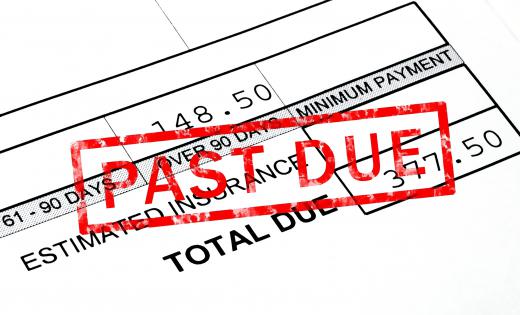
The shopaholic frequently begins to search for more and more “highs,” however, which translates to greater expense. Once the shopper begins to damage his or her own life by spending, or the compulsive shopping interferes with relationships, then true addiction exists, particularly if the person can’t stop.
This person frequently spends beyond his or her means, so he or she may sacrifice money for food, rent, utilities, or simply be unable to pay rising credit card balances. Once a shopaholic spends beyond his or her limits, the disease, like an addiction to drugs, can worsen. The person may indulge in compulsive theft, or may steal money from others in order to continue shopping. What began as joy at finding a few good bargains can end in financial ruin, and even criminal prosecution.

There is help to end such compulsions, which are just as likely to occur in men and women. Needing shopping, just like needing any other activity or drug to regulate mood, suggests that the person may have a chemical imbalance. Often restoring chemical balance, through medications like anti-depressants, can help curb some of the urge to shop, but this is only one half of the equation. As a person becomes a shopaholic, he or she not only physically depends on the shopping for chemical balance, but also emotionally depends on the experience.

The same holds true for people addicted to substances like nicotine. Fighting the physical addiction is not the same as fighting the habitual behavior of smoking. In addition to possibly needing chemicals to help alter brain chemistry, a shopping addict needs to learn how to stop habitual shopping. This can be especially difficult since most people need to shop from time to time, and it's nearly impossible to go “cold turkey” and stop completely. People who suffer from this condition will probably still need to occasionally shop for things like groceries, and this can lead to regression in fighting the addiction.

What does appear to help is support groups or individual counseling for controlling addictive behavior. Many organizations exist to help compulsive shoppers, and individual counseling can help a person to create strategies for taming the addiction. Group counseling can be particularly effective in keeping people from regressing back to compulsive shopping.

Just like any other addict, the shopaholic must want to quit. Very little can be accomplished until there is a sincere desire to end the behavior. For some people, this only occurs when they hit rock bottom. Hopefully, recognizing the signs early can help a person to curb the behavior in its infancy, so it does not become an addictive behavior that controls his or her life.
Tricia Christensen
Tricia has a Literature degree from Sonoma State University and has been a frequent WiseGEEK contributor for many years. She is especially passionate about reading and writing, although her other interests include medicine, art, film, history, politics, ethics, and religion. Tricia lives in Northern California and is currently working on her first novel.
Learn more...
Tricia Christensen
Tricia has a Literature degree from Sonoma State University and has been a frequent WiseGEEK contributor for many years. She is especially passionate about reading and writing, although her other interests include medicine, art, film, history, politics, ethics, and religion. Tricia lives in Northern California and is currently working on her first novel.
Learn more...AS FEATURED ON:
AS FEATURED ON:









-
![Shopaholics might spend outside their means and accumulate credit card debt.]() By: Stephen VanHornShopaholics might spend outside their means and accumulate credit card debt.
By: Stephen VanHornShopaholics might spend outside their means and accumulate credit card debt. -
![A shopaholic typically spends beyond their means.]() By: Franco DeriuA shopaholic typically spends beyond their means.
By: Franco DeriuA shopaholic typically spends beyond their means. -
![Compulsive shoppers may frequently purchase clothes.]() By: Karramba ProductionCompulsive shoppers may frequently purchase clothes.
By: Karramba ProductionCompulsive shoppers may frequently purchase clothes. -
![Shopaholic's experience a "high" from shopping.]() By: Odua ImagesShopaholic's experience a "high" from shopping.
By: Odua ImagesShopaholic's experience a "high" from shopping. -
![Shopaholics may have multiple credit cards with high balances.]() By: bramginoShopaholics may have multiple credit cards with high balances.
By: bramginoShopaholics may have multiple credit cards with high balances.



Discussion Comments
I sometimes wonder if I am a shopaholic, or if I just really like to shop. I sometimes spend a little more than I should. But I don't bankrupt myself. And I am getting better at not buying things I don't need.
Only, I love to get good deals. To me the fun of shopping is "finding" a great deal. So thrifting, clearance, etc. How else can I get the high of a great deal?
Sometimes I window shop online to find great deals (but I don't purchase online as it just isn't as fun). And also, I love being at the mall. I just really like being out and about and walking around looking at stuff!
Sometimes I just spend 10 dollars, or what have you. But I love to buy. And I love to get great deals. I don't know if it is an addiction, but it certainly is a habit. And it definitely is a "hobby".
I've actually given up shopping for myself for Lent. And oh my goodness, this is a long 40 days. Still, it has given me perspective. Part of that perspective is there is a lot of stuff I need to buy (for the kids husband house) that isn't "for me" and it is easier to buy it, and I don't feel guilty knowing that I am spending nothing on myself.
I think I could become a shopaholic quite easily (or rather, maybe I am one, but a really thrifty one?). I really don't know. All I know is I love to shop. And it is thrilling to find good deals!
I hope I am okay so long as I always stick to my budget, but now I am wondering if I have some sort of deep seated compulsion that needs to be cured? I don't know!
i think I'm a shopaholic. i am addicted to shopping online. The stuff there is unique, not like what you see in the store. if i can't afford to buy what i want, i get nervous.
I really think hard of ways to get money just to buy the things i want online. Sometimes i stay away from the site to avoid spending. I'm so hooked on it, I have no problem walking in store on the street. it doesn't tempt me. and they have flex payments, which is where they split up the payment monthly.
help is needed. my hsn credit card is already $800 and I'm only a 24 old single mother who fantasizes about being hot and looking good, especially when I haven't had a relationship in two years. --anon 86
I have recently become an obsessive shopper. I would constantly go to the mall to buy clothes and accessories. It makes me feel good to dress up and look cute, it could be the fact that i feel lonely and the material things make me feel better about myself. I am worried that i am heading down the wrong path. I personally believe therapy could also help with obsessive shopping habits. Good luck everyone.
i finally realized i had a prob. today when i was jittery because i had not bought anything for the day, and it was not even 5 yet. i am 19 with no real bills (just a $60 a month phone bill) yet i work two jobs and make about 360 a week.
i have saved nothing because i constantly feel the need to spend any money i have. i think it is a form of depression for sure, i am happy when i buy something, it also gives me some form of control in my life.
i wish i could stop and am giving myself an allowance and handing my debit cards to my boyfriend. I really wish there was like an A.A. group i could go to.
I consider myself a shopaholic too!
One bit of advice that I can give you, to stop yourself alone is: when you want to buy something, just look at it and answer the following questions: do i really need this? do i really like it? is it worth the money? don't i have something similar to this?
Even if one of your answers is positive then it is not worth buying the thing! So just leave it and get out of the shop! Good luck.
I'm from Malaysia and I'm a shopaholic. i can't stop buying girls things and many things. i have many clothes, high heels, handbags and many more.
My mom is mad at me because I'm wasting my money, but i can't stop my habit! if I'm not going shopping, i feel nervous, anxious and I'm not comfortable. I need to buy something, even if it is a small thing like a hairband. I'm becoming worse right now.
I know I shop compulsively. I live in Boca Raton, Florida. Is there such a thing as a shopaholics meeting?
Thank you.
I am also a shopalcoholic. I did not realize it until my credit cards went into collections. I can't pay the rent and was suffering emotionally from being in financial hardship.
All of my financial hardships came from shopping. Every time, I was depressed about my family tormenting me to get married even though I did not want to. Every time I was sad, I went shopping and the ending result was that I couldn't pay my rent, bills, and support myself. So I realized my mistake and tried to fix it.
This is what I did:
Every week I make a list of the things I need.
1-I buy necessities for the house such as food.
2-I start taking lunch with me every time I leave the house. I also took snacks in my bag and a bottle of water.
3-I made a promise to myself to put money aside from every pay check. Even if it is only $20 and I do not touch it. I put it in a piggy bank. As time goes buy the money will grow.
4-When I leave the house I only take a twenty dollar bill for emergency and do not spend it.
5-I go into stores to window shop but tell myself not to buy because I have to save for bigger things.
I learned this after I went bankrupt.
My addiction to shopping was depression being pushed into an arranged marriage that I did not want. Friends are only there when you want to hang out. They are not there to pay the bills.
god bless to all. and try taking a snack in your bag -- it works.
i am a shopaholic! people tell me i need help, but i just can't stop. i want to know is it really that bad being a shopaholic?
It annoys me that people would come to this site and ask, "How do you become a shopaholic?"
Let me explain, using myself for example. I am a 37 year old, single mom who has my mother living with me.
I believe I'm a shopaholic but it didn't start out that way. First I shopped for the home and ordinary stuff. After separating from my husband and finding myself in a very demanding job (I mean time wise), I began to just take my baby shopping for little things to make him happy. While shopping I was at peace from friends, family, and a lonely home.
When I was shopping things were convenient. McDonald's has a play area, the mall has a play area, etc. So me and my baby window shopped, shopped for the usual and shopped just to shop. I called it Mommy time but it was really a sad time and after my son got older I just couldn't stop shopping -- mainly because there was nothing else.
I'm pretty average and I do occasionally date, party and hang with friends. But my family makes me feel very insecure about it, so shopping is Mommy appropriate. Shopping also fit into my schedule.
I have so many things I have to do that shopping was there when I needed it 24/7. It was a class I could miss, or an inconvenience. It was there whenever I was ready to come to it in some form or another. Even when it seemed everyone had deserted me.
It has taken some time for me to be able to articulate my issue quite so well, but I can now look back and see where it came from and how it sneaked up on me so insignificantly.
I work constantly to change, using layaway to make sure I need things before I purchase and as a means to shop and get that jones out but not fully buy. Hey, a $30 loss layaway deposit still beats a $300 purchase. Small steps. And, I'm doing it.
However, as long as I looked at my shopping as a personality issue, then no matter how hard I tried, I couldn't stop. But when I realized I was addicted and started looking for the the triggers of addiction (like how did I get started, what emotion did it fill, what was happening that led me to this point, when was I doing it more/less, how did outside influences encourage the behavior, and why and how I plan to stop)I made major strides in self control.
My prayers, love and blessings to all my sisters and brothers trying to change.
I am a shopaholic. I am educated and I am very smart. Neither has anything to do with being a shopaholic. I know why I shop, it is because I do not receive emotional support or fulfillment in my private life, namely my husband. I do not feel I am the number one important person to anyone. I am lonely and I need someone to love me and care about me, to make me feel I am important to someone. So I shop to fill the empty space inside of me.
It is only a brief respite from the truth, so I do it again and again to feel good. I do want to stop but I cannot talk to my husband about it. He just gets upset at me and yells at me. I do not feel comfortable talking to other family members nor to my friends.
I am planning on going back into counseling. I have got to change and I know I cannot do it by myself.
i agree with this article in the factual sense, but it doesn't feel right calling it 'an addiction' because it almost seems like its giving people an excuse to feel the need to shop permanently. Sure i enjoy shopping, but i can't imagine it ever getting to the point where I would ruin myself.
I think I am a shopaholic. I need to go shopping several times a week or I feel an empty inside.
My mom says no you're not. She just does not want to believe it, but I don't have a drivers license yet so it is even worse. I know it is bad, but it is an addiction.
I know all about shopping- the buzz, the thrill, then the guilt, especially when I come back home with useless things that I don't need! At one point, my spending went over the top and I found myself shopping so constantly that sales assistants knew me and were only too happy to help me spend 'my money'- in effect credit card bills which i ended up have to pay up. I won't tell you how big it was but I learned a painful lesson and I am now slowly but gradually cutting back on the spending.
This article is so true! Because I am a shopaholic! And I am currently going through a terrible time with my 22-year-old son who is also a shopaholic. He only wants to spend money on himself though. He is engaged to be married and his fiancee' is the opposite. She is very hurt and frustrated that he seems to be so selfish about the way he spends his money. He is attending college right now, and is working a part time job. He convinces me he can't afford to pay his cell phone bill or his car insurance because of school expenses. But he is taking trips and buying electronics and other things that are taking the money that could be paying his bills! So I end up having to pay them! It is very frustrating! I need someone to counsel him before he bankrupts me and he ends up in financial ruin.
But, can you tell me please, how do people become spendaholics?
i am a shopaholic!!! i shop when i'm bored, i shop when in need, even shop for fun!
IMO, a shopaholic can be someone that buys many, many, many cheap things for people, but really only to satisfy themselves. Being a shopaholic can really ruin someone's reputation, yeah. Instead of being known for themselves, they completely disregard other relationships and just want people to drive them to take them shopping. The idea of not shopping can make them nervous. And worse when they are poor because the fruits of their shopping disease are put upon others that receive things they have no use for. What is really bad is when the shopaholic gives the things to those that don't need them, and doesn't give them to needy children that would LOVE them. It is unfortunate.
I completely agree that in this day and age, it is an addiction. It is so easy to shop and with so many bad things in the world, there is shopping. You HAVE to go in this store. You have to go in that store. It can be highly related to bipolar disorder. But, some cannot be cured with medicine because the tendency is too high, and the person must waste thousands of dollars in their life on meaningless gifts.
This article definitely screams "bipolar".
A shopaholic needs control and a guardian and a certain credit limit, as well as a certain amount of fear. That way, they feel "in a box", so to speak.
A shopaholic can also become angry . . . when anyone won't take them shopping, the shopping takes full precendence over the person. They NEED to spend 2 hours in a small store. Looking. Pondering.
"Often restoring chemical balance, through medications like anti-depressants, can help curb some of the urge to shop. However, this is only one half of the equation. As a person becomes a shopaholic, he or she not only physically depends on the shopping for chemical balance, but also emotionally depends on the shopping."
==I cannot agree more. They also do not admit it. Or they become so comfortable with it that they act like it is okay and they ignore what people say to counter it.
A shopaholic's worst enemy is appreciative family as to not start a fight. The shopaholic gets initiative and positive feedback and continues buying, happily calling out the cheap purchase prices and embarrassing themselves further.
I know because I have had a shopaholic halfsister for 35 years. Nothing can help her except fear. And that isn't enough to get her to stop. And negative feedback is not enough to get her to stop.
This is a good article as far as it goes. But more needs to addressed on how one can find the resources to quit shopping. Especially people who do not have a wide choice in counselers/counseling aimed at helping shoppers stop compulsively shopping. ie. those that live in very small towns, those that have no money to hire expensive counselors or can afford to travel to a place that offers that type of counseling. Is there an internet support group available to help.
Post your comments